
Reviewed · LUXOR WEST BANK TOURS
Private Full Day Tour of Luxor west Bank Tombs and temples
The day’s great prize is the Valley of the Kings, where painted royal tombs lead you below the desert hills and into ancient ideas about death, gods, and the afterlife. You can also visit King Tutankhamun’s tomb, including the famous mummy, if that stop is part of your ticket arrangements.
I like having a private Egyptologist guide, since you can ask questions and set the pace more easily than in a large coach group. I also like the broad sweep of the day: Hatshepsut, Ramses III, royal queens, and the workmen who decorated these tombs all appear in one well-packed route.
The main drawback is the pace. Six major stops in roughly eight hours leaves little room to linger, and the included lunch is not described in detail. At this very low advertised price, check which booking option includes entrance fees before you pay.
Key points to know before booking
- Six West Bank sites in one day: The route covers the Valley of the Kings, Hatshepsut’s Temple, the Colossi of Memnon, Medinet Habu, Deir el-Medina, and the Valley of the Queens.
- Private guiding: Only your own group takes part, with an English-speaking Egyptologist assigned to explain the monuments.
- Hotel or cruise pickup: Round-trip transport from your Luxor hotel or Nile Cruise is provided in an air-conditioned vehicle.
- About eight hours: Expect roughly seven and a half hours at the named sites, plus driving and a lunch break.
- Entrance fees are mostly included: Tickets for the listed sites are covered, although the booking option for professional guide and transfers may not include tickets.
- Very strong overall score: The experience is rated 5 out of 5 from 131 reviews, with 99 percent recommending it.
Why this West Bank route works so well
Luxor’s West Bank is not one single attraction. It is a wide archaeological area with royal burial grounds, temples, workers’ homes, and giant statues spread across the Theban necropolis. Visiting on your own means arranging transport between sites and working out which ticket belongs to which monument. This tour handles that structure for you.
The route also gives you more than the usual headline stop. The Valley of the Kings gets most of the attention, but Deir el-Medina can be just as revealing. There, you see where the artisans and laborers lived while building and decorating the royal tombs. That connection helps you understand that these grand burial places were made by real communities, not by some nameless ancient machine.
The private format matters here. A guide can explain a painted scene while you are standing in front of it, then answer a question about a pharaoh, a god, or a burial custom without waiting for a large group to catch up. The guide names that appear in the supplied feedback include Nasr and Aladdin, though your assigned guide may be different.
The tour is advertised at $16 per person, an unusually low price for a private full-day outing with transport, an Egyptologist, and several entrance fees. That makes it excellent value if the selected booking option includes the advertised admissions. Read the ticket details carefully, since the information also says tickets are not included with the Professional Guide plus Transfers option.
A few other Luxor days to weigh up
- Hurghada: Luxor Valley of the Kings & Tutankhamun Tomb Trip
★ 4.7 · 13,208 reviews - Luxor: Valley of the Kings and Hatshepsut Temple Day Tour
★ 4.4 · 1,404 reviews - Hurghada: Luxor Tour with Valley of Kings, Karnak & Tut Tomb
★ 4.6 · 1,082 reviews
Valley of the Kings: the day’s main event
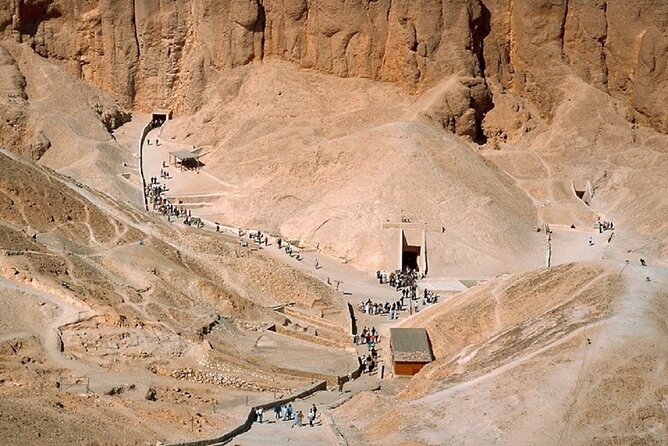
Allow about two and a half hours here, the longest stop of the day. The Valley of the Kings contains 63 known tombs, although the number open to the public can vary. Your ticket covers entry to the valley, while access to particular tombs may depend on the ticket type and current rules.
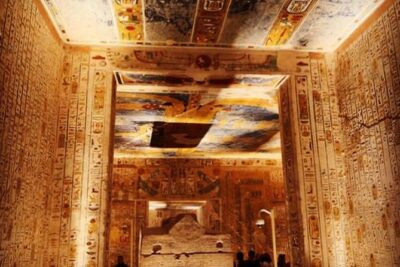
This is where the tour’s history becomes physical. You walk down into tomb corridors cut through the rock, then look up at painted scenes from Egyptian mythology. The walls were not simply decorated for beauty. They carried prayers, symbols, and instructions intended to help the dead ruler pass safely into the next world.
King Tutankhamun is the valley’s most famous name. His tomb is smaller than many royal burial places, but it carries enormous weight because its discovery made the young king famous around the world. One supplied review specifically praised seeing King Tut’s tomb and mummy, so ask your guide at the start of the visit what your ticket permits and how the stop will fit the day.
Two and a half hours sounds generous, but it passes quickly. You may be walking over uneven ground, climbing into and out of tomb entrances, and moving between separate tombs. Bring water, wear practical shoes, and keep your expectations realistic: the guide can explain the scenes, but you will not have time to study every wall in detail.
This stop is best for anyone drawn to ancient religion and royal burial customs. If you dislike enclosed spaces or find stairs difficult, tell the guide early. The tour information says most people can participate, but it does not promise that every tomb route will suit every mobility level.
Hatshepsut’s Temple and the story of a woman king
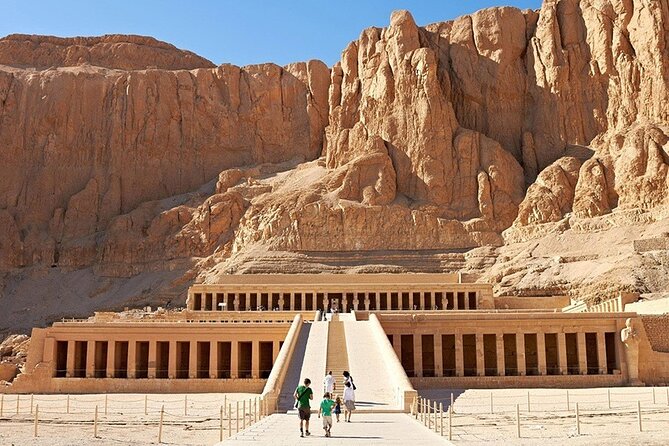
The next major stop is the Temple of Queen Hatshepsut at Deir el-Bahari, with about an hour and a half planned here. Its broad terraces rise against the cliffs, creating a very different view from the underground tombs.
Hatshepsut ruled during Egypt’s New Kingdom and used art and architecture to present herself as a legitimate pharaoh. The tour description connects her with early trading routes and explains the meaning of her name, Foremost of Noble Ladies. Your guide can help you read the political message in the temple, not just admire its shape.
I like this stop because it changes the rhythm of the morning. After dark tomb corridors, you step into an open monument built for ceremonies and royal display. The terraces and cliff setting also make it easier to grasp how the temple belonged to a much larger sacred area.
The planned 90 minutes should let you hear the main story and see the principal architectural features without turning the visit into a sprint. Still, the heat can make even a short walk feel long. Keep the included bottle of water close and use the vehicle as a place to cool down between sites.
Colossi of Memnon: a short stop with a long story
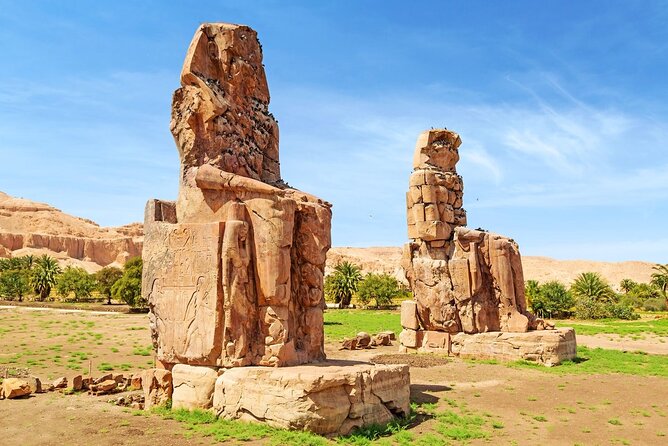
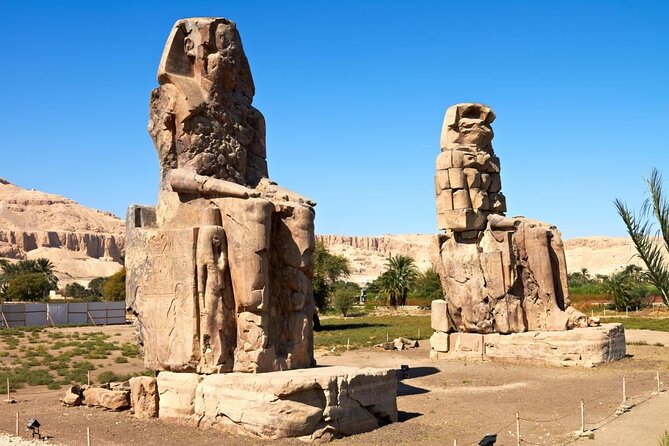
The Colossi of Memnon take about 30 minutes. These twin statues were carved from quartzite sandstone and once guarded the entrance to a much larger temple complex.
This is the briefest visit, so think of it as a photo and orientation stop rather than a full monument visit. The statues give you a quick sense of the scale ancient rulers wanted to project. Their size is impressive even when viewed from the roadside area.
The short timing is sensible in a full-day route, but it means you should not expect a detailed exploration. Listen for the historical explanation, take your photographs, and save your energy for Medinet Habu and the two valleys.
Same base, a completely different day out:
- Luxor Day Trip from Hurghada Small Group & Tutankhamun Tomb
★ 4.8 · 5,366 reviews - Hot Air Balloon Ride in Luxor Egypt with Transfers Included
★ 5.0 · 4,319 reviews - Luxor: Shared Full-Day Tour to Luxor West and East Banks
★ 4.5 · 1,812 reviews - Luxor: Hot Air Balloon Ride over Luxor Relics
★ 4.8 · 1,681 reviews
Medinet Habu: one of the West Bank’s strongest temples
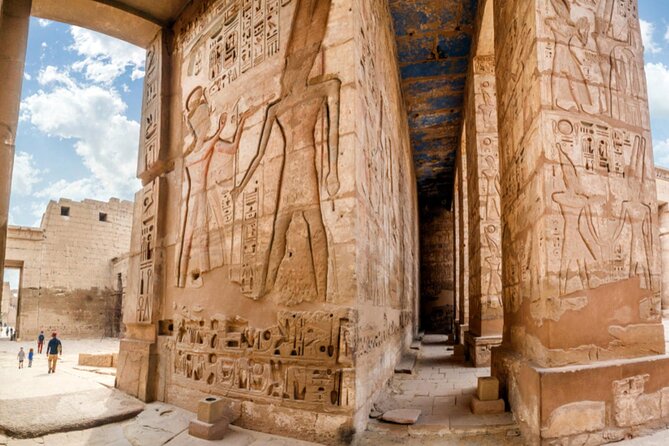
After lunch, the tour continues to Medinet Habu, also called the Temple of Ramses III. You have about an hour here, and that hour is well used.
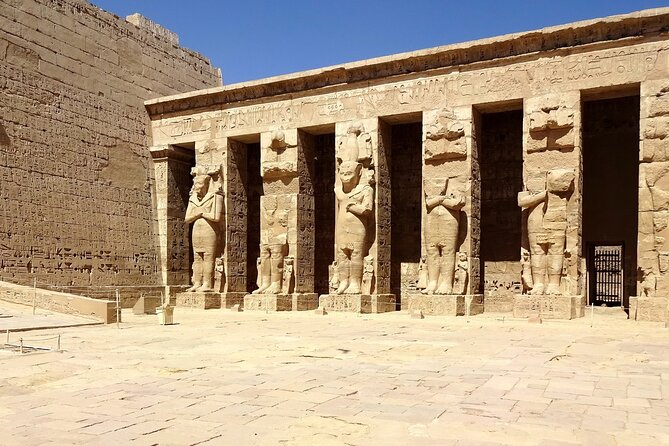
Ramses III commissioned the temple to honor his reign. Its walls and courts preserve the visual language of royal power, with carved scenes and architectural details that help explain how a pharaoh wanted his rule remembered. Compared with the Valley of the Kings, this is a public temple rather than a hidden burial place, so you get a different view of kingship.
I would pay close attention to the reliefs here. A guide who explains the figures and scenes can turn a wall full of carvings into a readable account of ritual, war, offerings, and royal authority. Without that context, the details can blur together.
One hour is enough for an informed visit, but not for every corner. If Medinet Habu is high on your list, tell the guide. In a private tour, that preference may be easier to accommodate than it would be in a fixed large-group schedule, though the full route still has strict time limits.
The lunch break falls before this stop, but no restaurant, menu, or meal inclusion is specified. Bring your own expectations and confirm the lunch arrangement when you book. The listed inclusions name water, transport, guiding, taxes, and entrance tickets, but they do not clearly describe lunch.
Deir el-Medina: where the tomb builders lived
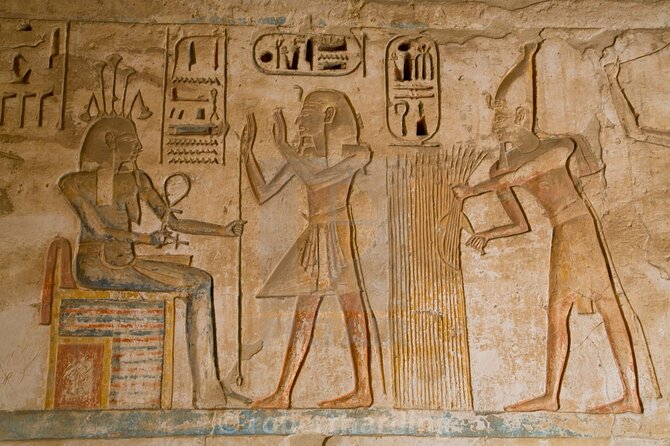
Deir el-Medina receives about an hour. This was the village of the artisans, craftsmen, and laborers who built and decorated royal tombs in the Valley of the Kings.
For me, this is one of the most useful stops because it puts human faces behind the grand monuments. The kings commissioned the tombs, but specialist workers planned the rooms, carved the stone, mixed pigments, and painted the walls. Seeing their former village adds social history to a day otherwise dominated by pharaohs.
The site can also help you compare private life with royal display. The workers’ settlement was tied directly to the royal necropolis, yet it was a community with its own homes and daily routines. Your Egyptologist guide is especially valuable here, since the remains need explanation to make sense.
An hour gives you a focused introduction. Do not expect a long archaeological study, but do expect the stop to make the Valley of the Kings more understandable. It shows how much labor and organization went into the tombs you saw earlier.
Valley of the Queens and Nefertari’s famous tomb
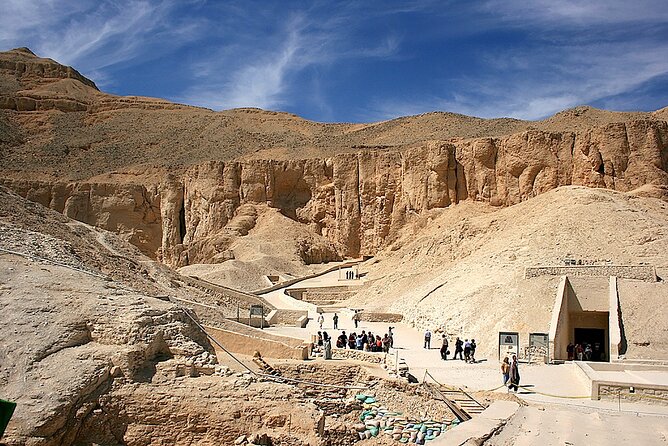
The final major site is the Valley of the Queens, the New Kingdom burial ground for queens and other members of the royal family. More than 90 tombs are known here, and the most famous belongs to Queen Nefertari, the wife of Ramses II.
The tombs are decorated with scenes from the Book of the Dead, showing the dead person’s passage toward the afterlife. These paintings are valuable not only for their color and detail but also for what they reveal about Egyptian religious thought.
The tour allows one hour. That is enough to understand the role of the valley and visit the tombs permitted by your ticket, but access to Nefertari’s tomb may involve a separate ticket or current site rules. The provided tour details include admission to the Valley of the Queens, but they do not state that a special Nefertari ticket is included. Ask before booking if that tomb is your main reason for visiting.
This final stop can be rewarding, though you may feel tired by then. The day has already included underground tombs, temple courtyards, statues, and village remains. If you want to give the queens’ valley more attention, ask whether the order or timing can be adjusted.
Transport, guide quality, and the private format
Pickup is offered from your Luxor hotel or Nile Cruise, followed by return transport in a modern air-conditioned vehicle. That is important on the West Bank, where the sites are spread out and the desert heat can wear you down between visits.
The tour is private, so only your group participates. That does not mean you can ignore the schedule, since the route contains six stops in one day, but it should make questions and small timing adjustments easier.
The supplied feedback gives a useful picture of the guiding. Nasr was described as punctual, clear, and strong on ancient Egyptian history. Aladdin was described as gentle in manner, informative, and willing to add lighter details. Another account praised the safe driver and smooth organization.
There is one caution about the vehicle. One three-star assessment described the car as old, although the pickup was on time and the guide was considered pleasant and informative. The tour promises air conditioning, but vehicle condition may vary. If a newer car matters to you, request confirmation before the day begins.
The guide’s quality will shape this experience more than any other single factor. Names such as Nasr and Aladdin appear in the supplied feedback, but there is no guarantee that either will lead your group. You should expect an English-speaking Egyptologist, not a specific person unless the operator confirms one.
What the $16 price really means
At $16 per person, the advertised price is hard to beat if all the listed inclusions apply. You receive private transport, an English-speaking Egyptologist, hotel or cruise pickup and return, a bottle of water, taxes, service charges, and entry to the Valley of the Kings, Hatshepsut’s Temple, Valley of the Queens, Deir el-Medina, and Medinet Habu. The Colossi of Memnon is free.
The important detail is the booking variation. The information says tickets are not included if you select Professional Guide plus Transfers. That wording can create a major price difference at the gate. Before confirming, check the exact package name and ask which admissions are included.
Tipping is not included. Airport pickup is also excluded, so this is not an airport transfer service. Confirmation is provided at booking, and free cancellation is available until 24 hours before the start time. Changes or cancellations inside that 24-hour window are not refundable.
The low price is strongest for a couple or small private group that wants transport and interpretation without arranging every site independently. Group discounts are also offered, which could make it even better value for a family or a larger party.
Who should book this full-day West Bank tour?
You should consider it if you want to see nearly all of Luxor’s major West Bank sites in one organized day. It suits first-time visitors, people staying at a Luxor hotel, and those arriving on a Nile Cruise who want a guide to handle the route.
It is also a good match for anyone who cares about history more than free time. The schedule favors coverage, and the guide’s explanations are central to understanding the tomb paintings, temple reliefs, and workers’ village.
You may prefer another arrangement if you want to spend half a day at only the Valley of the Kings, or if you need a slow pace with long breaks. This tour covers a lot of ground. It is focused, not leisurely.
Should you book it?
I would book this tour if the final package confirms that entrance fees are included and you want a full West Bank survey for a very low cost. The combination of private transport, an Egyptologist, and six important sites gives you strong value, while the high overall rating suggests the basic organization is dependable.
Before paying, confirm three points: which ticket option you are selecting, whether your preferred tombs require extra admission, and what lunch involves. If you do that, this is a practical way to see the royal tombs, temples, and working community that make Luxor’s West Bank so absorbing.
FAQ
How long does the tour last?
The tour lasts approximately eight hours. The listed site visits total about seven and a half hours, with additional time for pickup, transport, and lunch.
Where can pickup take place?
Pickup and return are offered from your Luxor hotel or Nile Cruise. Airport pickup is not included.
Is this a private tour?
Yes. Only your group participates in the activity.
Which sites are included?
The route includes the Valley of the Kings, Temple of Hatshepsut at Deir el-Bahari, Colossi of Memnon, Medinet Habu, Deir el-Medina, and the Valley of the Queens.
Is an Egyptologist guide included?
An English-speaking Egyptologist guide is included. The supplied information names Nasr and Aladdin in individual accounts, but it does not guarantee a particular guide for every booking.
Are entrance fees included?
Entrance fees are listed for the Valley of the Kings, Hatshepsut’s Temple, Valley of the Queens, Deir el-Medina, and Medinet Habu. The booking information also says tickets are not included with the Professional Guide plus Transfers option, so confirm your selected package.
What is the cancellation policy?
You can cancel at least 24 hours before the start time for a full refund. Cancellations or changes made less than 24 hours before the start time are not accepted for a refund.
More Full-Day in Luxor
- Full Day Tour to East and West Banks of Luxor
★ 5.0 · 1,449 reviews - Luxor : Full Day Tour to Luxor West and East Banks & Lunch
★ 5.0 · 870 reviews - Full Day Tour of Luxor West Bank Temples and Tombs (Private)
★ 5.0 · 722 reviews - Private Full-Day Luxor Highlights East and West Banks
★ 5.0 · 663 reviews
New on the Luxor list
- Full-Day East and West Luxor Private Tour★ 4.5 · 26 reviews
- Marsa Alam: Snorkeling with Sea Turtles Marsa Mubarak★ 4.9 · 26 reviews
- Day Trip to Edfu & Kom Ombo temples from Luxor and drop off in Aswan or Luxor★ 5.0 · 26 reviews
- Private Full day East and West Bank, Luxor★ 5.0 · 26 reviews
- Luxor Day Tour: Kings Valley & Karnak & Luxor & Hatshepsut Temple★ 5.0 · 26 reviews
- Luxury Hot Air Balloon Experience in Luxor with Pick-up★ 5.0 · 27 reviews
- Full-Day Luxor Tour – Discover the East and West Banks of the Nile★ 5.0 · 27 reviews
- 5 Days 4 Nights Nile Cruise Tour★ 5.0 · 27 reviews
Luxor West Bank Tours, compared.
Luxor Valley of the Kings & Tutankhamun Tomb Trip
Read our review →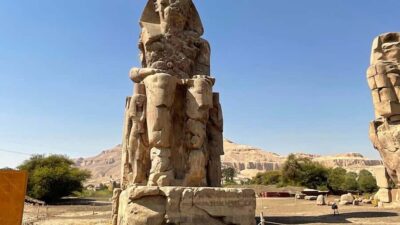
Valley of the Kings and Hatshepsut Temple Day Tour
Read our review →
Luxor Tour with Valley of Kings, Karnak & Tut Tomb
Read our review →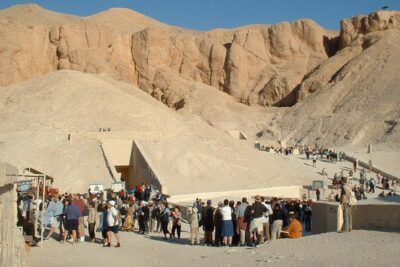
Valley of Kings, Hatchepsut Temple ,Karnak & Luxor-DayTour
Read our review →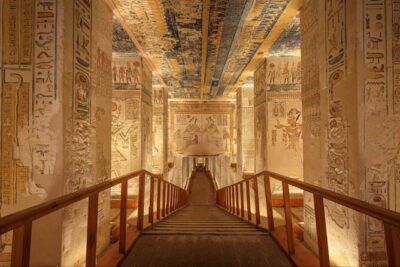
Full Day Tour of Luxor West Bank Temples and Tombs (Private)
Read our review →
Small Group Excursion to Luxor Valley of the Kings from Hurghada
Read our review →
Valley of Kings Hatshepsut & Karnak Luxor Day Trip
Read our review →Browse the lists this tour appears in