
Reviewed · LUXOR WEST BANK TOURS
Luxor: Karnak Temple and Luxor Temple Tour with Lunch
Karnak’s forest of towering columns is the star here. You walk through one of Egypt’s great ancient temple complexes, then compare it with the more compact Luxor Temple, where obelisks, statues, and carved walls tell a different part of the Theban story. A good guide makes the stones readable, not just photogenic.
I like the small-group format and the generous time for pictures. I also like the practical hotel pickup and drop-off, plus lunch after the sightseeing. The main consideration is that four hours goes quickly, and pickup is included only from the East Bank of Luxor. If you stay on the West Bank, you may need to arrange and pay extra for transport.
Key points at a glance
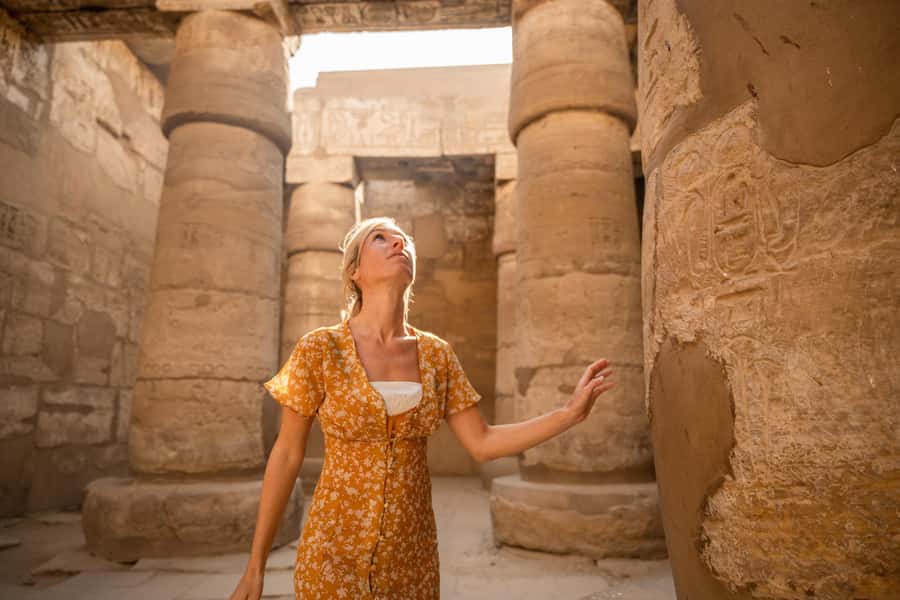
- Karnak’s Great Hypostyle Hall: Look up at a remarkable field of massive columns, where scale does most of the talking.
- Luxor Temple after Karnak: See how a second major temple gives you a more focused, easier-to-follow visit.
- Strong guide-led storytelling: Guides including Mena Oweda, Omar, Mohamed Refaaie, Ghada, and Asma have been praised for clear explanations, humor, and patience.
- Afternoon timing can work well: A 2 p.m. start may bring softer light and a sunset meal, though exact times depend on availability.
- Lunch adds local flavor: Expect Egyptian food at a local restaurant, rooftop venue, or boat setting, but meal quality can vary.
- Useful East Bank transfers: Pickup and return simplify the day if your accommodation is in central Luxor or elsewhere on the East Bank.
Why Karnak deserves the first visit
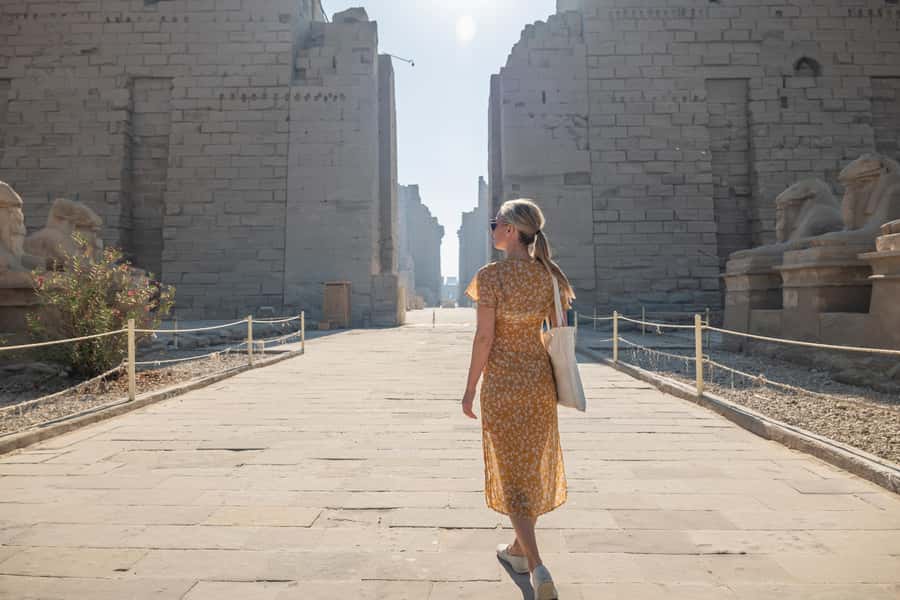
Karnak is not one single building. It is a huge temple complex built and expanded by successive rulers, and its scale can be hard to grasp until you walk among the columns. The temple was dedicated to the Theban Triad of Amun, Mut, and Khonsu, and your guide should help you understand how those gods fit into ancient Egyptian belief.
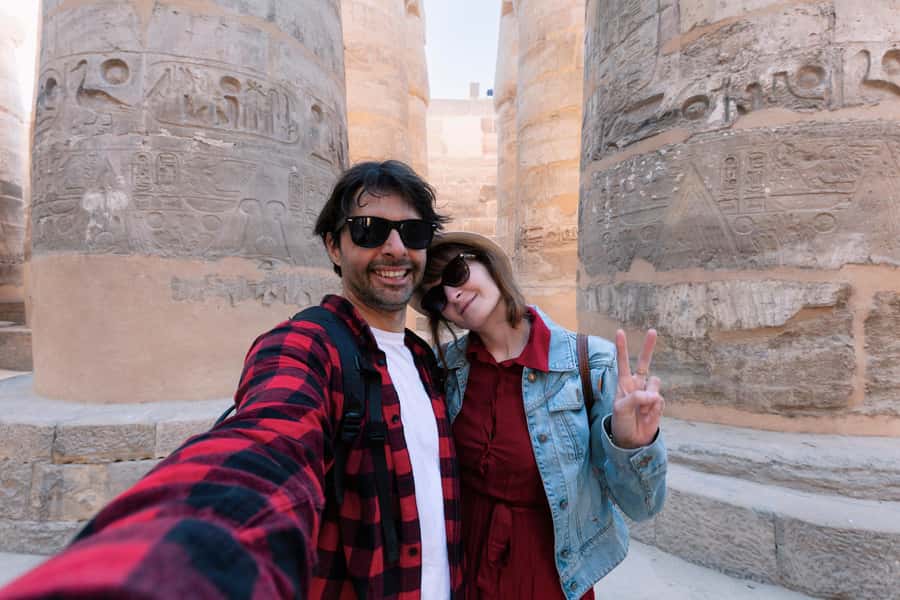
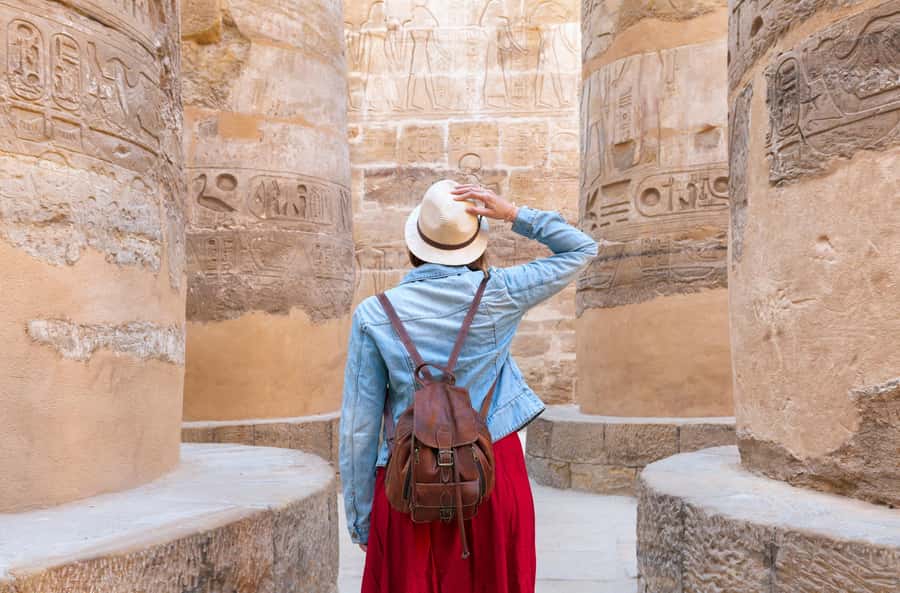
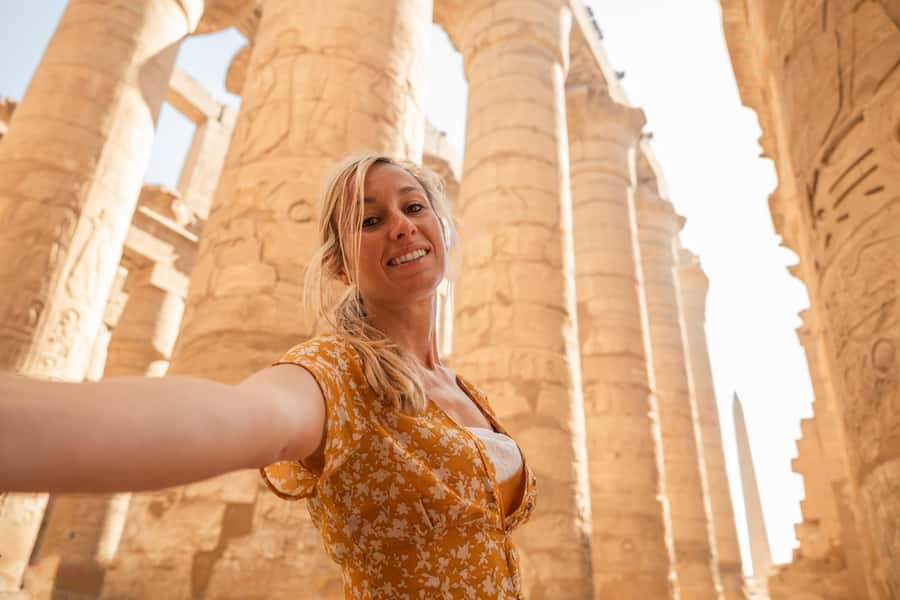
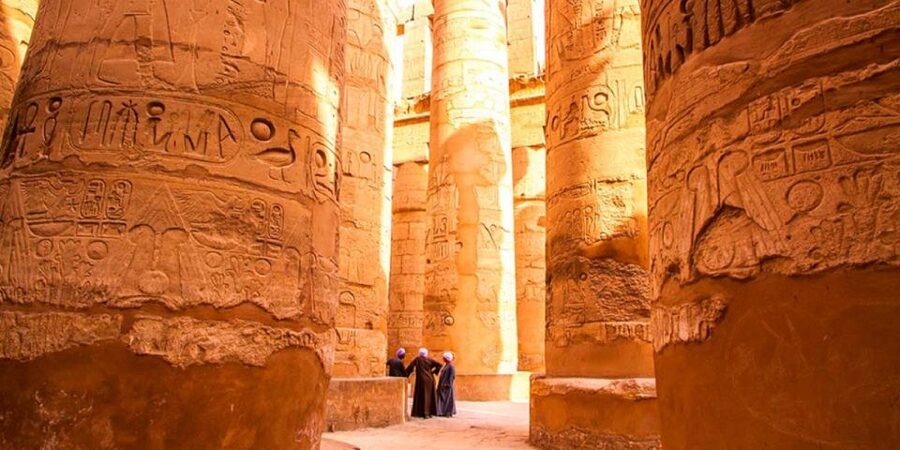
The most memorable area is the Great Hypostyle Hall, with its dense ranks of giant columns. The famous pillars are not simply decorative ruins. They show the ambition of the builders and the ceremonial purpose of the site. From ground level, the columns can make you feel very small, which is exactly the point of good temple architecture.
Your guide may point out hieroglyphs, royal names, gods, and scenes carved into the walls. This is where the tour earns its keep. Without help, you can admire the carvings but miss the meaning. Guides such as Remon, Roman, Mahmoud Hassan, Ablaa, and Ghada have been singled out for explaining details in a clear and engaging way.
Allow yourself time to stop and look. Several guides have given people free time to wander and take pictures rather than keeping them in a tight formation. That matters at Karnak, where you need a few quiet moments to absorb the scale.
The drawback is simple: Karnak is extensive, and four hours must also cover Luxor Temple and lunch. You will see the main areas, but this is not a slow archaeological study tour. If you want every chapel, inscription, and side passage, you would need more time.
A few other Luxor days to weigh up
- Hurghada: Luxor Valley of the Kings & Tutankhamun Tomb Trip
★ 4.7 · 13,208 reviews - Luxor: Valley of the Kings and Hatshepsut Temple Day Tour
★ 4.4 · 1,404 reviews - Hurghada: Luxor Tour with Valley of Kings, Karnak & Tut Tomb
★ 4.6 · 1,082 reviews
What makes Luxor Temple different
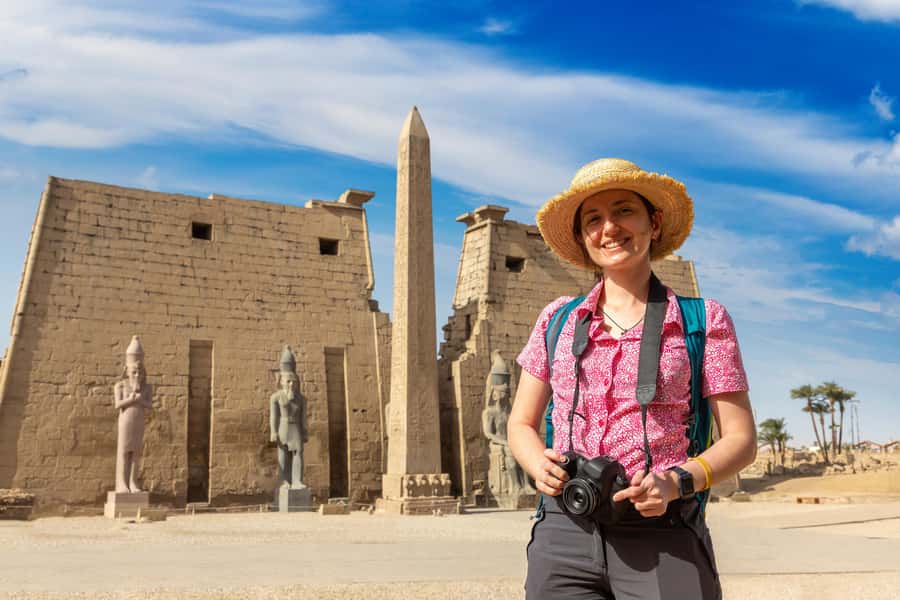
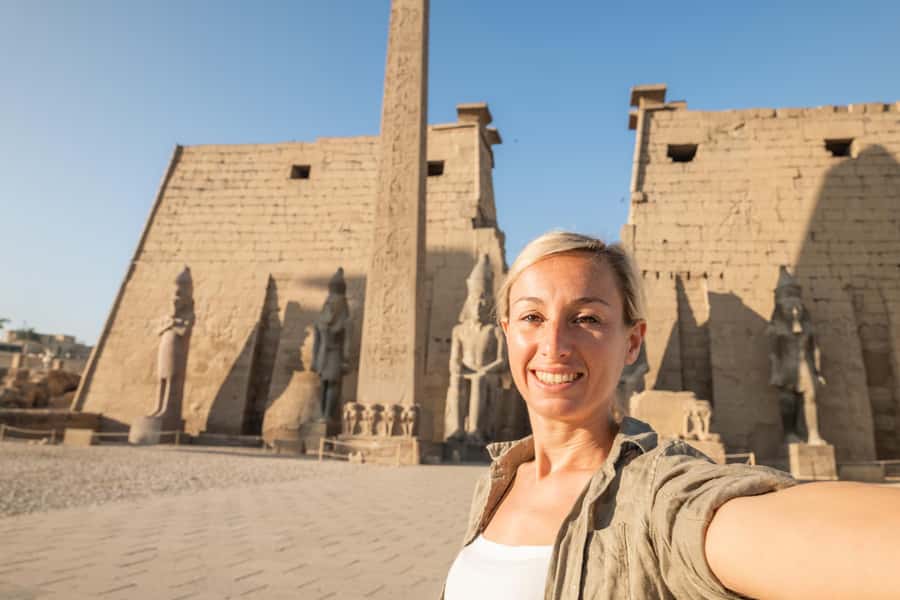
Luxor Temple is smaller than Karnak, but that does not make it less important. The visit feels more concentrated, with major statues, an obelisk, carved walls, and a clear sense of how the temple related to royal ceremony and the ancient city.
The contrast between the two sites is one of the best reasons to visit them together. Karnak gives you vast scale and a maze of columns. Luxor Temple offers a more direct sequence of monumental spaces. Seeing both helps you understand that ancient Thebes was not represented by one isolated building. These temples formed part of a larger religious and political center.
A guide can also explain the link between the sites and point out differences in construction, decoration, and use. Mohamed Refaaie was praised for explaining pillars and obelisks in both temples, while other guides have shown how to read selected hieroglyphs on the walls.
You should get some independent time here as well. That is useful for photography and for simply walking at your own pace. The tour is guided, but it does not have to feel like a nonstop lecture. A good guide such as Asma, Mena Oweda, or Omar can give you the background first, then let you look around with a better sense of what you are seeing.
How the four-hour schedule works
The day begins with pickup from your accommodation in Luxor. You join a small group, travel by air-conditioned vehicle, and head to the East Bank temples. A driver handles the city traffic and returns you to your accommodation at the end.
The advertised duration is four hours, though the pace can vary. A small group of four, or even just two people, can move around more easily than a large coach party. One couple found that being the only two people allowed them to shape the visit around their interests, while other small groups appreciated being able to hear the guide clearly.
The usual order is Karnak first, Luxor Temple second, and lunch afterward. Some afternoon departures begin around 2 p.m. and finish with a rooftop meal near sunset. That timing is attractive in the warmer months, since the light can be kinder for photographs than the hard midday sun.
A morning tour may suit you better if you prefer cooler conditions or want the rest of the day free. The exact start time is not fixed in the information provided, so you need to check availability when booking.
Do not expect a full-day Luxor program. This experience focuses on two East Bank temples. It does not include the Valley of the Kings, Hatshepsut Temple, or other West Bank sights. That limited scope is useful if you have only a short stay or want a focused introduction.
The guides are the main variable
The strongest part of this experience is the human element. Names praised for warmth, clear English, and strong explanations include Mena Oweda, Omar, Mohamed Refaaie, George, Ghada, Asma, Hamdy, Marwa, Essra, Farag, and Maria. You are not guaranteed one particular person, but the repeated pattern is clear: guide quality can make the difference between looking at old stones and understanding a place.
The best guides do more than recite dates. They explain what the figures represent, connect the temples to ancient Egyptian religion, and answer questions without making you feel hurried. Several guides were also praised for using humor and storytelling, which helps during a long walk through similar-looking columns and walls.
Patience matters. One guide adjusted the pace to suit the group, and another waited when people were delayed by an hour. That kind of flexibility is especially useful for families, older visitors, or anyone who wants time for photographs.
Language choices are broad. Arabic and English are available, with French, German, and Spanish offered as options. The included guide is described as English-speaking, so check the exact language and any extra cost before booking if you need a different language.
Some guides may also take you to shops selling papyrus, Egyptian cotton, essential oils, or herbs and spices. These stops appeared in several outings, and one person reported no pressure to buy. Still, they are not the main advertised sights. If you prefer every minute at the temples, politely ask how much time a shopping stop will take.
Same base, a completely different day out:
- Luxor Day Trip from Hurghada Small Group & Tutankhamun Tomb
★ 4.8 · 5,366 reviews - Hot Air Balloon Ride in Luxor Egypt with Transfers Included
★ 5.0 · 4,319 reviews - Luxor: Shared Full-Day Tour to Luxor West and East Banks
★ 4.5 · 1,812 reviews - Luxor: Hot Air Balloon Ride over Luxor Relics
★ 4.8 · 1,681 reviews
What lunch adds to the day
Lunch is included, and it gives the tour a welcome change of pace after the temples. The meal has been served in different settings, including a local restaurant, a rooftop venue, and a boat on the Nile. Several meals included simple Egyptian dishes such as meat, rice, vegetables, flatbread, and desserts.
The setting can be part of the appeal. A rooftop restaurant may give you views over Luxor and the river, especially on an afternoon departure. One meal on a boat was described as an unexpectedly good value, while another rooftop lunch featured home-cooked food and beef tagine.
Keep your expectations sensible. This is an included local meal, not a carefully selected fine-dining experience. One person found the food at Sunset Restaurant underwhelming and cold. That seems to show that the lunch arrangement can vary by venue and day.
Even so, lunch improves the shape of the tour. You can sit down, drink water, and talk with your guide after the sightseeing. It also makes the $40 price easier to justify, since you are paying for transport, entry fees when selected, a guide, and food rather than temple access alone.
Is $40 good value?
At $40 per person, this is strong value if you want the two major East Bank temples explained rather than simply delivered to the gate. The price includes an English-speaking guide, lunch, and hotel pickup and drop-off from East Bank accommodation. Entry fees are included if you select the appropriate option, so check that detail carefully while booking.
The value improves when the group is small. You receive more direct attention, can usually hear the guide, and may have greater flexibility with photo stops. Several outings had only two to four people, though group size can change.
The price is less attractive if your accommodation is on the West Bank and you must pay extra for transport. It is also worth checking whether the particular lunch venue and entry option suit your plans. Still, for a half-day visit that combines both temples with transport and food, the package covers the basics well.
Free cancellation up to 24 hours before the activity and a reserve-now, pay-later option make it easier to fit into a changing Egypt itinerary. These terms are useful if your Nile cruise or train schedule is not fully settled.
Practical advice before you go
Wear comfortable shoes. The temples require walking over uneven ground, and you will enjoy the visit more if you are not thinking about sore feet. Bring water, sunscreen, sunglasses, a sun hat, and a camera.
Comfortable clothing is also sensible. There is little reason to dress formally for this outing, and sun protection matters more than style. The temples can feel exposed, particularly during a bright morning or hot afternoon.
Ask your guide at the start how much time you will have at each temple. Guides have often allowed independent wandering, but the balance between explanation and free time can vary. If photography is a priority, say so early.
Wheelchair users should note that the experience is not suitable for wheelchair access. If you have limited mobility but do not use a wheelchair, contact the provider before booking and explain your needs, since the supplied details do not promise a modified route.
The tour includes pickup only from accommodation on Luxor’s East Bank. If you stay across the Nile, confirm the transport arrangement before paying. A small extra charge may apply, as one East Bank and West Bank accommodation issue showed.
Who will get the most from this tour?
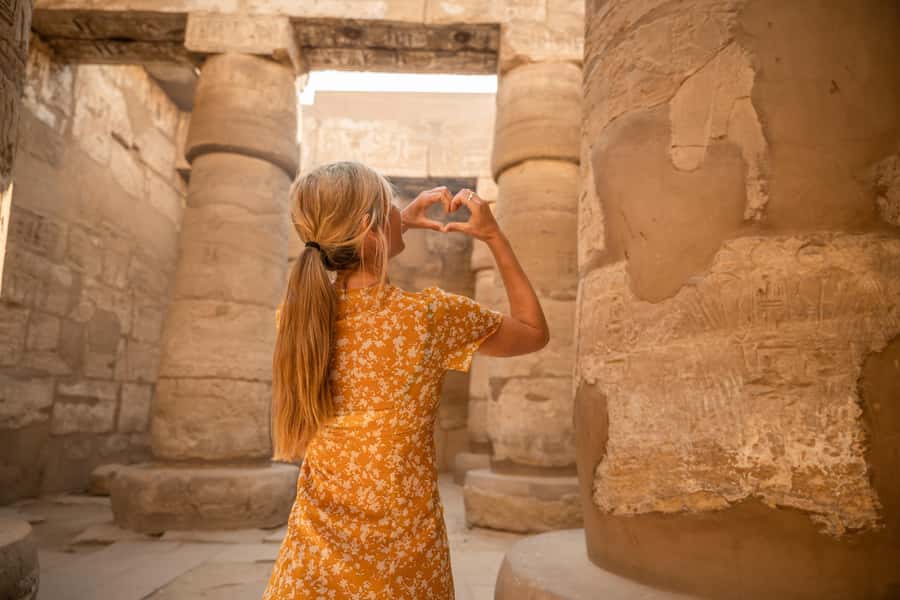
This is a good fit for a first visit to Luxor, especially if you want the main facts without spending a full day at archaeological sites. It also suits solo visitors, since the small-group setting can feel welcoming and gives you a ready-made guide and group.
Families may appreciate the clear storytelling and hotel transfers, though young children still need to manage several hours of walking. Couples and photographers will like the flexible pace and the chance of afternoon light followed by a meal overlooking the Nile.
History fans should see this as an introduction, not a specialist tour. The guide can explain the major stories, symbols, pillars, and obelisks, but the schedule does not leave room for every corner of Karnak.
It is less suitable if you dislike group tours, want private transport, or need a guaranteed particular guide. It may also disappoint if you expect lunch to be a major culinary event. The temples are the reason to book; lunch is a useful bonus.
Should you book it?
Book this tour if you want Karnak and Luxor temples covered in one organized half-day, with a guide who can explain what you are seeing and a meal afterward. The repeated praise for guides such as Mena Oweda, Omar, Mohamed Refaaie, Ghada, and Asma is encouraging, even though guide assignment is not guaranteed.
Choose an afternoon departure if available and if you like warm light, photos, and the chance of a sunset meal. Choose a morning start if heat is your main concern. Before booking, confirm the entry-fee option, pickup location, language, and West Bank transport.
For $40, this is a sensible choice for most East Bank visitors. The temples are extraordinary, the logistics are easy, and the guide can turn a wall of hieroglyphs into a story you can remember.
FAQ
How long does the Luxor temple tour last?
The advertised duration is four hours, including visits to Karnak Temple and Luxor Temple, lunch, and hotel transfers.
What is included in the price?
The tour includes an English-speaking guide, lunch, and pickup and drop-off from accommodation on Luxor’s East Bank. Entry fees are included when you select the relevant option.
Is hotel pickup available from the West Bank?
Pickup and drop-off are included from accommodation on the East Bank. If you stay on the West Bank, extra transport may be required.
What languages are available?
Arabic, English, French, German, and Spanish are available. The standard tour information describes the included guide as English-speaking, while other language options may be add-ons.
What food is served at lunch?
Lunch is Egyptian food served at a local restaurant, rooftop venue, or boat setting, depending on the arrangement. Meals have included meat, rice, vegetables, flatbread, and desserts.
What should I bring?
Bring comfortable shoes, sunglasses, a sun hat, a camera, sunscreen, water, and comfortable clothing. The activity is not suitable for wheelchair users.
More Lunch Experiences in Luxor
- Luxor : Full Day Tour to Luxor West and East Banks & Lunch
★ 5.0 · 870 reviews - From Luxor: Guided Tour to East or West Banks with Lunch
★ 4.5 · 604 reviews - Luxor: Abu Simbel Temple Private Guided Day Trip with Lunch
★ 4.6 · 546 reviews - Luxor: Valley of the Kings and Queens Guided Tour with Lunch
★ 4.5 · 337 reviews
New on the Luxor list
- Full-Day East and West Luxor Private Tour★ 4.5 · 26 reviews
- Marsa Alam: Snorkeling with Sea Turtles Marsa Mubarak★ 4.9 · 26 reviews
- Private Full day East and West Bank, Luxor★ 5.0 · 26 reviews
- Day Trip to Edfu & Kom Ombo temples from Luxor and drop off in Aswan or Luxor★ 5.0 · 26 reviews
- Luxor Day Tour: Kings Valley & Karnak & Luxor & Hatshepsut Temple★ 5.0 · 26 reviews
- Luxury Hot Air Balloon Experience in Luxor with Pick-up★ 5.0 · 27 reviews
- Full-Day Luxor Tour – Discover the East and West Banks of the Nile★ 5.0 · 27 reviews
- 5 Days 4 Nights Nile Cruise Tour★ 5.0 · 27 reviews
Luxor West Bank Tours, compared.
Luxor Valley of the Kings & Tutankhamun Tomb Trip
Read our review →
Valley of the Kings and Hatshepsut Temple Day Tour
Read our review →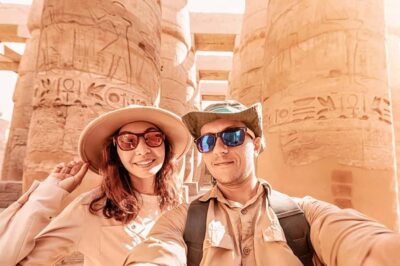
Luxor Tour with Valley of Kings, Karnak & Tut Tomb
Read our review →
Valley of Kings, Hatchepsut Temple ,Karnak & Luxor-DayTour
Read our review →
Full Day Tour of Luxor West Bank Temples and Tombs (Private)
Read our review →
Small Group Excursion to Luxor Valley of the Kings from Hurghada
Read our review →
Valley of Kings Hatshepsut & Karnak Luxor Day Trip
Read our review →
Valley of the Kings and Queens Guided Tour with Lunch
Read our review →Browse the lists this tour appears in