
Reviewed · LUXOR TOURS
Luxor: Shared Full-Day Tour to Luxor West and East Banks
Luxor gives you ancient Egypt at full volume: royal tombs, colossal statues, vast temple courts, and carved gods at every turn. This shared tour covers the major sights on both sides of the Nile in one long day, with guides such as Alaa Hassan, Ahmed Bahaa, Gabriel, and Omar bringing the stones and symbols into focus.
I like the practical sweep of it. You see the Valley of the Kings and Hatshepsut’s temple before lunch, then Karnak and Luxor Temple in the afternoon. I also like the balance between guided explanations and time to take pictures. The catch is simple: eight hours can feel rushed, especially in heat, and some recent groups have spent closer to 10 hours on the road and at the sites.
Key points to know before booking
- Five major Luxor sights in one day: The route includes the Valley of the Kings, Hatshepsut’s temple, the Colossi of Memnon, Karnak Temple, and Luxor Temple.
- Strong guide element: English-speaking Egyptologists explain mythology, royal history, temple art, and symbolism rather than leaving you to decode the ruins alone.
- Lunch is included: You stop at a local restaurant, with buffet-style local food mentioned in the tour feedback.
- Shared transport keeps the price down: At $90 per person, this is a practical way to cover both banks without arranging separate cars and guides.
- Flexible pacing matters: Guides have adjusted the order for delayed flights, allowed photo time, and helped visitors fit in special tombs when possible.
- East Bank hotel pickup is included: Pickup and drop-off are offered for hotels on Luxor’s East Bank.
Why this Luxor day works so well
The strength of this experience is its range. In a single day, you move from the hidden tombs of the west bank to the giant religious complex of Karnak, then finish among the illuminated or late-day stones of Luxor Temple, depending on the schedule.
That variety gives you a useful first look at Luxor. You see the city not as one isolated monument, but as a connected ancient center. The west bank focuses on death, burial, and royal memory. The east bank focuses on worship, ceremony, and the public life of the temples.
I would choose this tour if Luxor is a short stop on a wider Egypt trip. It saves you from piecing together drivers, admission tickets, and explanations for five major sites. If you have several days in Luxor, a private tour with more time at each monument may suit you better.
The shared format is also worth considering. You travel with other people, so the guide must keep a group moving. That can limit spontaneous stops, but it also keeps the price at a reasonable $90 per person for transport, lunch, a guide, and entrance fees when that option is selected.
A few other Luxor days to weigh up
- Full Day Tour to East and West Banks of Luxor
★ 5.0 · 1,449 reviews - Luxor : Full Day Tour to Luxor West and East Banks & Lunch
★ 5.0 · 870 reviews - Full Day Tour of Luxor West Bank Temples and Tombs (Private)
★ 5.0 · 722 reviews
Valley of the Kings, where the walls do the talking
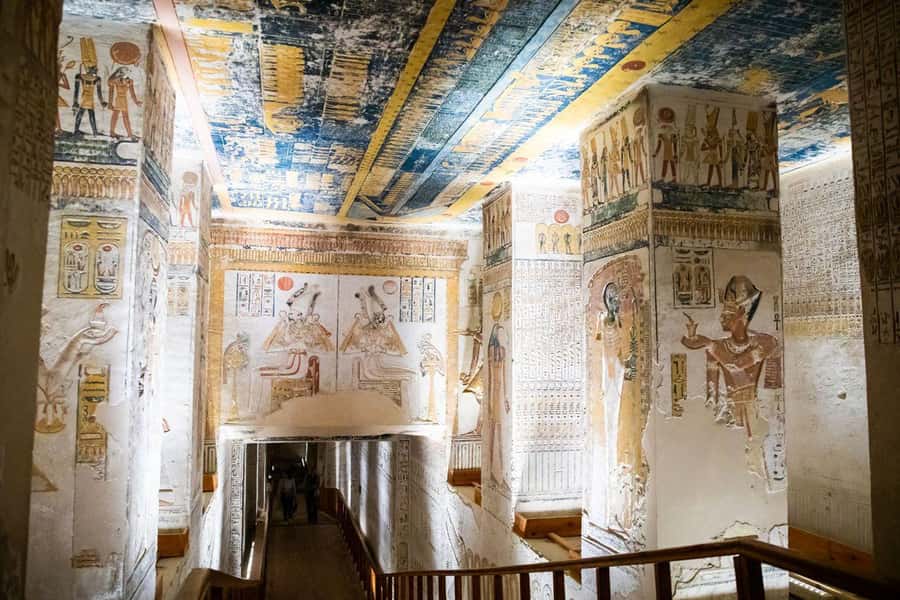
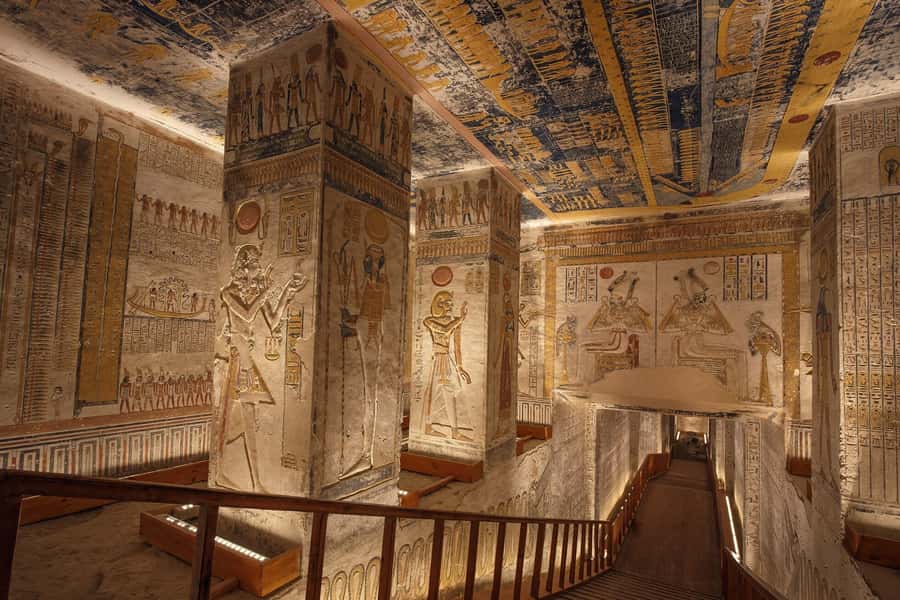
The first major stop is the Valley of the Kings, on Luxor’s west bank. This is the place to focus on painted tomb chambers rather than grand buildings. The pharaohs were buried here in rock-cut passages, and the decoration carries religious scenes, symbols, and texts meant to guide the dead into the next world.
Your guide can make the difference here. Without context, a tomb may look like a series of colorful walls. With a good explanation, the figures, animals, gods, and repeated symbols begin to form a story. Guides named in the tour feedback, including Gabriel, Ahmed Bahaa, and Mahmoud Hassan, were praised for explaining details and helping groups choose or add special tombs when available.
The standard visit does not mean every tomb is automatically included. Special tombs, including King Tutankhamun’s, may require an additional ticket. That is an important budget point. If Tutankhamun is high on your list, ask about the extra charge and available entry before you commit your sightseeing time.
Expect this stop to be hot, exposed, and busy at times. An early start is a smart request, especially since one visitor specifically advised beginning early because the schedule is large and the heat rises quickly. Wear practical shoes, carry water, and save your most careful photography for the tombs where it is allowed.
Hatshepsut’s three terraces at Deir el-Bahari
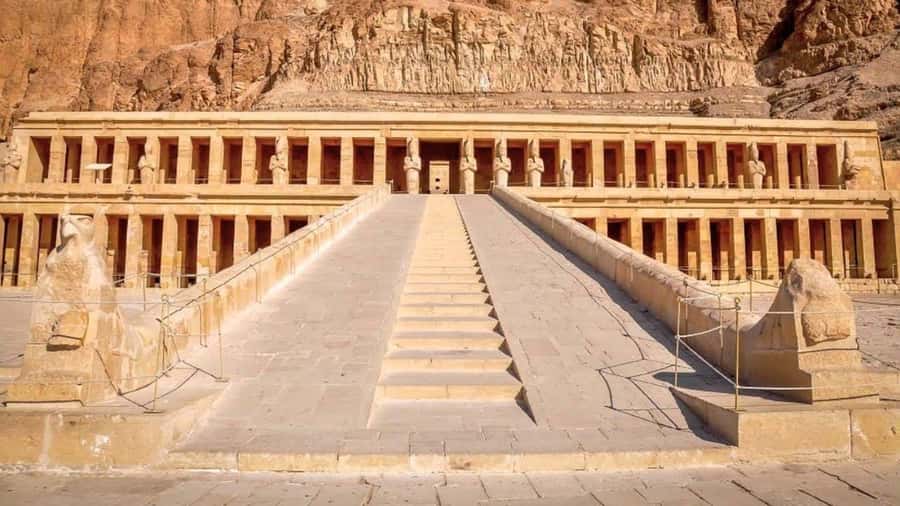
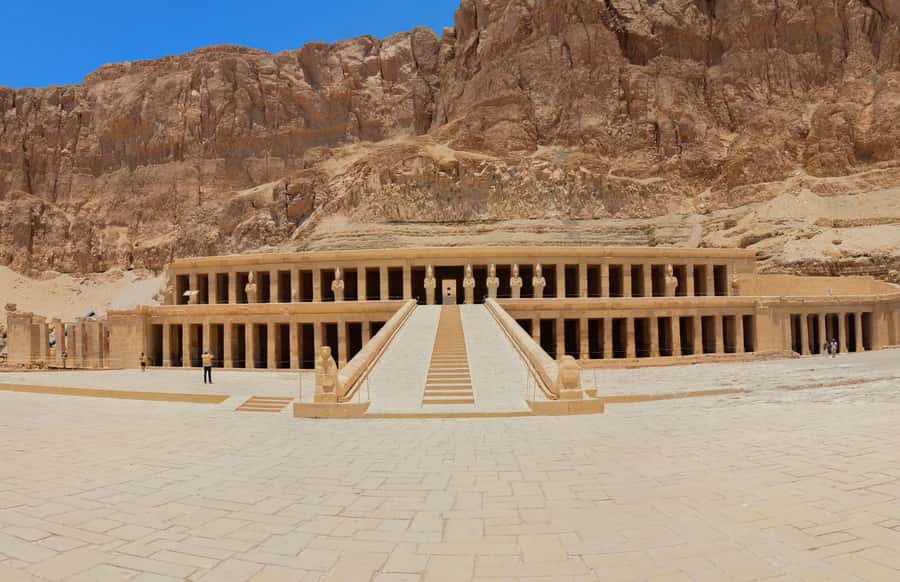
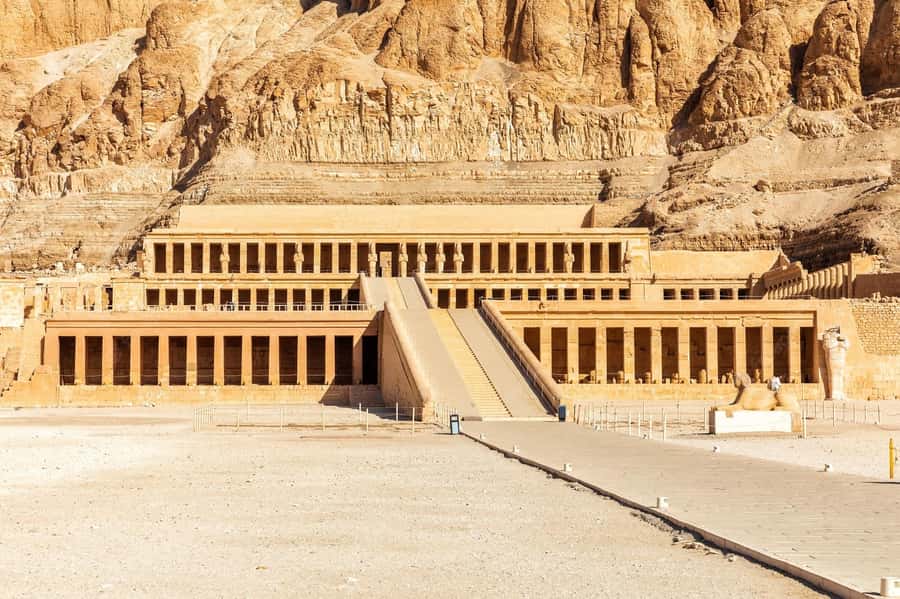
From the valley, the tour continues to the Mortuary Temple of Queen Hatshepsut. The temple is built against the cliffs of Deir el-Bahari, with three broad terraces rising from the desert floor toward the rock face.
This is one of Luxor’s best architectural views. The straight lines of the terraces contrast sharply with the cliffs behind them. From the lower approach, you can see why the temple feels so carefully placed rather than simply dropped into the desert.
Hatshepsut’s story also gives your guide good material. She ruled as a woman presenting herself in the traditional form of a king, and the temple’s reliefs helped support her authority. Look closely at the carved scenes and ask your guide about the figures, offerings, and royal imagery.
The practical drawback is sun exposure. The terraces offer little relief from the glare, and the climb between levels can feel tiring in warm weather. Guides generally provide an explanation before giving you time to look around and take photographs, which is useful here because you will want both the wide view and the carved details.
Colossi of Memnon and the remains of Amenhotep III
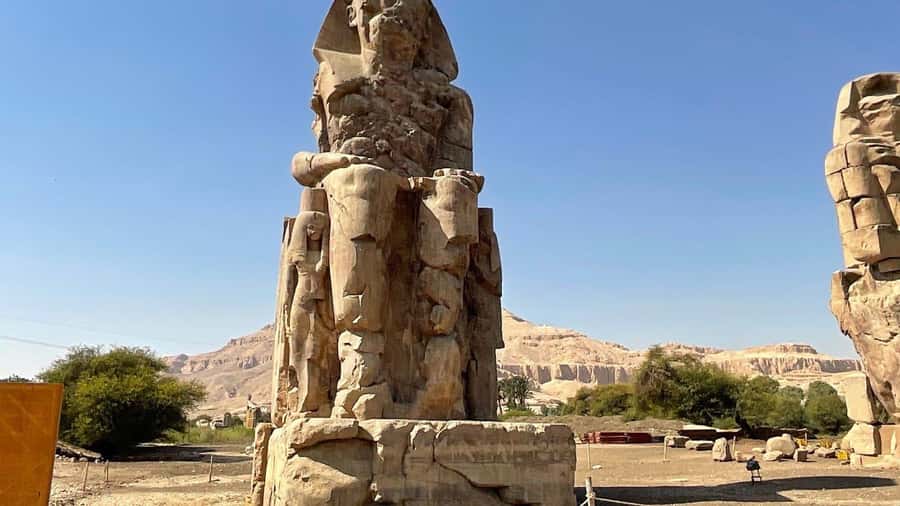
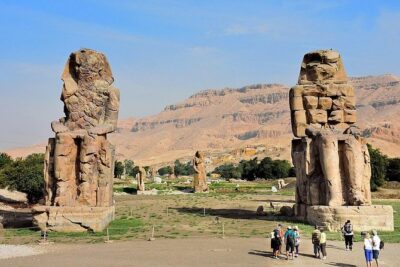
The Colossi of Memnon is a short, memorable stop. Two huge seated statues of Amenhotep III face east, marking the entrance to what was once his mortuary temple.
The temple itself has largely disappeared, so this visit is more about scale and setting than exploring a complete building. The statues give you a quick lesson in how ancient Egypt used size to project royal power. Their weathered surfaces and enormous proportions make a strong contrast with the detailed tomb paintings seen earlier.
This stop is often brief, which is sensible. You will have time for photographs and an explanation, but the Colossi do not offer the same extended route as Karnak or the Valley of the Kings. If you prefer long visits at fewer sites, this is one of the places that may feel too short. If you want to see the main landmarks in one day, it is a useful and efficient addition.
Same base, a completely different day out:
- Hurghada: Luxor Valley of the Kings & Tutankhamun Tomb Trip
★ 4.7 · 13,208 reviews - Luxor Day Trip from Hurghada Small Group & Tutankhamun Tomb
★ 4.8 · 5,366 reviews - Hot Air Balloon Ride in Luxor Egypt with Transfers Included
★ 5.0 · 4,319 reviews - Luxor: Hot Air Balloon Ride over Luxor Relics
★ 4.8 · 1,681 reviews
Lunch at a local restaurant
Lunch comes between the west and east bank visits. The tour includes a meal at a local restaurant, and the food has been described as tasty local fare, including a buffet in some arrangements. One meal was served on a terrace overlooking a tomato farm, giving the stop a more local setting than a quick roadside sandwich.
Treat lunch as a needed pause, not merely another included extra. The morning involves walking, sun, and a lot of information. A sit-down meal gives you time to cool down and reset before the large temple complexes.
The exact restaurant and menu can vary. The supplied details do not promise drinks beyond the meal, although some groups received water and occasional soft drinks. If you have dietary needs, ask the operator ahead of time rather than relying on the buffet to solve everything.
Karnak Temple, Luxor’s giant religious complex
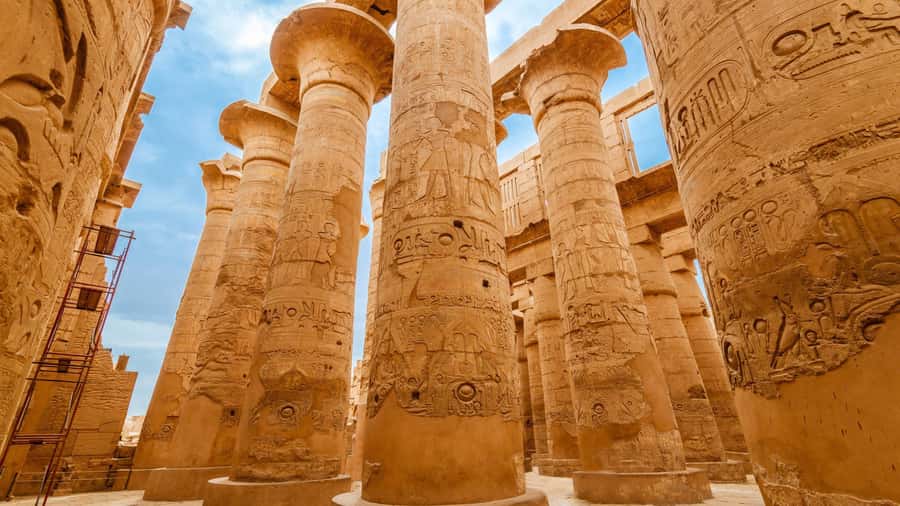
Karnak is the biggest visit of the afternoon and arguably the most demanding site on the route. It was dedicated to Amun, his wife Mut, and their son Khonsu, forming the Theban triad. Over centuries, rulers added halls, gateways, statues, columns, and sacred spaces.
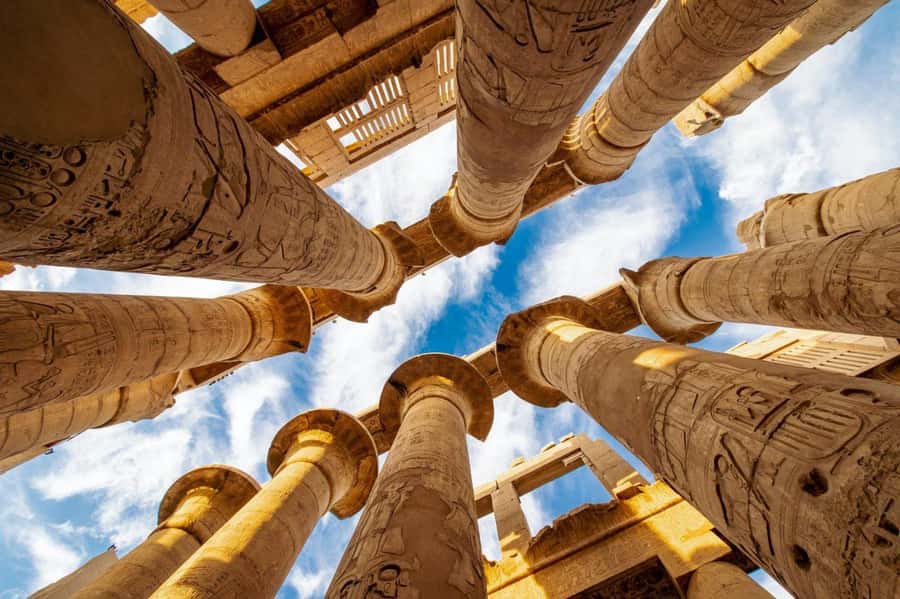
The scale can be hard to grasp when you walk in. Your guide helps by pointing out how the complex developed and by explaining what each major section was used for. The Great Hypostyle Hall, with its forest of massive columns, is the visual high point for many people. It is also the place where a short explanation can save you from wandering past important carvings without noticing them.
This is where the Egyptologist format earns its keep. Guides including Ramon, Alaa Hassan, and Mena Oweda were praised for clear English, lively storytelling, and explanations of mythology and artistic symbols. Alaa Hassan was also noted for showing groups attractive photo locations and explaining how the images fit into ancient beliefs.
Karnak can feel crowded, and its size makes it easy to tire. You may not have time to inspect every court and chapel. Listen closely to the guide’s main route, then use the free time for the details that interest you most. If you want a slower study of inscriptions, plan a separate visit.
Luxor Temple, a fitting final stop
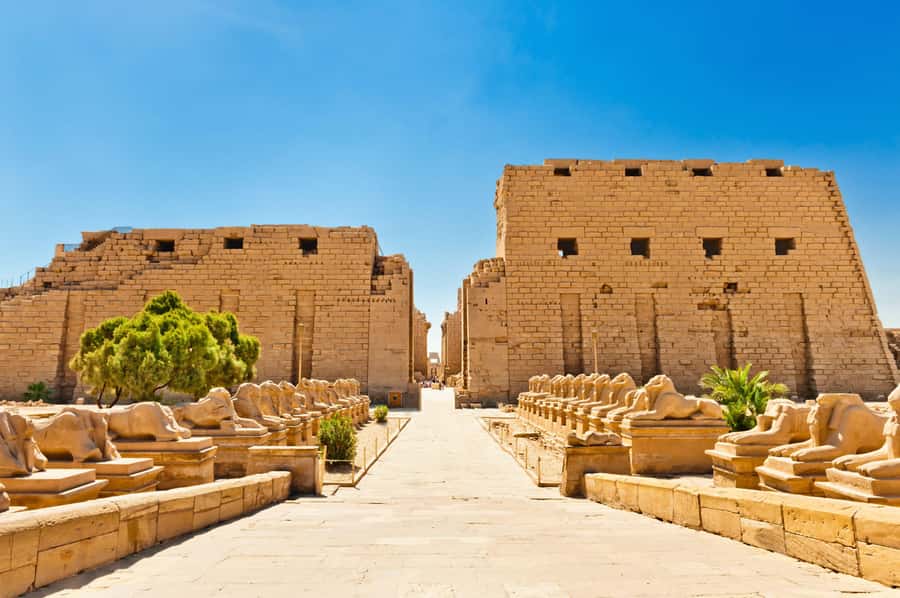
Luxor Temple was begun by Amenhotep III in the 18th Dynasty and completed or expanded by Ramses II. Unlike Karnak, it feels more compact, so you can take in its main sequence without quite the same sense of getting lost.
The temple was linked to Karnak by an avenue of sphinxes and played an important role in religious ceremonies. Your guide can explain the relationship between the two sites and the role of Amun in the Theban religious center.
I like Luxor Temple as the final stop because it brings together many of the themes from the day: royal power, gods, processions, huge columns, and layers of construction by different rulers. It also gives you a last chance to ask questions while the morning’s tombs and temples are still fresh.
The timing can affect the mood. An early finish gives you a brighter view of the reliefs, while a later visit may offer softer light. The tour does not guarantee a specific arrival time, since traffic, group movement, and earlier visits can shift the day.
Guides are the heart of the experience
The most praised feature is the guide service. The guide names vary by departure, but the recurring names include Ahmed Bahaa, Alaa Hassan, Gabriel, Omar, Mohammed, Adam, Mena Oweda, and Ramon.
What should you expect from a good guide on this route? Clear explanations, answers to questions, help with photographs, and an effort to keep the group comfortable. Several guides were described as funny and welcoming, which matters on a long day when five major sites can blur together.
The best comments also point to flexibility. Mahmoud adjusted the order after a delayed flight. Other guides made room for extra photo time, helped visitors look into special tomb tickets, and accommodated requested stops when possible.
Do not assume every guide will use the same style. Some may focus on a structured historical talk, while others lean more toward stories, mythology, and small details. If you care about a particular language, select the appropriate add-on or language option when booking. English, French, German, and Spanish are listed as available languages, while the included guide is described as English-speaking.
The real cost of a shared day
At $90 per person, the value depends on what you want from Luxor. You are paying for a guide, lunch, hotel pickup and return in the East Bank, and entrance fees if that option is selected. Arranging a private vehicle, guide, and separate visits could cost more, especially for a solo visitor or couple.
The tradeoff is time. A shared tour must collect people, keep to a group schedule, and move between both banks. One group found the minibus a little small, so comfort may depend on the number of people and the vehicle assigned.
The day is also physically full. The published duration is eight hours, but some experiences have run closer to 10 hours. That is not necessarily a problem if you want maximum coverage, but it is not the right choice for a relaxed, slow-paced archaeological day.
Pickup and drop-off are included for East Bank hotels. The provided details do not promise pickup from every part of Luxor, so confirm your hotel location before booking.
Who should book this tour?
I would recommend it to first-time visitors, solo travelers, couples on a tight schedule, and anyone staying in Luxor for only a day. It gives you the essential west and east bank sights without requiring you to negotiate separate transport.
It also suits people who want history explained in plain language. The temples are far more rewarding when someone points out the Theban triad, royal symbols, and the purpose behind the reliefs.
I would hesitate if you dislike group schedules, struggle with long hot days, or want to spend half a morning in one tomb. Families with young children should also think about the pace, since the route involves repeated walking and many hours of sightseeing.
Free cancellation up to 24 hours before the tour and reserve-now, pay-later booking make it easier to keep plans flexible. Those terms are useful if your Luxor schedule may change, but you should still check the selected option carefully, especially the entrance-fee arrangement and language.
Final verdict: a strong first look at Luxor
Book this tour if your goal is to see the main monuments efficiently and understand what you are looking at. The combination of royal tombs, Hatshepsut’s terraces, the Colossi, Karnak, Luxor Temple, lunch, and an Egyptologist guide gives you a lot for the price.
Go in expecting a packed day, not a leisurely archaeological study. Start as early as possible, wear shoes suited to uneven ground, protect yourself from the sun, and keep some energy for Karnak and Luxor Temple. If you get a guide in the mold of Alaa Hassan, Gabriel, Ahmed Bahaa, or Omar, you can expect the stories and explanations to be the part that turns a busy sightseeing schedule into a memorable day.
FAQ
Where does the tour begin and end?
Pickup and drop-off are provided in Luxor, specifically for hotels on the East Bank.
How long does the tour last?
The stated duration is eight hours. Some groups have experienced a longer day of around 10 hours, depending on the pace and schedule.
What sites are included?
The route includes the Valley of the Kings, the Mortuary Temple of Queen Hatshepsut, the Colossi of Memnon, Karnak Temple, and Luxor Temple.
Is lunch included?
Yes. Lunch at a local restaurant is included, with local buffet-style food mentioned in the tour details and feedback.
Are entrance fees included?
All entrance fees are included if you select the option that includes them. Extra tickets for special tombs may not be covered.
What languages are available?
English, French, German, and Spanish are listed as available guide languages. Non-English guides may require an add-on.
Is hotel transportation included?
Yes, hotel pickup and drop-off are included for hotels on Luxor’s East Bank.
Can I cancel for a refund?
You can cancel up to 24 hours in advance for a full refund.
Can I reserve now and pay later?
Yes. The tour offers reserve now and pay later booking, so you do not have to pay at the time of booking.
New on the Luxor list
- Full-Day East and West Luxor Private Tour★ 4.5 · 26 reviews
- Marsa Alam: Snorkeling with Sea Turtles Marsa Mubarak★ 4.9 · 26 reviews
- Private Full day East and West Bank, Luxor★ 5.0 · 26 reviews
- Day Trip to Edfu & Kom Ombo temples from Luxor and drop off in Aswan or Luxor★ 5.0 · 26 reviews
- Luxor Day Tour: Kings Valley & Karnak & Luxor & Hatshepsut Temple★ 5.0 · 26 reviews
- Luxury Hot Air Balloon Experience in Luxor with Pick-up★ 5.0 · 27 reviews
- Full-Day Luxor Tour – Discover the East and West Banks of the Nile★ 5.0 · 27 reviews
- 5 Days 4 Nights Nile Cruise Tour★ 5.0 · 27 reviews
Luxor Tours, compared.
Luxor Valley of the Kings & Tutankhamun Tomb Trip
Read our review →
Luxor Day Trip from Hurghada Small Group & Tutankhamun Tomb
Read our review →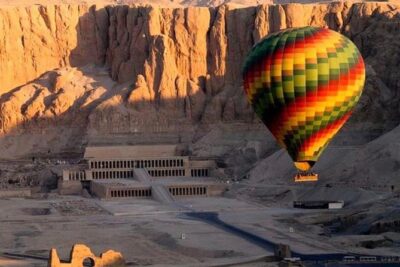
Hot Air Balloon Ride in Luxor Egypt with Transfers Included
Read our review →
Luxor Day Tour: Valley of Kings & Queens & Hatchepsut Temples
Read our review →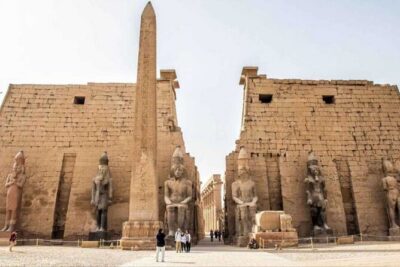
Full Day Tour to East and West Banks of Luxor
Read our review →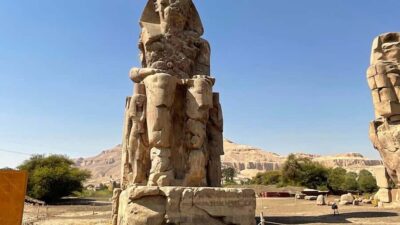
Valley of the Kings and Hatshepsut Temple Day Tour
Read our review →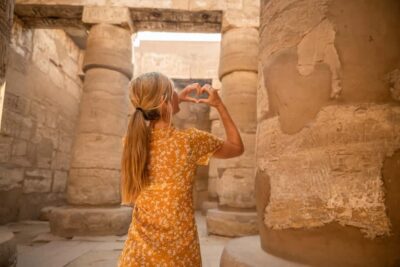
2-Day Luxor Tour with Hotel, Balloon, & Boat Ride
Read our review →Browse the lists this tour appears in