
Reviewed · LUXOR WEST BANK TOURS
West Bank Tombs and Temples
Medinet Habu is the star here. Ramses III’s huge mortuary temple has towering gateways, broad courts, and battle reliefs that still show sharp details after more than 3,000 years. The tour also brings you to the Valley of the Kings, the Tombs of the Nobles, the Colossi of Memnon, and Hatshepsut’s cliff-backed temple in one well-planned West Bank circuit.
I like the private format, since your guide can adjust the pace and answer your questions without a large group crowding around. I also like the included hotel pickup and the Egyptologist guide, especially because guides such as Ghada, Nermeen, Nana, and Mary Mena have been praised for clear English, humor, and strong knowledge of Luxor’s monuments.
The main drawback is the length. Seven hours and 35 minutes in the hot, mostly open West Bank can wear you down, and the Valley of the Kings entry covers only three standard tombs. Extra-famous tombs, including Seti I and Tutankhamun, cost more.
Key points to know before booking
- Medinet Habu gets the attention it deserves: This is one of Egypt’s largest mortuary temples, with well-preserved scenes of warfare, ceremonies, and religious rituals.
- Three Valley of the Kings tombs are included: You choose from a listed group of open tombs, while Seti I, Tutankhamun, and Ramesses V and VI require separate tickets.
- Only your party joins the tour: The private setup makes it easier to pause, ask questions, or spend longer at a favorite site.
- The route covers four major West Bank stops: You see royal burials, officials’ tombs, a great temple, and the famous Colossi of Memnon.
- Hotel transfers are included: The day begins and ends with transport in Luxor, with about 45 minutes set aside at each end.
- The guide matters: Previous guide names connected with this company include Ghada, Nermeen, Nana, Mary Mena, and others, though your assigned guide is not specified in advance.
Why Luxor’s West Bank deserves a full day
The West Bank is not one single monument. It is a broad archaeological area with royal tombs cut into desert cliffs, temples built for dead kings, and smaller decorated tombs made for officials and priests.
That variety gives this tour its strength. You are not looking at the same kind of building all day. The Valley of the Kings takes you underground into royal burial chambers. Medinet Habu returns you to open courtyards and monumental walls. The Tombs of the Nobles offer a more personal view of ancient Egyptian life, while Hatshepsut’s temple shows how carefully a ruler could use architecture to shape her public image.
I especially like this mix for a first visit to Luxor. You get the famous names, but also a site such as Medinet Habu and the Tombs of the Nobles, where a guide can help you notice details that are easy to miss on your own.
The tour is listed at $125 per person. That is not the cheapest way to see the West Bank, but the price includes a private vehicle, round-trip hotel transfers, guide service, and admission to the scheduled sites. The value improves if you are sharing the private experience with family or friends, and group discounts are offered.
A few other Luxor days to weigh up
- Hurghada: Luxor Valley of the Kings & Tutankhamun Tomb Trip
★ 4.7 · 13,208 reviews - Luxor: Valley of the Kings and Hatshepsut Temple Day Tour
★ 4.4 · 1,404 reviews - Hurghada: Luxor Tour with Valley of Kings, Karnak & Tut Tomb
★ 4.6 · 1,082 reviews
Starting in Luxor with a private guide
The day begins with pickup in Luxor and an introduction from a NASCO Tours representative. About 45 minutes is allowed for this opening and transfer period, followed by the drive toward the West Bank sites.
A private guide changes the feel of the day. You are not tied to a fixed group pace, and you can ask for more explanation at the tombs or move along when the heat starts to build. This is useful in Luxor, where many monuments can look impressive at first glance but become much more interesting once someone explains the figures, symbols, and royal claims carved into the walls.
The company has several guides who have received strong praise for their approach. Ghada is described as friendly, relaxed, and experienced, with more than two decades as a licensed guide. Nermeen, also called Nana in some feedback, is noted for her English, humor, and ability to work well with families. Mary Mena is described as approachable and clear, while another guide named Nana was praised for reading sections of hieroglyphs and explaining them with academic skill.
Those names are useful when booking, but they do not guarantee who will lead your tour. If a particular guide matters to you, ask the operator before confirming.
Choosing three tombs in the Valley of the Kings
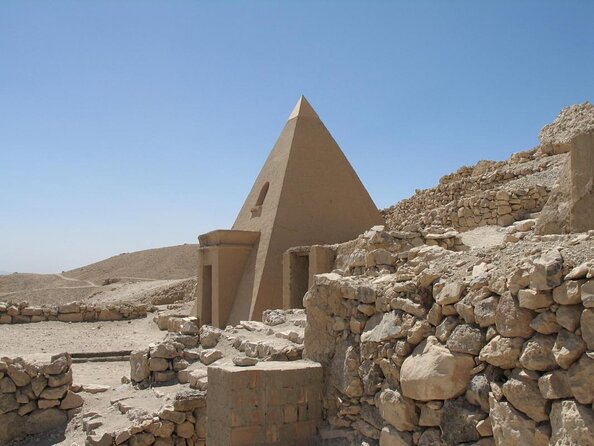
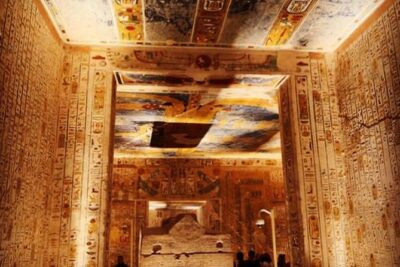
The Valley of the Kings is the first major stop and receives about 90 minutes. This desert valley served as the royal burial ground for nearly 500 years during Egypt’s New Kingdom, from the Eighteenth through the Twentieth Dynasties.
The main entry ticket allows access to three of the listed standard tombs:
- KV1, Ramesses VII
- KV2, Ramesses IV
- KV6, Ramesses IX
- KV8, Merenptah
- KV14, Tausert and Setnakht
- KV15, Sety II
- KV16, Ramesses I
- KV43, Thutmose IV
- KV47, Siptah
The exact open tombs can change, so treat this list as the available selection rather than a promise that every one will be open on your date. Your guide can help you choose three based on what is accessible and what interests you most.
I recommend using the time for quality rather than trying to race through every entrance. The painted walls and hieroglyphs are the main reason to visit, and a good guide can explain how the scenes relate to the pharaoh’s journey into the afterlife.
The extra-ticket tombs are a separate matter. KV9, the tomb of Ramesses V and VI, is known for its long decorated passage. KV17, the tomb of Seti I, is an especially important option for its decoration. KV62, Tutankhamun’s tomb, is famous for its discovery and royal occupant, though its small size means the experience is different from seeing a vast royal burial chamber.
None of those three additional tombs is included in the main admission. If you have a strong interest in one, budget for the extra ticket and confirm the current price locally. The tour price alone does not cover it.
The Valley is also the most physically demanding part of the morning. You walk between tomb entrances on exposed ground, then go down into and back out of underground chambers. Wear practical shoes, carry water, and save some energy for the later temples.
A short stop at the Colossi of Memnon
The drive from the Valley of the Kings to the Colossi of Memnon takes about 10 minutes. The visit itself is listed as a 15-minute photo stop.
These two enormous seated statues once guarded the entrance to a much larger temple complex. Today, they work best as a brief roadside pause rather than a long standalone visit. You can take in their scale, photograph the weathered stone, and let your guide explain what they represented before continuing.
The short timing is sensible. After the Valley’s tombs, you get an outdoor break without losing an hour that could be used at Medinet Habu or the other tombs. Still, if you prefer slow photography or want a detailed lecture on the statues, 15 minutes may feel tight.
Same base, a completely different day out:
- Luxor Day Trip from Hurghada Small Group & Tutankhamun Tomb
★ 4.8 · 5,366 reviews - Hot Air Balloon Ride in Luxor Egypt with Transfers Included
★ 5.0 · 4,319 reviews - Luxor: Shared Full-Day Tour to Luxor West and East Banks
★ 4.5 · 1,812 reviews - Luxor: Hot Air Balloon Ride over Luxor Relics
★ 4.8 · 1,681 reviews
Medinet Habu and the military story of Ramses III
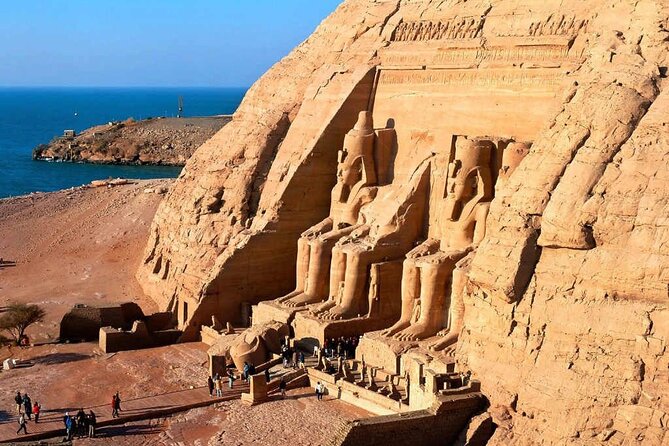
The tour then continues to Medinet Habu, with about 15 minutes of driving and one hour at the site. This is the part I would not want rushed.
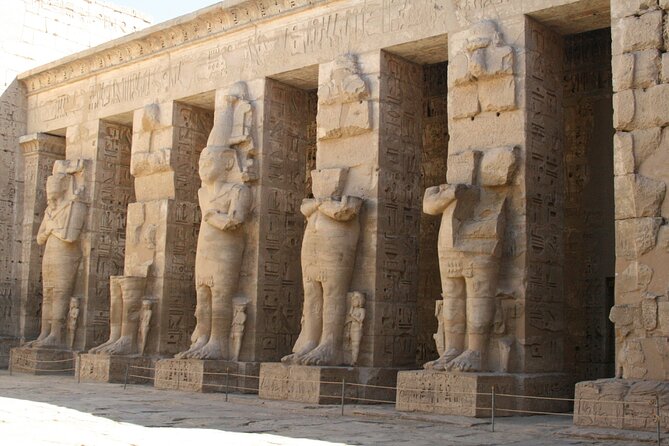
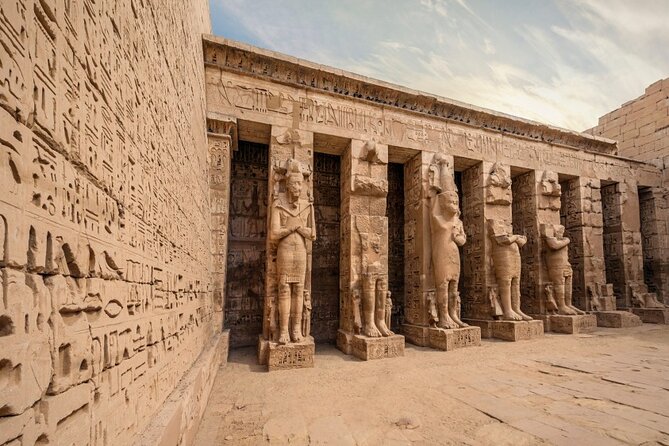
Medinet Habu is the mortuary temple of Ramses III, built to honor him after death and associated with his own wishes for the complex. Its scale is immediately clear: imposing towers, large courts, shrines, and long stretches of carved wall.
The reliefs are the real draw. They show battles, religious ceremonies, and royal scenes, with enough surviving detail to make the walls easier to read than many ancient sites. Ramses III used the temple to present himself as a powerful defender of Egypt, and the military images help you see how temples also served as places of royal messaging.
One hour is enough for a useful visit, but not for every corner. I would ask the guide to point out the best-preserved reliefs and explain how the temple’s courts and gateways fit together. Without that help, the size can be overwhelming and the figures may blur into a long series of carved scenes.
Medinet Habu is also a good reason to choose this private tour rather than a basic West Bank highlights trip. The itinerary gives it a proper stop instead of treating it as a quick photo opportunity.
The Tombs of the Nobles and everyday ancient Egypt
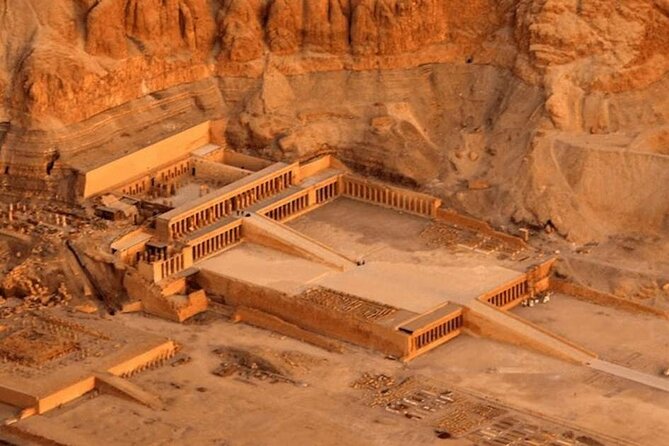
After Medinet Habu, the route allows about an hour for the transfer period to the Tombs of the Nobles, followed by another hour at the tombs themselves. The schedule is generous enough for a meaningful visit, though the listed timing combines travel and stop details in a way that may not match the exact clock on the day.
The Tombs of the Nobles were made for high officials and priests rather than pharaohs. Their wall paintings can show farming, food preparation, music, work, family life, and ceremonies. That makes them valuable for a different reason than the Valley of the Kings.
Royal tombs focus on the king’s divine role and passage into the next world. Noble tombs often give you more ordinary human scenes. You may see how people worked, celebrated, hunted, or served in official roles. These paintings can make ancient Egypt feel less like a parade of kings and more like a functioning society.
The site also rewards a guide who can explain who these officials were and why their positions mattered. Previous visitors have particularly valued guides who gave enough time for questions at the graves and Hatshepsut’s temple. That is one advantage of a private visit: you can ask about a scene instead of simply moving on with a large party.
You should expect uneven walking and enclosed spaces at the tombs. The day combines underground chambers with wide open temple grounds, so the heat and repeated movement can add up. If you are visiting with children, the private format helps because the guide and driver can make the pace more manageable, although the overall day is still long.
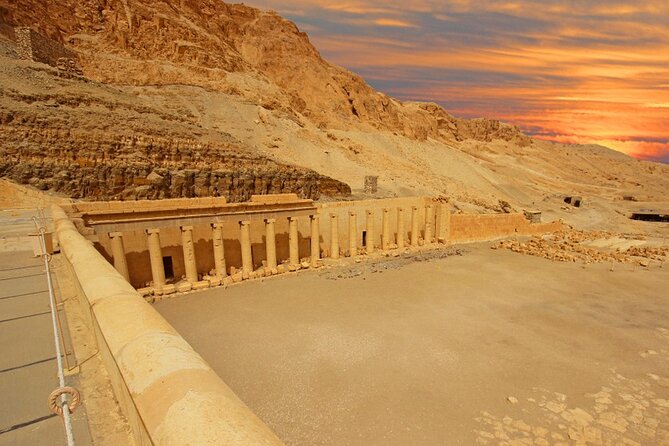
Hatshepsut’s temple below the cliffs
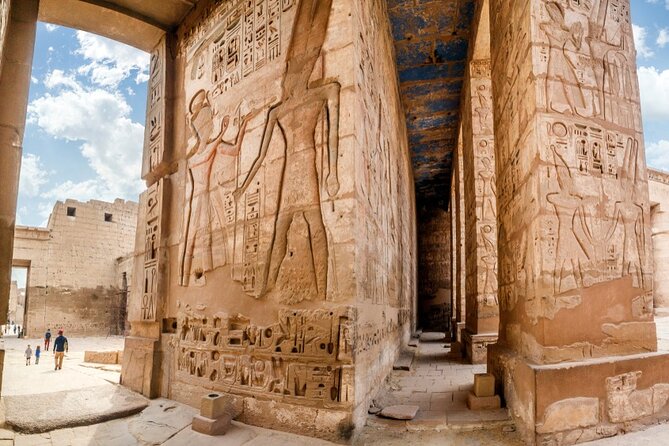
The final major monument is the Temple of Hatshepsut, with about 45 minutes scheduled for the visit and roughly 10 minutes of driving between stops.
The temple is built in terraces against towering cliffs, giving it a formal, dramatic setting. Hatshepsut was one of Egypt’s most powerful female rulers, and the architecture reflects a carefully planned public statement about her authority.
The terraces, broad lines, and cliff setting make this a different visual experience from Medinet Habu. Here, the impression comes from the relationship between the temple and the rock wall behind it. Inside, carved scenes and inscriptions help explain Hatshepsut’s reign and the religious purpose of the complex.
Forty-five minutes gives you time to see the main areas and take photographs, but it is not a slow study of every relief. If Hatshepsut is a major reason for your visit, tell the guide at the start of the day. A private guide can give this stop more attention, but the total schedule still has limits.
The order of the final two entries in the schedule is a little confusing, with the transfer and temple visit listed separately. In practical terms, you should expect to travel from the Tombs of the Nobles to Hatshepsut’s temple, visit the monument, and then return to your hotel.
Returning to your hotel after a full archaeological day
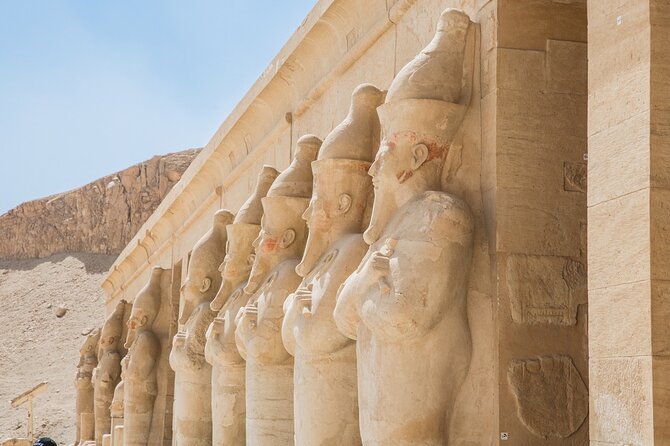
The return to Luxor allows about 45 minutes. By then, you will have spent much of the day walking, standing, climbing, and moving between hot outdoor sites and enclosed tombs.
That length is both a benefit and a warning. You cover a great deal without needing to arrange separate taxis or negotiate each transfer. You also avoid wasting a second day on the West Bank if your time in Luxor is short.
Still, I would not schedule another major sightseeing program immediately afterward. The private vehicle makes the return easier, but it does not remove the physical demands of the sites. An early start is also sensible during the stated operating window of 6:00 AM to noon, particularly in the warmer months.
The schedule is shown for dates from December 1, 2024, through September 30, 2025, and again from October 1, 2025, through September 30, 2026. Operating hours are listed daily from 6:00 AM to 12:00 PM. Confirm the pickup time when booking, since the actual start affects how much heat and crowding you encounter.
Who will get the most from this $125 tour?
I would recommend this tour to you if you want the major West Bank sights in one private day and care about having a guide explain what you are seeing. It is also a strong fit for families, couples, and small groups who value flexibility over the lowest possible price.
The itinerary works well for a first visit because it combines famous places with less obvious ones. The Valley of the Kings and Hatshepsut’s temple are essential stops for many people, while Medinet Habu and the Tombs of the Nobles add variety and substance.
I would think twice if you dislike long sightseeing days, enclosed tombs, or walking in hot conditions. I would also compare the price carefully if you are alone and mainly want a quick visit to one or two monuments. The private setup is most cost-effective when the $125 per-person rate is shared by a small party or when you value a dedicated guide and included transport.
The cancellation terms are practical: you can receive a full refund if you cancel at least 24 hours before the start time. Changes made inside that window are not accepted, and poor weather may lead to another date or a full refund.
Should you book West Bank Tombs and Temples?
Book it if you want a well-rounded West Bank day with private transportation, an Egyptologist guide, and enough time for Medinet Habu and the Tombs of the Nobles. The strongest feature is not simply the number of stops. It is the range of ancient life you see, from royal burials and battlefield scenes to officials’ private tombs and Hatshepsut’s carefully designed temple.
Before paying, decide which Valley of the Kings tombs matter most to you and ask about extra admission for Seti I, Tutankhamun, or Ramesses V and VI. If you can handle a long day and the price fits your group, this is a useful, history-filled way to see Luxor’s West Bank without being tied to strangers or a rigid group schedule.
FAQ
How long does the West Bank Tombs and Temples tour last?
The tour lasts approximately 7 hours and 35 minutes, including the scheduled visits, transfers, and return to your hotel.
What sites are included?
The tour includes the Valley of the Kings, the Colossi of Memnon, Medinet Habu, the Tombs of the Nobles, and the Temple of Hatshepsut.
Does the tour include hotel pickup and return transportation?
Yes. Round-trip hotel transfers in Luxor are included.
Is this a private tour?
Yes. Only you and your party participate in the private activity.
How many Valley of the Kings tombs does the main ticket include?
The main entry ticket includes access to three of the listed open tombs. The selection includes tombs such as Ramesses VII, Ramesses IV, Ramesses IX, Merenptah, Tausert and Setnakht, Sety II, Ramesses I, Thutmose IV, and Siptah.
Are the tombs of Seti I and Tutankhamun included?
No. KV17, the tomb of Seti I, and KV62, the tomb of Tutankhamun, require additional tickets. KV9, the tomb of Ramesses V and VI, also requires a separate ticket.
What happens if the weather is poor?
If the tour is canceled because of poor weather, you will be offered a different date or a full refund.
New on the Luxor list
- Full-Day East and West Luxor Private Tour★ 4.5 · 26 reviews
- Marsa Alam: Snorkeling with Sea Turtles Marsa Mubarak★ 4.9 · 26 reviews
- Private Full day East and West Bank, Luxor★ 5.0 · 26 reviews
- Day Trip to Edfu & Kom Ombo temples from Luxor and drop off in Aswan or Luxor★ 5.0 · 26 reviews
- Luxor Day Tour: Kings Valley & Karnak & Luxor & Hatshepsut Temple★ 5.0 · 26 reviews
- Luxury Hot Air Balloon Experience in Luxor with Pick-up★ 5.0 · 27 reviews
- Full-Day Luxor Tour – Discover the East and West Banks of the Nile★ 5.0 · 27 reviews
- 5 Days 4 Nights Nile Cruise Tour★ 5.0 · 27 reviews
Luxor West Bank Tours, compared.
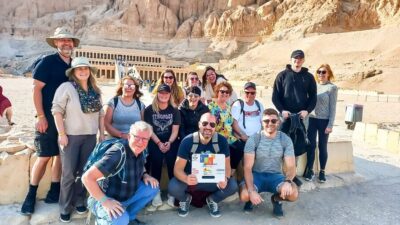
Luxor Valley of the Kings & Tutankhamun Tomb Trip
Read our review →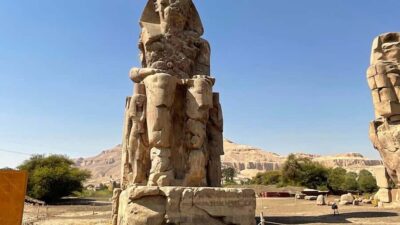
Valley of the Kings and Hatshepsut Temple Day Tour
Read our review →
Luxor Tour with Valley of Kings, Karnak & Tut Tomb
Read our review →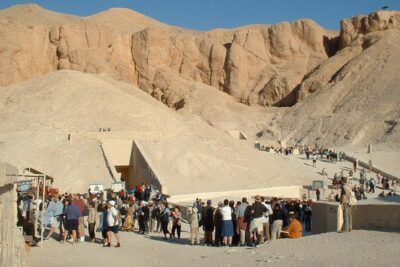
Valley of Kings, Hatchepsut Temple ,Karnak & Luxor-DayTour
Read our review →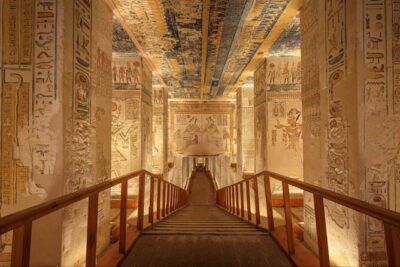
Full Day Tour of Luxor West Bank Temples and Tombs (Private)
Read our review →
Small Group Excursion to Luxor Valley of the Kings from Hurghada
Read our review →
Valley of Kings Hatshepsut & Karnak Luxor Day Trip
Read our review →Browse the lists this tour appears in