
Reviewed · LUXOR WEST BANK TOURS
Private Full Day Tour: Valley of the Kings,Hatshepsut temple&more
Luxor’s West Bank is an open-air history lesson, but the best part is going below ground. This private day links royal tombs with the temples and workmen’s village that explain how ancient Thebes functioned. I like the private vehicle, which lets your group set the pace, and the wide range of stops, from King Tut’s neighbors to the Colossi of Memnon. The drawback is a full schedule in strong sun, with little time for a relaxed lunch or extra stops.
You’ll get hotel pickup, bottled water, an air-conditioned vehicle, and an English-speaking guide. Guide Mobarak and driver Taha are specifically named in guest feedback, with praise for careful explanations, flexible timing, and a comfortable modern car. The listed price is remarkably low, but check whether admission tickets are included in the option you select.
Key points at a glance
- Three royal tombs in the Valley of the Kings: Admission covers three tombs, but King Tutankhamun’s tomb is excluded.
- A private day on the West Bank: Only your group takes part, so you can ask questions and adjust the pace.
- Six major stops: The route includes Hatshepsut Temple, the Valley of the Queens, Medinet Habu, Deir el-Medina, and the Colossi of Memnon.
- A guide who can add detail: Mobarak is named as an English-speaking guide, while Taha is praised as a flexible driver.
- Seven to nine hours of sightseeing: Expect a substantial day, not a quick photo tour.
- Low advertised price: The value is strong if the selected package includes site tickets, but confirm the exact option before paying.
Why the West Bank works best as a private day
The West Bank of Luxor is not one single monument. It is a spread-out collection of tombs, temples, statues, and settlements on the far side of the Nile. Seeing it all by private vehicle saves you from arranging separate rides between sites and keeps the day focused on ancient Thebes.
The experience begins with pickup from your Luxor hotel. From there, you travel in a private air-conditioned vehicle with bottled water on board. That matters in Luxor, where a shaded car between sites is more than a small comfort.
A private tour also gives you room to ask for more explanation when a painted wall catches your eye, or to move along when a stop has given you enough. The stated duration is seven to nine hours, so the day has some flexibility built in, though the six-stop plan leaves little room for wandering.
The driver and guide have different jobs. A good guide helps you read the scenes, names, and burial customs. A good driver makes the transfers easier. Taha is praised for being flexible about where to stop and how long to stay, while Mobarak is praised for explaining small details in the temples and inscriptions. Those names may not be assigned to every departure, so treat them as useful examples rather than a promise.
A few other Luxor days to weigh up
- Hurghada: Luxor Valley of the Kings & Tutankhamun Tomb Trip
★ 4.7 · 13,208 reviews - Luxor: Valley of the Kings and Hatshepsut Temple Day Tour
★ 4.4 · 1,404 reviews - Hurghada: Luxor Tour with Valley of Kings, Karnak & Tut Tomb
★ 4.6 · 1,082 reviews
Valley of the Kings: three tombs below the desert hills
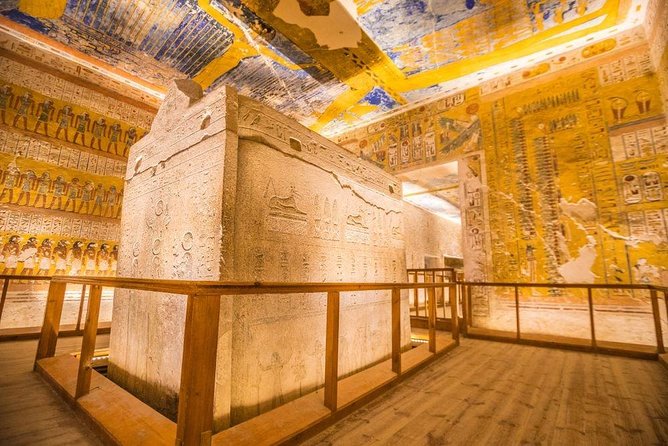
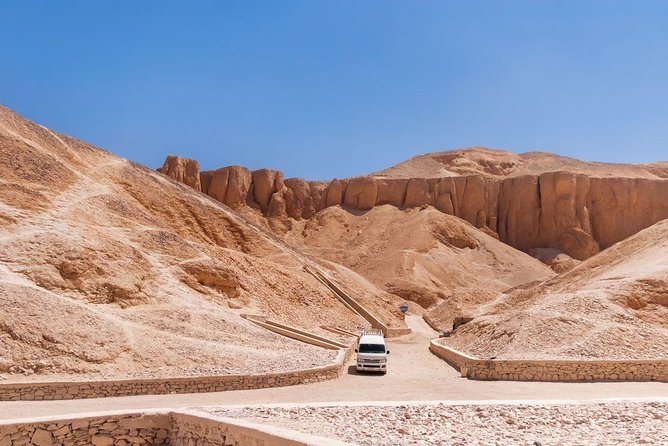
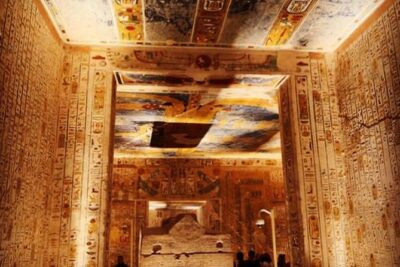
Start with the most famous stop, the Valley of the Kings. This dry valley held the burial places of pharaohs during Egypt’s New Kingdom, and the tombs were cut into the hills rather than built as large pyramids. Their hidden entrances and decorated corridors were meant to protect the dead and guide them into the afterlife.
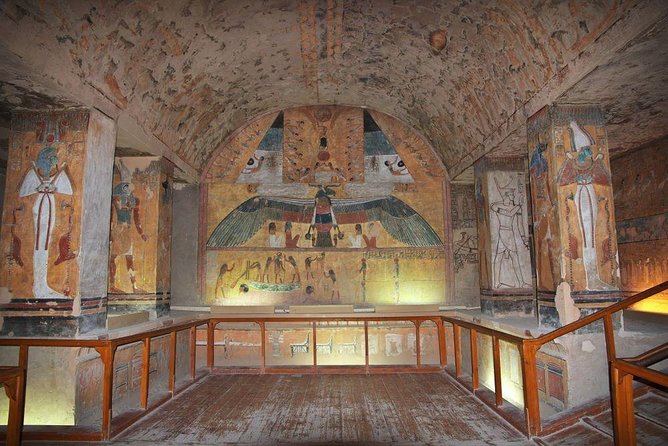
Your admission includes three tombs. That is enough for a strong first look, since the tombs differ in layout, color, and decoration. The guide can help you notice details that are easy to miss, including the scenes and inscriptions carved or painted along the passageways.
King Tutankhamun’s tomb is specifically excluded. That is important because the young pharaoh’s name draws many visitors, yet the tomb requires separate consideration. If seeing it is a priority, ask about the additional ticket and whether it can be arranged. Do not assume it is part of the three-tomb admission.
The planned visit lasts about two hours. That gives you time to enter the selected tombs without turning the stop into a rushed dash. Still, underground passages can be tight and warm, and the surrounding site has little shade. Wear practical shoes and bring water, even though a bottle is supplied in the vehicle.
I like the way this opening stop sets the tone for the rest of the day. You are not just looking at a famous name on a map. You are seeing where royal burial customs took place, then spending the afternoon connecting those tombs to the temples and people who supported them.
Hatshepsut Temple and the story of a female pharaoh
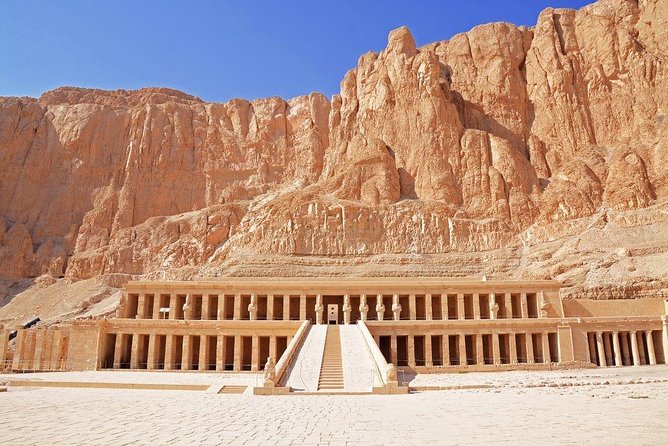
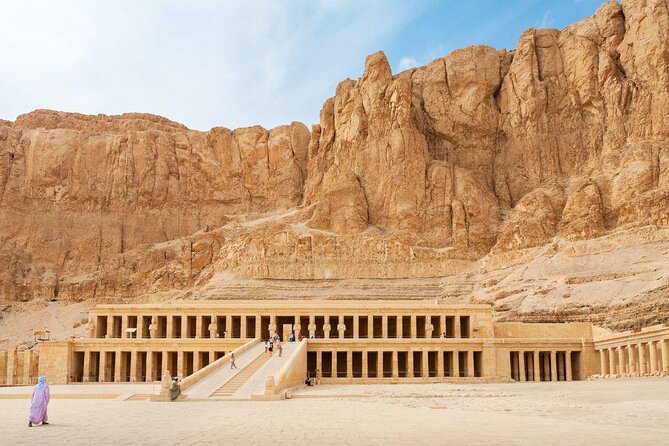
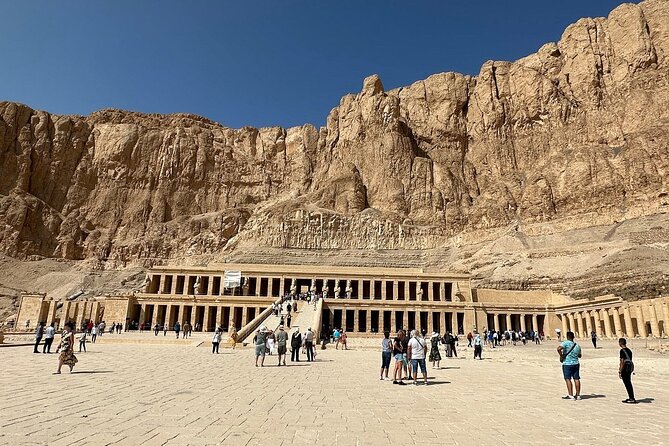
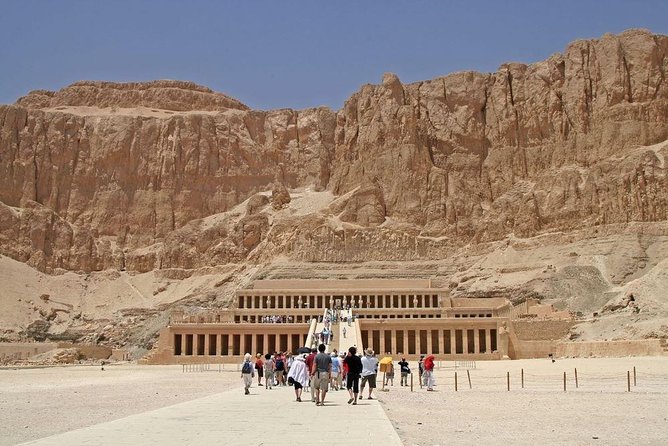
The Temple of Hatshepsut at Deir el-Bahari is the day’s grand architectural counterpoint to the dark tombs. Its terraces rise against the cliffs, creating a broad ceremonial setting that feels very different from the enclosed burial chambers.
Hatshepsut ruled Egypt for about 20 years during the 18th Dynasty, roughly from 1490 to 1469 BCE according to the supplied tour information. She was the daughter of Thutmose I and is presented here as the only pharaonic woman to rule ancient Egypt.
The planned visit lasts about 90 minutes. That should give you time to take in the terraces, examine the surviving decoration, and hear the political story behind the monument. The temple is dedicated to Hatshepsut, so the guide’s explanation is especially useful: this is not simply a pretty building against the cliffs, but a statement of royal power.
This stop can also be one of the most visually demanding. The broad open approach offers little protection from the sun, and the scale of the building encourages you to keep looking upward and outward. Use the vehicle transfer as a chance to rest before continuing.
Valley of the Queens: a quieter royal cemetery
The Valley of the Queens, known in ancient times as Ta-Set-Neferu, or the Place of Beauty, served as a burial area for queens, princesses, and other members of the royal family. It lies opposite the Valley of the Kings on Luxor’s West Bank.
The scheduled visit is 45 minutes, making this a shorter and more focused stop. You will not have the same amount of time as at the Valley of the Kings, so listen closely to the guide’s explanation and decide which details matter most to you.
The site is valuable because it broadens the story of ancient Egyptian royalty. The Valley of the Kings focuses on pharaohs. Here, you get a look at the royal wives and children who were also given decorated tombs and formal burial places.
A shorter stop can be a benefit on a hot day, especially after two major sites. The tradeoff is that you may wish for more time if a particular tomb interests you. This is one place where a private format helps: you can ask your guide how to use the available 45 minutes rather than simply following a fixed group line.
Same base, a completely different day out:
- Luxor Day Trip from Hurghada Small Group & Tutankhamun Tomb
★ 4.8 · 5,366 reviews - Hot Air Balloon Ride in Luxor Egypt with Transfers Included
★ 5.0 · 4,319 reviews - Luxor: Shared Full-Day Tour to Luxor West and East Banks
★ 4.5 · 1,812 reviews - Luxor: Hot Air Balloon Ride over Luxor Relics
★ 4.8 · 1,681 reviews
Medinet Habu: Ramses III’s powerful mortuary temple
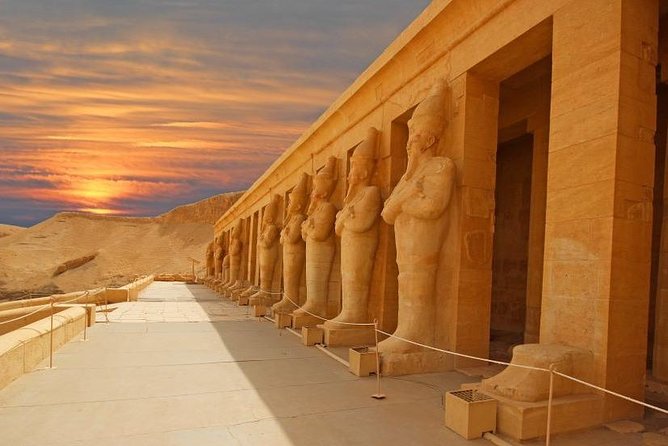
Medinet Habu, the mortuary temple of Ramses III, is scheduled for about one hour. Built during the New Kingdom, during Ramses III’s reign from approximately 1186 to 1155 BCE, it served as a place for rituals, offerings, and the pharaoh’s mortuary cult.
The complex covers about 24,000 square meters. That size gives you a sense of why this is more than a quick temple photo stop. You are looking at a large religious and funerary center built to honor the king after death.
The temple is known for its design and carved decoration. Your guide can explain how the site worked as a place of worship and remembrance, rather than treating it as a collection of isolated walls. If Mobarak leads your day, the detailed explanations described in his feedback would be especially useful here, where inscriptions and reliefs carry much of the story.
One practical point: after the Valley of the Kings, Hatshepsut Temple, and the Valley of the Queens, your attention may begin to fade. Give Medinet Habu a fair chance. Its importance is not only visual. It helps show how royal commemoration continued after burial, through ceremonies and offerings made in the pharaoh’s name.
Deir el-Medina and the people behind the tombs
Deir el-Medina, called the Valley of the Artisans, is one of the most revealing stops on the route. This ancient village housed the craftsmen and workers who carved and decorated the royal tombs in the nearby valleys.
The settlement was occupied from about the 15th to the 11th century BCE. Its residents included skilled carvers, painters, and sculptors. The village provided homes and support facilities for the people whose work gave the royal tombs their decoration.
The planned visit lasts one hour. That is enough time to connect the grand monuments with the workers who made them. I consider this one of the most useful stops for understanding ancient Egypt because it shifts attention away from kings alone.
The site also gives your guide a chance to explain specialized work. The tombs were not decorated by a single anonymous workforce. They required people with different skills, from cutting stone to painting scenes and shaping sculpture.
If you are choosing where to ask questions, this is a good place to ask how the workers’ village related to the nearby royal cemeteries. The private setting means you can slow down for that explanation instead of relying only on a standard speech.
Colossi of Memnon: a fast stop with a huge payoff
The final stop is the Colossi of Memnon, a pair of enormous seated statues of Pharaoh Amenhotep III. Each statue is about 18 meters, or 60 feet, tall and weighs around 720 tons.
They were made from quartzite sandstone and originally stood at the entrance to Amenhotep III’s mortuary temple. Much of that temple has disappeared, which makes the statues even more striking. They remain as huge survivors from a once larger complex.
The stop lasts about 15 minutes and admission is free. That is enough time for photographs and a close look at the carved figures. The statues once carried bright paint, though most of that color has faded.
Do not expect a long guided visit here. The Colossi are a brief final pause, not a full archaeological site on the scale of Medinet Habu. Their location and size make them a fitting close to the day, especially after seeing several places connected with mortuary worship.
What the price really means
The advertised price is $11.28 per person, an unusually low figure for a private full-day tour with a vehicle, guide, hotel pickup, bottled water, and several major sites. On paper, that is excellent value.
The key phrase is the all-inclusive option. The tour information says tickets to all mentioned sites are included if you choose that option. This suggests the price can vary according to the package selected, so check the booking screen carefully. Confirm that admission to the Valley of the Kings, Hatshepsut Temple, the Valley of the Queens, Medinet Habu, and Deir el-Medina is covered before assuming the lowest displayed price includes everything.
The airport is another exception. Pickup from a Luxor hotel and return to the hotel are included, but airport pickup costs extra. Tipping is also not included.
At this price, the private format is the main value. You are not just paying for entry. You are paying for transport between sites, a guide, and the ease of having the day arranged around your group. If your selected ticket option includes admissions, the package becomes particularly strong for anyone who wants to see several West Bank locations without arranging each transfer separately.
Who should book this Luxor tour?
I would recommend this experience to a first-time Luxor visitor who wants the main West Bank sights in one day. It suits couples, families, and small private groups that prefer their own vehicle and the ability to ask questions without a large group setting.
It is also a good fit if you want more than the famous Valley of the Kings. Deir el-Medina adds the workers’ point of view, Medinet Habu adds a major temple, and the Valley of the Queens expands the story beyond pharaohs.
You should think twice if you dislike full sightseeing days or need a long midday break. Six stops over seven to nine hours is a lot, and the sun can make even a comfortable vehicle feel like a welcome retreat. The schedule is practical, but it is not leisurely.
You should also check the ticket details if King Tutankhamun is essential to your plan. Three Valley of the Kings tombs are included, but Tutankhamun’s tomb is not.
Practical details before you book
Confirmation is provided at booking, and the activity is listed as suitable for most people. Pickup is offered from hotels in Luxor, with return transportation included. The tour is private, so only your group participates.
The vehicle is air-conditioned, and bottled water is supplied on board. That combination matters during a day spent moving between exposed archaeological sites. Bring comfortable footwear and plan for a warm, active day, even though the exact conditions are not specified.
The tour is often reserved about nine days ahead. That does not guarantee that every date will sell out, but it is a useful planning signal if your Luxor stay is short. Free cancellation is available up to 24 hours before the start time for a full refund. Cancellations or changes made less than 24 hours before the start time are not accepted for a refund.
Should you book it?
Book this tour if you want a broad, private introduction to Luxor’s West Bank and value having transport, guiding, and several admission sites handled in one day. The combination of royal tombs, Hatshepsut’s temple, Ramses III’s mortuary complex, the queens’ cemetery, and the artisans’ village gives you a fuller picture than a Valley of the Kings visit alone.
The main cautions are simple: confirm the ticket package, remember that King Tutankhamun is extra, and be ready for a long day in the sun. If you can accept that pace, the low listed price and private vehicle make this a strong practical choice for seeing Luxor’s major West Bank sights.
FAQ
How long does the private Luxor tour last?
The tour lasts approximately seven to nine hours.
Is hotel pickup included?
Yes. Pickup from your hotel in Luxor and return transportation are included. Airport pickup costs extra.
Is the tour private?
Yes. Only your group participates in the activity.
How many Valley of the Kings tombs can I visit?
The tour includes visits to three tombs in the Valley of the Kings. King Tutankhamun’s tomb is excluded.
Are admission tickets included?
Tickets to the listed sites are included if you choose the all-inclusive option. Check the exact package before booking.
Is a guide included?
Yes. An English-speaking professional guide is included. Mobarak is named as a guide in the supplied tour information.
Can I cancel for a full refund?
Yes, if you cancel at least 24 hours before the experience start time. Cancellations made less than 24 hours in advance are not refundable.
New on the Luxor list
- Full-Day East and West Luxor Private Tour★ 4.5 · 26 reviews
- Marsa Alam: Snorkeling with Sea Turtles Marsa Mubarak★ 4.9 · 26 reviews
- Day Trip to Edfu & Kom Ombo temples from Luxor and drop off in Aswan or Luxor★ 5.0 · 26 reviews
- Private Full day East and West Bank, Luxor★ 5.0 · 26 reviews
- Luxor Day Tour: Kings Valley & Karnak & Luxor & Hatshepsut Temple★ 5.0 · 26 reviews
- Luxury Hot Air Balloon Experience in Luxor with Pick-up★ 5.0 · 27 reviews
- Full-Day Luxor Tour – Discover the East and West Banks of the Nile★ 5.0 · 27 reviews
- 5 Days 4 Nights Nile Cruise Tour★ 5.0 · 27 reviews
Luxor West Bank Tours, compared.
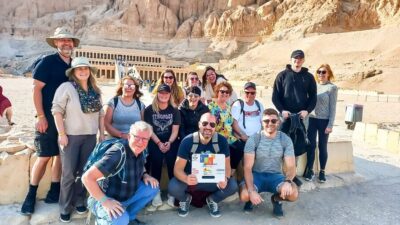
Luxor Valley of the Kings & Tutankhamun Tomb Trip
Read our review →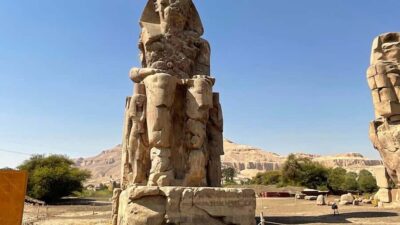
Valley of the Kings and Hatshepsut Temple Day Tour
Read our review →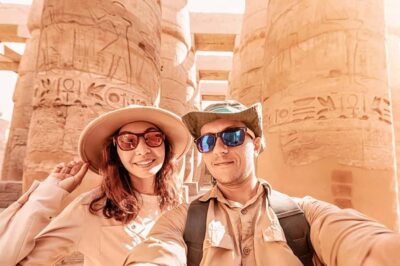
Luxor Tour with Valley of Kings, Karnak & Tut Tomb
Read our review →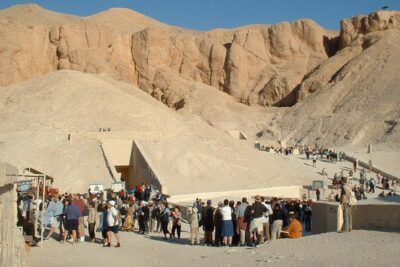
Valley of Kings, Hatchepsut Temple ,Karnak & Luxor-DayTour
Read our review →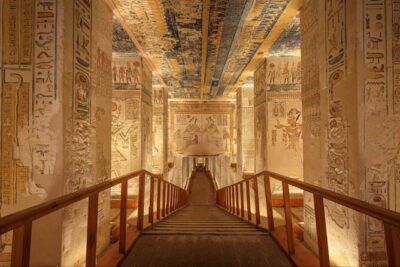
Full Day Tour of Luxor West Bank Temples and Tombs (Private)
Read our review →
Small Group Excursion to Luxor Valley of the Kings from Hurghada
Read our review →
Valley of Kings Hatshepsut & Karnak Luxor Day Trip
Read our review →Browse the lists this tour appears in