
Reviewed · LUXOR WEST BANK TOURS
Full Day East Bank, West Bank, and Valley of the Queens in Luxor
Luxor packs an astonishing amount of ancient Egypt into a small area, and this private day takes on nearly all of the major sights at once. You move from the tombs of the West Bank to the great temples of the East Bank, with a guide to explain what you are seeing instead of leaving you to decode a forest of columns and carved figures.
I like the private format, since your group can ask questions and set a comfortable pace. I also like the air-conditioned car and hotel pickup, two small comforts that matter after hours in the sun. The one concern is simple: nine hours and six major stops make this a full day, so you should expect plenty of walking and a lot of information.
Key things to know before booking
- Six major Luxor sites in one day: The route covers the Valley of the Kings, Hatshepsut’s Temple, the Colossi of Memnon, Valley of the Queens, Karnak Temple, and Luxor Temple.
- A guide who can shape the day: Guides named Sami, Nabil, Ahmed, Farid, Mustafa, Salma, and Hani are associated with especially warm, clear, and flexible guiding on past departures.
- A private air-conditioned vehicle: Hotel pickup and return are included, along with a bottle of mineral water.
- Tomb and temple access included: Admission is included for the listed stops, though lunch depends on the option you choose.
- Good value at $13 per person: The price is unusually low for private transport, guiding, and listed entry fees, but check the exact package before paying.
- Free cancellation until 24 hours ahead: Cancel at least 24 hours before the start time for a full refund.
Why this Luxor day works so well
The appeal is not just the number of sites. It is the contrast between them.
On the West Bank, you enter dry valleys and funerary monuments built for pharaohs and queens. The focus is death, burial, and the journey to the next world. On the East Bank, you encounter temples built for worship, festivals, royal power, and public ceremony. By the end of the day, you have seen both sides of ancient Thebes.
That broad view makes this a useful first full day in Luxor. You do not have to arrange separate cars, negotiate several short rides, or work out how to connect the west and east sides of the Nile. Your guide handles the order, your driver handles the roads, and you can focus on the sites.
The private setup also changes the feel of the day. You are not tied to the questions or pace of a large coach group. Guides such as Sami, Ahmed, Farid, Mustafa, Salma, and Hani have been praised for explaining difficult subjects in plain English, answering unexpected questions, and adjusting their tone for families and solo participants.
Still, keep your expectations realistic. This is a sightseeing marathon, not a slow archaeological study. Even with thoughtful pacing, six stops in roughly nine hours leaves limited room for long pauses, repeated visits to favorite tombs, or an unplanned detour.
A few other Luxor days to weigh up
- Hurghada: Luxor Valley of the Kings & Tutankhamun Tomb Trip
★ 4.7 · 13,208 reviews - Luxor: Valley of the Kings and Hatshepsut Temple Day Tour
★ 4.4 · 1,404 reviews - Hurghada: Luxor Tour with Valley of Kings, Karnak & Tut Tomb
★ 4.6 · 1,082 reviews
Valley of the Kings: two hours among royal tombs
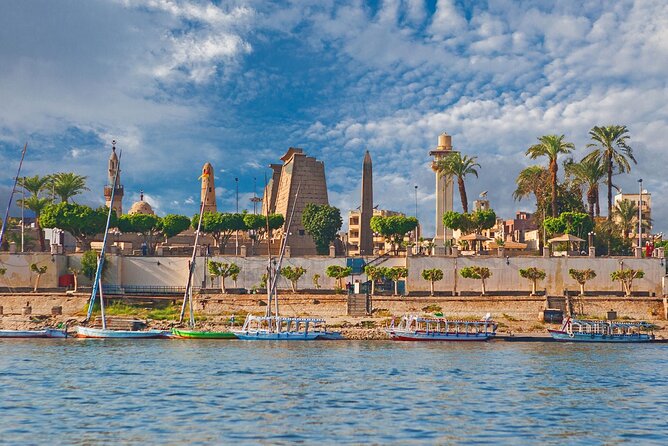
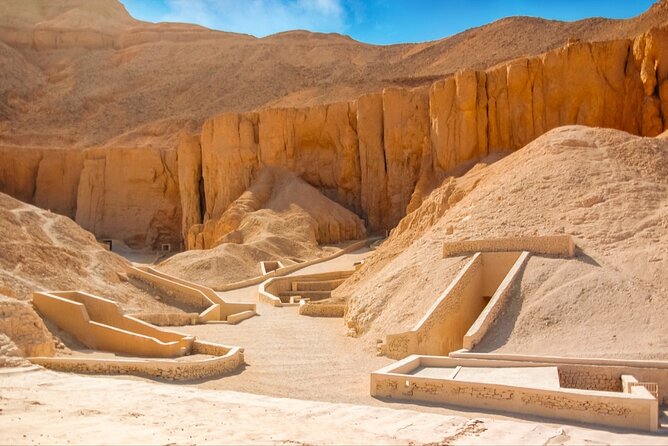
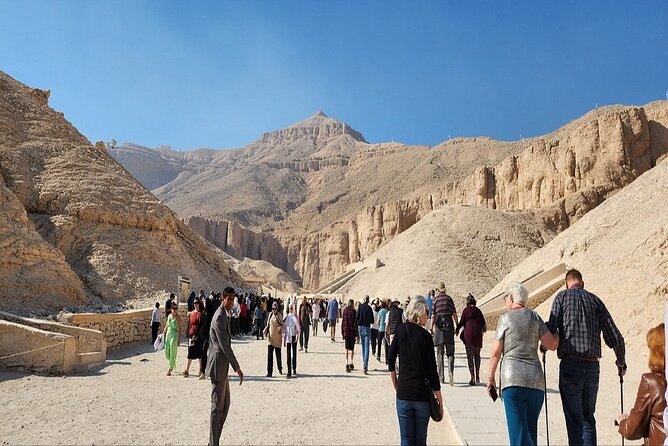
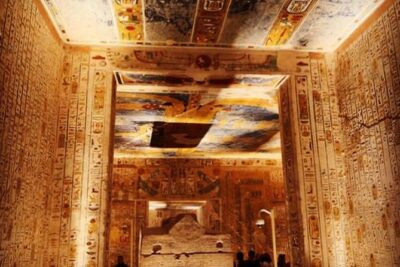
The day begins on the West Bank at the Valley of the Kings, the most famous stop on the route. Instead of grand pyramids, you find a broad desert valley with tomb entrances cut into the rock. The real spectacle is underground.
The admission listed for the stop is included, and you have the chance to visit a selection of tombs. The exact tombs can vary, so do not book this expecting automatic entry to every famous chamber. Special tombs, including the tomb of Tutankhamun, can involve separate arrangements or fees, and the supplied tour details do not promise those additions.
This is where a guide earns the fare. The painted walls can look like a jumble of gods, symbols, and figures if you do not know what to notice. A good explanation helps you understand the scenes as part of a burial program, not just as attractive decoration.
Allow for uneven ground, heat outside the tombs, and steps or sloping passages inside. The cool interior can feel like a relief after the sun, but you will move between several exposed areas. Bring water, use the bottle provided, and wear shoes that can handle dusty paths.
Two hours is a sensible amount of time for a first visit. You can see several tombs without turning the morning into a rushed checklist. If you are fascinated by Egyptian burial customs, use your private format to ask questions. One guide, Ahmed, was praised for spending about ten minutes answering a question about burial rituals, the kind of exchange that can make the site far more meaningful.
Hatshepsut’s Temple beneath the cliffs
From the royal tombs, the route continues to the Temple of Hatshepsut at Deir el-Bahari. The setting changes at once. The temple rises in broad terraces at the base of high cliffs, with long lines, open courts, columns, statues, and reliefs.
Hatshepsut ruled Egypt in the 15th century BC and used this temple to present her authority and divine birth. Your guide can help you read the site as royal messaging. The building was not simply a place for ceremonies. It also told visitors why a female ruler had the right to occupy Egypt’s highest office.
The one-hour visit should give you time to appreciate the terraces and main reliefs. It is also one of the most photogenic stops, but the strong sun can make the open spaces tiring. The cliffs provide a dramatic backdrop, yet shade is limited.
A useful moment here may come from the weather rather than the stonework. A past guide named Nabil used a sudden gust of sand as a chance to explain how the temple’s setting shaped its atmosphere and construction. That is the kind of local storytelling I value: it connects the monument to the place around it instead of treating the stop like a museum label.
The Colossi of Memnon: a short, worthwhile pause
The Colossi of Memnon take only about 30 minutes, and admission is free. That makes this the lightest stop of the day, both in time and effort.
The two huge quartzite sandstone statues depict Pharaoh Amenhotep III. They once guarded the entrance to his mortuary temple, a complex that was far larger than what you see today. The statues now sit beside the modern road, which can make the stop feel less secluded than the valleys.
Do not dismiss it as a quick photo stop. The scale becomes clear when you stand near the bases and look up at the carved figures. Your guide can also explain that the statues are remnants of a much larger royal complex, helping you picture what has disappeared.
Thirty minutes is about right. You get a close look, hear the essential background, and return to the car without using up energy needed for the afternoon temples.
Same base, a completely different day out:
- Luxor Day Trip from Hurghada Small Group & Tutankhamun Tomb
★ 4.8 · 5,366 reviews - Hot Air Balloon Ride in Luxor Egypt with Transfers Included
★ 5.0 · 4,319 reviews - Luxor: Shared Full-Day Tour to Luxor West and East Banks
★ 4.5 · 1,812 reviews - Luxor: Hot Air Balloon Ride over Luxor Relics
★ 4.8 · 1,681 reviews
Valley of the Queens and the tomb of Nefertari
The Valley of the Queens is quieter in character than the Valley of the Kings, and its tombs shift attention from pharaohs to royal women and children. The main draw here is the tomb of Queen Nefertari, one of ancient Egypt’s most celebrated queens.
The listed admission is included, and the stop lasts about an hour. However, the tour information does not guarantee that every tomb will be open or that a special ticket for Nefertari’s tomb is included. Confirm the exact entry arrangement when booking if Nefertari’s chamber is the main reason you are choosing this tour.
The valley can feel more personal than the larger royal cemetery. The scale is smaller, and the silence may be more noticeable between explanations. I would use this stop to look carefully at the painted surfaces and ask your guide how the tomb’s decoration reflects the queen’s role.
This is also a good place to manage your energy. The day has already included a hot valley and a large temple. Do not feel that you must rush from wall to wall. Your guide can explain the key scenes, then give you time to look quietly.
Karnak Temple: two hours for Egypt’s grandest complex
After the West Bank, the tour crosses to the East Bank for Karnak Temple. This is the largest and most demanding site of the day, so the two-hour visit is welcome.
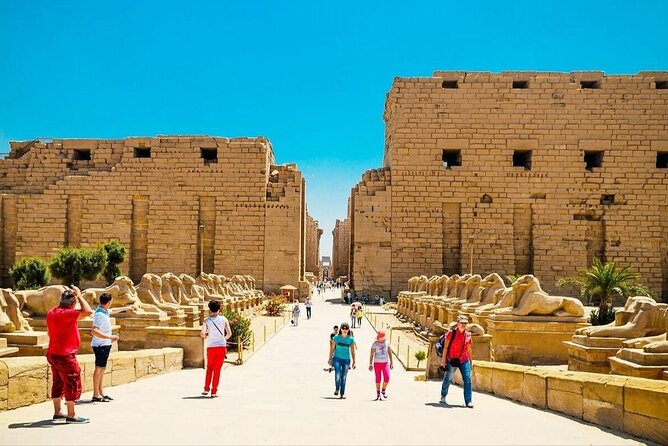
Karnak is not one simple building. It is a vast religious complex of temples, chapels, columns, courts, statues, and gateways developed over many generations. The famous hypostyle hall, with its giant columns, gives the site its sense of power. You may also see the double row of sphinxes that once formed part of the ceremonial approach.
The complex was linked to Luxor Temple by a roughly 1.5-mile avenue of sphinxes. You do not walk that entire route on this tour, but knowing the connection helps you understand Karnak and Luxor Temple as parts of one sacred center.
This is the stop where guiding matters most. Without context, Karnak can become a tiring sequence of huge stones. With a clear plan, you can focus on the major courts, the columned hall, carved scenes, and the way the complex grew over time.
Past guides have been particularly good at turning questions into short history lessons. Mustafa, for example, was praised for bringing enthusiasm to unexpected carvings and stories. Farid was noted for explaining the site in a way that worked for both adults and children. If you are traveling with a family, tell the guide early what level of detail your children can handle.
Two hours is long enough to see the principal areas, but not enough for every corner. That is a fair trade. Karnak rewards attention, yet its scale can wear you down if you try to inspect everything.
Luxor Temple after the heat of the day
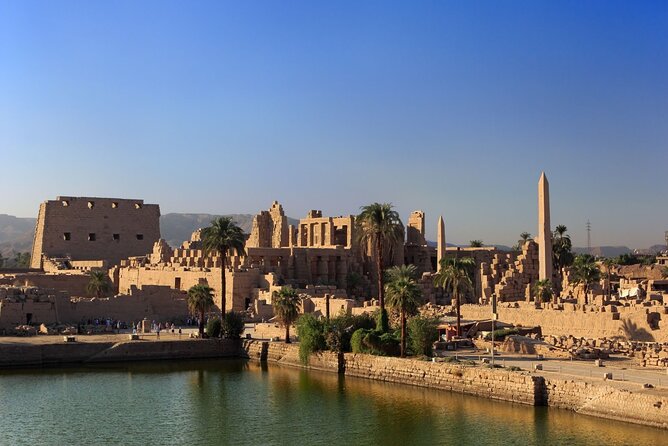
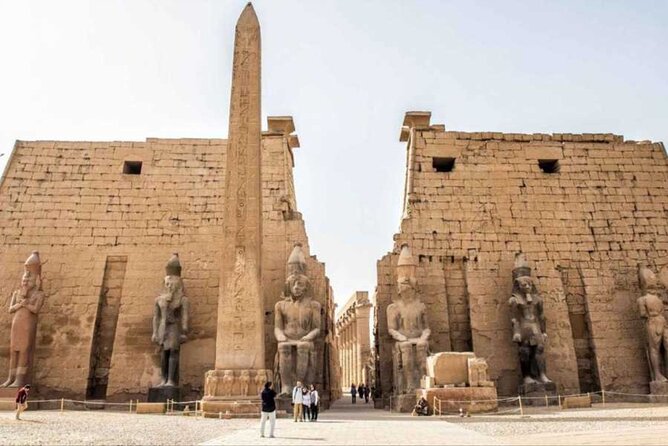
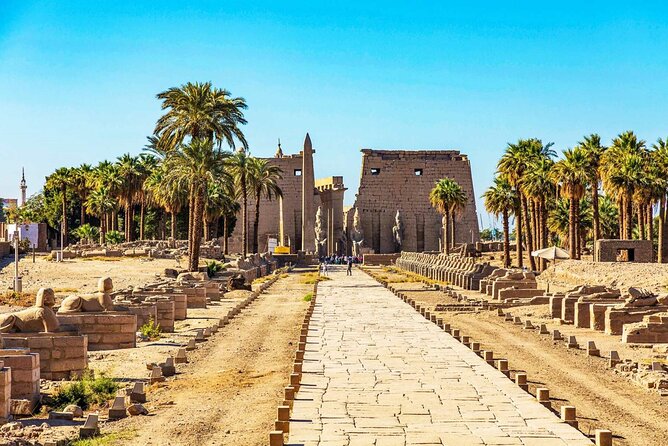
The final major stop is Luxor Temple, visited for about an hour and a half. Its location in the modern city gives it a different mood from the desert valleys. The temple feels connected to present-day Luxor, even as its columns and statues point back thousands of years.
Luxor Temple was part of the religious life of ancient Thebes and was linked with Karnak by the sphinx avenue. Restoration work has brought out bright colors in some areas, so look beyond the gray stone. Painted details can change your idea of what Egyptian temples originally looked like.
This is a strong place to finish because the site gathers several themes from the day: royal power, religious ceremony, processions, sculpture, and changing layers of Egyptian history. It also offers a more manageable walk after Karnak, though you will still be tired by this point.
A guide named Salma was praised for using small moments, including a street cat wandering near the group, to explain how ancient temple precincts once related to ordinary life and sacred space. That sort of observation can keep the final stop from feeling like one more item to cross off.
The late timing may help with the heat, but the tour’s exact start time is not provided. Ask about pickup when you reserve, especially if you want to avoid the strongest sun.
What the $13 price really gives you
At $13 per person, this is strikingly inexpensive for a private Luxor tour. The package includes a private air-conditioned vehicle, round-trip hotel pickup, a professional guide, service charges and taxes, a bottle of mineral water, and admission to the listed sites.
That is strong value if the advertised package applies to your booking. The important detail is the option structure. Lunch is included only when you choose the Car plus Guide plus Entry plus Lunch option. Do not assume the lowest displayed price includes a meal.
Tipping is not included. Keep that separate from the advertised cost and ask your guide or hotel for local guidance on an appropriate amount. The supplied details do not set a fixed tip.
The low price also makes it worth checking the final booking screen carefully. Confirm that your selected option includes the entries you want, especially if you care about a particular tomb. A private tour at this price can be excellent value, but clear expectations protect you from surprises.
Comfort, pace, and practical limits
The private air-conditioned car is more than a luxury here. Luxor’s major monuments involve heat, dust, and repeated transitions between open sites and enclosed tombs. A cool vehicle gives you a place to recover between stops.
Hotel pickup and return are included in Luxor, which removes much of the day’s friction. You do not need to arrange separate transport between the two banks. The experience is also offered with mobile tickets, and confirmation is received at booking.
The tour is suitable for most participants, but the information does not promise a fully accessible route. Expect walking over historic surfaces, outdoor exposure, and some uneven areas. If you have mobility concerns, contact the provider before booking rather than assuming every tomb and temple path will be easy.
The pace appears designed to be calm rather than frantic, but the schedule is still ambitious. You can help by arriving ready at pickup, carrying sun protection, and deciding in advance which questions matter most to you. A private guide can respond to your interests, but cannot create extra hours in the day.
The experience is available with group discounts, although the exact discount is not stated. Since this is a private activity, only your own group participates. That makes it a practical choice for couples, families, solo visitors, or friends who do not want to follow a large bus.
Who should book this private Luxor tour?
I would recommend it most strongly to a first-time visitor who wants the major sites organized in one day. It is also a good match for a short Luxor stay, since you can cover both banks without spending a day arranging taxis and tickets.
Families may appreciate the private guide and the ability to ask for simpler explanations. Solo visitors can also benefit from the flexible conversation and the calmer feel of a small group. Guides such as Farid and Ahmed have been praised for patience, clear English, and thoughtful answers.
History fans should book it if they value explanation as much as photographs. The tombs and temples are more rewarding when someone points out the burial customs, royal symbolism, and links between Karnak and Luxor Temple.
I would hesitate only if you dislike full sightseeing days or want to study each monument at length. Six major stops leave little time for lingering. If you prefer a slower schedule, you may want to split the West Bank and East Bank across two days, but that is not what this experience is built to do.
Free cancellation is available if you cancel at least 24 hours before the start time. Changes or cancellations made inside that period are not accepted for a refund, and cut-off times follow Luxor’s local time.
Should you book it?
Book this tour if you want maximum coverage with minimum planning. You get the essential royal valleys, Hatshepsut’s unusual temple, Karnak’s colossal religious complex, and Luxor Temple in one private day, plus transport and a guide.
The key question is not the price. It is your tolerance for a long schedule. If you can handle a full day in the sun and want a clear introduction to Luxor, the combination of private transport, entry fees, and guide service offers excellent value at $13 per person. Confirm the lunch option and any special tomb access before paying, then let the guide help you turn a crowded list of monuments into a connected story.
FAQ
How long does the Luxor tour last?
The tour lasts approximately nine hours and includes six sightseeing stops across Luxor’s East and West Banks.
Is hotel pickup included?
Yes. Pickup from your Luxor hotel and return transportation are included in a private air-conditioned vehicle.
Is this a private tour?
Yes. Only your group participates in the activity, and the tour is led by a professional Egyptian guide.
Are entrance fees included?
Admission is included for the Valley of the Kings, Hatshepsut’s Temple, Valley of the Queens, Karnak Temple, and Luxor Temple. The Colossi of Memnon has no admission charge. Confirm separately if you want access to a specific special tomb.
Is lunch included?
Lunch is included only when you choose the option listed as Car plus Guide plus Entry plus Lunch.
Can I cancel for a full refund?
Yes, if you cancel at least 24 hours before the experience start time. Cancellations or changes made less than 24 hours ahead are not accepted for a refund.
New on the Luxor list
- Private Tour Nile Felucca Ride at Sunset in Luxor★ 5.0 · 26 reviews
- Full-Day East and West Luxor Private Tour★ 4.5 · 26 reviews
- Marsa Alam: Snorkeling with Sea Turtles Marsa Mubarak★ 4.9 · 26 reviews
- Private Full day East and West Bank, Luxor★ 5.0 · 26 reviews
- Day Trip to Edfu & Kom Ombo temples from Luxor and drop off in Aswan or Luxor★ 5.0 · 26 reviews
- Luxor Day Tour: Kings Valley & Karnak & Luxor & Hatshepsut Temple★ 5.0 · 26 reviews
- Luxury Hot Air Balloon Experience in Luxor with Pick-up★ 5.0 · 27 reviews
- Full-Day Luxor Tour – Discover the East and West Banks of the Nile★ 5.0 · 27 reviews
Luxor West Bank Tours, compared.
Luxor Valley of the Kings & Tutankhamun Tomb Trip
Read our review →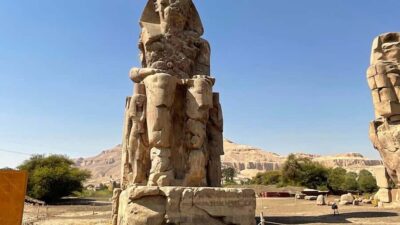
Valley of the Kings and Hatshepsut Temple Day Tour
Read our review →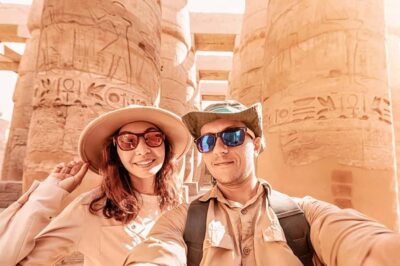
Luxor Tour with Valley of Kings, Karnak & Tut Tomb
Read our review →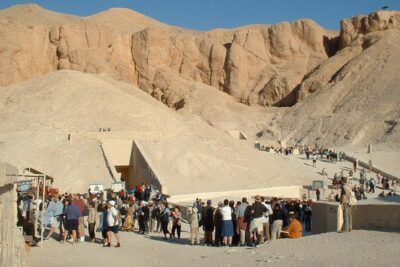
Valley of Kings, Hatchepsut Temple ,Karnak & Luxor-DayTour
Read our review →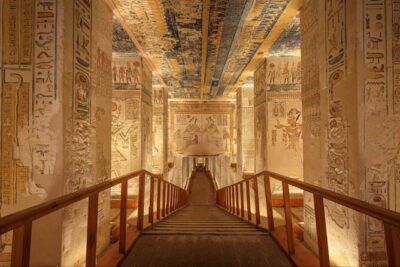
Full Day Tour of Luxor West Bank Temples and Tombs (Private)
Read our review →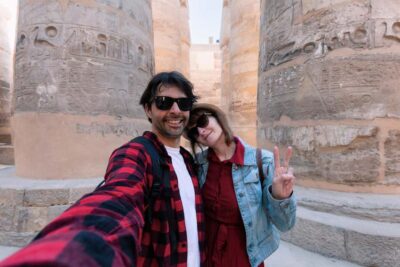
Small Group Excursion to Luxor Valley of the Kings from Hurghada
Read our review →
Valley of Kings Hatshepsut & Karnak Luxor Day Trip
Read our review →Browse the lists this tour appears in