
Reviewed · NILE CRUISES
Dahabiya Nile Cruise: Aswan to Luxor – 4 Days/3 Nights
The best part of this four-day dahabiya cruise is the slow pace. Instead of watching Egypt through the window of a large river ship, you spend long stretches close to the riverbank, passing birds, farms, villages, and small islands. The route links Aswan and Luxor with Egypt’s major ancient sites, but it also leaves room for quiet sunsets and sunrise on deck.
I like the small-boat atmosphere and the way the trip combines major temples with less-visited places such as Gebel el-Silsila and El Kab. I also like that transport, admissions, meals, and an Egyptologist guide are included. The main consideration is price: at $1,123 per person, this is a premium Nile trip, and you should confirm the exact boat and cabin before paying.
Key points to know before booking
- Sail from Aswan to Luxor in three nights, with full-board breakfast, lunch, and dinner on board.
- Visit Philae, Kom Ombo, Edfu, El Kab, and Gebel el-Silsila, then continue by car to Luxor’s west bank and Karnak.
- Expect a quiet, intimate boat setting, often with a small number of passengers rather than a large cruise crowd.
- Your Egyptologist guide travels with you for the sightseeing, with guide names reported for different departures including Salem, Aref, Ahmed, Iman, and Mohamed.
- The Nile views are a major part of the trip, especially at sunrise, sunset, and during silent stretches near islands and farmland.
- Check the boat details carefully, since one poor account described a last-minute vessel change and a mismatch between the promised and supplied boat.
Why a dahabiya makes this Nile route different

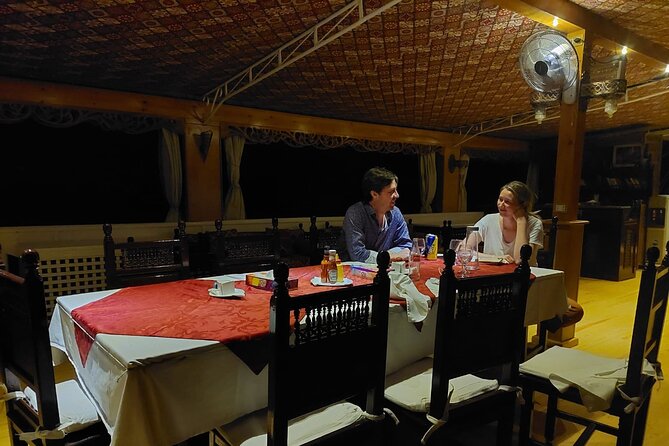
A dahabiya is a small traditional-style sailing boat, not a floating hotel with hundreds of cabins. That changes the whole mood of the journey. You have polished wood, shaded seating areas, a sundeck, and a much closer view of the Nile’s edge.
The boat may be towed by a small motorboat when the wind is weak. That means you should not expect four days of romantic sailing under canvas. The benefit is quiet cabins and steady progress, while the drawback is that the boat may not always move under its own sails.
The small scale is the strongest reason to choose this trip. Large Nile ships follow a set schedule and can feel crowded at the main temples. A dahabiya can moor near an island or village, giving you a calmer evening and a better sense of daily life along the river.
The available rating is 4.7 out of 5 from 32 ratings, with 94 percent recommending the experience. Praise focuses on the crew, food, guide service, comfortable boats, and peaceful river time. One account describes a group of only two passengers with their guide and crew, while another describes about ten passengers sharing a cozy dining experience. The exact number depends on the departure and boat assigned.
More Boat Tours in Aswan
- 4-Days Nile Cruise From Aswan To Luxor including Abu Simbel and Hot Air Balloon
★ 5.0 · 3,142 reviews - 4-Day 3-Night Nile Cruise from Aswan to Luxor&Abu Simbel+Balloon
★ 5.0 · 2,023 reviews - 4-Day 3-Night Nile Cruise from Aswan to Luxor including Abu Simbel, Air Balloon
★ 4.5 · 612 reviews
Day one: Philae, island paths, and Kom Ombo
Your Aswan pickup can be from the airport, railway station, or hotel. The first visit is Philae Temple, reached as part of the guided tour before you board the dahabiya.
Philae is dedicated to Isis, one of ancient Egypt’s most important goddesses. The temple complex sits on an island, so the setting matters as much as the carved columns and reliefs. This is a strong opening visit because it introduces you to the religious world of ancient Egypt while also giving you an early taste of the river scenery.
After Philae, you board the boat and eat lunch on board. The first afternoon includes sailing toward a small Nile island, where you can walk through the countryside. This is not a grand archaeological stop, and that is exactly its value. You get a break from temple walls and see the green strip of cultivated land that survives along the river.
Later, the boat continues toward Kom Ombo. The temple is built on a striking bend in the Nile, with the river close to its stone platform. It is unusual because it serves two gods: Sobek, the crocodile god, and Horus the Elder. Its double design gives your guide plenty to explain, from the two sanctuaries to the temple’s medical and religious reliefs.
Kom Ombo is particularly effective late in the day. The position above the river gives the site a memorable setting, and ancient stories about sacred crocodiles add an extra layer to the visit. Allow about two hours for the temple tour.
Afterward, you return to the dahabiya and continue toward Gebel el-Silsila. The first night is spent on board. Meals included on this day are breakfast, lunch, and dinner, although breakfast is generally before the formal start if you board later in the morning.
Day two: Gebel el-Silsila and the great temple at Edfu

Day two begins with sunrise from the sundeck. This is one of the simple pleasures of a small Nile boat. You can watch the light change over the water without having to rush straight into a coach or a museum.
As the boat passes Gebel el-Silsila, you see sandstone quarries and rock-cut chapels associated with Horemheb, Seti I, Ramses II, and Merenptah. The itinerary describes this section as a view from the dahabiya rather than a full land visit, so keep your expectations clear. You may see important remains from the water, but the experience is more about the river setting and the scale of the quarries than an extended archaeological walk.
The boat then continues to Edfu. After arrival, you meet your guide for the visit to the Temple of Horus. Edfu is one of the best-preserved cult temples in Egypt, with massive walls, clear reliefs, and a strong sense of its original layout.
The temple is linked to the story of Horus avenging Osiris by defeating Seth. Your guide can help you read the symbols and understand how the temple worked as a place of worship, rather than leaving you to admire a large pile of stone without context.
Edfu takes about two hours. The temple is a highlight for anyone who wants to see ancient Egyptian architecture in unusually complete form. It can also be tiring if you have already spent the morning in the heat, so bring water, use the shaded areas when possible, and wear practical shoes.
The third stop is Besaw Island, where the boat moors for the night. This is another example of the trip’s slower rhythm. The evening is not built around another major monument. Instead, you have time to sit on deck, watch the river, and enjoy dinner without the noise and traffic of a large ship.
Day three: the quiet archaeological stop at El Kab
After breakfast, the dahabiya sails toward El Kab, the ancient town of Nekheb. This is one of the more unusual stops on the route because it receives less attention than Edfu, Luxor, or the Valley of the Kings.
At El Kab, your guide leads you through the remains of the old settlement, its temples, and tombs cut into the nearby cliffs. The site offers a different kind of archaeological experience. Rather than one towering monument, you see traces of a town and the remains of a religious center spread across a broad area.
I would value this stop most if you enjoy archaeology beyond the famous headline sites. El Kab helps connect Egypt’s temples with the communities that supported them. It also gives you another chance to walk away from the main river corridor and see a quieter side of the country.
The scheduled visit takes about two hours. Afterward, you return to the boat and sail toward Esna. The included transfer from Esna to Luxor is important because the dahabiya portion ends before the final sightseeing day is complete.
This day has fewer headline monuments, so it feels more relaxed. That can be a welcome change after Philae, Kom Ombo, and Edfu. If you want nonstop major temples, the slower third day may feel light. If you want time on the Nile and a less standard itinerary, it is a useful part of the trip.
More Nile cruises around Aswan:
- From Aswan: 4-Day Nile Cruise from Aswan to Luxor with Guide
★ 4.1 · 593 reviews - 4-Days Nile Cruise From Aswan To Luxor including Abu Simbel and Hot Air Balloon
★ 4.5 · 509 reviews - 4-Day 3-Night Nile Cruise from Aswan to Luxor – Private Tour
★ 5.0 · 369 reviews - 4 Days Nile Cruise from Aswan to Luxor including Abu Simbel and Hot Air Balloon
★ 4.5 · 356 reviews
Day four: Luxor’s west bank and the Valley of the Kings
After breakfast, you check out of the dahabiya and meet your guide for a vehicle transfer. The car is described as modern, air-conditioned, and deluxe, which matters after three nights on the river and a warm morning of sightseeing.
The first major visit is the Valley of the Kings. You will enter three tombs, excluding the tomb of Tutankhamun. That detail is easy to miss, but it affects the value of the ticket and your expectations. Tutankhamun’s tomb is not included in the stated plan, so you should ask locally about the option and any extra charge if seeing it is important to you.
The Valley is not mainly about grand buildings. Its treasures are underground, where royal burial chambers were cut into the cliffs and decorated with scenes intended to guide the dead into the next world. Three tombs give you a solid introduction, though the exact tombs can vary.
Heat is a practical concern. The valley has little shade, and the combination of sun, uneven ground, and enclosed tombs can be demanding. Carry the provided natural water, keep your pace sensible, and listen carefully to your guide’s advice about the day’s order.
Next comes the Temple of Queen Hatshepsut at Deir el-Bahari. Built for the woman who ruled Egypt for roughly two decades during the 18th Dynasty, the temple is arranged in broad terraces against the cliffs. Its design feels very different from the enclosed sanctuaries at Edfu and Kom Ombo.
Hatshepsut’s story is one reason this visit matters. She was the only pharaonic woman to rule ancient Egypt, and the temple presents her reign through architecture, reliefs, and royal imagery. You will spend about an hour here.
The Colossi of Memnon are a quick roadside stop, scheduled for about 30 minutes. The two statues originally represented Amenhotep III and once marked the entrance to his enormous funerary temple. Each was carved from a single block of stone and is described as rising about 18 meters above the plain.
The statues are faceless today, but their scale still makes the stop worthwhile. Archaeological work continues behind them, and the visit gives you a glimpse of how much of the west bank remains under study.
Karnak brings the trip to a grand finish
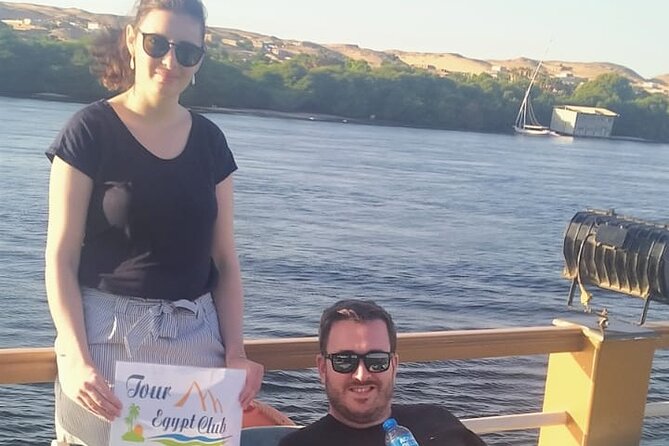
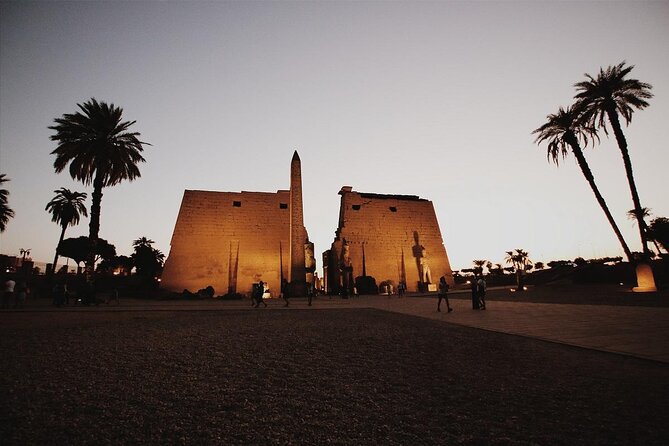
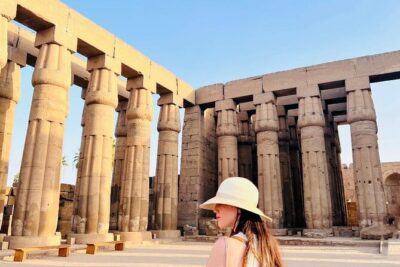
The final major visit is Karnak Temple on Luxor’s east bank. This enormous complex was built, enlarged, repaired, and redecorated over roughly 1,500 years. It was devoted mainly to Amun and the Theban triad, but successive pharaohs also used it to display their power.
Karnak can feel overwhelming without a guide. The complex includes pylons, sanctuaries, obelisks, columns, and processional spaces spread over more than two square kilometers. Your one-hour visit gives you the essential route, but it is not enough to inspect every section in detail.
I like ending here because Karnak gives you the full scale of ancient Thebes after several days of smaller temples and river stops. At the same time, the final day is packed. The Valley of the Kings, Hatshepsut, the Colossi, and Karnak require walking, driving, and sustained attention. You should not plan a demanding evening activity immediately afterward.
Following Karnak, you are transferred to Luxor and dropped at the airport, station, or hotel of your choice. The stated meeting point for the final drop-off is on the Luxor Corniche, so confirm the exact location with the operator before departure.
Food, cabins, crew, and the value of the price
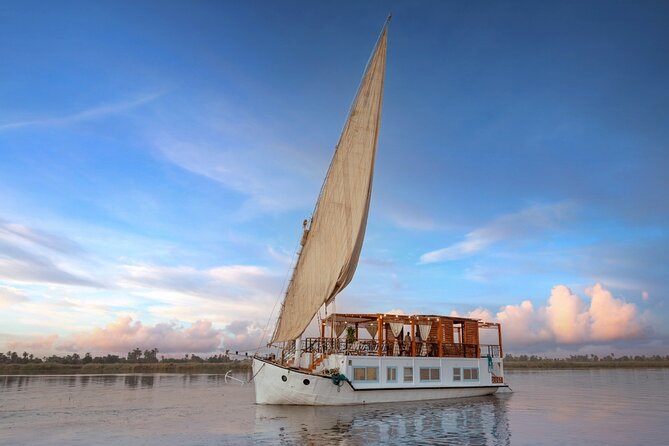
The $1,123 price includes three nights aboard the dahabiya, all meals, transfers, entrance fees, guiding, tea, coffee, natural water, and taxes. In practical terms, you are paying for a private, organized route rather than only for transport on the Nile.
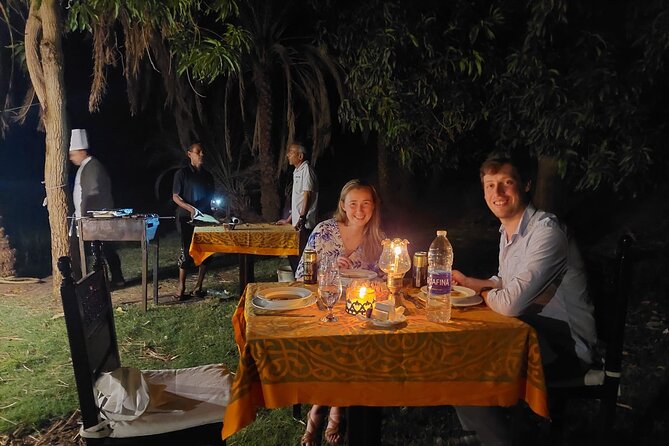
The food receives especially strong praise. Meals are described as traditional and tasty, and one account specifically notes that the chef handled vegan requirements well. You should still tell the operator about dietary needs when booking, since the included meals are central to the experience.
The crew is another major strength. Names connected with different departures include Hayam, Ahmed, and other boat staff who took care of small details. Guides named in the feedback include Salem, Aref, Iman, Ahmed, and Mohamed, though you should not assume a particular guide will be assigned to your departure.
Accommodation descriptions point to cozy cabins, polished wood, tasteful seating areas, and well-maintained boats. But the exact dahabiya matters. One serious complaint describes a last-minute change and a boat that did not match the material shown before payment. That is not a minor issue on a three-night cruise.
Before you commit, ask for the boat name, current cabin photographs, cabin size, bathroom details, and written confirmation that the same vessel will be provided. The tour is private for your own group, but the boat may still carry other passengers depending on the booking arrangement. Clarify that point too.
Who will enjoy this cruise most
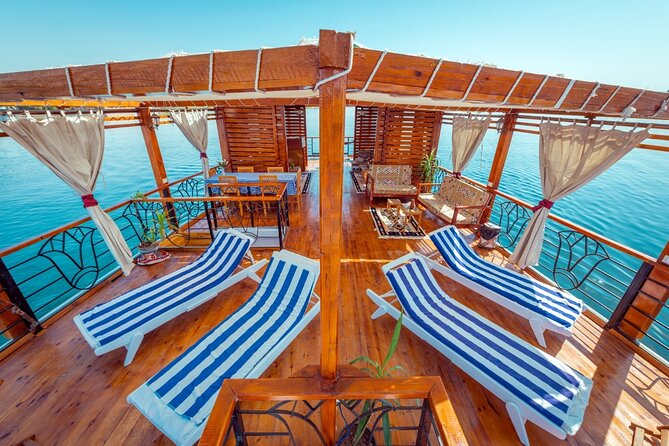
I would choose this trip if you want the Nile itself to be part of the holiday, not just a way to reach temples. It suits couples, families, and small private groups who value quiet evenings, personal service, and a slower route.
It is also a good fit if you have already seen Egypt’s major museums and want more time outdoors. The island walk, the view of Gebel el-Silsila, Besaw Island, and El Kab add variety to the standard Aswan to Luxor path.
You may prefer a larger cruise ship if you want resort-style facilities, a wider range of onboard entertainment, or a more predictable hotel format. You may also prefer a shorter land-based itinerary if you dislike fixed meal schedules or several nights in a compact cabin.
The trip is listed as suitable for most people, but the schedule includes walking at temples, uneven archaeological ground, heat, and several hours of sightseeing on the final day. Anyone with mobility or health concerns should ask the operator for current details before booking.
Cancellation is generous if handled early: cancel at least six full days before the start for a full refund. A cancellation two to six full days ahead receives 50 percent, while cancellation less than two full days ahead is nonrefundable. Poor weather can lead to a different date or a full refund.
Should you book the Aswan to Luxor dahabiya?
Book it if you want a small-scale Nile experience with strong guiding, full-board meals, and the main ancient sites built into one route. The quiet river time is the real reason to choose it, and the itinerary adds El Kab and Gebel el-Silsila instead of stopping only at the familiar monuments.
I would not book without confirming the exact boat and cabin in writing. At $1,123, the experience can be good value when the boat is comfortable, the meals are handled well, and the guide is engaged, but the price leaves little room for an unpleasant vessel substitution.
For the right passenger, this is a thoughtful alternative to a large Nile ship. You get fewer crowds, closer views of village life, and a more peaceful route from Aswan to Luxor, with enough major temples to make the journey feel substantial.
FAQ
Where does the dahabiya cruise begin?
The cruise begins in Aswan, Egypt. Pickup is offered from an Aswan airport, railway station, or hotel.
Where does the experience finish?
The dahabiya journey finishes in the Luxor area, followed by transfer and drop-off at a Luxor airport, station, or hotel of your choice. The stated meeting information places the Luxor drop-off on the Corniche.
How many nights are included on the boat?
The package includes three nights aboard the dahabiya.
Which ancient sites are included?
Included visits are Philae Temple, Kom Ombo Temple, Edfu Temple, El Kab, the Valley of the Kings, the Temple of Hatshepsut, the Colossi of Memnon, and Karnak Temple. Gebel el-Silsila is viewed from the dahabiya according to the stated plan.
Is the tomb of Tutankhamun included?
No. The Valley of the Kings visit includes three tombs, but Tutankhamun’s tomb is specifically excluded.
Are meals included?
Yes. The package includes three breakfasts, three lunches, and three dinners, along with tea, coffee, and natural water.
What is not included in the price?
Tips and personal expenses are not included. All stated entrance fees, transfers, guiding, meals, taxes, and accommodation are included.
More Boat Trips in Aswan
- From Aswan: 3-Day Cruise to Luxor with Hot Air Balloon
★ 4.3 · 598 reviews - 4-Days Nile Cruise Aswan&Luxor,Hot Air Balloon&Abu Simbel.Hot deal
★ 5.0 · 322 reviews - 2 Night Nile Cruise from Aswan to Luxor
★ 5.0 · 311 reviews - Private 04 Days Days Nile Cruise from Aswan to Luxor
★ 5.0 · 278 reviews
More 4-Day Experiences in Aswan
- 4-Day 3-Night Nile Cruise from Aswan to Luxor With Balloon and Abu Simbel
★ 5.0 · 327 reviews - From Aswan:4 Days Nile Cruise Luxor Abu Simbel & Air Balloon
★ 4.4 · 310 reviews - 4-Day Nile Cruise sails Aswan to Luxor&Abu Simbel.Hot air Balloon
★ 4.5 · 247 reviews - 4-Day Nile Cruise Aswan and Luxor Hot Air Balloon with Abu Simbel
★ 5.0 · 234 reviews
New on the Aswan list
- 4-Day-3 Night Nile Cruise Aswan & Luxor + Abu Simbel, Air Balloon★ 5.0 · 26 reviews
- 4-Days Nile Cruise sails Aswan to Luxor &Abu Simbel. Air Balloon★ 5.0 · 26 reviews
- Abusimbel Aswan to Luxor 4 days Nile cruise★ 5.0 · 27 reviews
- 4-Day 3-Night Nile Cruise from Aswan to Luxor – Luxury Tour★ 4.5 · 27 reviews
- Tour to Abu Simbel Temple with a small group and a Professional tour guide★ 4.5 · 27 reviews
- 4 Days 3 Nights from Aswan to Luxor Nile cruise+Abu simbel temple★ 5.0 · 27 reviews
- 4 Days Nile Cruise from Aswan to Luxor★ 5.0 · 28 reviews
- Nile Cruise 4 Days 3 Nights from Aswan to Luxor★ 4.5 · 29 reviews
Nile Cruises, compared.
4-Days Nile Cruise From Aswan To Luxor including Abu Simbel and Hot Air Balloon
Read our review →
Sakkara, Memphis & Dahshur (Pyramid & Felucca Options)
Read our review →
4-Day 3-Night Nile Cruise from Aswan to Luxor including Abu Simbel, Air Balloon
Read our review →
4-Day Nile Cruise from Aswan to Luxor with Guide
Read our review →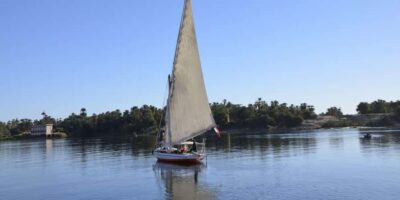
4-Days Nile Cruise From Aswan To Luxor including Abu Simbel and Hot Air Balloon
Read our review →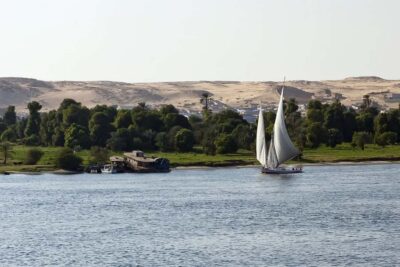
1 or 2-Hour Felucca Ride on the Nile with Transfers
Read our review →Browse the lists this tour appears in