
Reviewed · LUXOR WEST BANK TOURS
Private Tour to Valley of the Queens, Valley of the Artisans, and Habu Temple
The best part of this private Luxor tour is its focus on places beyond the usual Valley of the Kings. You’ll see painted royal tombs in the Valley of the Queens, then walk through the village where the craftsmen who built those tombs once lived and worked. The final stop, Medinet Habu, brings huge battle scenes and festival reliefs into view with unusually clear color.
I like the small-scale format, since your group can set the pace and ask for more or less explanation. I also like the mix of royal monuments and ordinary working life, a much fuller picture of ancient Thebes than another morning spent visiting only grand tombs. The main caution is guide quality: several guides, including Ali, Hesham, Moses, and Azab, have drawn strong praise, but a few guests found explanations thin or difficult to follow.
Key points to know before booking
- Three very different West Bank sites: royal burials, an artisan settlement, and a memorial temple.
- Private transport and pickup: travel from your Luxor hotel or Nile cruise ship in an air-conditioned vehicle.
- Three tombs at the Valley of the Queens: the selection may include tombs of royal sons as well as queens.
- Deir el-Medina is the history lesson: see the ruined village, a Ptolemaic temple, and decorated workers’ tombs.
- Medinet Habu preserves vivid scenes: Ramses III’s temple shows wars, rituals, and festivals in surviving color.
- Good value at $57 per person: entrance fees, guide, transport, water, taxes, and service charges are included.
Why these quieter Luxor sites matter
Luxor’s West Bank can feel like one giant open-air museum, but its famous stops do not tell the whole story. The Valley of the Kings shows where important pharaohs were buried. This tour adds two missing pieces: where royal women and princes were laid to rest, and where the skilled workers lived who cut and painted the tombs.
That makes the route especially useful if you have already visited the Valley of the Kings. One booking even changed part of the plan for a guest who had seen Habu Temple before, replacing it with another site. Another private tour was adjusted to include the Tombs of the Nobles. Such changes are not guaranteed, but the private setup gives you a better chance to discuss your priorities than a fixed group excursion.
The tour lasts about five hours. That is enough time for the three main stops without turning the day into a full West Bank marathon. Each site is scheduled for roughly an hour, with driving between them and the return to Luxor included.
A few other Luxor days to weigh up
- Hurghada: Luxor Valley of the Kings & Tutankhamun Tomb Trip
★ 4.7 · 13,208 reviews - Luxor: Valley of the Kings and Hatshepsut Temple Day Tour
★ 4.4 · 1,404 reviews - Hurghada: Luxor Tour with Valley of Kings, Karnak & Tut Tomb
★ 4.6 · 1,082 reviews
Valley of the Queens and the place of beauty
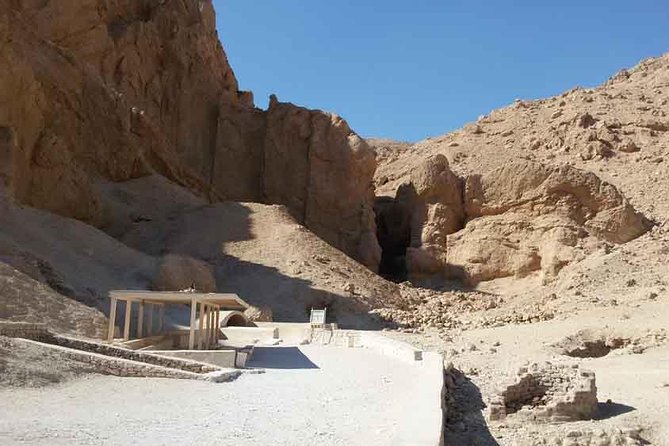
Your guide picks you up at your Luxor hotel or Nile cruise ship and crosses to the Theban Necropolis on the west side of the Nile. The first stop is the Valley of the Queens, known in ancient times as Ta-Set-Neferu, or the place of beauty.
More than 90 tombs are known here. They tend to be smaller than the great royal tombs, with an entrance passage, short halls, and a burial chamber. That compact design can make the paintings feel close and personal. You are not simply looking at a huge stone monument. You are examining a carefully planned underground room made for one person or one family member.
The route includes three tombs belonging to queens and royal sons. The named examples include Amun-her-khepeshef, Seth-her-khopsef, Khaemwaset, and a Ramesside prince. The earliest tombs may include that of Sitre, the wife of Ramses I, though the precise tombs open on the day can vary.
The famous Tomb of Nefertari is the obvious subject here, but it requires a separate fee if open, paid directly in Egyptian pounds. The supplied information also notes that it is closed at present, so do not build your plans around entering it. The three included tombs still give you a proper look at this burial valley without paying the premium associated with Nefertari.
One practical point matters inside any Egyptian tomb: the guide may explain the decoration outside or at the entrance, then give you time to enter and look around. One guest specifically wished the guide had accompanied the group into the tombs rather than sending them in alone. If detailed interpretation is important to you, ask your guide to explain the scenes before you enter and to answer questions afterward.
Deir el-Medina, where tomb builders lived
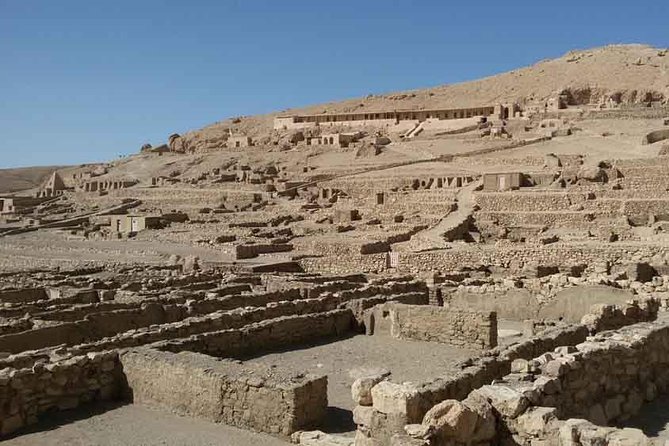
The next stop is Deir el-Medina, the Valley of the Artisans. In the New Kingdom, from about 1550 to 1080 BC, this settlement was called Set Maat, the Place of Truth. It housed the artisans and workmen responsible for creating royal tombs, including the men who cut passages, plastered walls, and painted sacred scenes.
This is the stop that often changes how you understand the grander monuments. At the Valley of the Kings, you see the finished work of the pharaohs. At Deir el-Medina, you see the remains of the community that produced it. The ruined homes and settlement plan help put those brilliant tomb paintings into a human setting.
The site also includes a small Ptolemaic temple dedicated to Hathor and Maat. It sits within a mud-brick enclosure and is very different from the huge temple complexes elsewhere in Luxor. Its smaller scale makes it easier to study the details of a local religious building and to see how the site continued to matter after the New Kingdom.
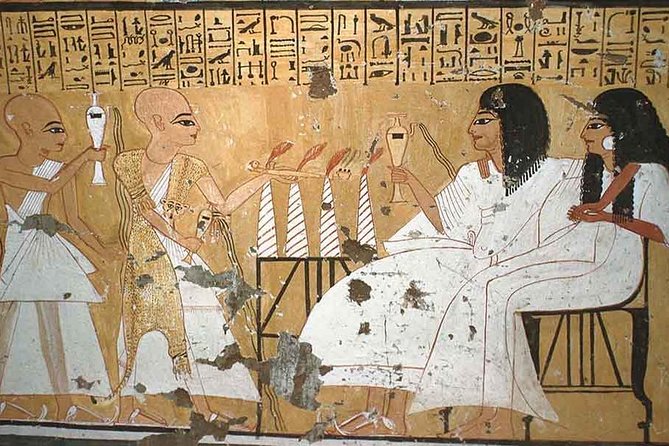
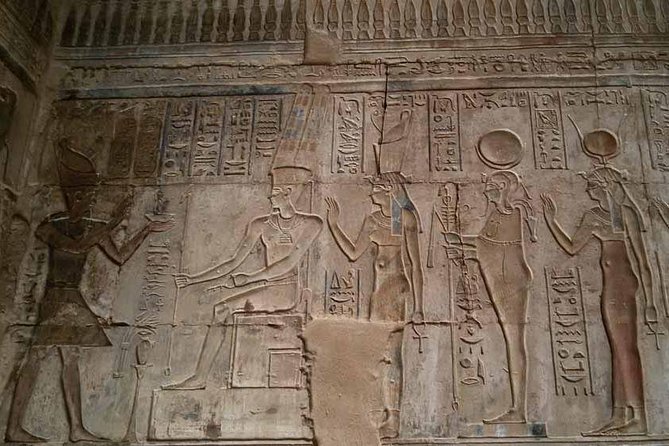
Two decorated tombs, associated with Sennedjem and Inherkau, are also part of the visit. These workers were not pharaohs, yet their tombs received carefully painted scenes. You may find the imagery more direct and intimate than the official royal art, with glimpses of daily work, religious belief, and the hopes surrounding the afterlife.
Allow yourself time to look closely. The village ruins can appear rough at first, especially beside Luxor’s monumental temples, but that is precisely their value. You are seeing the working community behind the royal spectacle.
Medinet Habu and Ramses III’s powerful message
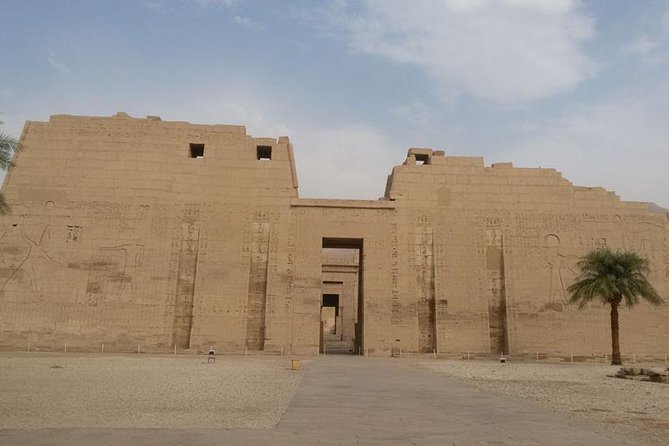
The final major stop is Medinet Habu, the memorial temple of Ramses III. He is remembered as the last great warrior pharaoh of the New Kingdom, and his temple presents that reputation in stone.
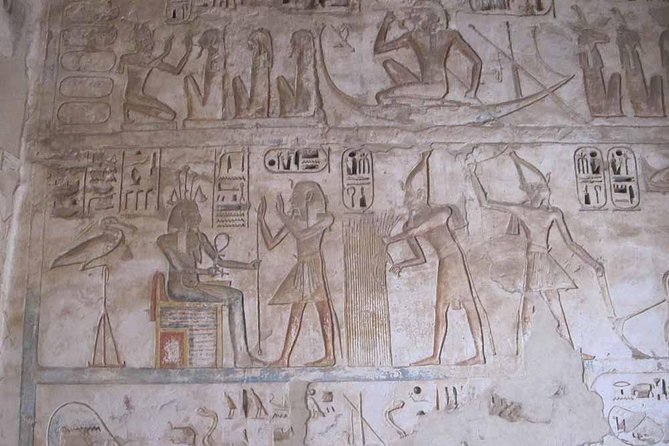
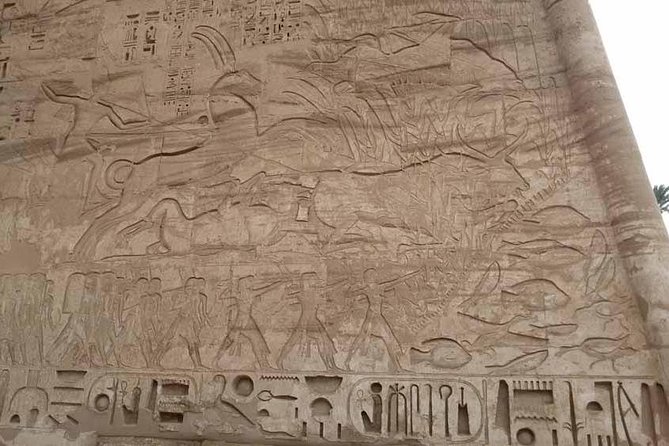
Medinet Habu is considered the best-preserved New Kingdom memorial temple. Its walls carry military scenes and texts describing the king’s victories, along with images of ceremonies and festivals. The decoration is not quiet or modest. It was designed to show royal strength, religious duty, and military success to anyone entering the complex.
The surviving color is a major reason to visit. Some ancient Egyptian reliefs now appear pale or worn, but Habu retains striking painted details in parts of the temple. Look for the contrast between the forceful battle scenes and the ordered ritual images. Together, they show how Ramses III wanted his reign remembered.
The complex was also a working institution, not just a ceremonial shell. A royal palace was attached to the southern side of the open forecourt. Priests’ homes and administrative buildings stood on either side. Your guide can help separate the temple’s religious role from its political and practical functions.
You should expect this stop to be visually strong, but the quality of the visit depends heavily on the explanation. One guest praised a guide for giving a relaxed but thorough tour, while another felt the commentary stayed close to a rehearsed script. Ask direct questions about the scenes and the temple’s layout. A private tour is most useful when you make use of that access.
Same base, a completely different day out:
- Luxor Day Trip from Hurghada Small Group & Tutankhamun Tomb
★ 4.8 · 5,366 reviews - Hot Air Balloon Ride in Luxor Egypt with Transfers Included
★ 5.0 · 4,319 reviews - Luxor: Shared Full-Day Tour to Luxor West and East Banks
★ 4.5 · 1,812 reviews - Luxor: Hot Air Balloon Ride over Luxor Relics
★ 4.8 · 1,681 reviews
A private guide can make or break the morning
The tour includes a qualified Egyptologist guide, but the person assigned is not specified in advance. Names praised in individual experiences include Ali, Hesham, Moses, and Azab. One guest also described a guide named Ash, or something similar, as especially helpful and kind when an older companion felt unwell. These names give you an idea of the range of guides used by Nile Holiday, but they do not promise a particular person.
The feedback is mostly very strong, with an overall rating of 4.7 from 28 reviews. The most common praise centers on guides who explain the sites well, answer questions, allow time to look around, and adjust the route to suit previous visits. One guest called the Valley of the Artisans the highlight of an Egypt trip, while another valued the calm pace at each stop.
There are also clear warnings. A few people felt they received little explanation. One person found the English difficult to understand and felt the guide could not answer questions beyond a prepared presentation. If you care deeply about ancient Egyptian religion, architecture, or hieroglyphics, make your expectations clear at the start.
The private format does not automatically mean the guide will walk beside you every minute. You may receive an introduction, then have free time inside a tomb or temple. Some people prefer this freedom. Others want continuous guiding. Tell the guide which style suits you.
Transport, timing, and what the $57 covers
At $57 per person, the tour offers solid value if you want a private West Bank visit without arranging every detail yourself. The price includes hotel or cruise pickup and return, transfers in a private air-conditioned vehicle, entrance fees to the listed sites, an Egyptologist guide, bottled water, taxes, and service charges.
That bundle matters in Luxor. You avoid negotiating separate transport and entrance payments at each stop, and you have a vehicle waiting while you move between sites. Pickup is available from hotels and Nile cruise ships in Luxor, making the tour practical for both hotel stays and short port calls.
The five-hour duration is a sensible fit for a half-day. The three one-hour site visits provide a clear framework, though actual time can shift with your pace and the guide’s plan. If you want to add another site, ask before booking or at the beginning. Some private visits have included an additional stop, but it is not part of the standard promise.
The main extra cost is the Tomb of Nefertari, if it reopens. The fee is not included and must be paid directly in Egyptian pounds. Since the tomb is currently closed according to the supplied details, treat it as a possible bonus rather than part of the tour.
Tipping and other personal extras are not included. One person disliked feeling repeatedly asked for money, including a question about payment to the driver. The stated price covers the listed services, but you should clarify any expected gratuities with the operator before departure so there are no awkward surprises.
Who will get the most from this tour
I would choose this excursion if you have already seen Luxor’s main royal sites and want a more varied West Bank day. The Valley of the Queens and Deir el-Medina are less commonly included in first-time sightseeing plans, yet they add important context and distinctive artwork.
It also suits you if you prefer a private pace. You can spend longer at the workers’ tombs, move more quickly through a familiar temple, or ask to alter the route if you have already visited one of the stops. That flexibility is the main reason to choose this over a cheaper group outing.
Families and mixed-age groups may appreciate the option to slow down. A guide was specifically praised for being considerate when a parent felt unwell. Still, the sites involve walking over ancient ground and the conditions can be harsh, so bring water, sun protection, and practical footwear.
This is less suitable if you want a luxury, highly polished experience with a guaranteed named guide. Guide quality varies, and the commentary may be excellent or merely adequate. It is also not the right booking if your sole goal is Nefertari’s tomb, since that tomb is currently closed and its separate fee is excluded.
Cancellation is straightforward: you can receive a full refund by canceling at least 24 hours before the local start time. Changes or cancellations made inside that window are not accepted for a refund.
Should you book this West Bank tour?
Book it if you want three different sides of ancient Thebes in a short private outing: royal burial, artisan life, and the public power of Ramses III. The price includes the major practical costs, and the ability to adjust the pace gives it an advantage over a fixed group schedule.
Before you commit, send a note asking who the guide will be, what language they will use, and whether the guide will accompany you into the tombs or explain them before you enter. If you receive a strong Egyptologist such as the guides praised by name, this can be one of the most rewarding smaller-site combinations in Luxor. If clear, detailed interpretation is your top priority, confirm that point first.
FAQ
How long does the private tour last?
The experience lasts about five hours, including visits to the Valley of the Queens, Deir el-Medina, and Medinet Habu, followed by transportation back to Luxor.
Where can pickup and drop-off take place?
Pickup and return are offered at Luxor hotels and Nile cruise ships.
Is this a private activity?
Yes. Only your own group participates in the tour.
Are entrance fees included?
Yes. Entrance fees for the listed sites are included in the price.
Is the Tomb of Nefertari included?
No. The Tomb of Nefertari is currently closed according to the provided information. If it opens, its extra fee must be paid directly in Egyptian pounds.
What else is included?
The tour includes private air-conditioned transport, an Egyptologist guide, bottled water, service charges, and taxes.
Can I cancel for a full refund?
Yes. You must cancel at least 24 hours before the experience starts, based on local time. Cancellations or changes made less than 24 hours before the start are not refunded.
New on the Luxor list
- Private Tour Nile Felucca Ride at Sunset in Luxor★ 5.0 · 26 reviews
- Full-Day East and West Luxor Private Tour★ 4.5 · 26 reviews
- Marsa Alam: Snorkeling with Sea Turtles Marsa Mubarak★ 4.9 · 26 reviews
- Day Trip to Edfu & Kom Ombo temples from Luxor and drop off in Aswan or Luxor★ 5.0 · 26 reviews
- Private Full day East and West Bank, Luxor★ 5.0 · 26 reviews
- Luxor Day Tour: Kings Valley & Karnak & Luxor & Hatshepsut Temple★ 5.0 · 26 reviews
- Luxury Hot Air Balloon Experience in Luxor with Pick-up★ 5.0 · 27 reviews
- Full-Day Luxor Tour – Discover the East and West Banks of the Nile★ 5.0 · 27 reviews
Luxor West Bank Tours, compared.
Luxor Valley of the Kings & Tutankhamun Tomb Trip
Read our review →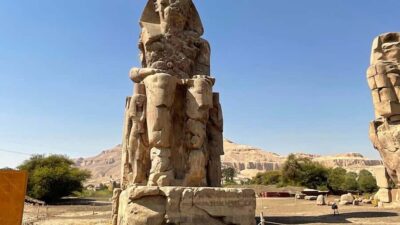
Valley of the Kings and Hatshepsut Temple Day Tour
Read our review →
Luxor Tour with Valley of Kings, Karnak & Tut Tomb
Read our review →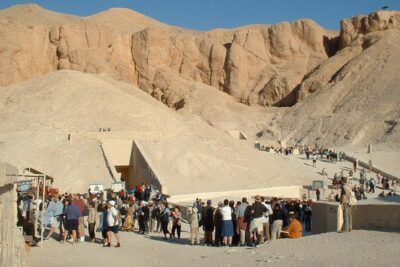
Valley of Kings, Hatchepsut Temple ,Karnak & Luxor-DayTour
Read our review →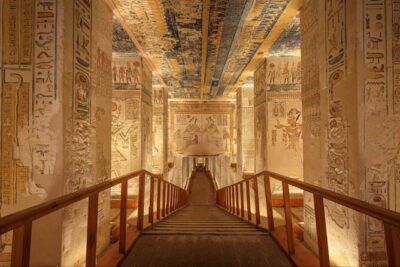
Full Day Tour of Luxor West Bank Temples and Tombs (Private)
Read our review →
Small Group Excursion to Luxor Valley of the Kings from Hurghada
Read our review →
Valley of Kings Hatshepsut & Karnak Luxor Day Trip
Read our review →Browse the lists this tour appears in