
Reviewed · LUXOR WEST BANK TOURS
Karnak and Luxor Temples (East of Luxor) Tour
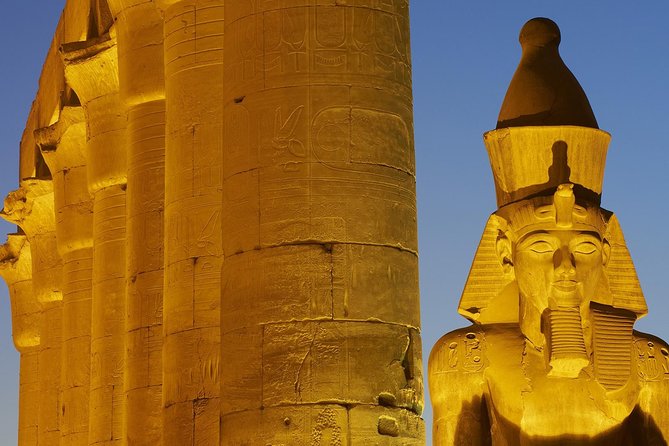
The Avenue of Sphinxes links Luxor’s two great East Bank temples, and this private tour lets you see both without sorting out transport, tickets, or the route yourself. Karnak Temple brings the biggest visual punch, with 134 columns in the Great Hypostyle Hall, while Luxor Temple feels more compact and layered.
I like the private guide format, since your group can set the pace and ask questions without trailing behind a large crowd. I also like the tidy package: hotel or Nile cruise pickup, private transport, entrance fees, bottled water, and drop-off are covered. The main drawback is timing. Four to five hours is enough for the two sites, but not for a slow, highly detailed study of every corner.
Key points
- See both major East Bank temples in one half-day: Karnak and Luxor are covered in a single outing.
- Walk the Avenue of Sphinxes: The route once connected the temples for about two miles and gives you a memorable photo setting.
- Hear the story from a private Egyptologist: George and Mike are named guides praised for lively explanations, historical insight, and photography help.
- Avoid transport and ticket worries: Hotel or cruise pickup, private vehicle use, admission fees, and drop-off are included.
- Plan for four to five hours: Karnak is allocated about three hours, followed by roughly two hours at Luxor Temple.
- Book with flexibility: Free cancellation is available up to 24 hours before the start time.
Why Karnak and Luxor Work So Well Together
Luxor’s East Bank is home to two very different temple experiences. Karnak is vast and sprawling, with monumental courts, columns, obelisks, a sacred lake, and the remains of the Temple of Amun. Luxor Temple is more compact, but its walls show how Egyptian, Greek, and Roman periods were layered onto the same place.
Seeing them together helps you make sense of Luxor. Karnak gives you scale. Luxor Temple gives you a more concentrated look at changing rulers and religious traditions. The Avenue of Sphinxes provides the physical link between them, even though the modern tour uses a private vehicle for part of the route rather than treating the entire two-mile avenue as a long walk.
I would choose this tour if you want the major East Bank sights explained in one organized outing. It works especially well for a first visit, a short stay, or a Nile cruise stop when you want an efficient plan.
A few other Luxor days to weigh up
- Hurghada: Luxor Valley of the Kings & Tutankhamun Tomb Trip
★ 4.7 · 13,208 reviews - Luxor: Valley of the Kings and Hatshepsut Temple Day Tour
★ 4.4 · 1,404 reviews - Hurghada: Luxor Tour with Valley of Kings, Karnak & Tut Tomb
★ 4.6 · 1,082 reviews
Starting at Karnak’s Avenue of Rams
Your guide picks you up from your Luxor hotel or Nile cruise and takes you to Karnak Temple in a private vehicle. The exact pickup time should be confirmed at booking, but the stated operating window is 6:00 AM to 2:00 PM, Monday through Sunday.
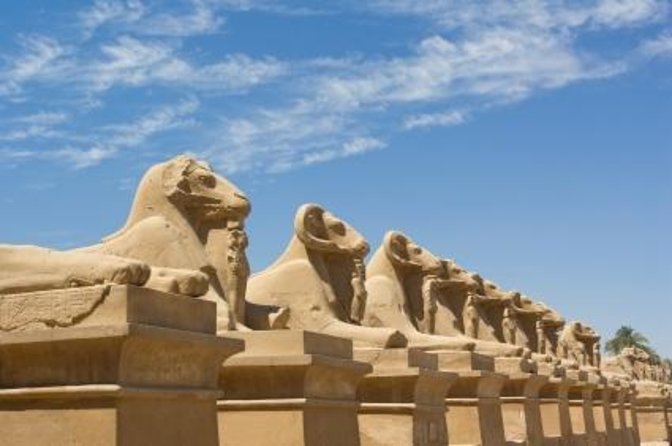
Karnak is the larger and more demanding stop, with about three hours set aside for it. You begin with the Avenue of Rams, an approach lined with ram-headed figures associated with the temple complex. This opening gives you a sense of scale before you reach the main courts and halls.
The guide is important here. Karnak is not one single building with a simple route. It is a large collection of sacred spaces built and altered by different rulers. Without explanation, it can become a parade of stones and names. With a private Egyptologist, you can stop to ask why a particular ruler added an obelisk, what a sacred area was used for, or how the complex changed over time.
The tour includes the temple entrance fee, so you do not need to arrange admission separately. Bottled water is also included, a small but useful touch during a long outdoor visit.
The Great Hypostyle Hall and Its 134 Columns
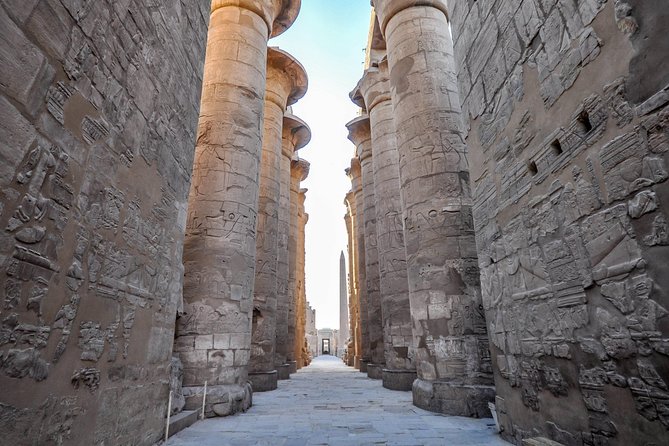
The Great Hypostyle Hall is the main visual event at Karnak. Its 134 columns create a forest of stone, with the central columns rising higher than those around them. Even if you are not focused on ancient architecture, the size of the hall makes it easy to understand why Karnak takes time.
Your guide should help you notice details that are easy to miss when you are looking only at the overall scale. Carved scenes, inscriptions, and the arrangement of the columns all carry meaning. The private format gives you room to pause for photographs or ask for a clearer explanation when the names and dates begin to blur.
The experience is not designed as a quick photo stop. Three hours at Karnak suggests a proper walk through the principal areas, including the Temple of Amun, the obelisks of Queen Hatshepsut and Thutmose I, the granite scarab beetle of Amenhotep III, and the Sacred Lake.
That list also points to the tour’s one practical challenge: Karnak can be tiring. You will spend much of the visit on foot, and the site is large enough that a rushed guide could leave you feeling overloaded. Tell your guide if you want more time for photographs or a shorter explanation at some stops.
Obelisks, the Sacred Lake, and the Granite Scarab
Karnak’s obelisks offer some of the clearest reminders that this was a royal and religious center, not simply a group of ruins. The tour points out obelisks connected with Queen Hatshepsut and Thutmose I, giving your guide a chance to explain how royal power was expressed through temple building.
The Sacred Lake adds a different mood. It was linked to temple ritual and is one of the features that helps you picture Karnak as an active religious complex. The granite scarab beetle associated with Amenhotep III is another memorable stop, and it is likely to appeal to you if you enjoy the smaller details as much as the giant columns.
I find these features valuable because they break up the monumental scale. Karnak could otherwise feel like one enormous hall after another. The guide’s job is to connect the individual objects to the people, beliefs, and ceremonies that shaped the site.
The strongest praise for this tour focuses on that guide role. George is described as making history feel lively and personal, with a communication style that keeps the subject from becoming a list of dates. Mike is also praised for strong site explanations and for taking good photographs. Guide assignments can vary, so you should not assume that one particular guide will be available, but those names give you a useful idea of the standard being promised.
Same base, a completely different day out:
- Luxor Day Trip from Hurghada Small Group & Tutankhamun Tomb
★ 4.8 · 5,366 reviews - Hot Air Balloon Ride in Luxor Egypt with Transfers Included
★ 5.0 · 4,319 reviews - Luxor: Shared Full-Day Tour to Luxor West and East Banks
★ 4.5 · 1,812 reviews - Luxor: Hot Air Balloon Ride over Luxor Relics
★ 4.8 · 1,681 reviews
Walking the Avenue of Sphinxes
After Karnak, the tour continues to Luxor Temple, with attention to the Avenue of Sphinxes. This avenue connected Karnak and Luxor for about two miles, creating a ceremonial route between the two temple complexes.
You will want your camera ready here. The sphinx-lined route is one of the most recognizable visual links in Luxor, and it gives the tour a sense of connection that you would miss by visiting the temples as unrelated monuments. The experience does not promise a full two-mile walk, so think of this as a chance to see and photograph the avenue while moving between the main sites.
This part of the visit is also useful context. Karnak was not an isolated temple complex. It formed part of a larger sacred setting, and the avenue helped link religious processions and public ceremonies. Your guide can explain that connection at the right level for your group rather than forcing you through a fixed lecture.
Luxor Temple’s Greek and Roman Layers
Luxor Temple receives about two hours, giving you time to explore its courtyards, columns, and decorated walls. Compared with Karnak, the site is easier to grasp as a single experience, but it is not simple. Egyptian foundations and later Greek and Roman changes appear together.
The tour specifically includes the Greco-Roman frescoes and depictions of Alexander the Great on the walls. These later details matter because they show how rulers from different cultures used and reshaped Egyptian sacred places. You are not looking at one frozen period. You are seeing a site that continued to carry meaning as political power changed.
I like Luxor Temple as the second stop because it gives your mind a shift after Karnak’s enormous scale. The walls and scenes feel more concentrated, and the guide can help you compare the two places instead of explaining each one in isolation.
Two hours is a sensible allowance, though your pace will depend on how much time you spend taking pictures and asking questions. If you want a very slow examination of every inscription, this tour may feel brisk. If your aim is to understand the main features and see the important areas without spending a full day at the East Bank, the timing is practical.
What the Private Format Really Adds
This is a private tour, so only your group participates. That is more than a comfort feature. At major temple sites, a private guide lets you ask for clarification, adjust the pace, and focus on the parts that interest you most.
A group fascinated by architecture might spend longer in the Hypostyle Hall. A family may prefer shorter explanations and more time for photographs. Someone interested in royal figures such as Hatshepsut, Thutmose I, Amenhotep III, or Alexander the Great can ask for extra context without holding up a busload of people.
The private vehicle also keeps the outing simple. You do not need to arrange separate taxis between the hotel, Karnak, and Luxor Temple. Pickup and drop-off are included from your hotel or Nile cruise in Luxor, and all listed entrance fees, taxes, fees, and handling charges are part of the price.
Tipping is not included. Keep that separate from your budget and decide what you feel is appropriate for the guide and driver.
Is $99.40 a Fair Price?
At $99.40 per person, this is not the cheapest way to see the East Bank temples. It can still be good value if you place a price on time, a private vehicle, admission fees, and a guide who can explain what you are seeing.
The package combines two temple entries, transport, pickup, drop-off, bottled water, and a private Egyptologist. If you tried to arrange each part separately, you would need to manage the route and tickets yourself, then find a guide capable of handling both sites. The tour removes that work.
Value depends on group size. For one person, the private format may feel expensive compared with joining a larger group. For couples, families, or a small party, the cost becomes easier to justify because the guide’s attention stays with your group.
The rating is 5 out of 5 from 45 reviews, with 100 percent recommending the experience. That is a strong record, and the praise is especially focused on the guides rather than only on the monuments. Still, you should judge the price against your priorities. If you already have a guide, car, and tickets arranged, this package adds less. If you want a clean half-day plan, it adds quite a lot.
Timing, Pickup, and Booking Details
The tour lasts approximately four to five hours. The listed schedule allows around three hours at Karnak and two hours at Luxor Temple, so plan for a substantial half-day rather than a quick morning visit.
Pickup is offered from your Luxor hotel or Nile cruise, followed by return transport. Confirmation is received at booking, and the experience is near public transportation. Most travelers can participate, according to the supplied tour details, but the visit does involve walking around large temple grounds.
The stated opening period runs through June 16, 2026, with tours listed Monday through Sunday from 6:00 AM to 2:00 PM. Because the start time matters for heat, light, and cruise schedules, check the confirmed pickup details before the day begins.
Free cancellation applies when you cancel at least 24 hours before the start time. A cancellation within 24 hours is not refunded, and changes within that period are not accepted.
Who Should Book This East Bank Tour?
I would recommend it for a first visit to Luxor, anyone staying only briefly, and Nile cruise passengers who want the main East Bank sights handled in one outing. It is also a good match for people who value clear explanations but do not want to follow a large group.
Families and small groups may particularly like the private arrangement. You can keep the pace suited to your own party and ask the guide to focus on the details you care about. Photography-minded visitors should also appreciate the chance to ask the guide for help with pictures, a skill specifically praised in connection with Mike.
You may want another plan if you prefer to wander alone for hours, need a very slow archaeological study, or already have private transport and a guide. The four to five hour schedule is efficient, but it is not an open-ended day at the temples.
Should You Book It?
Book this tour if you want Karnak and Luxor Temple in one organized half-day, with entry fees and transport already handled. The private Egyptologist is the main reason to choose it over simply hiring a car. George and Mike have received special praise for making the sites engaging and for helping with photographs, though guide assignment is not guaranteed.
Skip it if you want complete independence or the lowest possible price. For most first-time visitors, though, the combination of a private vehicle, two major temples, a two-mile avenue connection, and flexible guide attention makes $99.40 a reasonable buy.
FAQ
How long does the Karnak and Luxor Temples tour last?
The experience lasts approximately four to five hours. The planned visit includes about three hours at Karnak Temple and two hours at Luxor Temple.
Are hotel and cruise pickups included?
Yes. Pickup and drop-off are included from your hotel or Nile cruise in Luxor.
Is this a private tour?
Yes. Only your group participates in the activity, and transportation is provided by private vehicle.
Are entrance fees included?
Yes. Entrance fees to all sites named in the tour are included, along with taxes, fees, and handling charges.
What sites will I visit?
You will visit Karnak Temple and Luxor Temple on Luxor’s East Bank. The experience also includes views and photo opportunities along the Avenue of Sphinxes.
Can I cancel for a full refund?
Yes, if you cancel at least 24 hours before the experience start time. Cancellations made within 24 hours are not refunded, and changes during that period are not accepted.
New on the Luxor list
- Full-Day East and West Luxor Private Tour★ 4.5 · 26 reviews
- Marsa Alam: Snorkeling with Sea Turtles Marsa Mubarak★ 4.9 · 26 reviews
- Private Full day East and West Bank, Luxor★ 5.0 · 26 reviews
- Day Trip to Edfu & Kom Ombo temples from Luxor and drop off in Aswan or Luxor★ 5.0 · 26 reviews
- Luxor Day Tour: Kings Valley & Karnak & Luxor & Hatshepsut Temple★ 5.0 · 26 reviews
- Luxury Hot Air Balloon Experience in Luxor with Pick-up★ 5.0 · 27 reviews
- Full-Day Luxor Tour – Discover the East and West Banks of the Nile★ 5.0 · 27 reviews
- 5 Days 4 Nights Nile Cruise Tour★ 5.0 · 27 reviews
Luxor West Bank Tours, compared.
Luxor Valley of the Kings & Tutankhamun Tomb Trip
Read our review →
Valley of the Kings and Hatshepsut Temple Day Tour
Read our review →
Luxor Tour with Valley of Kings, Karnak & Tut Tomb
Read our review →
Valley of Kings, Hatchepsut Temple ,Karnak & Luxor-DayTour
Read our review →
Full Day Tour of Luxor West Bank Temples and Tombs (Private)
Read our review →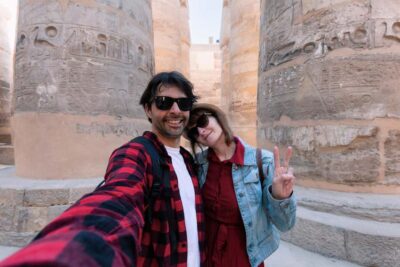
Small Group Excursion to Luxor Valley of the Kings from Hurghada
Read our review →
Valley of Kings Hatshepsut & Karnak Luxor Day Trip
Read our review →Browse the lists this tour appears in