
Reviewed · LUXOR WEST BANK TOURS
Luxor Day Tours To East Bank & West Bank
Luxor’s greatest strength is that its major sights sit on both sides of the Nile, and this private day tour brings the two halves together in one long historical sweep. You’ll visit Karnak and Luxor Temple on the East Bank, then cross to the West Bank for royal tombs, Hatshepsut’s temple, and the Colossi of Memnon. I like the private vehicle and flexible pace, and I like that you can choose a guide, entrance fees, and lunch as upgrades rather than paying for a package you may not need.
The main drawback is the packed schedule. Eight hours is enough to see the headline sites, but not enough for a slow archaeological study. Also, confirm exactly what your chosen price includes, since entrance fees and the Egyptologist guide are optional, and one water-charge mix-up has been reported even though bottled water is listed as included.
Key points about this Luxor day tour
- Two banks in one day: Cover Karnak and Luxor Temple, then the Valley of the Kings, Hatshepsut’s temple, and the Colossi of Memnon.
- Private transport: Your group travels by private air-conditioned vehicle, with hotel or Nile cruise pickup offered.
- Guide choice matters: Add an Egyptologist guide if you want help reading the temples, tombs, and royal symbols.
- A flexible price: The $15 starting price is attractive, but check whether entrance fees, lunch, and guiding are included in your selected option.
- A full but demanding day: The schedule allows about two hours at Karnak and the Valley of the Kings, plus shorter visits elsewhere.
- Strong overall record: The experience has a 4.9 rating from 35 reviews and a 97 percent recommendation rate.
Why seeing both banks of Luxor is worth your day
Luxor is not one compact archaeological park. Its ancient center spread across the Nile, with temples on the East Bank and royal burial grounds on the West Bank. Seeing both sides gives you a much clearer picture of ancient Thebes than visiting one temple in isolation.
The East Bank was linked with public worship and royal ceremony. The West Bank was tied to tombs and the world of the dead. This tour makes that contrast easy to follow, especially if you add the guide option. You move from enormous temple courts and processional avenues to painted burial chambers cut into the hills.
I particularly like the private format for this route. You are not tied to a large coach group, so your party can ask for more time at a favorite site or keep moving if the heat begins to wear you down. The vehicle also saves you from arranging separate transport between the two banks.
The tradeoff is pace. The tour gives you a strong first look at Luxor’s major monuments, but the sites are large and visually dense. If you want to inspect every inscription or enter every available tomb, you’ll need more time than this day provides.
A few other Luxor days to weigh up
- Hurghada: Luxor Valley of the Kings & Tutankhamun Tomb Trip
★ 4.7 · 13,208 reviews - Luxor: Valley of the Kings and Hatshepsut Temple Day Tour
★ 4.4 · 1,404 reviews - Hurghada: Luxor Tour with Valley of Kings, Karnak & Tut Tomb
★ 4.6 · 1,082 reviews
Karnak Temple, the grand opening act
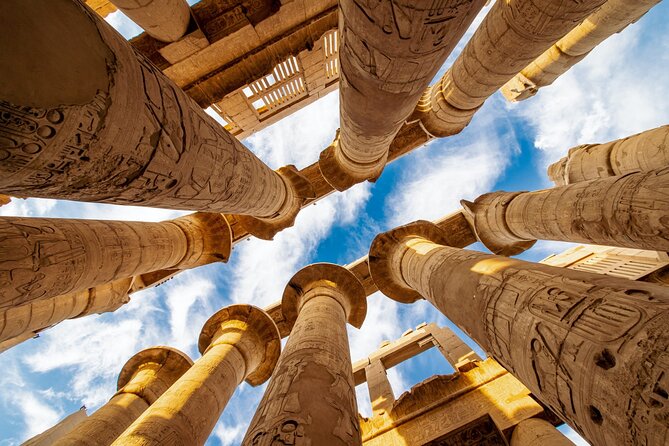
Karnak gets about two hours, which is sensible. This is the largest and most complex stop on the route, and rushing it would make little sense.
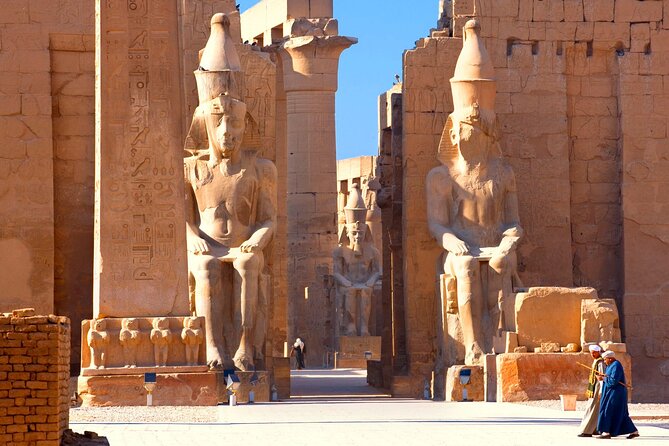
The temple complex was dedicated to Amun, his wife Mut, and their son Khonsu. Its scale is the first thing you notice. Columns, courtyards, gateways, statues, and carved walls stretch across a broad area, giving you a strong sense of how temple worship operated on a huge public scale.
The description calls Karnak the greatest example of worship in ancient Egyptian history. That is a grand claim, but the site earns the attention. Even a short visit gives you several distinct experiences: entering through massive gateways, walking among giant columns, studying carved scenes, and seeing how later rulers added their own work to an older sacred center.
Two hours should allow a useful visit with time for photographs. If your guide is included, ask for a clear route through the complex. Without a guide, the size can be confusing, and the meaning of the statues and inscriptions may not be obvious.
Wear practical shoes and carry the bottled water provided. Karnak is open and exposed, and the combination of walking and heat can make the first stop more tiring than expected.
Luxor Temple and the city’s evening connection
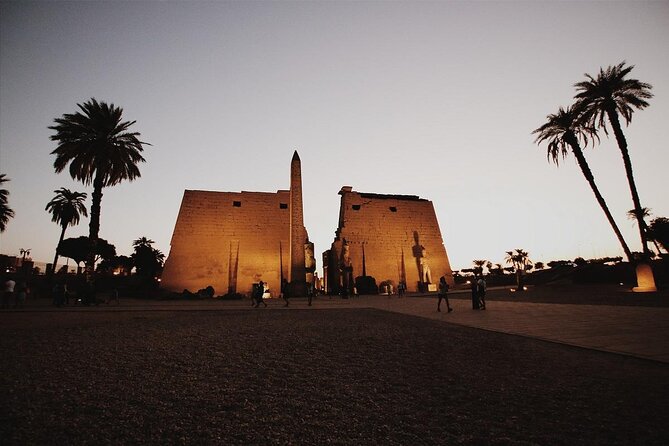
Luxor Temple receives about one hour. It is smaller and more concentrated than Karnak, so the shorter visit can work well.
The temple was begun by Amunhotep III in the 18th Dynasty and completed by Ramesses II during the 19th Dynasty. That change of rulers is useful to keep in mind as you look at the carvings. Ancient Egyptian monuments were often enlarged and adapted over time, rather than built in one single campaign.
Luxor Temple’s urban setting also gives it a different feel from Karnak. It sits in the center of modern Luxor, so the ancient stonework is closely tied to the present-day city. You get a strong contrast between the working city outside and the ceremonial space inside.
An hour is enough to see the main areas, but it leaves little room for lingering. If photography is important to you, use the time carefully. Your private format may make the stop feel less hurried than a large group visit, but the schedule still moves on to the West Bank.
Crossing to the Valley of the Kings
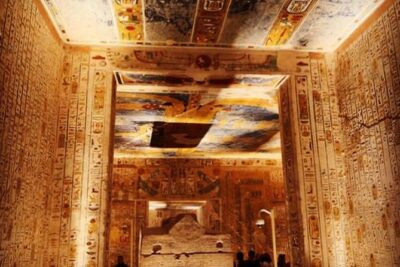
The Valley of the Kings is the longest West Bank stop, with about two hours. This is where the tour shifts from grand public temples to private royal burial places.
The valley contains the tombs of many rulers. The listed names include Thutmose I, Thutmose III, Tutankhamun, Ramesses VI, Merenptah, and Amenhotep I. The exact tombs available for entry can depend on current site rules and the ticket option you select, so do not assume every named tomb is part of the admission.
Tutankhamun’s tomb is famous, but it is not the only reason to visit. The point of the valley is seeing how royal burial moved into a hidden setting, with decorated corridors and chambers meant to guide the king into the afterlife. A guide can help explain the scenes and symbols, which otherwise may look like a series of similar painted walls.
Two hours gives you a reasonable chance to enter several tombs, depending on the ticket arrangement and how long you spend inside each one. Some tombs require extra fees, so confirm the entrance package before the day begins.
The valley can be physically demanding. You’ll walk over uneven ground and spend time in enclosed spaces. If you prefer a slower visit, tell the guide early. This is one stop where personal pacing matters more than simply checking off a famous name.
Same base, a completely different day out:
- Luxor Day Trip from Hurghada Small Group & Tutankhamun Tomb
★ 4.8 · 5,366 reviews - Hot Air Balloon Ride in Luxor Egypt with Transfers Included
★ 5.0 · 4,319 reviews - Luxor: Shared Full-Day Tour to Luxor West and East Banks
★ 4.5 · 1,812 reviews - Luxor: Hot Air Balloon Ride over Luxor Relics
★ 4.8 · 1,681 reviews
Hatshepsut’s temple and a different kind of royal story
The Temple of Hatshepsut at Deir el Bahari receives about two hours. That is generous compared with Luxor Temple, and it gives you time to take in the setting as well as the structure.
Hatshepsut was the daughter of Thutmose I and ruled Egypt for about 20 years during the 18th Dynasty, around 1490 to 1469 B.C. She is described as the only pharaonic woman to rule ancient Egypt. Her temple offers a useful counterpoint to the burial sites in the Valley of the Kings because it presents royal power in a formal, public setting.
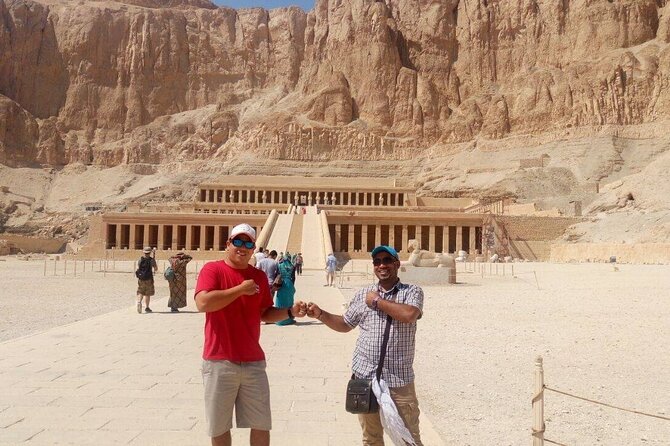
The building rises in broad levels against the cliffs of Deir el Bahari. Its terraces and long approach make it one of Luxor’s most recognizable monuments. You’ll want time here for wide photographs, close looks at the carved scenes, and an explanation of Hatshepsut’s role.
This is another stop where a guide can make a major difference. The monument is visually striking, but its political and religious meaning is not always clear from the stonework alone. Ask about the reliefs and Hatshepsut’s royal image, especially if ancient Egyptian succession and titles are new to you.
Two hours may feel long if you only want a quick photo, but it is useful if you care about architecture and the story behind the monument. The schedule allows the site to breathe a little after the more focused tomb visit.
The Colossi of Memnon as a brief final stop
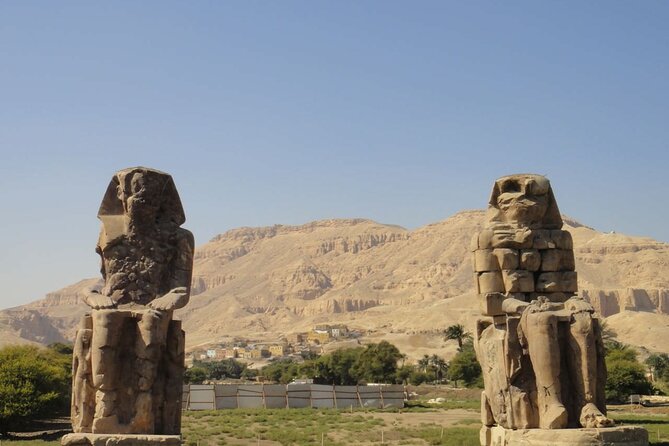
The final stop is the Colossi of Memnon, the remains of the mortuary temple of Amenhotep III. The visit is listed at about one hour, though the site is often used as a shorter final photo stop before returning to your hotel.
The two enormous seated figures are among the most familiar sights on the West Bank. Their scale gives you a final reminder of the power ancient rulers wanted to project, even though the larger mortuary temple no longer survives in full.
There is not the same amount of intact architecture here as at Karnak or Hatshepsut’s temple. That is the main reason to keep expectations realistic. You come for the statues, the connection to Amenhotep III, and the chance to pause before the return drive, not for another large complex.
Because the tour ends with drop-off at your hotel, this stop can work as a calm finish. If you are tired, it is also the easiest place to keep your visit brief.
What the $15 price really means
At $15 per person, the starting price is unusually low for a private eight-hour tour with transportation. That makes the experience appealing for anyone who wants a basic route between the major sites without arranging taxis or negotiating several separate fares.
Still, treat the price as a starting point. Entrance fees to the listed sites, the guide, and lunch are shown as optional, depending on the tour choice. A low headline price can become a different total once you add the services you actually want.
I would compare the options by asking three questions:
- Are the entrance fees included?
- Is an Egyptologist guide included?
- Is lunch part of the selected package?
The private vehicle and bottled water are included. Lunch is optional. Since a guide can add much more meaning at Karnak, the Valley of the Kings, and Hatshepsut’s temple, I would consider that upgrade carefully if this is your first visit to Luxor.
The guide quality appears to be one of the strongest parts of the experience. Named guides connected with the tour include Mohamed Eltiba, Ahmed, Angie, and Mohamed Ali. Guide assignments can vary, so you should not book on the assumption that one particular person will lead your day. But the repeated praise for clear explanations, friendly service, and help with temple inscriptions points to the value of choosing the guide option.
Transport, timing, and comfort
Pickup is offered from your Luxor hotel or Nile cruise, and the tour uses a private air-conditioned vehicle. The stated meeting point is Luxor Railway Station, so confirm the exact pickup arrangement after booking if you are staying elsewhere or boarding a ship.
The day lasts about eight hours and begins with hotel or cruise pickup. One party began at 8 a.m., which is a sensible approach for a route with so much walking. An early start can also give you more comfortable conditions before the day becomes hotter, though the exact pickup time should be confirmed.
You receive bottled water, but it is worth checking this at the start. One booking had a problem when the driver tried to charge for water, and the company resolved it after contact. I would keep the inclusion details on your phone and raise any confusion immediately rather than letting a small issue sour the day.
Most people can participate, according to the supplied practical information. The tour is near public transportation, although the private pickup means you may not need it. Expect walking at every major site, uneven surfaces at the valley, and sun exposure at open-air monuments.
Who this private Luxor route suits best
This tour fits you well if you want the major sights covered in one day and prefer private transport over a large group. It also suits first-time visitors who need a clear route through Luxor’s two banks.
I would choose it for:
- Couples or families who want a private vehicle
- Nile cruise passengers with one free day in Luxor
- First-time visitors who want both temples and tombs
- Budget-conscious visitors willing to check upgrade costs
- People who want a guide available but do not want guiding forced into the base price
You may want a slower or more specialized plan if you are an archaeology enthusiast, a serious photographer, or someone who dislikes full days of sightseeing. The route is broad rather than leisurely. It covers the essential sites, but it does not leave much room for additional tombs, museums, or unplanned stops.
The guide option is especially useful for anyone who wants context. A guide called Angie was praised for her explanation of the Valley of the Kings and the temples, while Mohamed Ali was noted for explaining the meaning of inscriptions. Another guide, Ahmed, was praised for allowing enough time for photographs. These details point to the kind of help you should request: clear history, readable explanations, and time for pictures.
Booking and cancellation details to keep in mind
The tour is often booked about 30 days ahead, so I would reserve early if your Luxor dates are fixed. Confirmation is received at booking, and free cancellation is available up to 24 hours before the experience starts.
Changes or cancellations made less than 24 hours before the local start time are not accepted for a refund. The experience also depends on good weather. If poor weather causes cancellation, you’ll be offered another date or a full refund.
The activity ends back at the meeting point, though the tour description also specifies return to the customer’s hotel. Confirm your exact drop-off location, especially if you are staying on a Nile cruise or moving to a different hotel afterward.
Should you book this Luxor day tour?
I would book it if you want a high-value first look at Luxor and like the privacy of your own vehicle. The combination of Karnak, Luxor Temple, the Valley of the Kings, Hatshepsut’s temple, and the Colossi of Memnon covers the essential East and West Bank sights in one day.
Before paying, select the option with the services you need and confirm the final total. The $15 base price is appealing, but entrance fees and guiding can change the real cost. If you want the monuments to make sense rather than simply appear as impressive ruins, the Egyptologist guide is the upgrade I would prioritize.
Skip it only if you want a slow, highly detailed archaeological day. For everyone else, this is a practical route with strong transport arrangements, a flexible private format, and enough time at the main sites to make your first Luxor visit count.
FAQ
How long does the Luxor East and West Bank tour last?
The tour lasts approximately eight hours, including visits to the major temples, tombs, and monuments on both sides of the Nile.
What sites are included in the route?
The route includes Karnak Temple, Luxor Temple, the Valley of the Kings, the Temple of Hatshepsut at Deir el Bahari, and the Colossi of Memnon.
Is hotel or Nile cruise pickup available?
Yes. Pickup is offered from your hotel or Nile cruise in Luxor, with return drop-off provided. The stated meeting point is Luxor Railway Station, so confirm your exact pickup location after booking.
Is transportation private?
Yes. The tour uses private transportation in an air-conditioned vehicle, and only your group participates.
Is an Egyptologist guide included?
A tour guide is optional and depends on the tour option selected. You can add a guide if you want explanations of the temples, tombs, inscriptions, and royal history.
Are entrance fees included?
Entrance fees depend on the tour option chosen. Check the final package details before booking so you know which site admissions are covered.
Is lunch included?
Lunch is optional and is not included in the basic package.
Can I cancel for a full refund?
Yes, if you cancel at least 24 hours before the experience start time. Poor-weather cancellations offer a different date or a full refund.
New on the Luxor list
- Full-Day East and West Luxor Private Tour★ 4.5 · 26 reviews
- Marsa Alam: Snorkeling with Sea Turtles Marsa Mubarak★ 4.9 · 26 reviews
- Private Full day East and West Bank, Luxor★ 5.0 · 26 reviews
- Day Trip to Edfu & Kom Ombo temples from Luxor and drop off in Aswan or Luxor★ 5.0 · 26 reviews
- Luxor Day Tour: Kings Valley & Karnak & Luxor & Hatshepsut Temple★ 5.0 · 26 reviews
- Luxury Hot Air Balloon Experience in Luxor with Pick-up★ 5.0 · 27 reviews
- Full-Day Luxor Tour – Discover the East and West Banks of the Nile★ 5.0 · 27 reviews
- 5 Days 4 Nights Nile Cruise Tour★ 5.0 · 27 reviews
Luxor West Bank Tours, compared.
Luxor Valley of the Kings & Tutankhamun Tomb Trip
Read our review →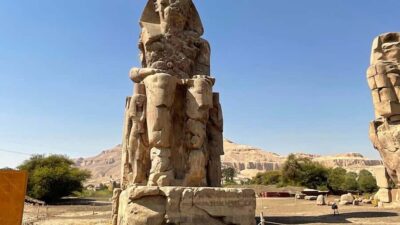
Valley of the Kings and Hatshepsut Temple Day Tour
Read our review →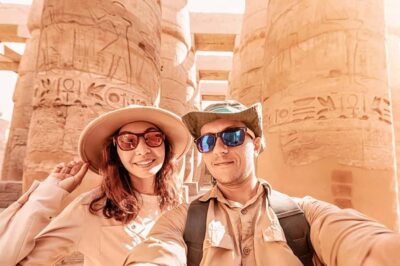
Luxor Tour with Valley of Kings, Karnak & Tut Tomb
Read our review →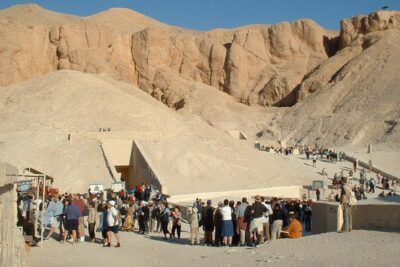
Valley of Kings, Hatchepsut Temple ,Karnak & Luxor-DayTour
Read our review →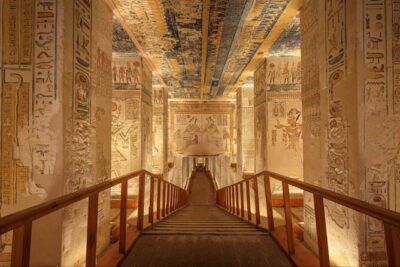
Full Day Tour of Luxor West Bank Temples and Tombs (Private)
Read our review →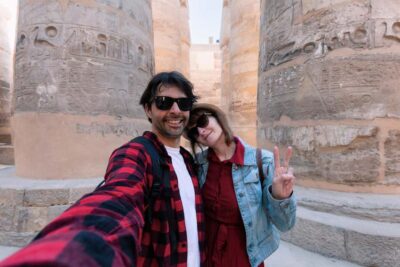
Small Group Excursion to Luxor Valley of the Kings from Hurghada
Read our review →
Valley of Kings Hatshepsut & Karnak Luxor Day Trip
Read our review →Browse the lists this tour appears in