
Reviewed · LUXOR TOURS
Private Two Days Tour of Luxor West and East banks
Luxor’s greatest strength is scale. In two days, you can move from royal tombs and desert cliffs on the West Bank to the huge columns of Karnak and the evening-friendly Luxor Temple on the East Bank. The private format matters here because it lets your guide adjust the pace, explain the details, and give a family some breathing room.
I like the included hotel pickup and air-conditioned vehicle, especially when the day stretches across several major sites. I also like the two-day plan: the West Bank is the longer, more demanding day, while the East Bank gives you time to look closely instead of racing from one monument to the next. The main drawback is that entrance fees are not included, so your final cost will be higher than the advertised $75.
Key things to know before booking
- The West Bank takes longer: Allow more energy for the Valley of the Kings, Hatshepsut, and the Colossi of Memnon.
- Your guide stays outside the tombs: Guides cannot enter the Valley of the Kings tombs, but they can explain the decoration and point out what to notice.
- Private means flexible: Only your party participates, and the schedule can be adjusted to suit your preferences.
- Mansour and Khalid are named guides: Past guests singled out Mansour and also praised the work of guide Khalid.
- Admission costs come later: Site tickets, food, drinks, and gratuities are separate from the $75 tour price.
- Families can benefit from the pace: The schedule has been adapted for young children, including a nine-year-old who received patient answers to his questions.
Why two days makes sense in Luxor
Luxor is not a one-monument town. Its major sights are spread across both sides of the Nile, and each site asks for a different kind of attention. The West Bank is about tombs, funerary temples, and the dry hills where ancient rulers built their final resting places. The East Bank is about grand state temples, processions, columns, and the religious heart of ancient Thebes.
You could try to cover all of this in one very long day, but I would not recommend it. You would spend much of your time getting from place to place, then meet Karnak’s 134 columns when your concentration is already gone. Splitting the tour gives you a better chance to remember what you saw.
The arrangement also suits families. One day can be more active and site-heavy, while the second day has a different rhythm. Guides have adjusted the timing for young children, and the private setup means you are not trying to keep an entire busload on schedule.
At $75, the tour offers good value if that price covers your party rather than each individual. You receive a private guide, driver, fuel, parking, taxes, hotel pickup, and drop-off. Still, you need to budget separately for admission to the Valley of the Kings, Hatshepsut, Karnak, and Luxor Temple, along with food, drinks, and a tip for the guide and driver.
A few other Luxor days to weigh up
- Hurghada: 2-Day Luxor Tour with Hotel, Balloon, & Boat Ride
★ 4.5 · 1,113 reviews - 2-Day Top Attractions and Adventures Package in Luxor with Accommodation
★ 5.0 · 178 reviews - Hurghada: 2-Day Luxor Tour with Hotel, Balloon, & Nile Boat
★ 4.8 · 82 reviews
Valley of the Kings: choose your tombs wisely
The first day begins on Luxor’s West Bank at the Valley of the Kings, the burial ground of the rulers of ancient Thebes. The visit includes about an hour and a half, beginning with a short stop at the visitor center before you head toward the tombs.
This is one place where a guide’s briefing is especially useful. Guides are not permitted inside the tombs, so your Egyptologist will explain the layout and tell you what to watch for before you enter. That preparation helps you read the painted scenes instead of simply walking through a dark corridor and taking a quick photograph.
The tombs were built for the afterlife, and their walls are covered with scenes, symbols, and writing connected with the journey beyond death. Your guide can help connect the images to the beliefs of ancient Egypt, then leave you free to explore at your own pace inside.
The standard admission does not cover every tomb. If you want to visit the tomb of King Tutankhamun, you pay an extra charge directly. This is an important budget point, since the famous name can make the optional ticket tempting. Ask your guide which tombs are open and which best match your interests before buying additional access.
The Valley is not a quick photo stop. You will walk, climb, and move between separate entrances, so comfortable shoes and water are sensible. The dry setting gives the site a powerful atmosphere, but there is little shade. I would save your strongest burst of energy for this part of the day.
Temple of Hatshepsut and the story of a female pharaoh
From the Valley, the tour continues to the Temple of Hatshepsut, one of Luxor’s most striking monuments. The temple rises against the cliffs, with broad terraces and long lines that make it feel very different from the enclosed tombs.
Your guide introduces Hatshepsut’s rise to power and explains how she presented herself as a male ruler in order to claim the throne. That story gives the monument more meaning than its impressive shape alone. Look closely at the carved scenes and hieroglyphs, then use the free time to wander through the courtyards.
The visit lasts about an hour. That is enough for an introduction and a look around, but you may want to ask your guide to focus on the details that interest you most. The private format helps here. You can spend more time on the carvings, or move on if younger members of your group have had enough.
Admission is extra, so factor that into the final price. The temple is also exposed, and the open terraces can feel tiring after the Valley of the Kings. A slower pace, water, and a pause in the vehicle between stops will make the day more comfortable.
Colossi of Memnon: a short stop with a big view
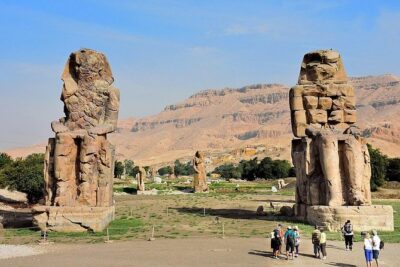
The Colossi of Memnon are two enormous seated statues marking what remains of the funerary temple of Amenhotep III. Only about 20 minutes are planned here, and admission is free.
This is a brief stop, but it earns its place. The statues give you an immediate sense of the scale ancient rulers wanted to project. They also provide a useful contrast to the detailed tomb paintings and the terraces of Hatshepsut.
You should not expect a full temple visit. The complex itself has largely disappeared, leaving the two giant figures as the main focus. Use the stop for photographs and for your guide’s explanation of the site, then keep your energy for the longer visits.
The West Bank day is the more demanding of the two. Plan accordingly, particularly if you are traveling with children. The private driver and air-conditioning are not minor comforts here. They give you a chance to recover between monuments instead of sitting in a large group’s fixed schedule.
Same base, a completely different day out:
- Hurghada: Luxor Valley of the Kings & Tutankhamun Tomb Trip
★ 4.7 · 13,208 reviews - Luxor Day Trip from Hurghada Small Group & Tutankhamun Tomb
★ 4.8 · 5,366 reviews - Hot Air Balloon Ride in Luxor Egypt with Transfers Included
★ 5.0 · 4,319 reviews - Luxor: Shared Full-Day Tour to Luxor West and East Banks
★ 4.5 · 1,812 reviews
Karnak Temple: two hours among 134 columns
Day two turns to the East Bank and begins at Karnak, the largest and most absorbing temple complex on this tour. The visit lasts about two hours, followed by free time to look around.
Your approach begins along the Avenue of Sphinxes, where your guide explains how the monumental entrance was built. Inside, you pass through layers of construction left by different pharaohs. Karnak grew over more than 3,000 years, so the complex feels less like one finished building and more like a record of rulers adding their mark.
The Great Court leads toward the Great Hypostyle Hall, the visual high point for many people. Its 134 columns rise overhead in dense rows, creating the feel of an ancient stone forest. Take time to look up, but also inspect the reliefs on the columns and walls. A guide can help you separate royal celebration, religious ritual, and symbolic decoration.
Farther inside, the sacred lake marks another part of the complex’s religious life. Ancient priests used the lake and its water in rituals connected with purification. This is a good point to slow down and let the scale of Karnak settle in.
Karnak can be confusing without an explanation. Its courtyards, pylons, halls, statues, and shrines cover a large area, and it is easy to lose the thread of what you are seeing. Your Egyptologist guide gives the site an order, then you receive free time to return to parts that caught your attention.
The two-hour visit is substantial, but Karnak can absorb much longer. If you are keen on ancient architecture, ask for a little extra time during the private portion. If you are with small children, the guide can help keep the route focused rather than turning the complex into an exhausting march.
Admission is not included. This is one of the larger extra costs to remember when comparing the tour price with a self-guided visit.
Luxor Temple: an easier finish on the East Bank
Luxor Temple provides a more compact final visit, lasting about an hour. It was once connected to Karnak by a two-kilometer Avenue of Sphinxes, and part of that avenue still marks the approach to the temple.
The monument is associated with Ramses II, whose statues dominate the entrance. Inside, columns and walls carry carved hieroglyphs, giving your guide plenty to explain. You can ask for help reading the scenes rather than treating the writing as decoration.
The temple also carries traces of later rulers. Alexander the Great wrote himself into its story, a reminder that important Egyptian monuments continued to be used and adapted long after the original pharaohs were gone.
Look for the obelisk at the entrance. It was once one of a pair, while its companion now stands on the Place de la Concorde in Paris. That detail connects Luxor to a much later chapter of European collecting and public display.
Luxor Temple is a sensible final stop because it is more contained than Karnak. After the open spaces and long walks of the West Bank, you can concentrate on the statues, reliefs, and columns without tackling another enormous complex. Admission is separate, and you should also leave room in the budget for a tip if your guide and driver have provided good service.
The private vehicle and guide make the difference
The tour includes hotel pickup and drop-off in an air-conditioned vehicle. That gives you a fixed base for the two days and avoids having to arrange separate transport between the West and East Bank sights.
The vehicle is also a practical part of the experience. Luxor’s monuments are spread out, and the West Bank day can be long. A clean minivan and a considerate driver were especially useful for families, with the timing adjusted around young children.
Your guide is the other major variable. Mansour received particular praise for bringing the subject to life, answering a nine-year-old’s questions patiently, and making the group feel comfortable. Khalid is also named in connection with a well-organized, informative day. Guide assignments can vary, so you should not assume one specific person will lead every booking, but these names give you an idea of the level of personal service associated with the operator.
A good Egyptologist does more than recite dates. You want someone who can explain why a relief matters, show you the difference between a temple and a tomb, and answer questions without rushing. The private setting makes that exchange easier than it is on a large group tour.
The guide may also help arrange additional activities if you want to adjust the plan. Keep in mind that any extra activity would need to be confirmed and may carry its own charge. The important point is that the schedule is not locked to a bus timetable.
What is included, and what will cost extra
The $75 price includes several useful services:
- Qualified Egyptologist guide
- Hotel pickup and drop-off
- Air-conditioned transport
- Driver, fuel, parking, service charges, and taxes
You pay separately for entrance tickets to the archaeological sites. Food and drinks are also not included, and gratuities are recommended.
This makes the tour a stronger value for people who want a private guide and transport without organizing each piece themselves. It is less attractive if you are comparing only the headline price with a self-guided admission ticket. Before booking, ask yourself what you would otherwise pay for a vehicle, a driver, and an Egyptologist over two days.
The private arrangement also has value that is harder to put on a receipt. You can ask more questions, spend extra time at a favorite monument, and adapt the rhythm for children. Those benefits matter most if your group has mixed interests or different energy levels.
Who should book this Luxor tour?
I would recommend this experience to first-time visitors who want the major West and East Bank sights explained in a clear order. It also suits families, couples, and small groups who prefer their own vehicle to a fixed group schedule.
It is a good match if you value context. The monuments are impressive on their own, but the stories of Hatshepsut, Ramses II, Alexander the Great, and the changing layers of Karnak make the visits more rewarding.
You may want another option if you dislike guided sightseeing or want to spend several hours at one site without a planned route. You also need to be comfortable paying admission fees separately and handling a long first day on the West Bank.
Book with the two-day structure in mind, not as one oversized sightseeing day split on paper. Give the Valley of the Kings and Hatshepsut your best energy, then let Karnak and Luxor Temple provide a more measured second day.
Final verdict
This is a practical way to see Luxor’s essential monuments without surrendering the trip to a large group schedule. The strongest points are the private transport, patient guiding, family-friendly flexibility, and sensible division between the West and East Banks.
At $75, it is appealing when you want the guide and vehicle arranged for you, but remember that tickets and meals are extra. If you want a clear introduction to Luxor, prefer personal attention, and can handle the additional admission costs, I would book it. If your priority is the lowest possible total price or complete independence, plan the sites and expenses carefully before choosing.
FAQ
Is hotel pickup included?
Yes. Hotel pickup and drop-off are included in the tour.
Is this a private tour?
Yes. Only your group participates, so the schedule can be adjusted to your preferences.
Are entrance fees included in the $75 price?
No. Entrance fees for the Valley of the Kings, Temple of Hatshepsut, Karnak Temple, and Luxor Temple are not included.
Is the tomb of King Tutankhamun included?
No. Visiting King Tutankhamun’s tomb requires an additional payment made directly at the site.
Are food and drinks included?
No. Food and drinks are not included unless specifically stated otherwise.
What is the cancellation policy?
You can cancel at least 24 hours before the experience start time for a full refund. Cancellations or changes made within 24 hours are not accepted and are not refundable.
New on the Luxor list
- Full-Day East and West Luxor Private Tour★ 4.5 · 26 reviews
- Marsa Alam: Snorkeling with Sea Turtles Marsa Mubarak★ 4.9 · 26 reviews
- Private Full day East and West Bank, Luxor★ 5.0 · 26 reviews
- Day Trip to Edfu & Kom Ombo temples from Luxor and drop off in Aswan or Luxor★ 5.0 · 26 reviews
- Luxor Day Tour: Kings Valley & Karnak & Luxor & Hatshepsut Temple★ 5.0 · 26 reviews
- Luxury Hot Air Balloon Experience in Luxor with Pick-up★ 5.0 · 27 reviews
- Full-Day Luxor Tour – Discover the East and West Banks of the Nile★ 5.0 · 27 reviews
- 5 Days 4 Nights Nile Cruise Tour★ 5.0 · 27 reviews
Luxor Tours, compared.
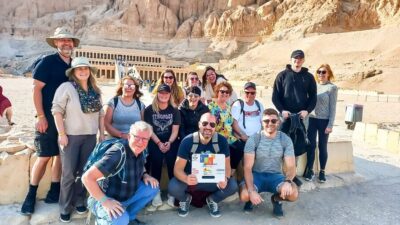
Luxor Valley of the Kings & Tutankhamun Tomb Trip
Read our review →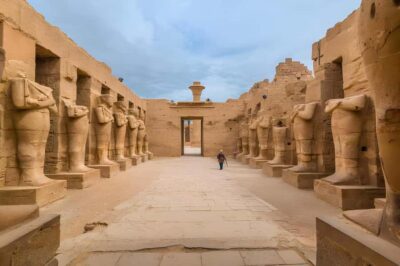
Luxor Day Trip from Hurghada Small Group & Tutankhamun Tomb
Read our review →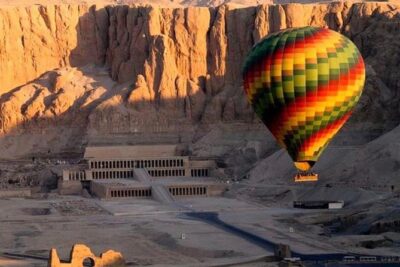
Hot Air Balloon Ride in Luxor Egypt with Transfers Included
Read our review →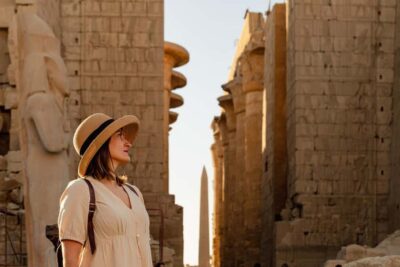
Shared Full-Day Tour to Luxor West and East Banks
Read our review →
Luxor Day Tour: Valley of Kings & Queens & Hatchepsut Temples
Read our review →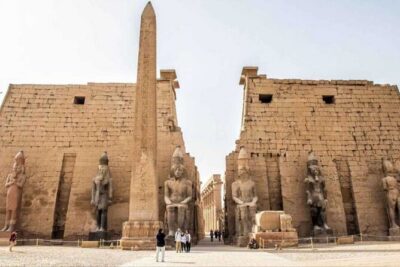
Full Day Tour to East and West Banks of Luxor
Read our review →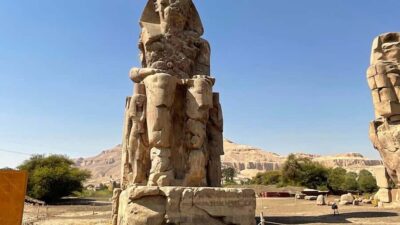
Valley of the Kings and Hatshepsut Temple Day Tour
Read our review →Browse the lists this tour appears in