
Reviewed · LUXOR TOURS
Luxor: West & East Banks & Tut’s Tomb Private Full-Day Tour
Tutankhamun’s tomb is the headline, but the real pleasure of this private Luxor tour is the contrast between the small, richly painted burial chambers on the West Bank and the vast stone courts of Karnak on the East Bank. In one day, you move from royal funerals to temple rituals, with a guide to explain what you are seeing rather than leave you facing a forest of columns.
I like two things here: you cover Luxor’s main ancient sights without arranging several taxis, and the private format lets you slow down for photos or spend longer at a favorite stop. Guides including Mina, Salma, Manal, and Mahmoud Issa have been praised for clear storytelling, good English, and patience.
The main drawback is simple: this is a long, walking-heavy day, with about 13,000 steps reported by one guest. Summer heat can make the schedule tiring, and Tutankhamun’s tomb may require an extra ticket, so confirm exactly what is included before you go.
Key points to know before booking
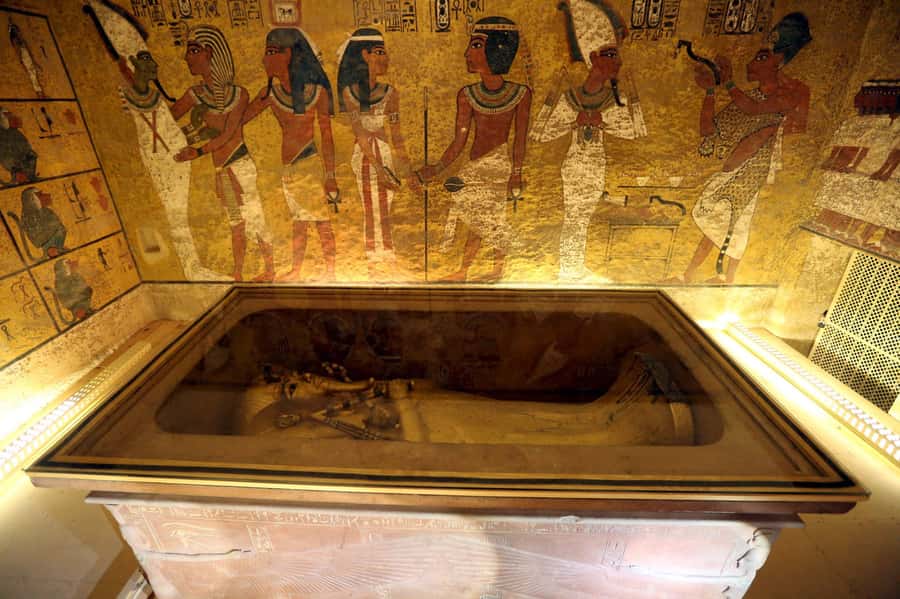
- Tutankhamun’s tomb is the special add-on to a classic Luxor day: You visit three Valley of the Kings tombs, including the famous pharaoh’s burial place, but the Tut ticket may cost extra.
- The private vehicle makes a packed schedule workable: Hotel pickup, air conditioning, and a waiting driver remove much of the day’s transport hassle.
- You get both banks of the Nile: The West Bank brings tombs and mortuary temples, while Karnak and Luxor Temple show the ceremonial heart of ancient Thebes.
- Your guide shapes the experience: Mina, Salma, Manal, Remon, Nelly, David, and Mahmoud Issa are among the guides praised for detailed explanations and flexible timing.
- Lunch is included, drinks are not: The meal is described as a local buffet or traditional Egyptian lunch, with drinks purchased separately.
- Expect a full sightseeing day: The tour is scheduled for eight hours, with two hours at the Valley of the Kings and two hours at Karnak.
Why this private Luxor day works
Luxor is not one compact archaeological site. Its monuments are spread across both sides of the Nile, and the best sights are separated by roads, fields, and river crossings. Seeing the West and East Banks in one day is possible on your own, but it takes planning, transport, tickets, and a good sense of timing.
This tour bundles those moving parts into a private group with hotel pickup and drop-off. That matters most if you have only a day or two in Luxor, or if you prefer to spend your energy looking at monuments instead of negotiating rides.
The day begins at your hotel in Luxor and finishes there. The vehicle has air conditioning, a welcome detail in the hot months. Several guides and drivers have also been praised for arriving on time, keeping the car comfortable, and waiting near the entrance when you return from a site.
The private setup is the biggest practical advantage. You can ask questions, take a break, spend longer taking photographs, or adjust the pace with your guide. It is still a busy schedule, but you are not tied to the interests or walking speed of a large group.
A few other Luxor days to weigh up
- Luxor: Shared Full-Day Tour to Luxor West and East Banks
★ 4.5 · 1,812 reviews - Full Day Tour to East and West Banks of Luxor
★ 5.0 · 1,449 reviews - Luxor : Full Day Tour to Luxor West and East Banks & Lunch
★ 5.0 · 870 reviews
Valley of the Kings: royal tombs beneath the hills
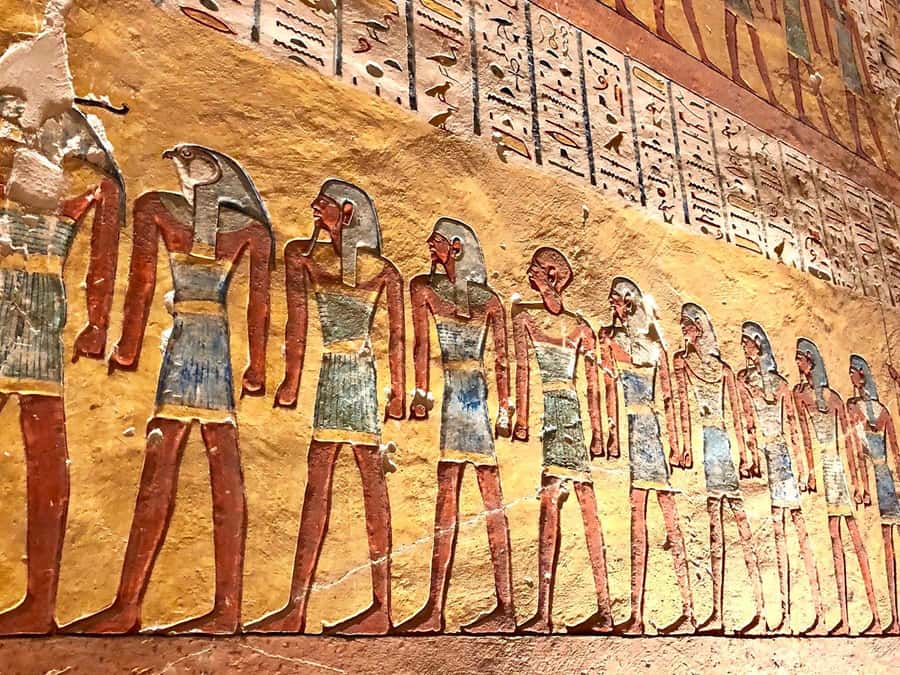
The first major stop is the Valley of the Kings, scheduled for about two hours. This dry valley was used for royal burials, and its plain exterior gives little warning of the colored scenes inside the tombs.
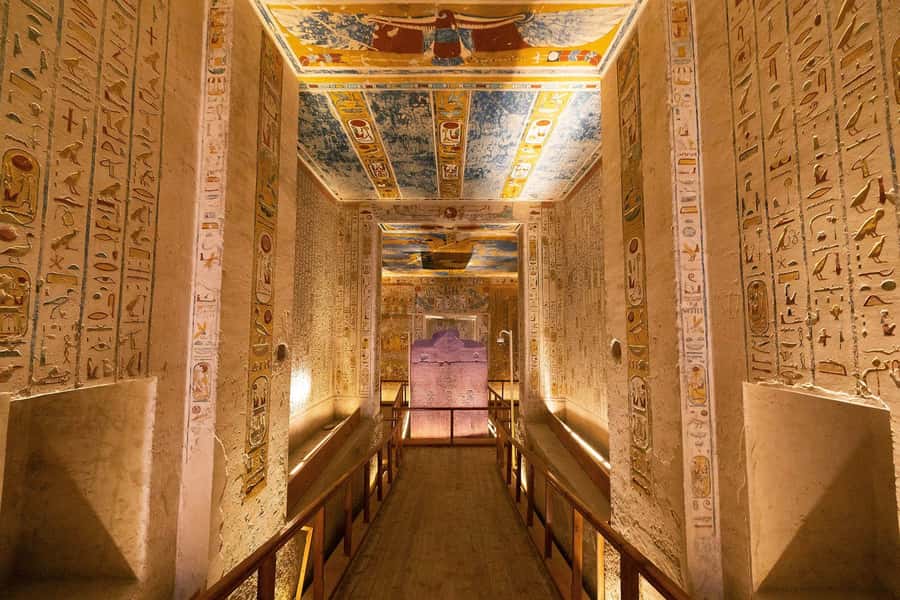
You are set to see three tombs, including Tutankhamun’s. The guide explains the purpose of the valley, the burial customs, and the stories shown on the walls before giving you time to look around and take photographs where permitted.
Tutankhamun’s tomb is smaller than many people expect. Its importance comes from the discovery of the young king’s largely intact burial treasure, not from a huge sequence of chambers. Seeing the burial chamber itself gives the famous name a physical setting, even if the room is more modest than the grand tombs nearby.
Pay attention to the ticket details. The general admission covers entry to a set number of tombs, but Tutankhamun’s tomb has been charged separately at 700 Egyptian pounds according to a December 2025 booking experience. The description of the tour says entry fees are included, yet this specific extra charge creates a point of confusion. I would ask the operator before departure if the Tut ticket is included in the current price.
You may also want to ask about the tombs of Ramses V and VI. One guide recommended them, and they are known for vivid wall decoration. The extra ticket is not included in the stated package, but it may be money well spent if you care more about painted interiors than famous names.
The valley involves walking in exposed sun and entering tombs reached by sloping paths or steps. Wear shoes with a firm grip, bring water, and pace yourself. The guide can give you context, but the pleasure of this stop comes from taking a quiet moment to study the color and symbols inside.
Valley of the Queens: a shorter, different royal story
The Valley of the Queens follows, with about an hour set aside. This area contains burial places for queens, princesses, and other high-ranking members of the royal court.
It is easy to treat this as a smaller repeat of the Valley of the Kings, but the change in focus is useful. Your guide can show how royal burial sites were used by different members of the court and explain the role of women and children within the ruling family.
The stop is shorter, so you should not expect to see every tomb. Instead, use the time to compare the scale and decoration with what you saw earlier. The value here is not sheer size. It is the chance to see a broader picture of ancient Egyptian royal life.
Hatshepsut’s three terraces at Deir el-Bahari
The Mortuary Temple of Queen Hatshepsut is one of the day’s most striking monuments. Its three broad terraces rise from the desert toward the cliffs of Deir el-Bahari, creating a strong geometric contrast with the surrounding rock.
Hatshepsut ruled as pharaoh and was represented in ways traditionally associated with a male king. Your guide can explain that unusual position and point out how the temple’s design and decoration supported her authority.
This is a good place to pause and look beyond individual carvings. The temple’s setting does much of the work. Long lines, pale stone, terraces, and cliffs create a grand approach, while the remains of reliefs and columns give clues to the original ceremonial purpose.
The one-hour visit is enough for an organized introduction and time to walk around, but you may want longer if architecture and photography are your priorities. The site is open and sunny, so your hat and water matter here as much as they do in the valleys.
Same base, a completely different day out:
- Hurghada: Luxor Valley of the Kings & Tutankhamun Tomb Trip
★ 4.7 · 13,208 reviews - Luxor Day Trip from Hurghada Small Group & Tutankhamun Tomb
★ 4.8 · 5,366 reviews - Hot Air Balloon Ride in Luxor Egypt with Transfers Included
★ 5.0 · 4,319 reviews - Luxor: Hot Air Balloon Ride over Luxor Relics
★ 4.8 · 1,681 reviews
Colossi of Memnon: a quick stop with a big scale
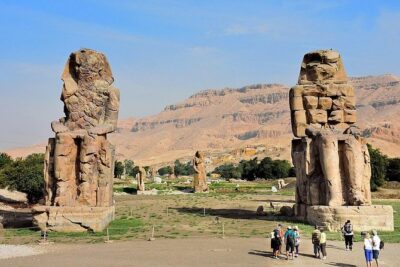
The Colossi of Memnon receive about 30 minutes. These enormous seated statues once guarded the entrance to the mortuary temple of Amenhotep III.
The temple itself is largely gone, which can make this stop feel brief compared with Karnak or Hatshepsut’s temple. The statues, however, give you a clear sense of the scale ancient builders aimed for. Your guide can explain the connection with Amenhotep III and the former temple complex.
Think of this as a useful photo and orientation stop rather than a full museum visit. It breaks up the West Bank schedule and helps you understand that many ancient monuments were once far larger than the ruins visible today.
Lunch in a local restaurant
Lunch is included at a local restaurant, usually described as a buffet or traditional Egyptian meal. The food has been praised as tasty, and one meal accommodated a gluten-free request with different rice.
Drinks cost extra, so keep a little Egyptian currency available. One restaurant had a terrace overlooking the green farmland of the West Bank, a welcome change after hours around stone monuments and open desert.
Do not expect lunch to be the main event. Its value is practical: you get a proper pause, a chance to sit in air conditioning or shade, and food without having to search for a restaurant during a tightly planned day.
Karnak Temple: the giant of the East Bank
After lunch, you cross to the East Bank for Karnak Temple, with about two hours scheduled. This is the largest and most demanding site of the day.
Karnak was dedicated chiefly to Amun and connected with his wife Mut and their son Khonsu, the three figures forming the Theban Triad. It grew over many centuries, with successive rulers adding courts, pylons, columns, chapels, and statues.
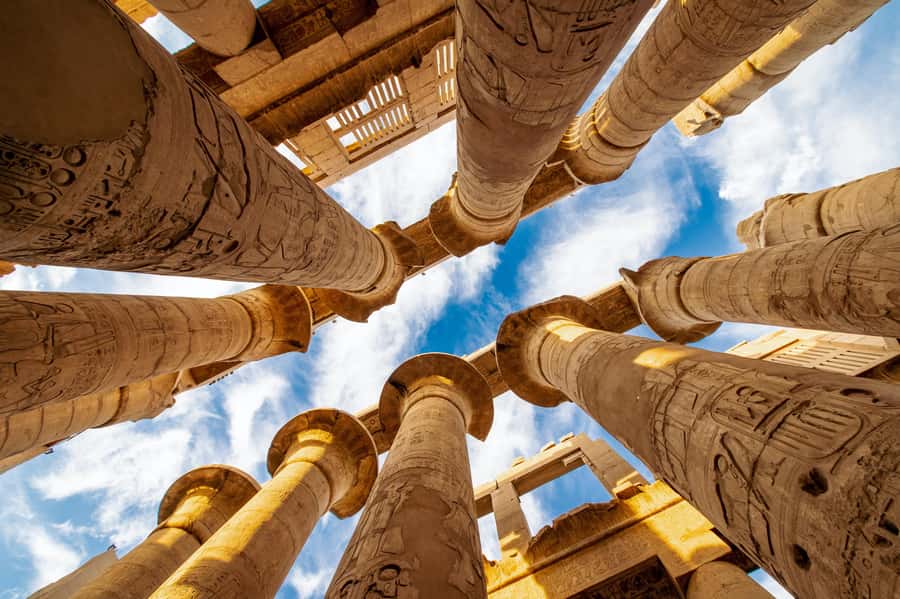
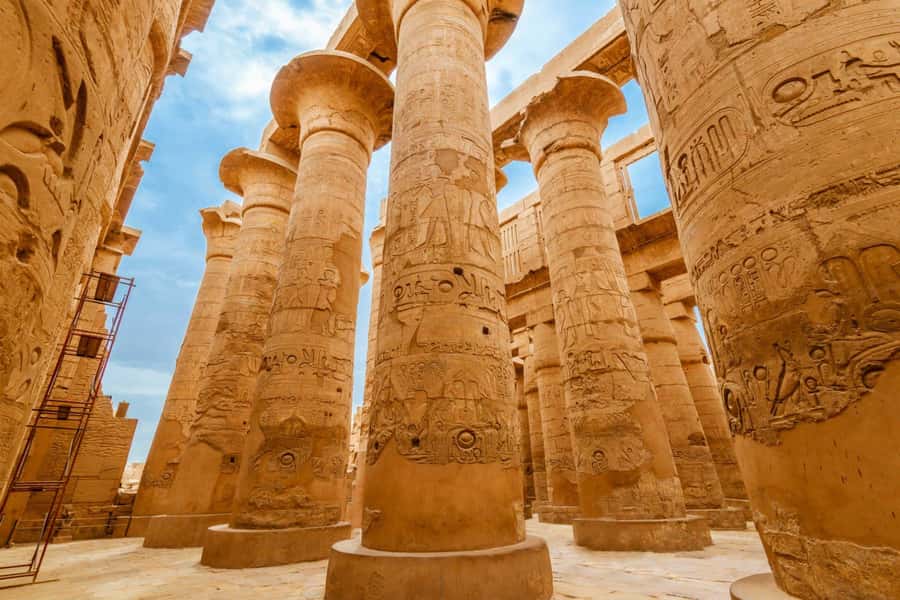
The Great Hypostyle Hall is the visual knockout. Its forest of towering columns makes you feel very small, and the carved surfaces reward a slow look. A guide is especially useful here because the complex can otherwise feel like a collection of impressive but disconnected stones.
Two hours gives you a strong introduction, but Karnak can absorb much longer. One visitor found the available time insufficient for a full visit and planned to return independently. That is a fair warning. If you love archaeology, architecture, or photography, tell your guide early that Karnak is a priority.
The private format helps. Your guide can explain the main route, then leave you time to explore and take pictures. Still, the tour must keep moving to reach Luxor Temple, so this is not an all-day Karnak study visit.
Luxor Temple: the evening finish
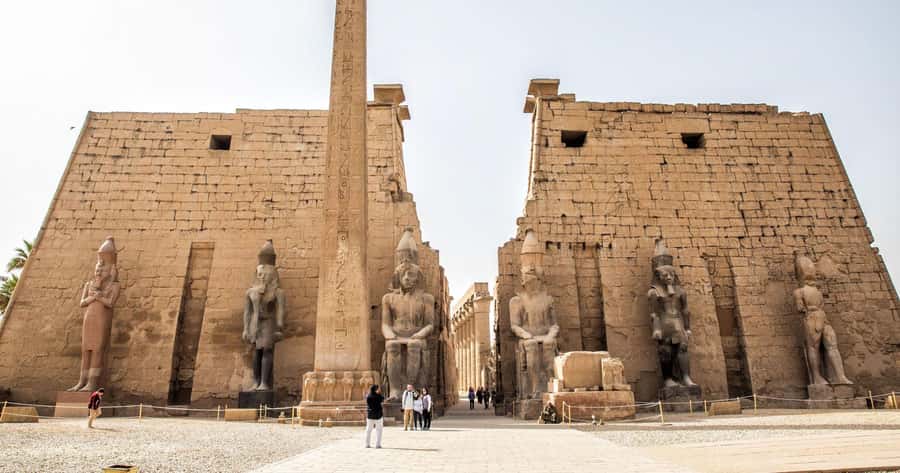
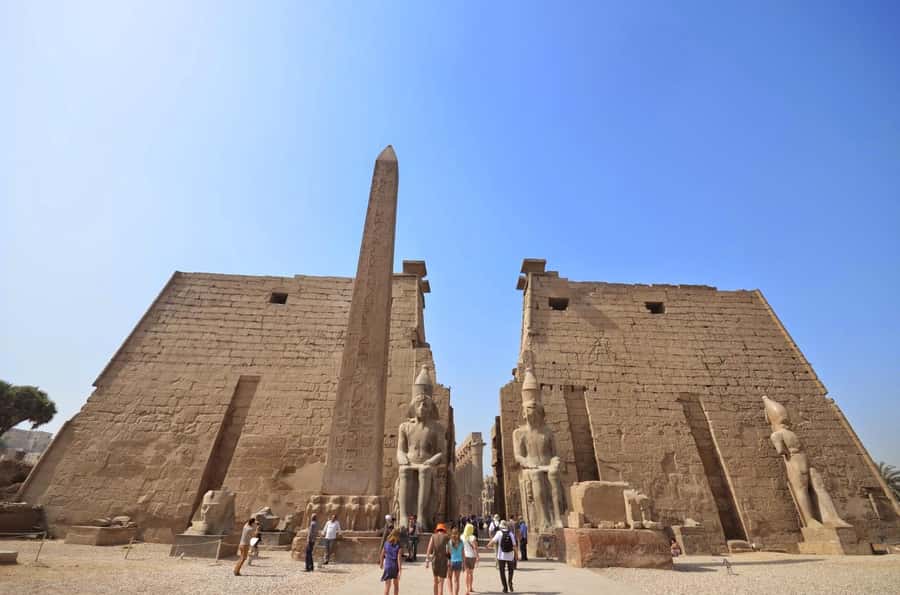
The final monument is Luxor Temple, scheduled for about an hour. Amenhotep III began the temple, and Ramses II completed major work on it. Unlike the remote tombs, this temple sits in the modern city, making the meeting of ancient and present-day Luxor especially clear.
The temple was connected with the renewal of kingship and the religious life of ancient Thebes. Your guide can help you read the layers left by different rulers and explain how the site relates to Karnak.
I like ending here because the monument feels more urban and immediate than the West Bank sites. Large statues, columns, and courts remain impressive, but you are also aware that modern Luxor has grown around them.
An hour is enough to see the main features, though it may feel short after Karnak. By this point, fatigue is a real factor. The advantage of a private car waiting afterward is that you can finish the day without arranging a ride back to your hotel.
Guide quality and the private format
The guide is the part of this experience that can turn a crowded list of monuments into a coherent day. Names vary by booking, but strong feedback has singled out Mina, Salma, Manal, Mahmoud Issa, Remon, Nelly, David, Asma, Esraa, and Gabriel.
The common strength is not simply reciting dates. The best guides explain why a temple was built, connect one ruler to the next, and answer questions in clear English. Several guides also gave visitors time to wander alone after the main explanation, which is exactly the right balance for a private archaeological tour.
The driver matters too. You spend a fair amount of time moving between sites, and the drivers have been praised for safe driving, punctual pickups, clean presentation, and keeping the air conditioning running. Some waited directly at the entrance so you did not have to search for the car.
You can also request small practical help. One guide arranged a pharmacy stop, and another helped contact a railway station about a later train to Cairo. Those gestures are not guaranteed, but they show why a private guide can be more useful than a fixed audio guide.
Price, walking, and who should book
At $140 per person, the tour is not the cheapest way to see Luxor. Its value depends on what you would otherwise pay for a private vehicle, guide, lunch, and separate admission tickets.
The package includes hotel transfers, an English-speaking guide, lunch, and entry fees as described. The possible Tutankhamun surcharge is the key question to settle. Drinks and optional tomb tickets are extra, so the final cost can rise.
I see this as good value for a first visit, especially if you have limited time. You see all the major places in one day, avoid much of the transport planning, and get explanations at sites that can be confusing without context.
The pace will suit you if you want a broad, well-organized introduction. It may not suit you if you prefer lingering for hours at one temple, avoiding midday heat, or visiting every tomb at leisure. The day includes substantial walking, steps, sun, and repeated transitions between the car and archaeological sites.
Book it if you want the main story of Luxor in one private day and value an informed guide more than a slow schedule. Ask in advance about the exact Tutankhamun admission, extra tombs, and your preferred start time. If you have two or more full days in Luxor, you might prefer to split the West and East Banks, but this tour is a sensible choice when time is tight.
FAQ
How long does the Luxor tour last?
The tour lasts eight hours, including visits to the West and East Banks, lunch, and hotel transportation.
What sites are included?
The route includes the Valley of the Kings, Valley of the Queens, Mortuary Temple of Hatshepsut, Colossi of Memnon, Karnak Temple, and Luxor Temple.
Does the tour include Tutankhamun’s tomb?
The tour description includes a visit to Tutankhamun’s tomb, but a December 2025 booking experience states that entry required an additional 700 Egyptian pounds. Confirm the current ticket arrangement before booking.
How many tombs do I see in the Valley of the Kings?
You see three tombs in the Valley of the Kings, including Tutankhamun’s tomb.
Is lunch included?
Yes. Lunch at a local restaurant is included. Drinks are charged separately.
Is this a private tour?
Yes. The activity is for a private group with a live English or Arabic-speaking guide.
Is hotel transportation included?
Yes. Pickup and drop-off at your hotel in Luxor are included, with a private vehicle and driver.
New on the Luxor list
- Full-Day East and West Luxor Private Tour★ 4.5 · 26 reviews
- Marsa Alam: Snorkeling with Sea Turtles Marsa Mubarak★ 4.9 · 26 reviews
- Private Full day East and West Bank, Luxor★ 5.0 · 26 reviews
- Day Trip to Edfu & Kom Ombo temples from Luxor and drop off in Aswan or Luxor★ 5.0 · 26 reviews
- Luxor Day Tour: Kings Valley & Karnak & Luxor & Hatshepsut Temple★ 5.0 · 26 reviews
- Luxury Hot Air Balloon Experience in Luxor with Pick-up★ 5.0 · 27 reviews
- Full-Day Luxor Tour – Discover the East and West Banks of the Nile★ 5.0 · 27 reviews
- 5 Days 4 Nights Nile Cruise Tour★ 5.0 · 27 reviews
Luxor Tours, compared.
Luxor Valley of the Kings & Tutankhamun Tomb Trip
Read our review →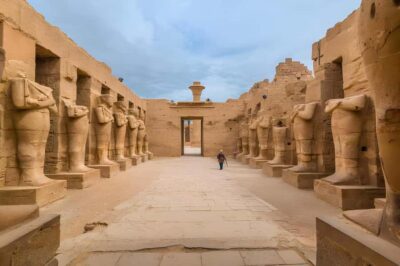
Luxor Day Trip from Hurghada Small Group & Tutankhamun Tomb
Read our review →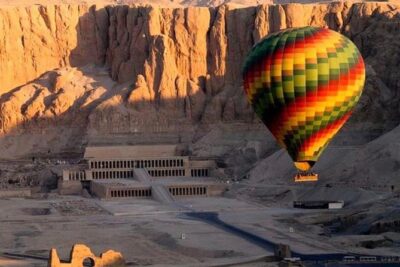
Hot Air Balloon Ride in Luxor Egypt with Transfers Included
Read our review →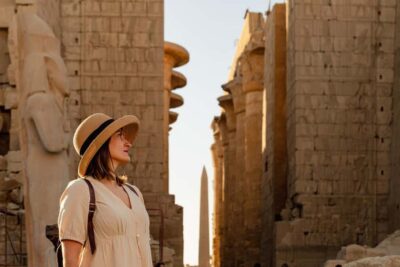
Shared Full-Day Tour to Luxor West and East Banks
Read our review →
Luxor Day Tour: Valley of Kings & Queens & Hatchepsut Temples
Read our review →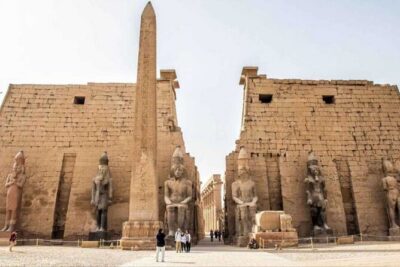
Full Day Tour to East and West Banks of Luxor
Read our review →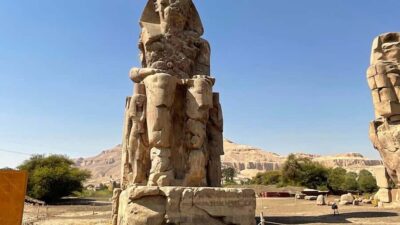
Valley of the Kings and Hatshepsut Temple Day Tour
Read our review →Browse the lists this tour appears in