
Reviewed · NILE CRUISES
Aswan to Luxor: 4-Day Private Nile Journey
The finest feature of this four-day journey is the route itself: you move slowly from Aswan to Luxor by Nile, stepping ashore for temples instead of treating ancient Egypt as a string of hurried day trips. Philae, Kom Ombo, Karnak, Luxor, and the Valley of the Kings give you a strong sweep of the country’s greatest sights.
I like the small group, capped at 10 people, and the practical setup, with airport pickup, an Egyptologist guide, three nights aboard a full-board cruise, and a transfer to Luxor Airport. Guides such as Tamer have earned especially strong praise for keeping the visits organized and informative, while the ship’s crew and buffet meals add comfort after hot temple walks.
The main consideration is timing. Four days is enough for the major stops, but it leaves little spare time. Abu Simbel requires a long optional road trip from Aswan, and extra charges apply for drinks, tips, domestic flights, and certain tickets such as Tutankhamun’s tomb.
Key points to know before booking
- A three-night cruise links the major sights: You unpack once and travel between Aswan, Kom Ombo, and Luxor by river.
- The group is limited to 10 people: That makes guided visits easier to follow than a large coach tour.
- Philae requires a boat ride: The temple sits on Agilika Island, reached by motorized boat from Aswan.
- Abu Simbel is optional: The drive takes about three and a half hours each way, so it adds a demanding full day.
- Meals are included aboard ship: Breakfast, lunch, and dinner are provided for all three cruise nights.
- The final day is packed: Hatshepsut, the Colossi of Memnon, the Valley of the Kings, and the airport transfer all come before departure.
Why this Nile route works so well
A Nile cruise gives you a useful rhythm. You visit a major monument, return to the ship, eat and rest, then watch the river carry you toward the next stop. The scenery is mostly desert and cultivated river country, but the change of pace matters. Ancient Egypt makes more sense when you see how tightly life has always followed the Nile.
This is a private journey with a maximum of 10 people, not a giant boat excursion with a guide shouting over a crowd. Your Egyptologist guide accompanies the sightseeing visits and helps explain the carved scenes, religious figures, and royal claims that can otherwise blur together.
The price is $840 per person. That is not a budget trip, but it covers three nights on a standard five-star cruise, full-board meals, transportation in an air-conditioned vehicle, airport assistance, the listed excursions, site entrance fees, and guide services. You are paying for coordination as much as for sightseeing. Aswan and Luxor are spread along the river, and arranging every transfer, boat ride, temple visit, and airport connection separately can be tiring.
One point needs checking before you pay. The schedule marks several stops as admission not included, while the included section says entrance fees to all listed sites are covered. Ask Journey To Egypt to confirm exactly which entrance tickets are included, especially the Valley of the Kings and any extra tombs.
More Nile cruises around Aswan:
- 4-Days Nile Cruise From Aswan To Luxor including Abu Simbel and Hot Air Balloon
★ 5.0 · 3,142 reviews - 4-Day 3-Night Nile Cruise from Aswan to Luxor&Abu Simbel+Balloon
★ 5.0 · 2,023 reviews - 4-Day 3-Night Nile Cruise from Aswan to Luxor including Abu Simbel, Air Balloon
★ 4.5 · 612 reviews
Day 1: Philae and the stonework of Aswan
Your arrival begins at Aswan Airport, where a guide meets you at the exit door with a sign bearing your name. This is a small but valuable service after a flight, particularly if you are unfamiliar with the airport or arriving after a long international journey.
The first major visit is the Temple of Philae. You reach it by motorized boat, crossing to Agilika Island. That boat approach is part of the pleasure. The temple is not simply beside the road waiting for a quick photograph. You arrive across the water, with the island setting helping you understand why the site was sacred.
Philae was dedicated to Isis and shows Egyptian, Greek, and Roman influence. Look for the way different rulers added their own architectural language to the same religious center. Your guide can help sort out the layers, since the carvings and names belong to more than one period.
The temple was dismantled and rebuilt on Agilika Island when the Aswan High Dam threatened the original location with flooding. That rescue story gives the visit modern importance as well as ancient drama. You are looking at an old sanctuary that survived partly because of a huge twentieth-century engineering project.
The day continues at the granite quarries and the Unfinished Obelisk. This enormous piece of stone shows how ancient workers shaped hard granite, and also how a crack could halt a royal project. It is especially useful because it lets you see the quarrying problem before visiting finished temples. The obelisk is described as roughly one-third taller than any other ancient Egyptian obelisk, though it was never completed.
The listed visit lasts about two hours. Admission is shown separately in the schedule, so confirm the ticket arrangement in advance. You should also expect some outdoor walking and strong sun, though the supplied information does not give a precise walking distance or temperature plan.
Day 2: Choosing Abu Simbel or staying with the cruise
Day 2 gives you the trip’s biggest optional decision. Abu Simbel can be visited by car from Aswan, with a drive of about three and a half hours each way. That means roughly seven hours on the road before counting the time at the temples.
If Abu Simbel is high on your Egypt wish list, the effort can be worthwhile. The twin temples were built for Ramses II and Queen Nefertari. Ramses II’s façade is marked by four huge statues, each about 70 feet tall. Nefertari’s temple is smaller, but its presence is important because it gives the queen a major monument of her own.
Like Philae, Abu Simbel was moved to protect it from the High Dam’s floodwaters. The scale of the relocation is hard to grasp until you see the massive cliffside façades. This optional outing adds a powerful chapter to the story of Egypt’s monuments and modern preservation.
The drawback is simple: it is a long car journey after arriving in Aswan, and it is not included in the $840 price. If you choose it, ask for the exact extra price, pickup time, and return arrangements. If you skip it, you keep a calmer day and continue with the ship’s main schedule.
The included sightseeing centers on Kom Ombo. The ship cruises there, and you go ashore to visit the Greco-Roman temple dedicated to Haroeris, the sun god, and Sobek, the crocodile god. Sobek was linked with creation and power, while the crocodile connection reflects the Nile environment that shaped daily life and religion.
Kom Ombo is a good contrast to Philae. Rather than one island sanctuary, you see a temple with a shared religious purpose and unusual paired worship. Your guide can make the carved figures and divided design easier to read. The scheduled visit lasts about two hours.
Day 3: Horus, Karnak, and Luxor after sunset
The third day includes a visit to the Temple of Horus before the cruise continues toward Luxor. Horus was shown with a falcon’s head and was associated with the sky. The temple dates to the Ptolemaic period and was built by Ptolemy III in 230 BC.
The site is described as remarkably well preserved and colorful. That matters because many Egyptian temples survive mainly as weathered stone, while this temple can give you a clearer sense of how painted worship spaces looked. The visit helps break up the cruise and gives you another example of Egypt under Greek-speaking rulers.
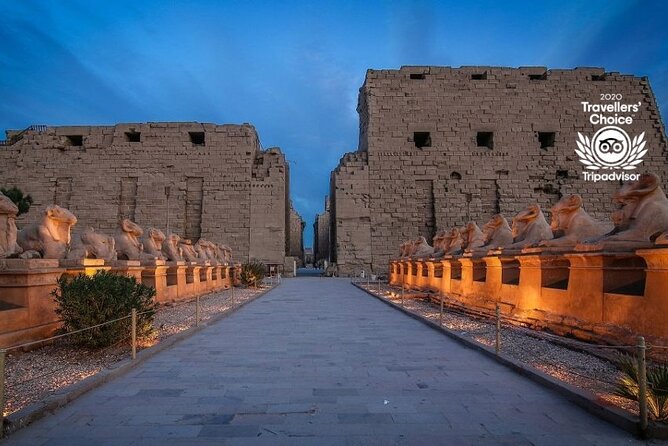
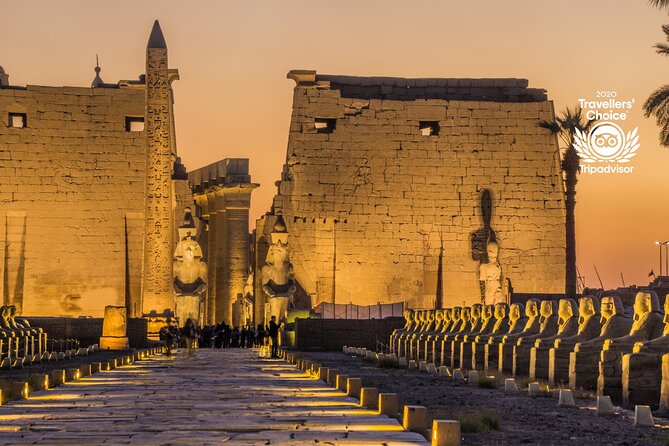
After cruising to Luxor, you visit the east bank and the Temple of Karnak. Karnak is not one compact building. It is a huge religious complex expanded by generations of pharaohs, each eager to attach a name, statue, or inscription to the sacred precinct.
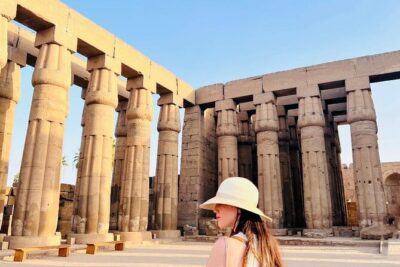
The Great Hypostyle Hall is the visual high point. Its columns rise about 80 feet, packed tightly enough to make you feel small without needing any dramatic staging. Look up at the remaining decoration, then look down at the worn floor and imagine the scale of the processions once held here.
The Temple of Luxor follows. You see the statues of Ramses II at the entrance, the Courtyard of Ramses II, and the Colonnade of Amenhotep III, with its tall line of columns. Karnak and Luxor are close enough to visit together, but they feel different. Karnak is sprawling and layered. Luxor is more concentrated, with a strong processional axis.
This is one of the busiest sightseeing days, so listen closely to the guide and keep track of the meeting point. The schedule allows about two hours for the visit, which is enough for the main route but not for a slow, detail-by-detail study of every wall.
A few other Aswan days to weigh up
- From Aswan: 4-Day Nile Cruise from Aswan to Luxor with Guide
★ 4.1 · 593 reviews - 4-Day 3-Night Nile Cruise from Aswan to Luxor – Private Tour
★ 5.0 · 369 reviews - 4 Days Nile Cruise from Aswan to Luxor including Abu Simbel and Hot Air Balloon
★ 4.5 · 356 reviews - 4-Day 3-Night Nile Cruise from Aswan to Luxor With Balloon and Abu Simbel
★ 5.0 · 327 reviews
Day 4: Royal tombs on Luxor’s west bank
The final morning crosses to the west bank of the Nile. The first stop is the Colossi of Memnon, two huge seated statues that once guarded a temple entrance. They are a quick visit, but their size gives you a useful opening to the area of ancient Thebes.
Next comes the Temple of Hatshepsut. The temple’s terraces are set against the desert cliffs, making it one of the more distinctive buildings on the route. Hatshepsut ruled as pharaoh and is remembered as Egypt’s first female pharaoh. Her temple also shows how royal power could be expressed through architecture, formal processions, and carefully planned reliefs.
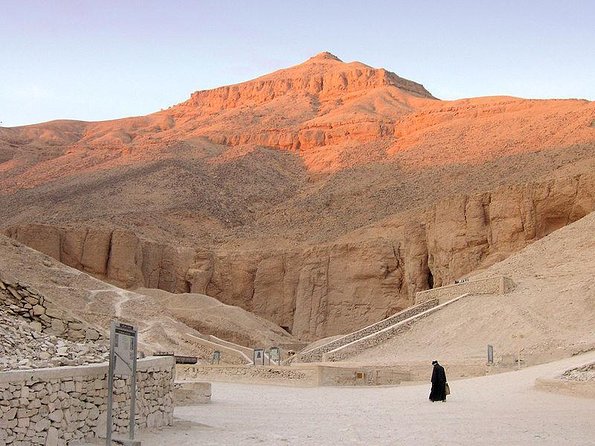
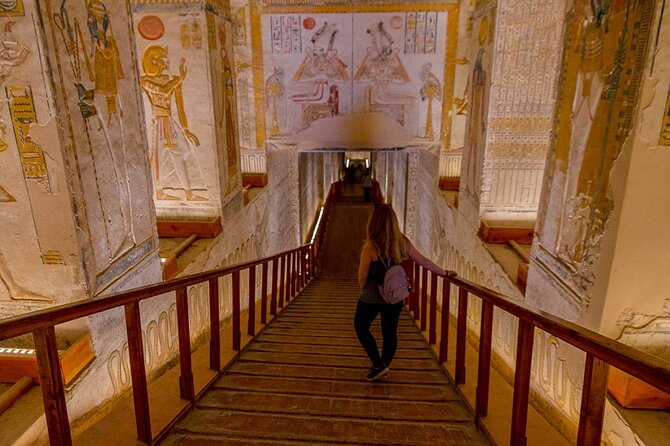
The main event is the Valley of the Kings, the burial ground of pharaohs and nobles for about 500 years beginning in the sixteenth century BC. The valley is a UNESCO World Heritage Site, but the label is less important than what you do there: walk down into the rock-cut tombs and see the painted passages built for the afterlife.
Tutankhamun’s tomb is an extra ticket purchased on the spot. It is famous because Howard Carter found it in 1922, but it is not automatically included according to the supplied details. If you want to enter, budget for that extra charge and confirm whether the general Valley of the Kings admission is already covered.
The day is listed at about four hours, followed by a transfer to Luxor Airport. That makes the departure timing important. The tour should suit you best if your flight leaves late enough to allow the west-bank visits and the drive to the airport. Ask for a precise pickup and flight-planning recommendation before booking your airfare.
The ship, meals, and daily comfort
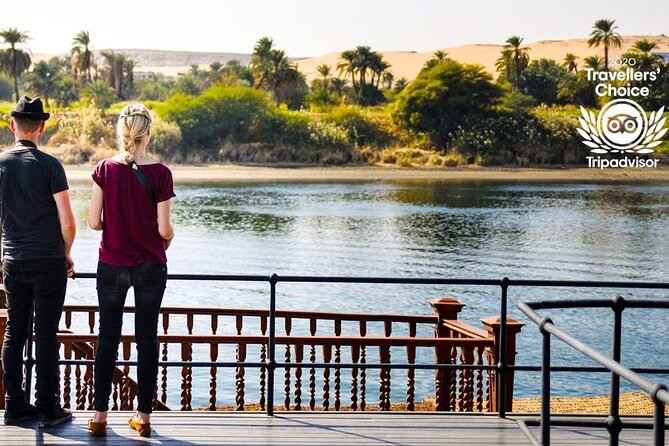
The cruise is described as a standard five-star vessel with full-board accommodation. Breakfast, lunch, and dinner are included for the three nights, which keeps your daily costs predictable. A review of the onboard experience praised the range of buffet choices, so you should have several meal options rather than one fixed dish.
Drinks are not included. That is a common extra on cruise packages, but it is easy to forget when comparing prices. Tips for the cruise crew, guides, and drivers are also separate.
The strongest practical praise goes to the crew and organization. The onboard staff are described as personable, polite, and attentive, while the activities are handled in an orderly way. Guide Tamer received especially high praise for his work, which matters because the quality of explanation can shape how much you get from temples that initially look like walls of symbols.
The ship is your base for three nights, but the exact vessel and cabin details are not provided. Ask about the ship name, cabin size, deck location, and dining arrangements if those details matter to you. A standard five-star rating can mean different things in different cruise markets.
Who should book this four-day journey?
I would choose this tour if you want the main Aswan to Luxor sights handled in one package and like the idea of sleeping aboard a Nile ship. It is a strong fit for a first visit to Egypt, especially if you prefer a guide to explain the monuments rather than exploring every site alone.
The small maximum group is useful for couples, families, and independent-minded people who do not want a large coach party. Airport pickup and the Luxor Airport transfer also reduce the number of connections you must arrange yourself.
You should think twice if you want long, unstructured hours at each monument. The schedule is efficient, and Day 4 in particular is full. It also may not suit you if a long road trip sounds unpleasant, since Abu Simbel is optional and takes about three and a half hours each way.
The tour runs on Fridays, Mondays, or Wednesdays. It is commonly booked about 60 days ahead, so those fixed sailing days may require some planning around your flights.
Should you book the Aswan to Luxor Nile journey?
Book it if you value a well-organized route, a small group, full-board cruising, and the chance to see Egypt’s key temples without arranging every transfer yourself. The combination of Philae, Kom Ombo, Horus, Karnak, Luxor, Hatshepsut, and the Valley of the Kings gives you an impressive four-day introduction.
Before committing, confirm the cruise ship, exact admission inclusions, Abu Simbel cost, airport timing, and the price of drinks and gratuities. If those details fit your budget, $840 offers solid value for three cruise nights, meals, transport, guides, and the listed sightseeing. If you want Abu Simbel or Tutankhamun’s tomb, add those costs and allow for the extra time.
FAQ
Where does the tour begin and end?
It begins in Aswan, Egypt, with pickup at Aswan Airport. It ends with a transfer to Luxor Airport in Luxor.
How long does the tour last?
The journey lasts approximately four days and includes three nights aboard the Nile cruise.
On which days does the cruise operate?
Cruises are scheduled every Friday, Monday, or Wednesday.
Is airport pickup included?
Yes. Meet-and-assist service on arrival and departure is included. At Aswan Airport, the guide meets you at the exit door holding a sign with your name.
How many people can join the tour?
The maximum group size is 10 people.
Are meals included?
Yes. Breakfast, lunch, and dinner are included for each of the three cruise nights, for a total of three breakfasts, three lunches, and three dinners.
Is Abu Simbel included?
No. Abu Simbel is an optional tour from Aswan by car and is not included in the main price. The drive takes about three and a half hours each way.
Can I cancel for a full refund?
Yes, if you cancel at least 24 hours before the experience start time. Cancellations made less than 24 hours beforehand are not refunded, and changes within that period are not accepted.
New on the Aswan list
- 4-Day-3 Night Nile Cruise Aswan & Luxor + Abu Simbel, Air Balloon★ 5.0 · 26 reviews
- 4-Days Nile Cruise sails Aswan to Luxor &Abu Simbel. Air Balloon★ 5.0 · 26 reviews
- Abusimbel Aswan to Luxor 4 days Nile cruise★ 5.0 · 27 reviews
- 4-Day 3-Night Nile Cruise from Aswan to Luxor – Luxury Tour★ 4.5 · 27 reviews
- Tour to Abu Simbel Temple with a small group and a Professional tour guide★ 4.5 · 27 reviews
- 4 Days 3 Nights from Aswan to Luxor Nile cruise+Abu simbel temple★ 5.0 · 27 reviews
- 4 Days Nile Cruise from Aswan to Luxor★ 5.0 · 28 reviews
- Nile Cruise 4 Days 3 Nights from Aswan to Luxor★ 4.5 · 29 reviews
Nile Cruises, compared.
4-Days Nile Cruise From Aswan To Luxor including Abu Simbel and Hot Air Balloon
Read our review →
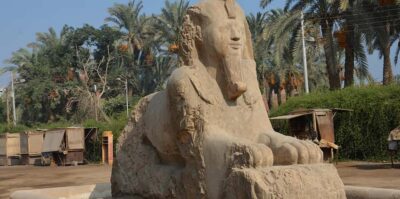
Sakkara, Memphis & Dahshur (Pyramid & Felucca Options)
Read our review →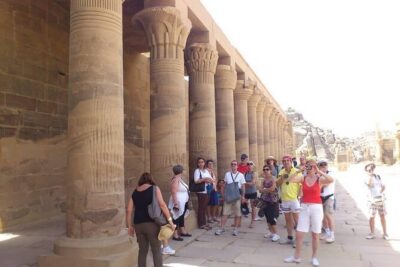
4-Day 3-Night Nile Cruise from Aswan to Luxor including Abu Simbel, Air Balloon
Read our review →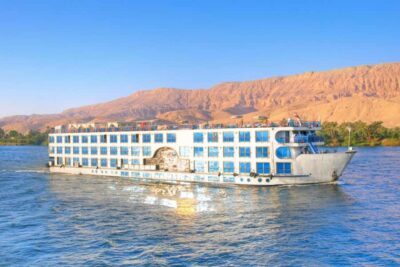
4-Day Nile Cruise from Aswan to Luxor with Guide
Read our review →
4-Days Nile Cruise From Aswan To Luxor including Abu Simbel and Hot Air Balloon
Read our review →
1 or 2-Hour Felucca Ride on the Nile with Transfers
Read our review →Browse the lists this tour appears in