
Reviewed · LUXOR TOURS
Private 2 Days The Best of Luxor
The most powerful part of this tour is the chance to move from painted royal tombs to giant temple courts in just two days. You’ll cross Luxor’s West Bank to the Valley of the Kings, then return to the East Bank for Karnak, Luxor Temple, and a museum filled with objects from ancient Thebes.
I like the private vehicle and guide, since your schedule is shaped around your group rather than a large coach. I also like the range of sites: the tombs provide intimate detail, while Karnak and Luxor Temple show Egypt on a grand scale. The main consideration is that entrance fees are not included, and the two days are full.
Key points
- Four royal tombs are included at the Valley of the Kings, with optional entry to Tutankhamun’s tomb.
- Ramesses III’s tomb has unusual scenes showing foreign goods, boats, armor, and blind harpists.
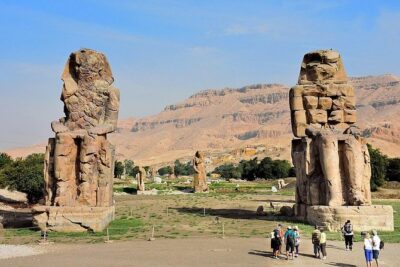
- Hatshepsut’s temple and the Colossi of Memnon add major West Bank sights beyond the tombs.
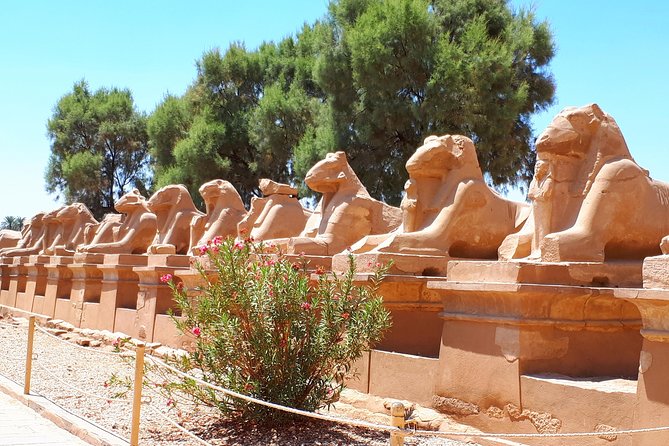
- Karnak includes the Hypostyle Hall, giant columns, obelisks, the Sacred Lake, and the Avenue of Sphinxes.
- Luxor Museum displays Tutankhamun-era objects, mummies, and the Sobek and Amenhotep III statue.
- Guides named in the supplied tour details include Khalid and Ragab Elmotgalye, both praised for clear explanations and careful guiding.
Two days to understand Luxor’s ancient heart
At $150 per person, this is a strong-value private introduction to Luxor if you want the major sights arranged for you. The price covers hotel or harbor pickup, transport in an air-conditioned vehicle, and a qualified Egyptologist, but not the admission charges at the archaeological sites.
That last point matters. You should budget separately for the entrance fees, including the optional 360 Egyptian pound ticket for Tutankhamun’s tomb. The tour covers a lot of ground, so knowing the extra costs before you go will make the experience feel much smoother.
Your pickup begins at about 8:00 a.m. from a central Luxor hotel or the harbor. Day one lasts about eight hours, and day two brings another set of major monuments before a return to your hotel. Since this is a private activity, you can ask your guide to slow down when a tomb or carving catches your attention.
A few other Luxor days to weigh up
- Hurghada: 2-Day Luxor Tour with Hotel, Balloon, & Boat Ride
★ 4.5 · 1,113 reviews - 2-Day Top Attractions and Adventures Package in Luxor with Accommodation
★ 5.0 · 178 reviews - Hurghada: 2-Day Luxor Tour with Hotel, Balloon, & Nile Boat
★ 4.8 · 82 reviews
Day one: royal tombs on Luxor’s West Bank
The first morning heads to the Necropolis of Thebes, better known as the Valley of the Kings. The valley is not about grand exterior buildings. Its importance lies underground, where pharaohs were placed in decorated tombs cut into the rock.
Four royal tombs are part of the visit. The named stops include the tombs of Ramesses III, Ramesses IX, and Merenptah, with the itinerary also referring to Horemheb and a fourth royal tomb. Your Egyptologist is especially useful here because the paintings can look similar at first glance. A guide can point out the religious texts, figures, colors, and changes in tomb design.
You should expect walking and some time in enclosed spaces. The tour gives roughly two hours to the Valley of the Kings, followed by about 25 minutes at each of the named tombs. The schedule is generous enough for a useful first look, but not so loose that you can linger for hours in one place.
Ramesses III and the Tomb of the Harpers
Ramesses III’s tomb, known as KV 11, is one of the most interesting stops because its decoration includes more than religious scenes. The walls show ritual texts such as the Litany of Ra and the Book of Gates, along with the king appearing before the gods.
Look closely at the smaller side rooms near the entrance. They contain scenes of foreign tribute, detailed pottery from the Aegean, boats, and royal military equipment. The blind harpists in the final side chamber gave the tomb its alternate name, the Tomb of the Harpers.
This is a good example of why a private Egyptologist helps. Without explanation, you might pass these scenes as more painted figures. With context, they become a glimpse into ceremony, trade, music, and royal power.
Ramesses IX and Merenptah
The tomb of Ramesses IX is known for its strong color and detailed decoration. One of its most memorable features is the ceiling above the sarcophagus, where the goddess Nut stretches across the space. The large sarcophagus and surviving paintings make this a worthwhile stop even though some sections have deteriorated.
Merenptah’s tomb gives you a different sense of scale. Merenptah was the son of Ramesses II, and his tomb has fewer side rooms but taller corridors and chambers. The design reflects a change from the bent or jogged axis used in earlier royal tombs.
The tour details also identify Horemheb’s tomb among the four royal tombs visited. Because the exact order can vary, ask your guide at pickup which four are open and included that day. Tomb access can change, and the separate entrance ticket for Tutankhamun’s tomb is optional.
Same base, a completely different day out:
- Hurghada: Luxor Valley of the Kings & Tutankhamun Tomb Trip
★ 4.7 · 13,208 reviews - Luxor Day Trip from Hurghada Small Group & Tutankhamun Tomb
★ 4.8 · 5,366 reviews - Hot Air Balloon Ride in Luxor Egypt with Transfers Included
★ 5.0 · 4,319 reviews - Luxor: Shared Full-Day Tour to Luxor West and East Banks
★ 4.5 · 1,812 reviews
Tutankhamun’s mummy
Tutankhamun’s tomb requires an additional entrance fee of 360 EGP. It is a small and highly charged stop, not because the tomb is the largest, but because the young king’s mummy remains there.
Tutankhamun took the throne at about ten years old and died at about nineteen. His short life and the discovery of his largely intact burial made him the world’s most famous pharaoh. The tour gives you the chance to see his royal mummy face to face, but you should decide in advance if this extra charge is important to you.
Hatshepsut’s temple and the Colossi of Memnon
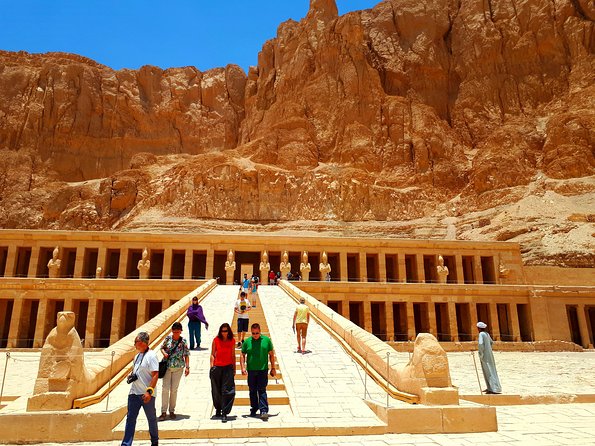
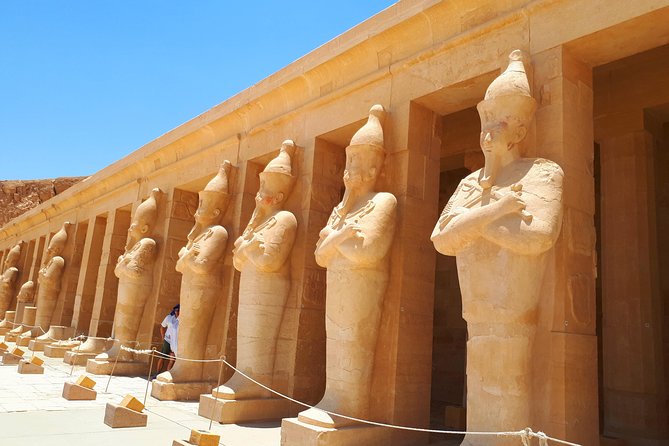
After the tombs, the vehicle takes you to the Temple of Hatshepsut at Deir el Bahari. Hatshepsut was the only woman to reign over Egypt as pharaoh, and she was an ancestor of Tutankhamun.
The temple is built against the cliffs, giving it a different feel from the underground tombs and open temple courts elsewhere in Luxor. You have about an hour here. That allows time to study the terraces, surviving reliefs, and the setting, while your guide explains Hatshepsut’s rule and place in the royal family.
The Colossi of Memnon are a short stop of about 20 minutes, and admission is free. These two huge statues date to the reign of Amenhotep III. They work well as a quick photo and orientation stop between the major West Bank sites.
The final West Bank visit is the Mortuary Temple of Ramesses III, with about 30 minutes scheduled. This gives the first day another temple setting after the tombs and Hatshepsut’s monument. You will have seen the West Bank from several angles: royal burial, royal memorial, and monumental statues.
Day two: Karnak’s giant columns and sacred spaces
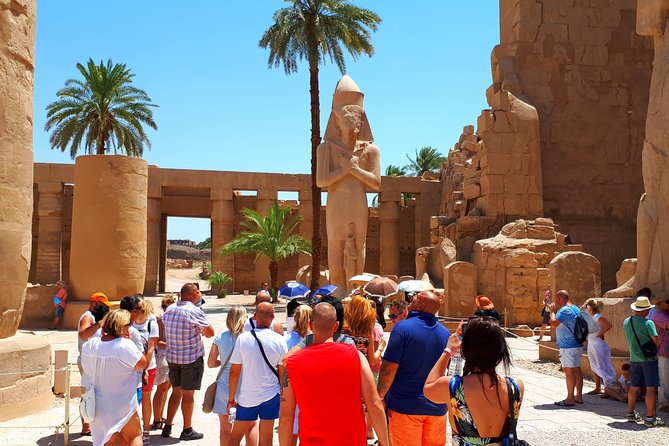
Day two begins on the East Bank at Karnak, with about two hours inside the temple complex. Karnak was built over different reigns, so it feels less like a single building and more like a long record of Egyptian royal ambition.
The route includes the Avenue of Sphinxes, the Hypostyle Hall, obelisks linked with Hatshepsut and Thutmosis I, the Temple of Amun, the Granite Scarab of Amenhotep III, and the Sacred Lake. Each part gives you something different to look at.
The Hypostyle Hall is the great visual moment. Its 134 massive columns create a forest of stone, many still carrying carved and painted details. This is where a guide can help you read the room rather than simply photograph it. Ask which rulers added particular sections and how the temple was used.
The Avenue of Sphinxes once linked Karnak and Luxor Temple across roughly three kilometers. Only a few hundred meters are available to see today, but the surviving stretch helps you understand that these were not isolated monuments. They formed part of a ceremonial route.
Karnak can be tiring because of its size. The two-hour visit is long enough to see the major sections, but you may want to save questions for your guide and avoid trying to inspect every wall. There is simply too much detail for one visit.
Luxor Temple and the Avenue of Sphinxes
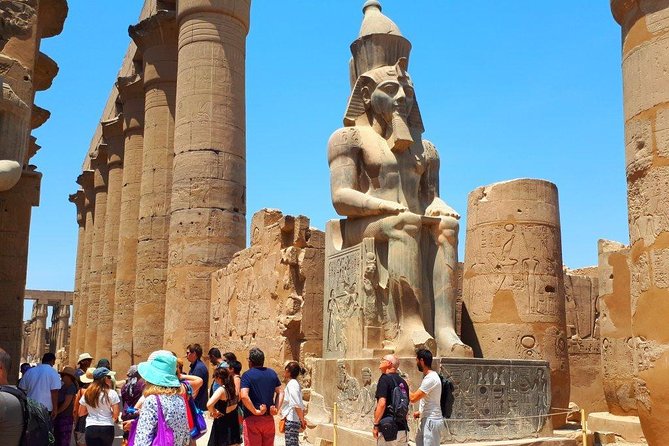
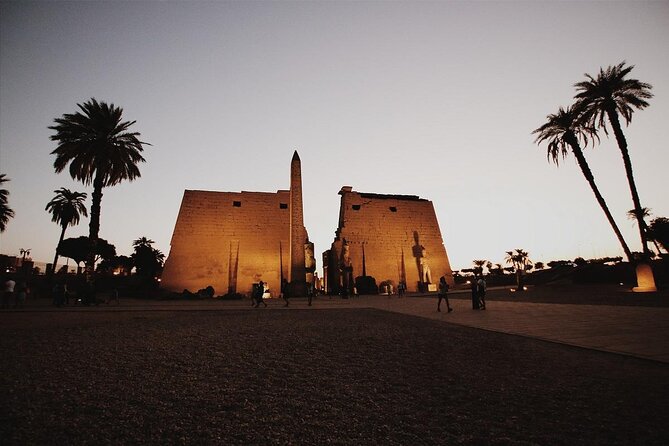
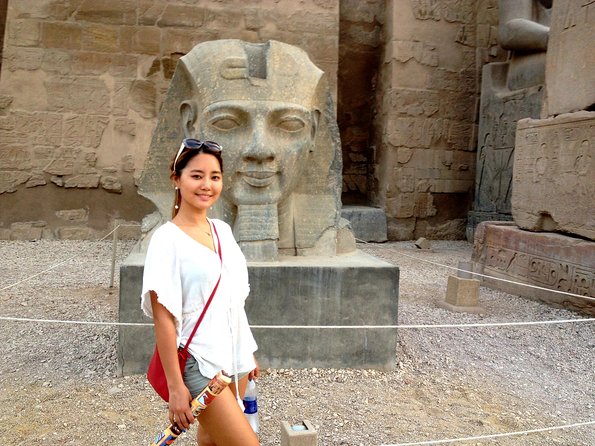
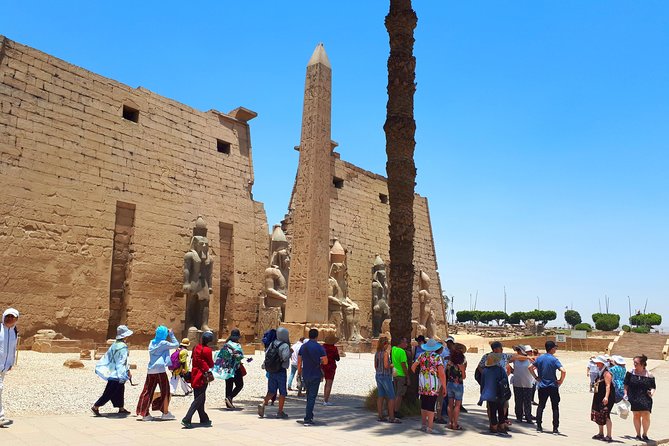
Luxor Temple receives about an hour. It was dedicated to the Theban Triad of Amun-Ra, Mut, and Khonsu, and it includes the granite statues of Ramesses the Great.
Compared with Karnak, Luxor Temple is easier to grasp in one visit. Its courtyards, columns, statues, and processional connection to Karnak give you a clear sense of how religion and kingship shaped the city.
The separate stop for the Obelisk of Thutmosis I and the Obelisk of Queen Hatshepsut allows about 15 minutes at each. The itinerary repeats the Thutmosis reference, so your guide can clarify exactly where the stops fit into the route. The Avenue of Sphinxes receives about ten minutes, enough for a quick look at the ceremonial road and its relationship to the two temples.
This sequence works well after Karnak. You first see the larger religious complex, then a more contained temple with powerful royal imagery. If you enjoy architecture, this second day is likely the stronger of the two.
Luxor Museum: a quieter final hour
The Luxor Museum is a welcome change of pace after the open-air monuments. The visit is guided and intended to last about an hour, followed by free time to look around on your own.
The collection includes ancient objects found in Luxor and items associated with Tutankhamun’s tomb. You can also see several mummies, the double statue of Sobek, the crocodile god, with Amenhotep III, and tools and objects that help explain how tombs and temples were decorated.
I value this stop because a museum can make the earlier monuments easier to understand. After seeing painted tombs and huge temple walls, you get closer to the objects themselves. Details about materials, tools, and construction can bring the large sites down to a human scale.
The tour information says the museum visit includes a guided visit, but the general inclusions also state that entrance fees to the mentioned sites are not included. Confirm the museum admission arrangement when booking so there is no confusion.
Guide quality and the private format
The guide is the key part of this experience. The tour uses a qualified Egyptologist, and the supplied tour details name Khalid and Ragab Elmotgalye in especially positive booking feedback. Khalid is described as explaining temple use and history with care and pride. Ragab Elmotgalye is praised for detailed explanations and for helping the group feel safe throughout the day.
Those comments point to what you should expect from the best version of this tour: not just transfers between monuments, but explanations that connect a tomb painting to Egyptian beliefs, or a columned hall to the ruler who built it.
Because your group is private, you can ask for clarification, request a little more time at a favorite site, or tell the guide when you need a pause. The itinerary is fixed enough to cover the main sights, but the private setup should feel less rushed than a large group outing.
What the $150 price really covers
The $150 price is reasonable for two days of private transport, hotel or harbor pickup and drop-off, and an Egyptologist guide. The value is strongest if you are staying in central Luxor and want the West Bank and East Bank arranged without sorting out transport between each stop.
The price does not include total entrance fees. That includes the principal archaeological sites, and Tutankhamun’s tomb carries its own optional fee of 360 EGP. A hot air balloon ride may also be possible, but it is not included.
The balloon option deserves careful thought. It is an extra activity, not part of the core tour, so you should not assume it will fit automatically into the two-day schedule. Ask about timing and cost before committing.
Who should book this Luxor tour?
I would choose this tour if you have two days in Luxor and want the main ancient sites covered with a private guide. It suits first-time visitors, couples, families, and small groups that prefer their own vehicle and a clear plan.
It is also a good fit if you want help making sense of the monuments. The Valley of the Kings, Karnak, and Luxor Temple can be overwhelming without context, especially when you are seeing several rulers and religious figures in one day.
You may want a slower arrangement if you prefer long museum visits, extended photography time, or quiet wandering. The program is packed, and its strength is coverage. Admission fees also need to be added to the advertised price.
Should you book the Best of Luxor?
Book it if you want an efficient private introduction to Luxor, value an Egyptologist’s explanations, and are comfortable paying entrance fees separately. The strongest reasons are the wide range of sites, the private vehicle, and the chance to compare the intimate tombs of the West Bank with the huge temples of the East Bank.
Before booking, confirm the four Valley of the Kings tombs open on your date, the current admission costs, the museum entry arrangement, and any hot air balloon plans. If those details fit your budget, this is a practical way to see Luxor’s essential monuments in two well-planned days.
FAQ
How long does the Luxor tour last?
The experience lasts approximately two days. Day one is described as a full guided trip of about eight hours, while day two covers the East Bank monuments and Luxor Museum.
What time does the tour start?
The stated start time is 8:00 a.m.
Is hotel pickup included?
Yes. Pickup and drop-off are included from a central Luxor hotel or harbor.
Is transportation included?
Yes. Transport is provided in an air-conditioned vehicle.
Is this a private tour?
Yes. Only your group participates in the private activity.
Is an Egyptologist guide included?
Yes. A qualified Egyptologist tour guide is included. Guides named in the supplied tour details include Khalid and Ragab Elmotgalye.
Are entrance fees included?
No. Total entrance fees for the mentioned sites are not included. The optional ticket for Tutankhamun’s tomb is listed as 360 EGP.
Is the hot air balloon ride included?
No. A hot air balloon ride may be possible, but it is not included in the tour price.
Can I cancel for a full refund?
Yes, if you cancel at least 24 hours before the experience start time. Cancellations made less than 24 hours before the start time are not refunded, and changes within that period are not accepted.
New on the Luxor list
- Full-Day East and West Luxor Private Tour★ 4.5 · 26 reviews
- Marsa Alam: Snorkeling with Sea Turtles Marsa Mubarak★ 4.9 · 26 reviews
- Day Trip to Edfu & Kom Ombo temples from Luxor and drop off in Aswan or Luxor★ 5.0 · 26 reviews
- Private Full day East and West Bank, Luxor★ 5.0 · 26 reviews
- Luxor Day Tour: Kings Valley & Karnak & Luxor & Hatshepsut Temple★ 5.0 · 26 reviews
- Luxury Hot Air Balloon Experience in Luxor with Pick-up★ 5.0 · 27 reviews
- Full-Day Luxor Tour – Discover the East and West Banks of the Nile★ 5.0 · 27 reviews
- 5 Days 4 Nights Nile Cruise Tour★ 5.0 · 27 reviews
Luxor Tours, compared.
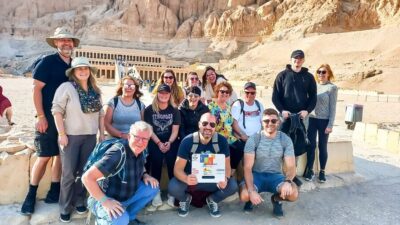
Luxor Valley of the Kings & Tutankhamun Tomb Trip
Read our review →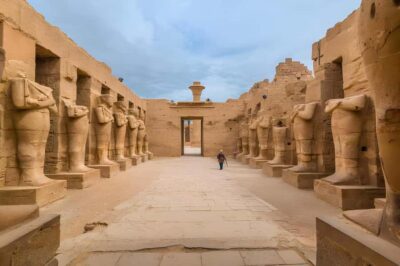
Luxor Day Trip from Hurghada Small Group & Tutankhamun Tomb
Read our review →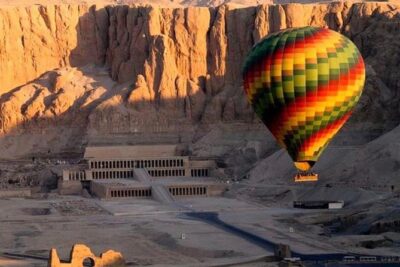
Hot Air Balloon Ride in Luxor Egypt with Transfers Included
Read our review →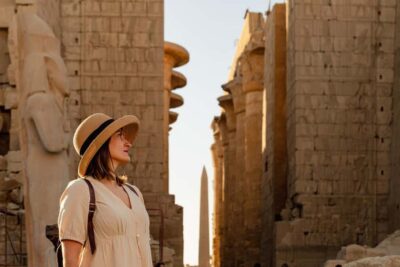
Shared Full-Day Tour to Luxor West and East Banks
Read our review →
Luxor Day Tour: Valley of Kings & Queens & Hatchepsut Temples
Read our review →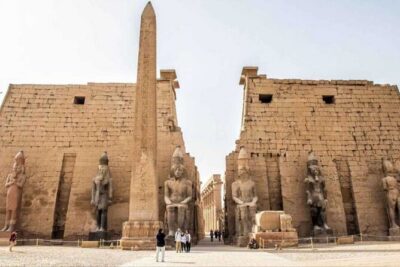
Full Day Tour to East and West Banks of Luxor
Read our review →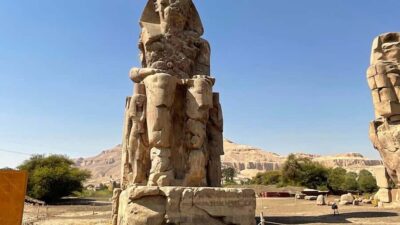
Valley of the Kings and Hatshepsut Temple Day Tour
Read our review →Browse the lists this tour appears in