
Reviewed · LUXOR TOURS
Enjoy Day Tour to East and West banks of luxor Highlights From Luxor
Luxor packs an astonishing amount of ancient Egypt into one day. This tour takes you from royal tombs and desert cliffs on the West Bank to the grand temple avenues of the East Bank, with an Egyptologist to explain what you are seeing. I especially like the five major sites in one day and the ease of hotel or airport pickup. Lunch and private air-conditioned transport add real value. The tradeoff is simple: this is a long, warm, busy day, and admission fees are not included.
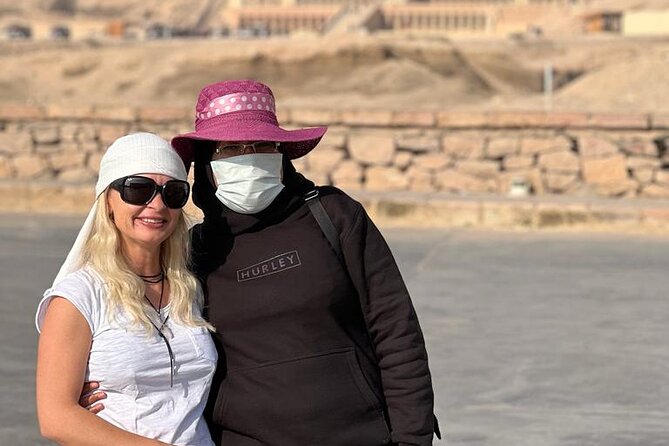
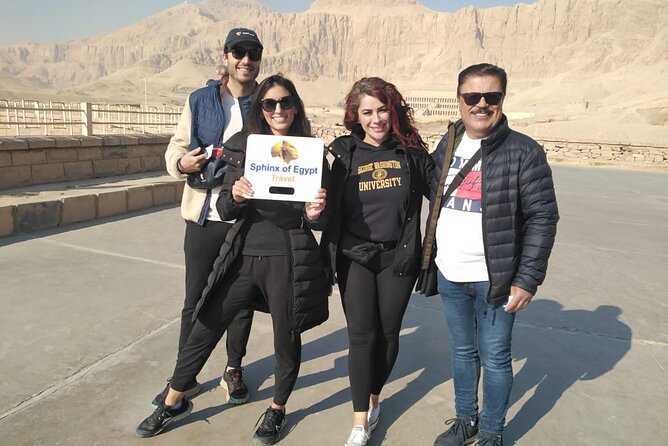
I also like the small-group setup, listed as six to eight people, which should give you more room to ask questions than a large coach tour. The guide named in one account, Shaaban, adjusted the driving plan around the group’s wishes and answered questions clearly. Plan carefully for the extra cost, though: one guest calculated about €35 per person in entrance fees on top of the tour price.
Key points at a glance
- Five landmark sites in roughly eight hours: Cover the Valley of the Kings, Hatshepsut Temple, Colossi of Memnon, Karnak, and Luxor Temple in one well-packed day.
- West Bank first, East Bank later: Start with royal tombs and mortuary monuments, then finish among Luxor’s great city temples.
- Egyptologist guide included: An English-speaking guide adds context to names, rulers, gods, and changing temple designs.
- Private air-conditioned transport: Hotel and airport pickup are offered, with transfers between every stop.
- Lunch is included, entrance fees are not: The $40 price is attractive, but budget separately for tickets and tipping.
- Small group rather than a large coach: The experience is private to your booking, with the guide shared among a group of about six to eight people.
Why this route works for a first day in Luxor
Luxor’s ancient sights sit on both sides of the Nile, and arranging them yourself can mean sorting out transport, opening times, tickets, and the best order. This tour removes most of that work. You are collected at your Luxor hotel or airport, driven in an air-conditioned vehicle, and taken to the main monuments in a practical sequence.
The route begins on the West Bank. That is the right place to start because the Valley of the Kings and the monuments at Deir el-Bahari are tied to death, burial, and the afterlife. Later, you cross to the East Bank for the temples of Karnak and Luxor, where ancient Thebes focused more on worship, ceremony, and royal display.
You get around eight hours, but the day still moves quickly. The Valley of the Kings alone has about two hours assigned to it, followed by an hour and a half at Hatshepsut Temple. After a short visit to the Colossi of Memnon, you spend another hour and a half at Karnak and an hour at Luxor Temple. That leaves little room for a slow lunch, long photo stops, or extra sights.
I would choose this tour if you have only one full day in Luxor or want a clear introduction before exploring more on your own. If you prefer lingering at one tomb or studying every carved wall at leisure, the schedule may feel tight.
A few other Luxor days to weigh up
- Hurghada: Luxor Valley of the Kings & Tutankhamun Tomb Trip
★ 4.7 · 13,208 reviews - Luxor Day Trip from Hurghada Small Group & Tutankhamun Tomb
★ 4.8 · 5,366 reviews - Hot Air Balloon Ride in Luxor Egypt with Transfers Included
★ 5.0 · 4,319 reviews
Inside the Valley of the Kings
The Valley of the Kings is the day’s most powerful stop. Set on the West Bank opposite modern Luxor, it served as a royal burial ground for roughly 500 years, from the sixteenth to the eleventh century BC. Its ancient name and purpose connect it directly to the funerary city of Thebes.
The valley has an Eastern Valley, where most of the royal tombs are found, and a Western Valley. Your visit is allotted two hours, enough to see the site with an Egyptologist and enter the tombs allowed by your ticket. The tour price does not include admission, so confirm the ticket arrangement and cost before setting out.
The main thing to understand is that the valley is not one single tomb. It is a collection of burial chambers cut into the rock, each with its own decoration and layout. Your guide can help explain how the tombs fit into Egyptian beliefs about kingship and the afterlife, rather than leaving you to read scattered labels.
This is also where the pace and heat matter most. You may spend time walking over exposed ground and entering enclosed tomb spaces. Bring water, wear practical shoes, and keep your energy in reserve for the later temples. The one account supplied praised the guide’s explanations but also warned that the full program takes plenty of energy in high temperatures.
Queen Hatshepsut’s terraces at Deir el-Bahari
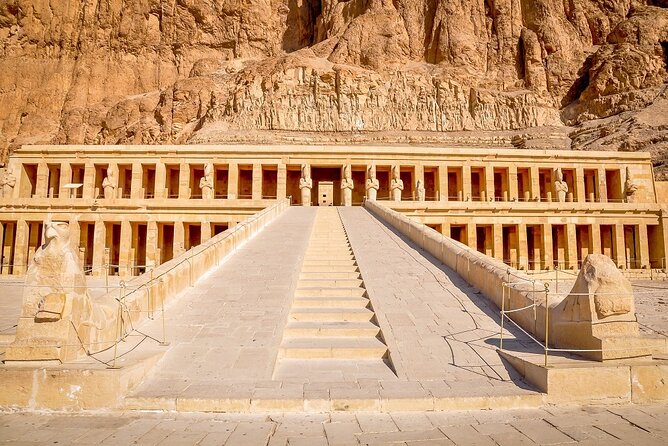
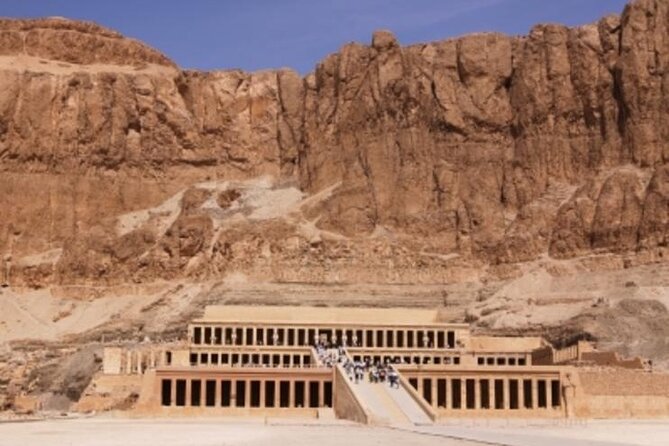
Hatshepsut Temple gives you a sharp change of mood after the tombs. Built about 3,500 years ago by Queen Hatshepsut, the temple rises in three broad levels of open terraces at Deir el-Bahari. Its strong horizontal design differs from the more enclosed temple forms you see on the East Bank.
The temple was built of limestone, with statues of Osiris and Hatshepsut once placed in front of the second-level pillars. Those statues were originally painted, a useful reminder that ancient Egyptian monuments were not always the plain stone color they have today.
I find this stop especially useful for understanding Hatshepsut herself. She was a queen who ruled as pharaoh, and the temple’s scale and setting help explain how seriously she presented that role. An Egyptologist can point out details that are easy to miss when you are focused only on the terraces and mountain backdrop.
The visit lasts about 90 minutes. That is enough to walk through the main levels and hear the basic story, but you should not expect time for every relief or corner. The open terraces offer little shelter, so a hat, water, and light clothing will make this stop more comfortable.
The brief stop at the Colossi of Memnon
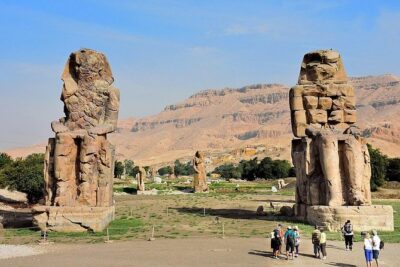
The Colossi of Memnon are a 30-minute photo and orientation stop. These two huge seated statues once guarded the memorial temple of Pharaoh Amenhotep III on the West Bank. Today, the statues are the main surviving pieces of that complex.
Each statue is about 19 meters and one-third of a meter high. The ancient Greeks called them Memnon after the eastern statue developed a crack and was said to make a sound at dawn. The story linked that sound to the mythical Memnon calling for his mother, Eos, the goddess of dawn.
The entrance is listed as free, which makes this a useful stop without another ticket to manage. Still, the short timing tells you what to expect. You will see the statues, hear their story, and take photographs, not explore a full temple complex.
That brevity works well in an already packed day. It gives you a pause between the longer West Bank visits before the vehicle takes you toward the East Bank.
Same base, a completely different day out:
- Luxor: Shared Full-Day Tour to Luxor West and East Banks
★ 4.5 · 1,812 reviews - Luxor: Hot Air Balloon Ride over Luxor Relics
★ 4.8 · 1,681 reviews - Luxor Day Tour: Valley of Kings & Queens & Hatchepsut Temples
★ 5.0 · 1,496 reviews - Full Day Tour to East and West Banks of Luxor
★ 5.0 · 1,449 reviews
Karnak’s columns, temples, and sacred family
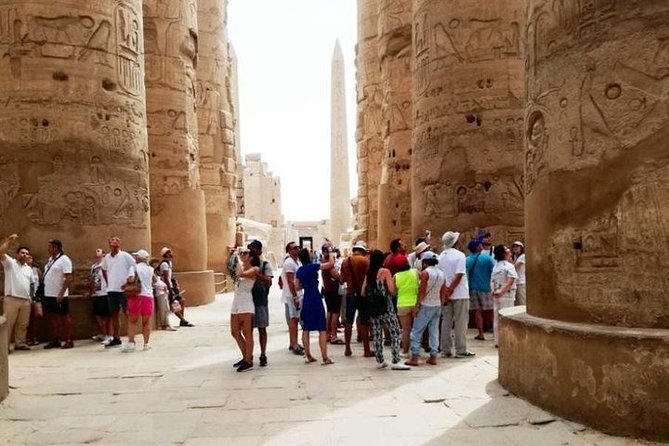
Karnak is the largest and most extended temple visit on the route, with about 90 minutes scheduled. It is not just one building. It is a complex of temples, structures, and columns expanded over many centuries, from the Middle Kingdom through the Roman period.
The main religious focus was the Theban triad: Amun, his wife Mut, and their son Khonsu. The guide’s role matters here because the scale can be confusing. Without context, Karnak can feel like a huge collection of walls and columns. With a clear explanation, you can begin to see how different rulers added their own pieces to a sacred center that kept changing over time.
This is one place where the small group format should help. A guide speaking to six to eight people can pause for questions without having to project over a large crowd. You can ask about the temple’s gods, its builders, and how the complex changed across different periods.
Karnak also rewards attention to proportion. Some spaces feel open and ceremonial, while others are enclosed by dense rows of columns. You may find the 90-minute visit enough for the major areas, but not for every section. If you are passionate about architecture or religious symbolism, you may wish the tour allowed more time.
Luxor Temple after the day’s big sights
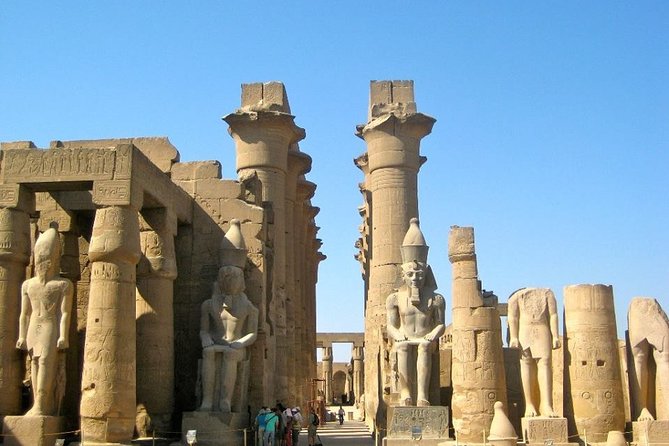
Luxor Temple is the final major stop, with about one hour allotted. It sits on the East Bank in modern Luxor and was founded around 1400 BC. The temple was devoted to Amun-Ra, Mut, and Khonsu, the same Theban triad linked with Karnak.
The surviving buildings reflect work from the Eighteenth and Nineteenth Dynasties. Amenhotep III built important sections, while Ramses II added the open courtyard, pylon, and two obelisks. Thutmose III also contributed to the complex.
After Karnak, Luxor Temple provides a more compact look at royal building and religious space. Its location in the city makes the contrast with the West Bank especially clear. You move from a broad temple complex to a monument woven into the life of modern Luxor.
The one-hour schedule is sensible for a final stop. By then, you may be tired, and Luxor Temple gives you a focused last visit rather than another vast site. If you want to study inscriptions at length, though, you will need to accept that this is an overview.
What the $40 price really covers
At $40 per person, this tour offers strong basic value for a full day. You receive pickup and return, a private air-conditioned vehicle, an English-speaking Egyptologist, lunch, transfers between the five named sites, service charges, and taxes.
The word private needs a little clarification. The activity is private in the sense that only your booked party participates, but the guide is shared with a small group of six to eight people. That is quite different from having a guide and car entirely to yourself. If you are booking as a couple or family, confirm how your group will be combined.
The major extra is entrance admission. The listed price does not include tickets for the Valley of the Kings, Hatshepsut Temple, Karnak, or Luxor Temple. One account put the additional cost at about €35 per person, so treat the advertised $40 as the transport, guide, lunch, and coordination cost, not the final amount for the day.
Tipping is also excluded. Other languages cost extra as well, while English guiding is included. There are no stated extras for the included lunch or standard transfers, but anything outside the itinerary is your responsibility.
Transport, pickup, and the day’s pace
Pickup is available from your Luxor hotel or the airport, and return transport is included. That is useful if you have just arrived, are leaving later, or do not want to arrange a taxi across both sides of the Nile.
The air-conditioned vehicle matters in Luxor’s heat. You will move between five major sites, and a cool vehicle gives you a place to recover between walks. The tour is also near public transportation, though the included pickup makes local connections less important.
The plan is ambitious. The supplied timing adds up to about six and a half hours at the sights, within an overall duration of roughly eight hours. That leaves time for driving and lunch, but not much slack. The schedule can work well when your priority is seeing the major monuments in one day.
I would start with a full breakfast and carry water. Wear shoes suitable for uneven ground, and expect plenty of standing and walking. The route is open to most people, but its length and heat make it less comfortable for anyone who needs frequent rest.
The guide can make or break the experience
The Egyptologist is the main reason to choose this over simply hiring transport. Ancient Egyptian temples can be hard to read without a basic guide to the rulers, gods, building phases, and funeral beliefs. A good explanation turns a wall, statue, or column into part of a story.
The feedback provided names Shaaban and credits him with explaining the sites clearly, answering questions well, and adjusting the driving plan to suit the group. You should not assume Shaaban will be assigned on every booking, but his example shows the kind of guide service to hope for.
The small group of six to eight is a useful middle ground. You get more personal contact than on a large bus, while the cost stays low. It is not the same as a fully private guide for two people, so expectations matter.
If you need a language other than English, budget for the additional charge. The included guide service is English-speaking.
Who should book this Luxor day tour?
I would recommend it for first-time visitors with one full day, people arriving without a fixed sightseeing plan, and anyone who values a guide’s historical explanation. It also suits visitors who want airport or hotel transport handled in one booking.
Families and small groups may like the practical setup, especially if they want to avoid negotiating transport at every site. The private activity format also means you are not placed on a large coach with strangers, though the guide may be shared with six to eight people.
You may want another plan if your main goal is slow photography, extended tomb visits, or a deep study of one temple. The day covers a lot, but it does not linger. It is also worth reconsidering if high heat or long periods of walking are difficult for you.
Free cancellation is available when you cancel at least 24 hours before the start time. Changes or cancellations made later are not accepted for a refund, and cut-off times use Luxor local time.
Should you book it?
Book this tour if you want Luxor’s essential sights covered with minimal planning and a guide who can connect the monuments into one story. The mix of royal tombs, a queen’s temple, giant statues, and two major East Bank temples gives you a strong first look at ancient Thebes.
The value is good at $40, provided you add the entrance fees, tipping, and any language supplement to your budget. Go in ready for a full, hot day rather than a relaxed outing. If that sounds right, the included transport, lunch, and Egyptologist make this a practical way to see both banks without wasting precious time on arrangements.
FAQ
How long does the Luxor tour last?
The tour lasts approximately eight hours. The scheduled visits include two hours at the Valley of the Kings, 90 minutes at Hatshepsut Temple, 30 minutes at the Colossi of Memnon, 90 minutes at Karnak, and one hour at Luxor Temple.
Does the tour include hotel or airport pickup?
Yes. Pickup and return are provided from your Luxor hotel or the airport.
Are entrance fees included in the $40 price?
No. Entrance fees are not included. A separate account put the additional admission cost at about €35 per person, but you should confirm the current amount before booking.
Is lunch included?
Yes. Lunch is included in the tour price.
Is this a fully private tour?
The activity is private to your participating group, but the English-speaking Egyptologist guide is shared with a small group of six to eight people.
Can I cancel for a full refund?
Yes, if you cancel at least 24 hours before the experience start time. Cancellations or changes made less than 24 hours before the start time are not accepted for a refund.
New on the Luxor list
- Private Tour Nile Felucca Ride at Sunset in Luxor★ 5.0 · 26 reviews
- Full-Day East and West Luxor Private Tour★ 4.5 · 26 reviews
- Marsa Alam: Snorkeling with Sea Turtles Marsa Mubarak★ 4.9 · 26 reviews
- Private Full day East and West Bank, Luxor★ 5.0 · 26 reviews
- Day Trip to Edfu & Kom Ombo temples from Luxor and drop off in Aswan or Luxor★ 5.0 · 26 reviews
- Luxor Day Tour: Kings Valley & Karnak & Luxor & Hatshepsut Temple★ 5.0 · 26 reviews
- Luxury Hot Air Balloon Experience in Luxor with Pick-up★ 5.0 · 27 reviews
- Full-Day Luxor Tour – Discover the East and West Banks of the Nile★ 5.0 · 27 reviews
Luxor Tours, compared.
Luxor Valley of the Kings & Tutankhamun Tomb Trip
Read our review →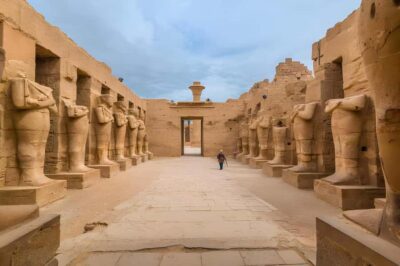
Luxor Day Trip from Hurghada Small Group & Tutankhamun Tomb
Read our review →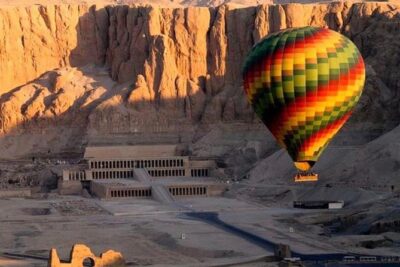
Hot Air Balloon Ride in Luxor Egypt with Transfers Included
Read our review →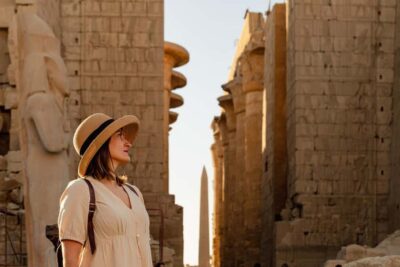
Shared Full-Day Tour to Luxor West and East Banks
Read our review →
Luxor Day Tour: Valley of Kings & Queens & Hatchepsut Temples
Read our review →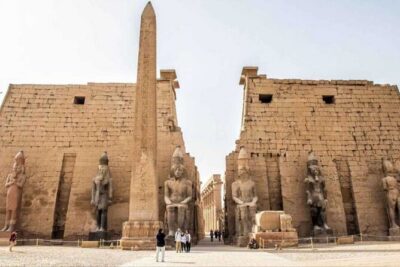
Full Day Tour to East and West Banks of Luxor
Read our review →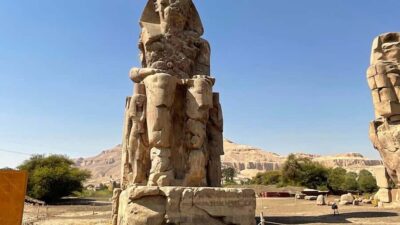
Valley of the Kings and Hatshepsut Temple Day Tour
Read our review →Browse the lists this tour appears in