
Reviewed · LUXOR TOURS
Private Tour: Luxor East and West Banks Full Day Tour
Luxor packs some of Egypt’s greatest monuments into one long day. This private tour takes you from the royal tombs of the West Bank to Karnak and Luxor Temple on the East Bank, with an Egyptologist to explain what you are seeing rather than leaving you to decode a wall of hieroglyphs alone. I like the private format and the included transfers, especially when you are staying on a Nile cruise or trying to fit the major sights into limited time.
I also like that lunch, entrance fees, and a private vehicle are included in the $189.80 price. Guides such as Michael Samir and Beshoo have received especially warm praise for clear explanations, practical help, and flexibility. The main catch is the pace: the advertised stops add up to more than the stated eight-hour duration, so confirm the day’s timing and tell your guide which sites matter most.
Key points to know before booking
- See both sides of Luxor in one day: The route covers the Valley of the Kings, Hatshepsut’s temple, the Colossi of Memnon, Karnak, and Luxor Temple.
- Private guiding changes the day: Your group travels alone, so you can ask questions, adjust the pace, and spend more time at a favorite monument.
- Michael Samir is a guide name worth requesting: He has been praised for strong English, Ancient Egyptian expertise, energy, and practical assistance, though guide assignment is not guaranteed.
- The West Bank is physically demanding: Expect sun, walking, steps, and time inside tombs, followed by the much larger temple grounds at Karnak.
- Lunch and transport reduce daily costs: A private vehicle, hotel or cruise pickup, site admissions, and lunch are all built into the listed price.
- The schedule needs clarification: The listed stop times total about nine hours and thirty minutes, while the tour is described as approximately eight hours.
Why this private Luxor route works
The great advantage here is coverage. You are not choosing between the West Bank tombs and the East Bank temples. In one organized day, you see the places that give Luxor its special character: burial chambers cut into desert cliffs, a grand processional temple, colossal statues, and the remains of a religious center built and expanded by generations of pharaohs.
I like the order of the route. Starting on the West Bank lets you handle the tombs and open-air sites before moving across for lunch and the East Bank temples. The private car also matters. Luxor’s monuments are spread out, and a separate driver means you are not spending the day arranging taxis or waiting for rides between sites.
Your Egyptologist is the central part of the experience. A good guide can explain why royal tombs were placed in the Valley of the Kings, point out the changing styles at Karnak, and help you see how Luxor Temple and Karnak once formed part of one ceremonial route. The strongest comments about this operator focus on guides who explain clearly, answer questions, help with photographs, and offer practical advice.
The private setup also gives you room to shape the day. If you are fascinated by tomb decoration, you can ask for more time there. If your group includes older family members or people who tire in the heat, you can discuss a reasonable pace. That flexibility is the main reason to choose this tour over a large coach outing.
A few other Luxor days to weigh up
- Luxor: Shared Full-Day Tour to Luxor West and East Banks
★ 4.5 · 1,812 reviews - Full Day Tour to East and West Banks of Luxor
★ 5.0 · 1,449 reviews - Luxor : Full Day Tour to Luxor West and East Banks & Lunch
★ 5.0 · 870 reviews
Starting at the Valley of the Kings
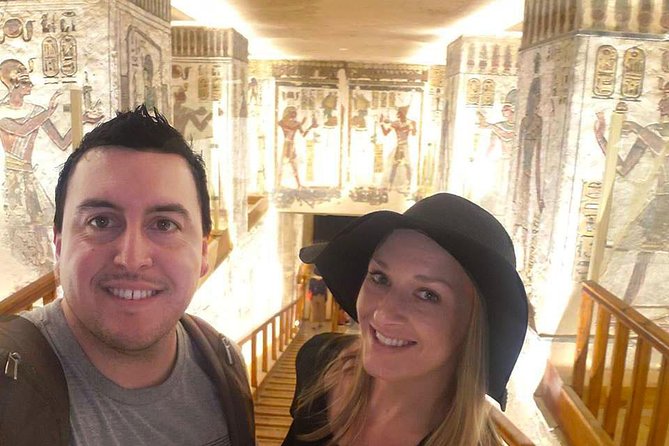
The first major stop is the Valley of the Kings, the burial ground used by many New Kingdom pharaohs. Instead of building giant pyramids in the open desert, rulers had tombs cut into the Theban hills and filled their underground rooms with images and texts meant to guide them into the afterlife.
You will enter the tombs included in your admission and see painted scenes with remarkably strong color. The walls show gods, rituals, protective symbols, and passages from funerary texts. Your guide can help make sense of these scenes, since the tombs are visually powerful but easy to confuse when you move from one narrow chamber to another.
King Tutankhamun’s tomb is part of the valley’s fame. Howard Carter found the young king’s largely intact burial in 1922, making it one of the most famous archaeological discoveries ever made. The tour information identifies Tutankhamun’s tomb as a focus of the visit, but it is wise to confirm at the entrance exactly which tombs are included and if an extra ticket is needed for any special tomb.
Allow plenty of energy for this stop. The valley is exposed, and the tombs require walking between the parking area and entrances. Inside, passages can be narrow and uneven. You may also find stairs and a warm, close atmosphere in the underground chambers. Comfortable shoes, water, and protection from the sun will make this first section much easier.
The listed duration is two hours and thirty minutes, which is generous enough for several tombs and an explanation from your guide. It is also the point where a private tour earns its keep. You can ask why one tomb differs from another instead of rushing after a group leader.
Reading the Temple of Hatshepsut
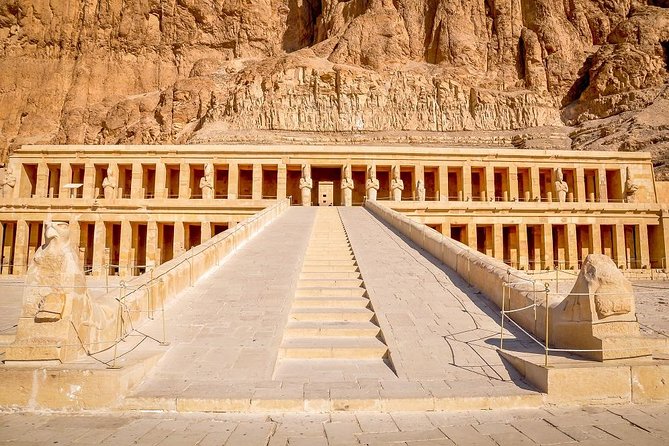
From the valley, the route continues to the Temple of Hatshepsut at Deir el Bahari. Built against a dramatic wall of cliffs, this temple uses broad terraces and long ramps rather than the enclosed, shadowy feeling of the royal tombs.
Hatshepsut ruled Egypt as a woman who took on the symbols and titles normally associated with a male pharaoh. Her temple presents her authority through reliefs, divine connections, and scenes of trade and royal ceremony. Ask your guide to point out the details that support her claim to rule, as well as the later damage and alterations that affected parts of the decoration.
The site is visually open, with long walks across terraces. The setting is one of the most memorable in Luxor, but it gives you little shade. The scheduled time of one hour and forty minutes should allow for the main terraces, photographs, and an explanation without forcing you to linger in the heat.
I would treat this stop as a lesson in how Egyptian monuments use space. The Valley of the Kings takes you underground into private burial places. Hatshepsut’s temple brings royal power into the open, with architecture designed to impress people approaching from the Nile plain.
A quick look at the Colossi of Memnon
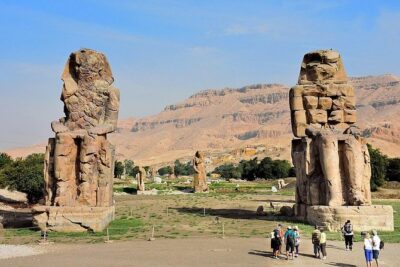
The Colossi of Memnon are an easy roadside stop, but do not dismiss them as a filler attraction. These two seated stone figures once guarded the entrance to a much larger temple built for Amenhotep III. Each statue reaches about 21 meters in height.
The stop lasts around twenty minutes, enough to walk around the figures and take photographs. Your guide will also explain the old story of an echo or sound associated with one of the statues. The name Memnon comes from later Greek associations, not from the original Egyptian identity of the monument.
This is a short visit, and that is appropriate. The statues are imposing, but the main temple complex they once guarded is largely gone. After seeing tombs and Hatshepsut’s terraces, you will appreciate the scale of these figures without needing a long stop.
Lunch follows this part of the route. The meal is included, which is useful in a full day when leaving the sites to find a restaurant would cost time. The exact restaurant and menu are not specified, so you should tell the operator about any dietary needs before the tour if that matters to you.
Same base, a completely different day out:
- Hurghada: Luxor Valley of the Kings & Tutankhamun Tomb Trip
★ 4.7 · 13,208 reviews - Luxor Day Trip from Hurghada Small Group & Tutankhamun Tomb
★ 4.8 · 5,366 reviews - Hot Air Balloon Ride in Luxor Egypt with Transfers Included
★ 5.0 · 4,319 reviews - Luxor: Hot Air Balloon Ride over Luxor Relics
★ 4.8 · 1,681 reviews
Karnak, where scale takes over
After lunch, you cross to the East Bank and visit Karnak Temple. This is the largest and most complex site on the route, and the listed three-hour visit reflects that.
Karnak was not built in one burst. Pharaohs added courts, sanctuaries, obelisks, columns, and statues across many centuries. That layered growth is part of its appeal. You are not seeing one perfectly unified building. You are walking through a religious center shaped by changing rulers and religious priorities.
The avenue of sphinxes introduces the ceremonial side of Karnak. Inside, the Great Hypostyle Hall is the visual knockout: 134 columns fill the space, with the largest rising above the others. Even if you know the number in advance, the forest of stone still takes a moment to absorb.
The tour also points out obelisks connected with Hatshepsut and Thutmose I, the temple of Amun, a granite scarab associated with Amenhotep III, and the Sacred Lake. These details show that Karnak is more than a hall of columns. It was a working temple complex with routes, courts, sacred spaces, and symbolic monuments.
This is where an Egyptologist makes the biggest difference. Without guidance, Karnak can become a sequence of enormous walls and columns. With an explanation, you can follow the movement from public processions toward more restricted religious areas. You can also ask your guide to pause at the details that interest you instead of receiving a rushed speech at every stop.
The drawback is size. Three hours in Karnak can be tiring, particularly after the West Bank and lunch. If your group needs breaks, say so. A private tour should make it possible to divide the visit into manageable sections rather than treating every corner as compulsory.
Luxor Temple after the crowds thin
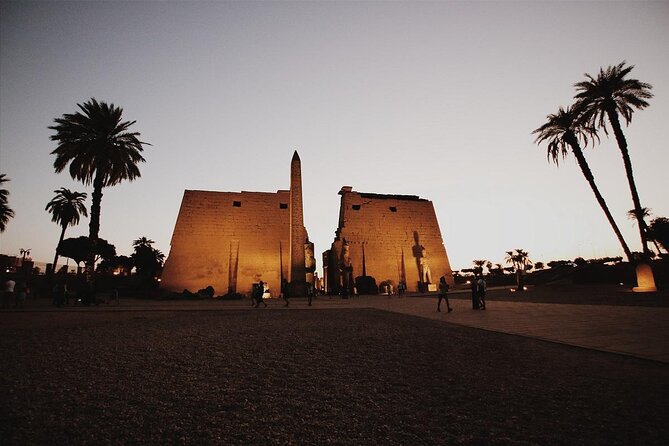
The final major stop is Luxor Temple, a more compact and focused site than Karnak. It was linked to Karnak by an avenue of sphinxes and played an important role in religious processions.
Here you will see the huge seated and standing statues of Ramesses II, along with courtyards, columns, and later additions. Ramesses II ruled for about 67 years and is one of the most recognizable pharaohs in Egyptian history. His monuments often emphasize scale and authority, and Luxor Temple gives you a clear example of that style.
I like ending here because the temple offers a useful contrast with Karnak. Karnak can feel endless. Luxor Temple is easier to read as a procession from entrance to inner areas. Your guide can connect the two sites, helping you picture how people and sacred images once moved along the sphinx avenue between them.
The listed visit lasts two hours. That is enough time for a careful walk and photographs, though the exact amount of daylight or evening atmosphere will depend on your start time. The meeting information gives a pickup window between 6:00 and 9:00 a.m., Monday through Sunday, so confirm your precise pickup time when booking.
What the $189.80 price really covers
At $189.80 per person, this is not the cheapest way to see Luxor. The price makes more sense for a small private party that values time, comfort, and direct guidance.
Included are:
- Hotel or Nile cruise pickup and drop-off
- Private vehicle transport
- A qualified Egyptologist guide
- Entrance fees to all listed sites
- Local lunch
- Taxes, fees, and handling charges
You do not have to budget separately for the main admissions or lunch. You will still need money for tipping, which is specifically excluded.
For two people, the total cost is substantial, but you are buying a private service rather than a seat on a large bus. For a family or small group, group discounts may improve the per-person value. The operator has also arranged customized multi-day programs and transfers for some clients, so you can ask if this day can fit around a Nile cruise or another Egypt itinerary.
The value depends on how much you want explained. If you are happy to arrange taxis and read about the monuments yourself, a private tour may feel expensive. If you have one day in Luxor and want the main sites handled by one team, the cost is easier to justify.
Guides, drivers, and the personal touch
The strongest praise centers on the human side of the service. Michael Samir, also called Michael in the supplied comments, is described as friendly, energetic, fluent in English, and strong on Ancient Egyptian history. Beshoo is also praised for kindness, friendliness, and clear explanations. Sheree has filled in on another tour and was described as a helpful guide.
Those names are useful when you contact Go Luxor Tours, but they do not guarantee a particular assignment. Ask who will guide your group and what language the tour will be conducted in.
A separate driver is another practical advantage. The guide can focus on the monuments while the driver handles the road and vehicle. Several comments also describe help with photographs, queues, practical information, restaurant choices, and souvenir negotiations. These services are not listed as formal inclusions, so treat them as possible strengths rather than promises.
The private format means only your group participates. That gives you a better chance to ask questions and avoid the rigid pace common on large group outings. It does not remove the heat, walking, or crowds at the monuments, so keep your expectations sensible.
Timing, comfort, and small planning details
The tour is described as approximately eight hours, but the listed durations are two hours and thirty minutes at the Valley of the Kings, one hour and forty minutes at Hatshepsut’s temple, twenty minutes at Memnon, three hours at Karnak, and two hours at Luxor Temple. Added together, those times reach about nine hours and thirty minutes, before accounting for driving and lunch.
That is the most important detail to clarify before paying. The actual day may use shorter practical visits, or the posted durations may be estimates. Ask for the expected pickup and return times, particularly if you have a train, flight, cruise departure, or dinner reservation.
The tour is available with hotel or Nile cruise pickup in Luxor. Confirmation is provided at booking, and the meeting information lists morning departures from 6:00 to 9:00 a.m. Most people can participate, and the sites are near public transportation, though this is not a public-transport tour.
Plan for substantial walking and sun exposure. The information does not provide details about wheelchair access, so anyone with mobility concerns should ask the operator directly before booking. Tipping is not included, and the cancellation policy gives a full refund if you cancel at least 24 hours before the start time. Cancellations within 24 hours are not refunded, and late changes are not accepted.
Who should book this Luxor day?
I would choose this tour if you have only one full day in Luxor and want the major sights covered without managing transport yourself. It also suits couples, families, and small groups who prefer asking questions privately and adjusting the pace.
It is a good match for first-time visitors who want context at the monuments. Karnak and the Valley of the Kings can be confusing without a guide, and the route links the sites into a coherent story rather than treating them as isolated photo stops.
You may want a different plan if you prefer slow archaeology, long unstructured time, or a quieter schedule. Five major attractions plus lunch is a lot. Ask the operator to prioritize the Valley of the Kings, Karnak, or another favorite site if your group would rather see fewer places properly.
Should you book it?
Book this private Luxor tour if convenience, expert interpretation, and full coverage matter more to you than finding the lowest price. The package removes several daily hassles: transport, admissions, lunch, and site planning are handled, while the private format gives you a voice in the pace.
Before booking, confirm the guide, pickup time, actual duration, lunch arrangements, and which tomb admissions are included. If those details suit your schedule, this is a practical way to see Luxor’s essential West and East Bank monuments in one well-supported day.
FAQ
How long is the Luxor East and West Banks tour?
The experience is advertised as approximately eight hours. The listed stop durations add up to about nine hours and thirty minutes, so you should confirm the expected schedule with Go Luxor Tours before booking.
What sites are included?
The route includes the Valley of the Kings, the Temple of Hatshepsut at Deir el Bahari, the Colossi of Memnon, Karnak Temple, and Luxor Temple.
Is hotel pickup included?
Yes. Hotel pickup and drop-off in Luxor are included. Pickup from a Nile cruise in Luxor is also specified.
Is this a private activity?
Yes. Only your group participates in the private tour.
Is lunch included?
Yes. A local lunch is included in the tour price.
Are entrance fees included?
Yes. Entrance fees to all sites named in the itinerary are included.
Is a guide provided?
Yes. A qualified Egyptologist guide is included. Michael Samir and Beshoo are names associated with the company, but a specific guide is not guaranteed in the supplied details.
What is the cancellation policy?
You receive a full refund if you cancel at least 24 hours before the experience begins. Cancellations or changes made within 24 hours are not accepted for a refund.
New on the Luxor list
- Full-Day East and West Luxor Private Tour★ 4.5 · 26 reviews
- Marsa Alam: Snorkeling with Sea Turtles Marsa Mubarak★ 4.9 · 26 reviews
- Private Full day East and West Bank, Luxor★ 5.0 · 26 reviews
- Day Trip to Edfu & Kom Ombo temples from Luxor and drop off in Aswan or Luxor★ 5.0 · 26 reviews
- Luxor Day Tour: Kings Valley & Karnak & Luxor & Hatshepsut Temple★ 5.0 · 26 reviews
- Luxury Hot Air Balloon Experience in Luxor with Pick-up★ 5.0 · 27 reviews
- Full-Day Luxor Tour – Discover the East and West Banks of the Nile★ 5.0 · 27 reviews
- 5 Days 4 Nights Nile Cruise Tour★ 5.0 · 27 reviews
Luxor Tours, compared.
Luxor Valley of the Kings & Tutankhamun Tomb Trip
Read our review →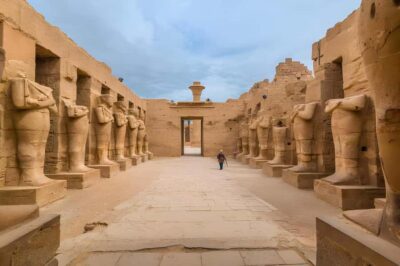
Luxor Day Trip from Hurghada Small Group & Tutankhamun Tomb
Read our review →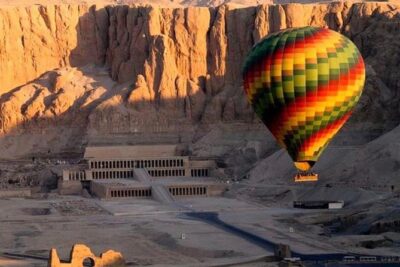
Hot Air Balloon Ride in Luxor Egypt with Transfers Included
Read our review →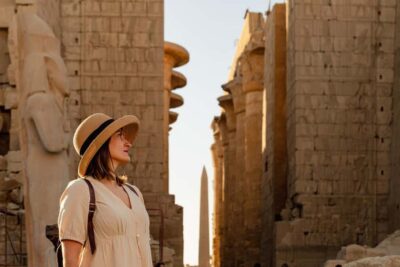
Shared Full-Day Tour to Luxor West and East Banks
Read our review →
Luxor Day Tour: Valley of Kings & Queens & Hatchepsut Temples
Read our review →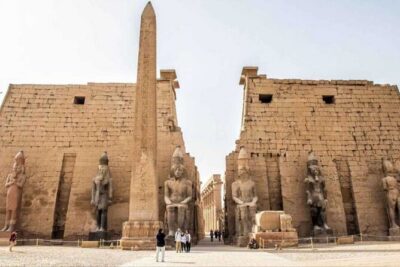
Full Day Tour to East and West Banks of Luxor
Read our review →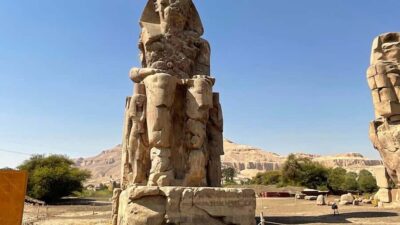
Valley of the Kings and Hatshepsut Temple Day Tour
Read our review →Browse the lists this tour appears in