
Reviewed · LUXOR TOURS
Private Full Day Tour of Luxor West and East Bank Tombs & Temples
Luxor packs some of Egypt’s greatest ancient sights into one extraordinary day. This private tour takes you from the royal tombs of the Valley of the Kings to the huge columns of Karnak, with Hatshepsut’s Temple, Luxor Temple, and the Colossi of Memnon filling out the route.
I like the private format, since you can ask questions, pause for photographs, and set a comfortable pace with your Egyptologist guide. I also like the practical setup: hotel pickup, a first-class air-conditioned car, drop-off, and bottled water are included. The main drawback is the price wording: admission tickets are not included, and lunch is mentioned in the schedule but not in the included services, so confirm those costs before booking.
Key points at a glance
- Five major Luxor sights: See Karnak, Luxor Temple, Hatshepsut’s Temple, the Valley of the Kings, and the Colossi of Memnon in one private outing.
- Guide Ali Sayed may be assigned: His clear English, storytelling, photo help, and ability to answer questions receive especially strong praise.
- Private air-conditioned transport: Hotel pickup and drop-off make crossing Luxor’s east and west banks much easier.
- Tutankhamun’s tomb is not automatically included: Entrance tickets are separate, including any extra ticket required for the young king’s tomb.
- A flexible 4 to 8 hour schedule: The day can suit different sightseeing speeds, though five major sites still make this a full program.
- Very low starting price: At $25 per person, the tour can be excellent value, but budget separately for tickets and any extras.
Why this route works so well in Luxor
Luxor is split by the Nile into two very different sightseeing zones. The east bank is the ancient city, home to Karnak and Luxor Temple. The west bank is the necropolis, where pharaohs built tombs and mortuary temples among the desert hills.
Seeing both sides in one day gives you the clearest picture of ancient Thebes. You are not simply moving from one monument to another. You are following the old pattern of royal life and death: temples for worship and ceremony on the east bank, royal burial grounds and memorial temples on the west.
This is also a sensible tour for a first visit. The route covers the headline sights without asking you to arrange several taxis, negotiate each crossing, or work out which ticket applies at each site. Your guide can provide the setting and explain how the monuments fit together.
The listed price is just $25 per person, which is unusually low for a private full-day outing with transport and an Egyptologist guide. That makes it appealing for couples, families, and small groups. Still, treat the advertised price as the starting cost rather than the full day’s budget, since entrance tickets are excluded and the lunch arrangement needs checking.
A few other Luxor days to weigh up
- Luxor: Shared Full-Day Tour to Luxor West and East Banks
★ 4.5 · 1,812 reviews - Full Day Tour to East and West Banks of Luxor
★ 5.0 · 1,449 reviews - Luxor : Full Day Tour to Luxor West and East Banks & Lunch
★ 5.0 · 870 reviews
The Valley of the Kings and the world of royal tombs
The west bank usually begins with the Valley of the Kings, a dry valley where New Kingdom pharaohs were buried in rock-cut tombs. Instead of building exposed pyramids, rulers hid their burial chambers beneath the Theban hills.
The appeal is inside the tombs. Descending corridors lead to chambers covered with painted scenes, religious texts, and images intended to help the dead king pass into the next world. The spaces vary in length and decoration, so the experience is partly about comparing several tombs rather than seeing only one famous room.
The planned examples include the tombs of Ramses III, Ramses IV, and Merenptah. Each gives you a different look at royal burial art and the scale of the work carried out underground.
Tutankhamun’s tomb is the most famous name on the list. Howard Carter discovered it in 1922, and it was found nearly intact. The celebrated gold mask is in Cairo, not Luxor, but the young king’s mummy remains at the tomb. That makes the visit more personal than many people expect.
There is an important practical point here. Entrance tickets are not included, and special tombs can require an additional ticket. Ask your guide which standard tombs are covered by the basic Valley of the Kings ticket and what extra payment applies to Tutankhamun’s tomb.
I would also avoid trying to see every possible tomb. A smaller selection with time to look at the painted walls is more rewarding than rushing through a long list. The tour description allows about two hours here, which should give you a useful introduction, but your exact time may depend on ticket choices and the day’s pace.
Hatshepsut’s Temple and a powerful female pharaoh
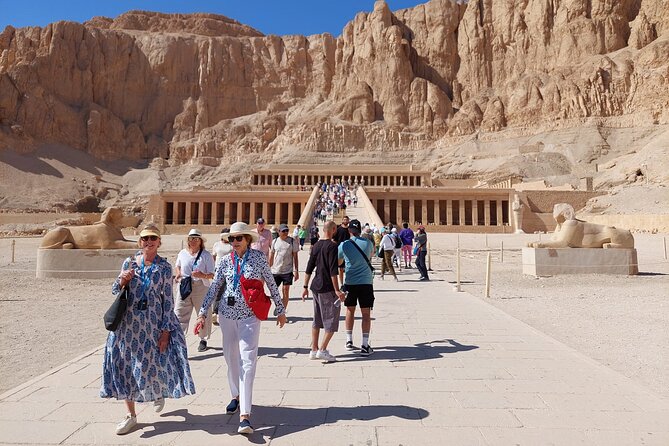
From the valley, the route continues to the Temple of Queen Hatshepsut at Deir el Bahari. The temple rises in broad terraces against the cliffs, creating one of Luxor’s most memorable settings.
Hatshepsut ruled Egypt as pharaoh, an unusual achievement for a woman in the royal succession. Her temple presents her as a legitimate king, using the symbols and formal images normally linked with male rulers. Your guide can help explain the political message behind the statues, reliefs, and titles.
Hatshepsut was an ancestor of Tutankhamun and belonged to the same dynasty, so this stop connects neatly with the Valley of the Kings. You move from the burial place of a famous young king to the memorial temple of one of the dynasty’s most capable rulers.
The temple is more open and spacious than the underground tombs. That contrast gives the morning a good rhythm: dark painted chambers followed by terraces, cliffs, and wide views across the west bank.
The listed visit lasts about two hours, though the site itself can be hot and exposed. Wear practical shoes, bring sun protection, and use the supplied bottle of water. The tour provides water, but you may want to carry extra if you are sensitive to heat.
The Colossi of Memnon, a quick stop with a huge presence
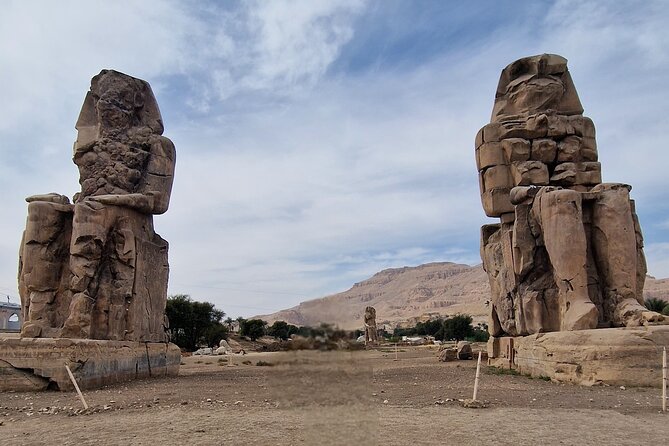
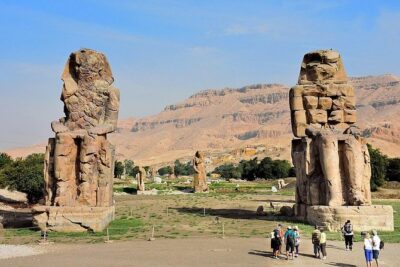
The Colossi of Memnon are two enormous seated statues of Amenhotep III. They once guarded the entrance to a much larger temple complex, most of which has disappeared or survives only in fragments.
This is the briefest stop, listed at about one hour, and admission is free. You will have time to see the statues, study their scale, and take photographs without adding another ticket to the day.
Do not expect a long temple visit here. The value is visual and historical. The statues show how ancient rulers used size to make power visible, even before you entered the main sanctuary.
Because this stop is free and relatively short, it also gives the schedule a little breathing room. If you have spent extra time at a tomb or Hatshepsut’s Temple, this is the sort of stop that can remain useful without creating another complicated ticket decision.
Same base, a completely different day out:
- Hurghada: Luxor Valley of the Kings & Tutankhamun Tomb Trip
★ 4.7 · 13,208 reviews - Luxor Day Trip from Hurghada Small Group & Tutankhamun Tomb
★ 4.8 · 5,366 reviews - Hot Air Balloon Ride in Luxor Egypt with Transfers Included
★ 5.0 · 4,319 reviews - Luxor: Hot Air Balloon Ride over Luxor Relics
★ 4.8 · 1,681 reviews
Karnak Temple and its forest of columns
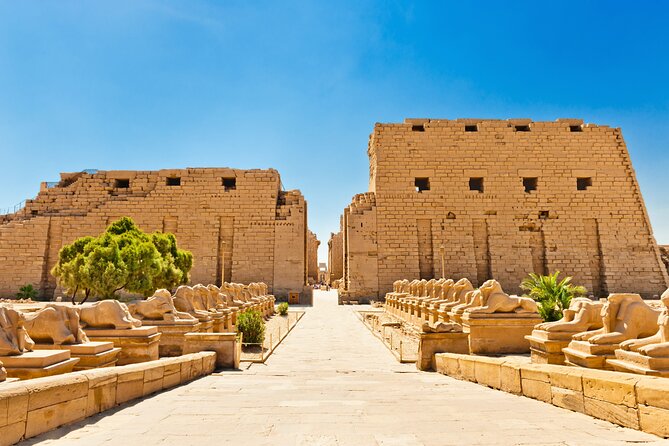
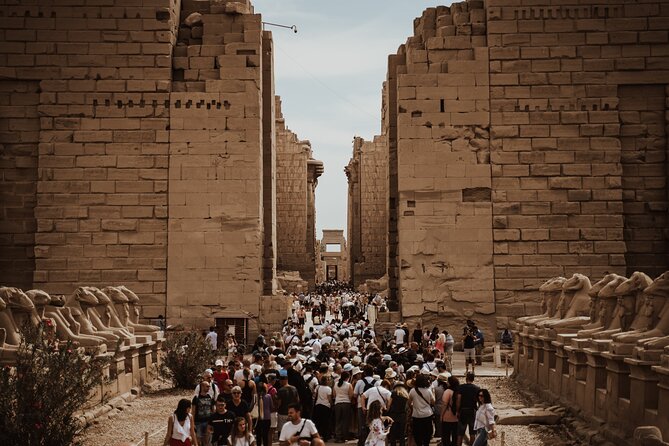
After lunch, the east-bank portion continues at Karnak, one of Egypt’s largest temple complexes. Karnak is not a single building from one reign. It grew over many generations, with successive rulers adding courts, sanctuaries, obelisks, columns, and sacred spaces.
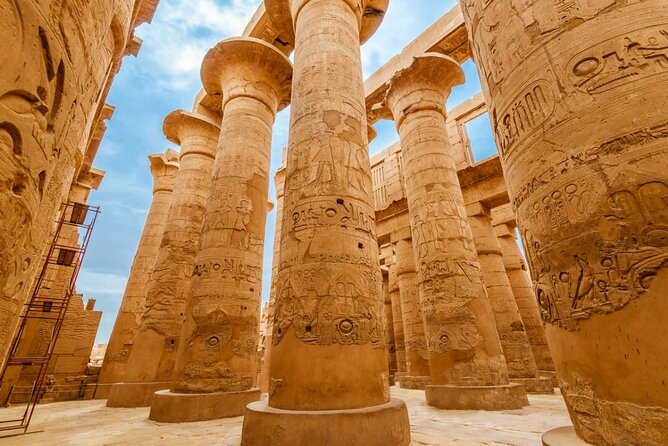
The approach includes the Avenue of Sphinxes, which gives you an immediate sense of ceremony and scale. Inside, the Hypostyle Hall is the great showstopper. Its 134 massive columns create a stone forest, with the taller central columns rising above the surrounding rows.
Karnak can feel confusing without a guide. There are layers of construction, repeated royal names, and several religious areas spread across a broad site. A well-informed Egyptologist can help you understand what you are looking at instead of leaving you with a collection of impressive but disconnected walls.
Look for the obelisks linked with Queen Hatshepsut and Thutmose I, the lotus and papyrus designs connected with the Temple of Amun, the granite scarab of Amenhotep III, and the Sacred Lake. These details reward a slower visit, especially if your guide points them out before you start taking photographs.
The itinerary allows about two hours at Karnak. That is enough for the main route, though you should not expect to inspect every corner of the complex. The site is large, and the midday heat can make a focused visit more pleasant than an exhaustive one.
Admission is separate. Since Karnak is one of the central stops, include its ticket in your budget before deciding how inexpensive the tour really is.
Luxor Temple and the end of the ancient city
Luxor Temple provides a strong finish. Unlike Karnak, which developed as a vast religious complex, Luxor Temple has a more contained layout and a direct relationship with the old city.
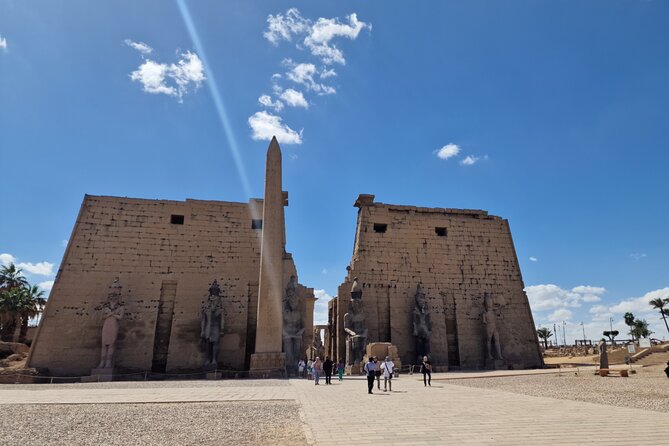
The temple was dedicated to the Theban Triad of Amun-Ra, Mut, and Khonsu. You will see monumental reliefs, courtyards, and the granite statues of Ramses the Great. The arrangement helps you appreciate how royal ceremony, religion, and public processions worked together.
A one-hour visit is listed here. That is enough to take in the main court and statues, but you may want longer if you enjoy inscriptions and architectural detail. Ask your guide to explain how Luxor Temple related to Karnak, since the two sites were linked by the Avenue of Sphinxes.
The temple is also a useful contrast with the west-bank sights. After tombs, cliffs, and memorial buildings, you return to an urban temple with a different sense of movement and public life. The east and west banks stop feeling like separate attractions and start making historical sense as parts of one ancient capital.
Tickets are not included here either. Keep some money aside for the entrance fees at both east-bank temples.
What the private format changes
The private setup is more than a marketing label. Only your group takes part, so you can ask questions about a particular pharaoh, request photo time, or ask for a clearer explanation when a name or dynasty becomes confusing.
The strongest comments about guide Ali Sayed focus on his clear English, good timing, and ability to explain without burying you under facts. He is also praised for making time for photographs and helping visitors find good angles. You may not be assigned Ali specifically, so confirm the guide’s name when booking if that matters to you.
A private guide is especially useful at Karnak and in the Valley of the Kings. Both sites contain more detail than a casual visit can absorb, and a guide can point out the scenes and features you might otherwise pass without noticing.
The tour also seems suited to different levels of interest. If you want a lively overview, the guide can keep the story moving. If you already know a fair amount about ancient Egypt, the private setting gives you room to ask more focused questions.
The vehicle is described as a first-class, air-conditioned luxury car. That matters in Luxor, where the day includes road transfers between the hotel, the west bank, and the east bank. Hotel pickup and drop-off remove the need to organize local transport around a demanding sightseeing schedule.
Timing, lunch, and the real cost
The duration is listed as roughly 4 to 8 hours. That is a wide range, but it reflects the difference between a brisk highlights visit and a slower day with more questions, photographs, and time at each monument.
The stated schedule adds up to a substantial day: about two hours each at Karnak, Hatshepsut’s Temple, and the Valley of the Kings, plus an hour at each of the Colossi of Memnon and Luxor Temple. Transfers and lunch fit around those visits.
Lunch is mentioned as part of the day’s sequence, and one account praises the meal and the choice of location. However, lunch is not listed among the included services. I would ask exactly what is provided before you set your budget. The same applies to entrance tickets and any extras not specifically named.
At $25 per person, the tour offers strong potential value even after adding admissions. The private car and guide would normally be the costliest parts to arrange independently, and hotel pickup saves both time and bargaining. Group discounts may make the deal even better for families or friends traveling together.
Still, low price should not push you into skipping the questions that matter. Confirm the start time, the guide’s language, which entrance tickets are required, and whether lunch is included or simply planned as a break.
Who will get the most from this tour
I would choose this tour for a first visit to Luxor, especially if you have one full day and want the major monuments handled in one plan. It also suits anyone who prefers asking questions in a private car rather than joining a large group.
Families may like the flexible pace and hotel pickup. Couples and friends can make better use of the private format by deciding how much time to spend on photographs or inscriptions.
The day is less suitable if you want a slow, specialist visit to one site. Five major stops create a highlights tour, not an archaeological study day. The 4 to 8 hour range also means you should not assume the longest possible schedule unless the operator confirms it.
You should also be ready for heat, walking, uneven ground, and separate admission payments. The tour description says most people can participate, but it does not provide more detailed accessibility information, so ask if you have mobility concerns.
My verdict: a strong first-day choice with ticket costs to check
I would book this tour if you want a practical overview of Luxor’s essential sights, private transport, and an Egyptologist who can connect the monuments into one story. The combination of the Valley of the Kings, Hatshepsut’s Temple, Karnak, Luxor Temple, and the Colossi of Memnon is hard to beat for a first day.
The biggest reason to choose it is the guide-led format. Ali Sayed is repeatedly praised for clear English, useful historical context, patience with questions, photo help, and a friendly manner. Confirm his availability if you specifically want him, since the tour does not promise a named guide.
The main caution is financial rather than historical. The $25 price is attractive, but admission tickets are extra, and lunch is not clearly included. Get those details before booking, then allow up to eight hours if you prefer a relaxed pace.
Free cancellation is available when you cancel at least 24 hours before the start time. Inside that window, the payment is not refunded and changes are not accepted. For most first-time visitors to Luxor, this is a very sensible way to get oriented and see the city’s greatest monuments in one well-supported day.
FAQ
Where does the tour take place?
The tour takes place in Luxor, Egypt, covering sights on both the west and east banks of the Nile.
How long does the tour last?
The listed duration is approximately 4 to 8 hours.
Is hotel pickup included?
Yes. Hotel pickup and drop-off are included.
Is the tour private?
Yes. Only your group participates in the activity.
Which sights are included in the route?
The route includes Karnak Temple, Hatshepsut’s Temple, the Valley of the Kings, the Colossi of Memnon, and Luxor Temple.
Are admission tickets included?
No. Admission tickets are not included in the tour price.
Is lunch included?
Lunch is mentioned in the schedule, but it is not listed among the included services. Confirm the lunch arrangement before booking.
What happens if I cancel?
You can receive a full refund if you cancel at least 24 hours before the experience start time. Cancellations or changes made within 24 hours are not accepted and are not refunded.
New on the Luxor list
- Full-Day East and West Luxor Private Tour★ 4.5 · 26 reviews
- Marsa Alam: Snorkeling with Sea Turtles Marsa Mubarak★ 4.9 · 26 reviews
- Day Trip to Edfu & Kom Ombo temples from Luxor and drop off in Aswan or Luxor★ 5.0 · 26 reviews
- Private Full day East and West Bank, Luxor★ 5.0 · 26 reviews
- Luxor Day Tour: Kings Valley & Karnak & Luxor & Hatshepsut Temple★ 5.0 · 26 reviews
- Luxury Hot Air Balloon Experience in Luxor with Pick-up★ 5.0 · 27 reviews
- Full-Day Luxor Tour – Discover the East and West Banks of the Nile★ 5.0 · 27 reviews
- 5 Days 4 Nights Nile Cruise Tour★ 5.0 · 27 reviews
Luxor Tours, compared.
Luxor Valley of the Kings & Tutankhamun Tomb Trip
Read our review →
Luxor Day Trip from Hurghada Small Group & Tutankhamun Tomb
Read our review →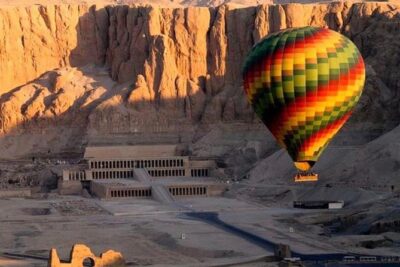
Hot Air Balloon Ride in Luxor Egypt with Transfers Included
Read our review →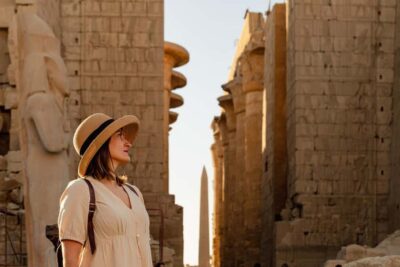
Shared Full-Day Tour to Luxor West and East Banks
Read our review →
Luxor Day Tour: Valley of Kings & Queens & Hatchepsut Temples
Read our review →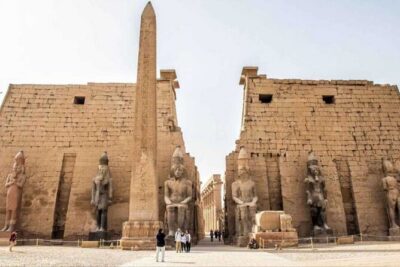
Full Day Tour to East and West Banks of Luxor
Read our review →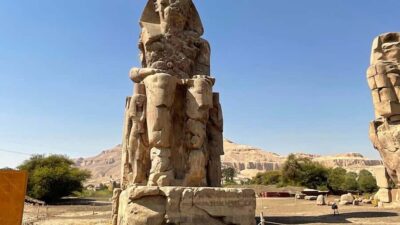
Valley of the Kings and Hatshepsut Temple Day Tour
Read our review →Browse the lists this tour appears in