
Reviewed · LUXOR TOURS
First impression of Luxor-Explore secrets of Luxor by horse carriage
Luxor’s East Bank comes into focus in a memorable way from a horse carriage, with the Nile, busy streets, and ancient monuments passing at street level. This tour combines that old-fashioned ride with guided visits to Karnak Temple and Luxor Temple, two of Egypt’s major ancient sites.
I like the clear meeting point by Luxor Museum and the chance to hear about new archaeological discoveries from an Egyptologist. I also like the useful pairing of the two temples with the Avenue of Sphinxes and Abu Haggag Mosque. The main concern is horse welfare, and one serious account describes an emaciated horse collapsing in the heat. You should consider that issue carefully before booking.
Key points at a glance
- A horse-carriage introduction to Luxor: The ride offers a street-level look at the Nile-side city and avoids haggling with drivers.
- Two major temples in one morning or afternoon: You visit Karnak and Luxor Temple on foot, with entrance fees paid separately.
- A guide-led history lesson: An Egyptologist explains the rulers, gods, construction phases, and recent archaeological discoveries.
- Avenue of Sphinxes connection: The restored route helps you understand how Karnak and Luxor Temple were linked in ancient Thebes.
- A practical four-hour format: The tour begins and ends at Luxor Museum, making it easy to fit into a first day.
- A serious animal-care question: Ask about the horse and carriage arrangements before you commit.
A street-level first look at Luxor
The appeal here is not just getting from one temple to another. A carriage gives you a slower view of Luxor’s streets, the Nile-side road, and daily city life between the monuments. You are not sealed inside a vehicle, so the ride can feel more connected to the city.
That said, the title and description create a clear expectation: you should be collected by horse carriage at the start. One account found that the group walked to the first point of interest instead, which made the experience feel less like the advertised introduction to Luxor. Ask the operator exactly where the carriage ride begins and how much of the route is on foot.
The carriage also raises an ethical issue. One report describes an old, visibly underfed horse falling and being unable to rise without help on a hot day. That is not a minor complaint. If the horse appears unwell, overheated, or poorly treated, you should feel comfortable refusing the ride and raising the matter with the provider.
More horse rides around Luxor:
- Private Horse Riding Tour in Luxor West Bank
★ 5.0 · 91 reviews - Hurghada: Red Sea & Desert Horse Riding Tour with Swimming
★ 4.8 · 2,198 reviews - Hurghada: Sea & Desert Horse Tour, Stargazing, Dinner & Show
★ 4.5 · 1,592 reviews
Meeting at Luxor Museum
You meet in front of Luxor Museum on Kornish Al Nile. Look for the tour leader holding a red flag. The activity ends at the same meeting point, so you do not need to arrange a separate ride back from the final stop.
The meeting point is one of the tour’s practical strengths. Luxor Museum is a recognizable place near the Nile, and the fixed location removes some of the uncertainty that comes with arranging a carriage directly on the street. Confirmation is provided at booking, and the activity is listed near public transportation.
The group can reach as many as 50 people. That is a large possible group for a carriage-based outing, especially when you later enter temple courtyards and halls on foot. If the group is near capacity, it may be harder to hear the guide or stay close during the temple visits.
Riding toward Karnak Temple
The first carriage section takes you from the museum toward Karnak. The ride is listed as about 10 minutes, so think of it as a short introduction rather than a long sightseeing drive.
This short trip still has value. You can see Luxor at street level, take photographs along the Nile, and avoid the usual back-and-forth over a local ride price. The carriage is transportation, not the main event, and the heart of the experience begins once you reach Karnak.
I would use this part to get oriented. Luxor sits on the site of ancient Thebes, and the modern city grew around monuments that once formed the center of Egyptian religious life. A guide can help connect the ordinary streets around you with the huge temple complex ahead.
Karnak Temple and the scale of ancient Thebes
Karnak receives about an hour. Entrance is not included, and the stated cost for Karnak and Luxor Temple together is 200 Egyptian pounds, listed as about 12 US dollars. Bring enough local currency or confirm the current price, since Egyptian ticket costs can change.
Karnak is not one simple temple. Construction began roughly 4,000 years ago and continued through many periods, including the time of Roman control. Pharaoh after pharaoh added walls, columns, sanctuaries, and gateways, leaving a site that feels more like a sacred district than a single building.
The main focus is the Temple of Amun-Ra. Ancient Egyptians saw it as the earthly home of Amun-Ra, who was joined by his wife Mut and their son Khonsu. The complex also included temples connected with these gods, giving the site a religious structure that your guide can explain as you move through it.
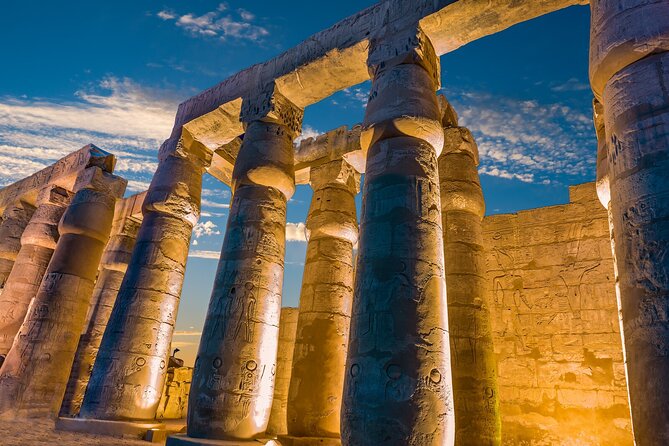
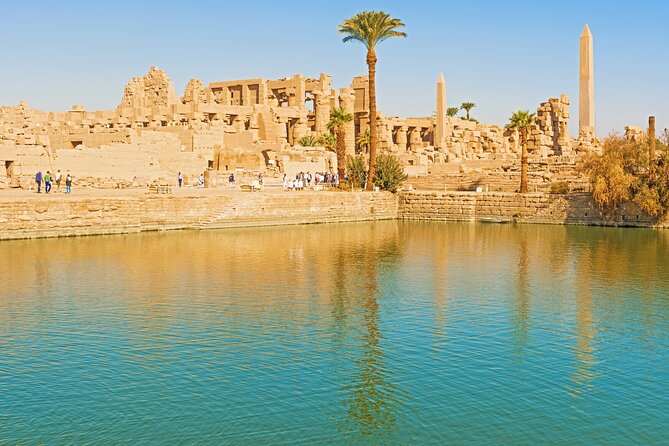
The Hypostyle Hall is the visual high point for many people. Built during the reign of Seti I, it contains a forest of huge columns. The scale is hard to grasp from photographs, so allow yourself time to look upward and notice the carved details, the spacing between the columns, and the way light enters the hall.
One hour is enough for an introduction, but not enough for every corner. You will need to stay aware of the group and listen for instructions about where to meet. If you want a slow, detailed study of every relief, a longer dedicated visit to Karnak would suit you better.
The guide’s role matters here. Without context, Karnak can become a long sequence of columns and broken walls. With a good explanation, you can understand how different rulers added to the sacred center and why the complex changed as political power shifted from Memphis and other capitals.
A few other Luxor days to weigh up
- Hurghada: Luxor Valley of the Kings & Tutankhamun Tomb Trip
★ 4.7 · 13,208 reviews - Luxor Day Trip from Hurghada Small Group & Tutankhamun Tomb
★ 4.8 · 5,366 reviews - Hot Air Balloon Ride in Luxor Egypt with Transfers Included
★ 5.0 · 4,319 reviews - Luxor: Shared Full-Day Tour to Luxor West and East Banks
★ 4.5 · 1,812 reviews
Luxor Temple and the royal renewal ceremony

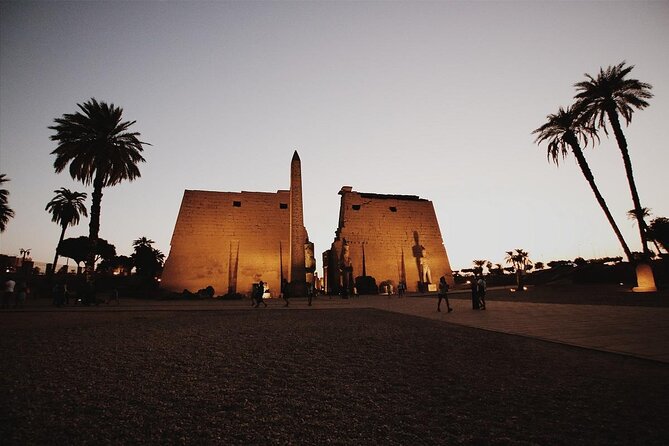
The next major stop is Luxor Temple, with about an hour on foot. Again, the entrance ticket is extra. The temple was built over several centuries by Amenhotep III, Ramses II, Tutankhamun, and other rulers, so its walls bring together several chapters of Egyptian history.
Luxor Temple was tied to the idea of the First Occasion, a sacred moment when the god Amun experienced renewal. The annual ceremony reenacted the pharaoh’s coronation and reinforced the link between the ruler, the gods, and the continuing order of the kingdom.
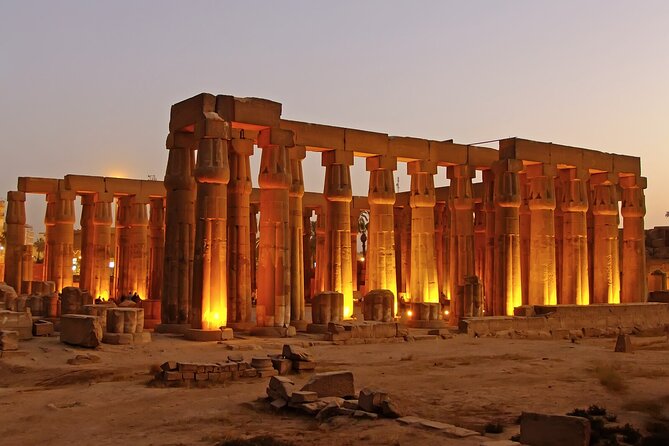
The Great Colonnade Hall is a major feature. It stretches nearly 61 meters and includes 28 columns about 21 feet high. Much of its decoration was carried out under Tutankhamun around 1330 BC. Those figures give you a sense of how grand the completed ceremonial route must have been.
The temple has also changed through time. Some sidewalls were pulled down after the pharaonic period and reused as building material. That mixture of surviving columns, missing walls, later additions, and reused stone is part of what makes Luxor Temple different from a perfectly preserved monument.
Your guide can also point out how Luxor Temple relates to Karnak. The two were connected by a ceremonial route, and the Avenue of Sphinxes helps make that relationship visible. Seeing both temples in one outing gives you a stronger sense of Thebes as a connected religious center, not two isolated attractions.
Walking the Avenue of Sphinxes

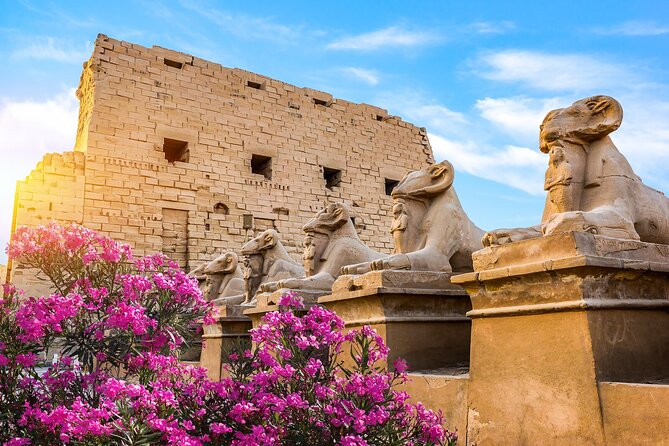
The Avenue of Sphinxes receives about 30 minutes and has no separate admission charge listed. Construction began during the New Kingdom and was completed under Nectanebo I, who ruled in the 30th Dynasty from 380 to 362 BC.
The avenue was buried beneath sand for centuries. Archaeological work began to reveal sections in the mid-20th century, including groups of statues found near Luxor Temple between 1949 and 1964. Egypt reopened the roughly 3,000-year-old route in a major ceremony on November 25, 2021.
This stop works best as a link between the temples. It helps you picture ceremonial movement between Karnak and Luxor Temple, even if the restored route does not recreate every detail of the ancient setting. The half-hour visit also gives you a change of pace after the large temple interiors.
Use this section for photographs, but listen to the guide before wandering ahead. With a possible group of 50, it is easy to lose sight of the meeting point.
Abu Haggag Mosque inside an ancient temple
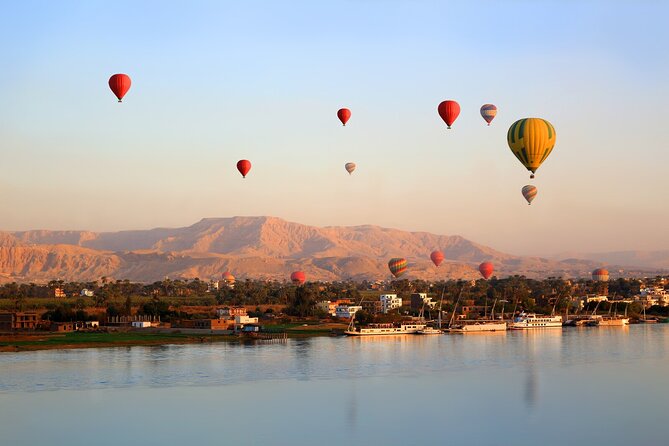
The final stop is Abu Haggag Mosque, where a working Islamic place of worship is integrated into Luxor Temple. The mosque occupies part of an ancient Egyptian religious complex dating to the reign of Amenhotep III in the 14th century BC.
This is one of the most interesting details of the tour because it shows how a sacred site can continue to serve religious life across very different periods. You are not looking at a separate monument placed beside the temple. The mosque is built into the older structure, creating a visible meeting point between ancient Egyptian and Islamic history.
The visit is listed at about 10 minutes. Treat it as a brief orientation rather than a full mosque tour. Be respectful of the religious setting and follow the guide’s directions about where you may stand and what you may photograph.
What the $30 price really covers
The tour costs $30 per person. That includes the Egyptologist guide and horse-carriage transportation, but not admission to Karnak and Luxor temples. The extra entrance cost is stated as 200 Egyptian pounds, or about $12, in total.
That makes the basic outing reasonably priced if you want transportation, a guide, and four hours of sightseeing in one package. The value is strongest for a first visit, when you want someone to explain the major monuments and remove the hassle of negotiating with local drivers.
The value is weaker if you mainly want a long carriage ride. The listed carriage sections are short, while most of the time is spent walking through the temples. You are paying for the combination of transport and interpretation, not for an extended ride through Luxor.
Group discounts are available, and the activity is booked an average of 15 days ahead. That booking pattern suggests you should not leave it until the last minute during a busy period, though the data does not promise that every date will sell out.
The guide can make or break the visit
An Egyptologist guide is included, which is important at both temples. The walls and columns contain more information than most people can absorb alone, and the guide should help you sort out the major gods, rulers, ceremonies, and building phases.
The strongest praise connected with the experience focuses on the host. Ababoub is named in a particularly positive account as an excellent host, with the historic sites and the day’s organization receiving warm approval. You cannot assume Ababoub will lead every departure, so ask who your guide will be when you confirm the booking.
The guide is also the person who can explain recent archaeological finds, a specific promise of this outing. That gives the visit a link to current Egyptology rather than treating the temples as frozen ruins.
Animal welfare and the carriage question
I would not skip this issue. Horse carriages can offer a memorable way to see Luxor, but the quality of care matters more than the novelty of the ride.
One serious account describes a horse with protruding bones collapsing in hot weather and needing the harness removed before it could be helped. The operator apologized and said the matter would be investigated. That response is worth noting, but it does not erase the distress of the event.
Before riding, check the horse’s condition. If you see signs of severe thinness, exhaustion, injury, or heat stress, do not feel pressured to continue. Contact the provider and ask what alternative transport or refund arrangement is possible. This is also a good reason to clarify the exact carriage portion, since one account found the actual start did not match the title.
Who should book this Luxor tour?
I would consider it for a first day in Luxor, especially if you want a short introduction to the East Bank without arranging several separate rides. It suits you if you value an Egyptologist’s explanations, want to see both major temples, and like having a fixed start and finish point.
It is also a practical choice for people who prefer a moderate four-hour outing rather than a full-day schedule. The route includes major sights, a short carriage ride, open-air photo opportunities, and a useful link between ancient Egyptian and Islamic history.
I would hesitate if you want a private, slow-paced temple visit, dislike large groups, or are not comfortable with horse transport. A maximum group size of 50 can make the experience less personal, and the animal-care report deserves real weight in your decision.
The cancellation terms are simple: cancel at least 24 hours before the local start time for a full refund. Changes or cancellations within 24 hours are not accepted for a refund.
Final decision: book with questions first
This is a good-value introduction to Luxor’s East Bank when the guide is strong and the carriage arrangements are clear. Karnak, Luxor Temple, the Avenue of Sphinxes, and Abu Haggag Mosque form a well-chosen route, and the $30 price leaves the temple tickets as the main extra cost.
I would book only after confirming two points: exactly where the carriage ride begins, and how the operator checks the horses’ health and working conditions. If the answers satisfy you, this can be an efficient and atmospheric first look at Luxor. If they do not, visit the temples with another guide and choose transport that feels right to you.
FAQ
How long does the Luxor horse-carriage tour last?
The activity lasts about four hours.
Where does the tour begin?
You meet in front of Luxor Museum on Kornish Al Nile in Luxor City. The tour leader carries a red flag.
Where does the tour end?
The activity ends back at the Luxor Museum meeting point.
Are Karnak Temple and Luxor Temple admission tickets included?
No. Entrance tickets for Karnak and Luxor temples are paid separately. The stated combined cost is 200 Egyptian pounds, listed as about 12 US dollars.
What is included in the price?
The price includes an Egyptologist tour guide and transportation by horse carriage.
How large can the group be?
The maximum group size is 50 people.
Can I cancel for a full refund?
Yes. You must cancel at least 24 hours before the experience start time for a full refund. Cancellations or changes made within 24 hours are not refunded or accepted.
New on the Luxor list
- Full-Day East and West Luxor Private Tour★ 4.5 · 26 reviews
- Marsa Alam: Snorkeling with Sea Turtles Marsa Mubarak★ 4.9 · 26 reviews
- Day Trip to Edfu & Kom Ombo temples from Luxor and drop off in Aswan or Luxor★ 5.0 · 26 reviews
- Private Full day East and West Bank, Luxor★ 5.0 · 26 reviews
- Luxor Day Tour: Kings Valley & Karnak & Luxor & Hatshepsut Temple★ 5.0 · 26 reviews
- Luxury Hot Air Balloon Experience in Luxor with Pick-up★ 5.0 · 27 reviews
- Full-Day Luxor Tour – Discover the East and West Banks of the Nile★ 5.0 · 27 reviews
- 5 Days 4 Nights Nile Cruise Tour★ 5.0 · 27 reviews
Luxor Tours, compared.
Luxor Valley of the Kings & Tutankhamun Tomb Trip
Read our review →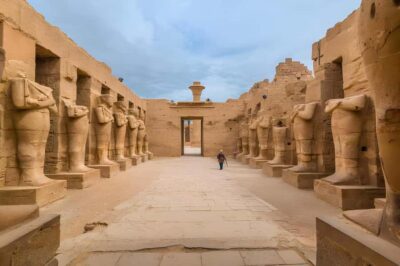
Luxor Day Trip from Hurghada Small Group & Tutankhamun Tomb
Read our review →
Hot Air Balloon Ride in Luxor Egypt with Transfers Included
Read our review →
Shared Full-Day Tour to Luxor West and East Banks
Read our review →
Luxor Day Tour: Valley of Kings & Queens & Hatchepsut Temples
Read our review →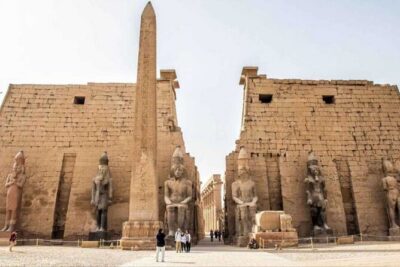
Full Day Tour to East and West Banks of Luxor
Read our review →
Valley of the Kings and Hatshepsut Temple Day Tour
Read our review →Browse the lists this tour appears in