
Reviewed · NILE CRUISES
7 Day Pyramids & Nile Cruise By Air
The boldest feature here is the sheer amount of ancient Egypt packed into seven days. You move from Cairo’s pyramids to Aswan, sail north on the Nile, and finish among the tombs and temples of Luxor, with flights and transfers arranged for you.
I like the private-tour setup, since your group gets its own guide and vehicle rather than being folded into a large bus tour. I also like the mix of famous monuments and river time: Giza and Abu Simbel bring the big drama, while three nights aboard the cruise give you a slower view of villages, desert, and temples along the river. The main drawback is pace. This is a busy week, and the Abu Simbel visit plus several long sightseeing days may leave you wishing for more time in Cairo or Luxor.
Key points at a glance
- Cairo to Aswan by domestic flight: The itinerary avoids a long overland journey and gets you quickly to the southern Nile.
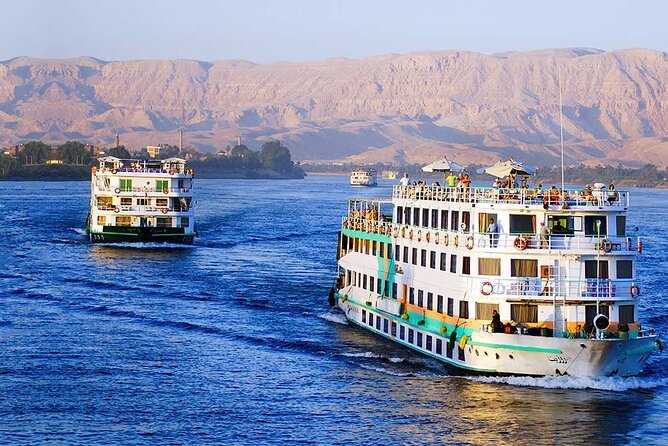
- Three nights on a five-star cruise: Your cabin, meals, and Nile excursions are included, which makes budgeting easier.
- Abu Simbel is part of the package: The enormous statues of Ramses II and the temple of Queen Nefertari are among the trip’s biggest sights.
- Private guiding throughout: Guides such as Mena, Meyer, George, Alfred, John, and Marcos have been praised for clear explanations and personal attention.
- Classic sites are covered: Giza, the Egyptian Museum, Philae, Kom Ombo, Edfu, Karnak, Luxor Temple, Hatshepsut, and the Valley of the Kings all appear in the plan.
- Extra touches are included: You get a camel ride at the pyramids and a felucca trip in Aswan, along with bottled water during outings.
Why this seven-day route works
Egypt can be awkward to plan on your own. The key sights are spread across a long stretch of the country, domestic flights need coordination, and Nile cruises operate on fixed schedules. This package takes care of the main connections: Cairo to Aswan by air, three nights on a riverboat, then Luxor to Cairo by air.
That structure gives you a useful first look at Egypt without spending your week in road vehicles. You get two nights in Cairo, three nights on the Nile, and a final sightseeing day in Luxor before returning to Cairo for your flight home.
The private format matters. Your group participates on its own, and a guide reviews the schedule with you at the Cairo hotel. Past experiences with this company repeatedly praise quick communication from Osama and the care taken by guides including Mena, Meyer, George, Alfred, John, and Marcos. Guide assignments can change, so treat those names as examples rather than a promise.
The tradeoff is that this is a survey trip, not a slow cultural stay. You will see a lot, but you will also have early starts, airport transfers, boat boarding, and several major monuments in close succession. If you want a first visit that covers the famous sights with little planning, the pace makes sense. If you prefer lingering in museums, wandering markets, or spending several days in one town, this route may feel tight.
More Boat Tours in Cairo
- Cairo: Dinner Cruise on the Nile River with Entertainment
★ 4.2 · 2,190 reviews - Cairo: Nile Sunset Dinner Cruise, Show & Optional Transfer
★ 4.1 · 2,184 reviews - Cairo: Nile Dinner Cruise with Belly Dancer Show with Pickup
★ 4.4 · 835 reviews
Day one: a simple arrival in Cairo
Your arrival day is deliberately light. A Journey to Egypt representative meets you at Cairo International Airport before the immigration counters, holding a sign with your name. You then ride by private air-conditioned vehicle to your Cairo hotel.
The representative reviews the holiday schedule with you at the hotel and confirms pickup times. That small meeting is useful in Egypt, where sightseeing often begins early and the next day’s arrangements matter.
No meal is included on this first day. The airport transfer is listed at about 45 minutes, though actual road time can vary. You should treat the day as an arrival and recovery day, not as a bonus sightseeing day.
Day two: Giza, the Sphinx, and the Egyptian Museum
The tour’s first full day begins with the Giza Plateau. You see the Great Pyramid of Cheops, built between 2551 and 2528 BC and formed from an estimated 2.5 million stone blocks. Its original height was about 137 meters, an impressive scale even before you consider how the builders moved and fitted the stone.
The tour continues to the pyramid panorama area, where you can photograph all three major pyramids together. You then visit the Great Sphinx and the Valley Temple. A camel ride is included during the pyramids tour, giving the day a classic Egypt postcard moment, though you should confirm the exact length and arrangements with your guide.
Lunch at a local Cairo restaurant is included. Afterward, the group visits the Egyptian Museum, one of the world’s best-known collections of ancient Egyptian material. The museum portion is valuable because it gives you objects and artifacts to connect with the monuments you have just seen outside.
Seven hours is a full sightseeing day. The Giza plateau is open and exposed, so comfortable shoes, sun protection, and bottled water matter. Bottled water is supplied during outings, and breakfast and lunch are included.
The order of the pyramids and museum visits can affect your energy. If you care strongly about avoiding the worst heat or crowds, ask the guide whether the sequence can be adjusted. The private format may offer some flexibility, but the listed schedule remains the guide.
Day three: flying to Aswan and visiting Philae
The next morning, you fly from Cairo to Aswan. On arrival, a guide meets you at the airport exit door with your name. The southern city feels markedly different from Cairo, and the Nile becomes the center of the trip from this point onward.
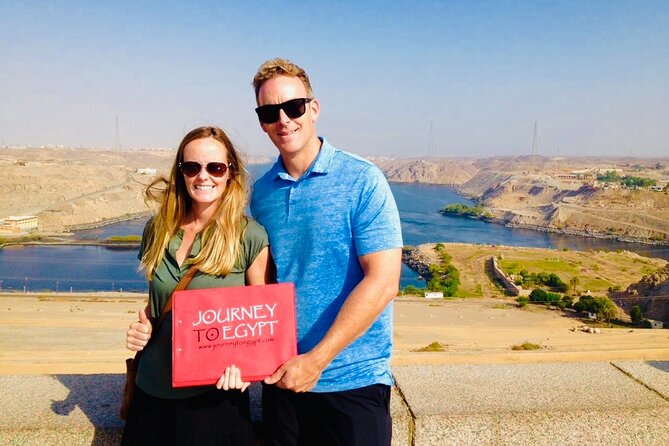
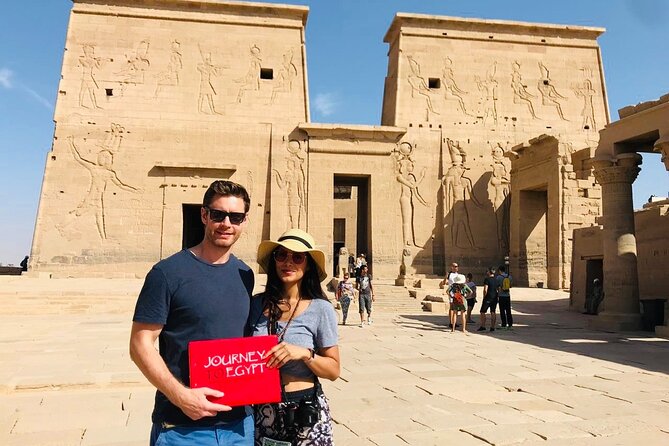
Sightseeing includes the Aswan High Dam and Philae Temple. Philae is devoted mainly to Isis and Hathor and is one of the most memorable temple settings in Egypt. The temple complex was moved to higher ground after the High Dam threatened to flood the original island, a major engineering and preservation story that adds meaning to the visit.
You board the Nile cruise before lunch. Lunch and dinner are served on board, and you spend the night in Aswan. A felucca ride is also included in the package, although the day-by-day description does not give its exact timing. Ask when it will take place, since wind and river conditions can affect a traditional sailing trip.
This is one of the route’s more efficient transitions, but it is also a busy one. You go from airport pickup to multiple sights, then onto the boat in a few hours. Keep your documents and essential medication in your hand luggage rather than in a checked suitcase or large transfer bag.
More Nile cruises around Cairo:
- Luxury Felucca on the Nile with Lunch
★ 5.0 · 994 reviews - Giza: Sakkara, Memphis & Dahshur (Pyramid & Felucca Options)
★ 4.8 · 626 reviews - Private Felucca Ride on the Nile River
★ 4.2 · 537 reviews - Cairo: 1 or 2-Hour Felucca Ride on the Nile with Transfers
★ 3.5 · 451 reviews
Day four: Abu Simbel and the crocodiles of Kom Ombo
Abu Simbel is the great set piece of the southern section. The twin temples were built for Ramses II and Queen Nefertari, and Ramses’s façade is guarded by four statues about 70 feet tall. The site was dismantled and moved to protect it from the waters created by the Aswan High Dam.
That relocation is not just an engineering footnote. It explains why the temple stands where it does today and shows the scale of the international effort to preserve Egypt’s monuments. The interiors and massive carvings make Abu Simbel worth the extra travel involved.
The supplied schedule places Abu Simbel and Kom Ombo on the same day, but it does not spell out the transport or exact hours for the Abu Simbel visit. This is the clearest point to verify before booking. Ask whether the Abu Simbel excursion is by road from Aswan, by air, or handled in another way, and ask how it fits with the cruise departure.
Later, the boat cruises to Kom Ombo. You leave the ship to see the Greco-Roman temple dedicated to Haroeris, the sun god, and Sobek, the crocodile god. The temple’s unusual double dedication gives it a different feel from the pharaonic sites at Giza and Philae.
You can also see mummified crocodiles connected with Sobek worship. The combination of temple reliefs and crocodile remains makes this a particularly distinctive stop. Breakfast, lunch, and dinner are included on the cruise day.
Day five: Edfu, Karnak, and Luxor Temple
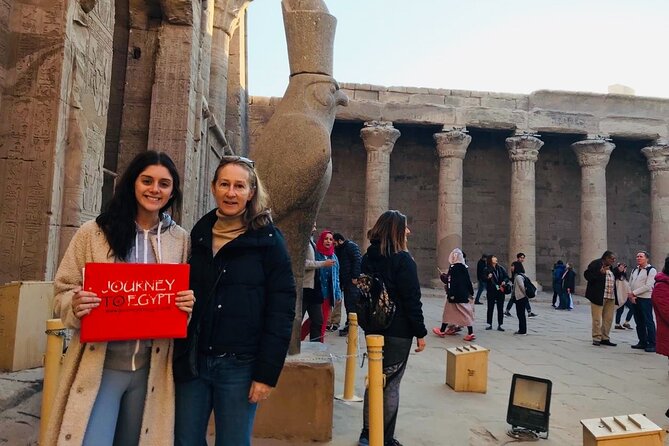
The day begins with the Temple of Horus at Edfu. Built in 230 BC by Ptolemy III, it is one of the best-preserved temples in Egypt. Its reliefs and colorful surfaces help you picture how temple worship looked before centuries of weather and reuse took their toll.
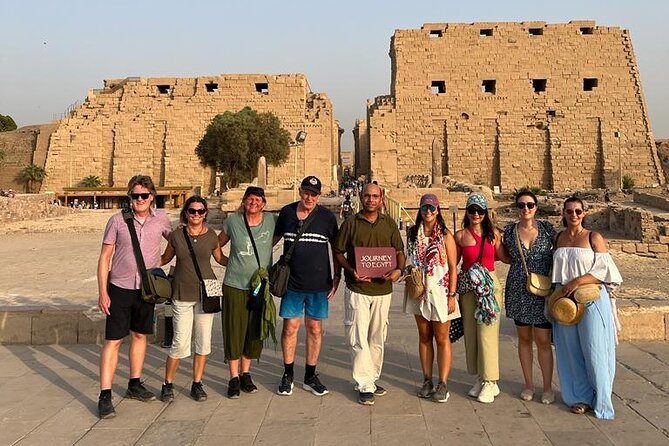
After Edfu, the boat continues toward Luxor. Once you arrive, the program shifts to the east bank and the vast Karnak Temple complex. Generations of rulers added to Karnak, which means the site is less a single building than a long record of changing power.
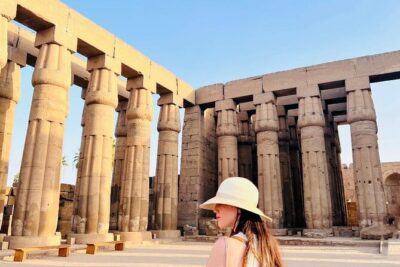
The Great Hypostyle Hall is the visual high point. Its rows of columns rise about 80 feet, and their scale can make you feel very small in the best possible way. Your guide helps explain how the complex grew and why pharaohs wanted their names carved into it.
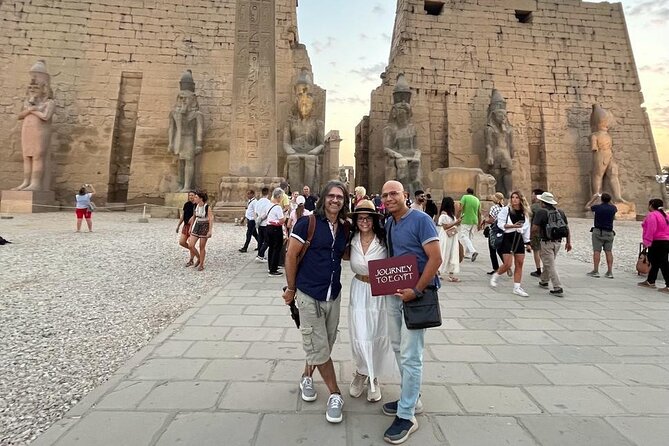
The day continues at Luxor Temple. You see the statues of Ramses II at the entrance, the Courtyard of Ramses II, and the Colonnade of Amenhotep III. Karnak and Luxor Temple were linked in ancient times, and visiting both helps you understand Luxor as a ceremonial center rather than just a collection of isolated ruins.
The listed sightseeing time is about two hours, but the full day includes the Edfu visit and cruising. As with all Nile stops, the ship’s timetable controls the visit. Wear shoes with good support and keep sun protection close by.
Day six: Hatshepsut and the Valley of the Kings
The final major sightseeing day crosses to Luxor’s west bank. You begin at the Colossi of Memnon, two large statues that once guarded the entrance to a temple complex. They are a quick stop, but their scale makes them worthwhile.
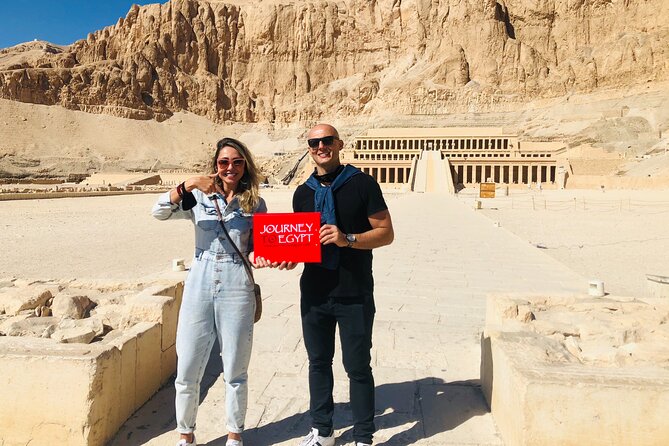
Next comes the Temple of Hatshepsut, an unusual terraced monument built for Egypt’s first female pharaoh. Her position in Egyptian history was complicated, and the temple gives your guide a chance to explain both her rule and the way later rulers treated her memory.
The Valley of the Kings is the day’s main event. For roughly 500 years, from the 16th century BC, pharaohs and nobles were buried in this desert valley. Instead of building visible pyramids, rulers placed decorated tombs inside the hills, hoping to protect them from grave robbers.
The standard entrance covers the sites indicated in the program, but entering Tutankhamun’s tomb requires an extra ticket. The tomb was found in 1922 by Howard Carter, and its fame means many people want to see it. The burial chamber is important, but the extra charge and limited space mean you may prefer to use your time on other tombs if your interest lies in wall paintings rather than Tutankhamun himself.
Five hours of west-bank sightseeing is a reasonable amount for a focused visit. Still, this is another day when heat and walking can catch up with you. The private guide is useful here because the best choice of tombs can depend on which ones are open and how much time you have.
The Nile cruise: comfort, rhythm, and limits
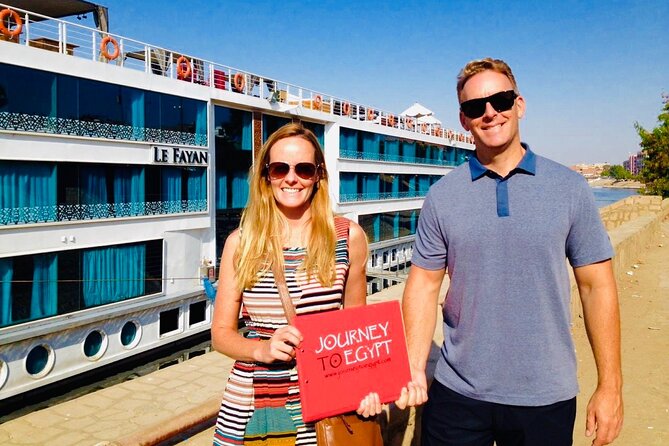
Three nights aboard a five-star cruise are included on a full-board basis. That covers accommodation, breakfast, lunch, and dinner on the boat, along with the listed Nile excursions.
The cruise gives the week a needed change of pace. Instead of packing and unpacking every night, you watch the river pass from the boat and reach temples by water. This is the most restful part of the route, though it is not a resort stay. You still have fixed sailing times, scheduled shore visits, and active sightseeing.
A cruise also puts practical limits on the itinerary. The boat cannot wait indefinitely for a late group, and some visits depend on the sailing schedule. Ask for the ship name, cabin details, boarding time, and exact Abu Simbel arrangement before you pay. The package description confirms a five-star cruise but does not name the vessel.
What the $2,400 price really covers
At $2,400 per person, the price is not cheap, but it includes more than a basic guided tour. You receive three Cairo hotel nights with breakfast, three nights on a full-board Nile cruise, domestic flights from Cairo to Aswan and Luxor to Cairo, private airport and hotel transfers, guides, admission fees for listed sights, meals during tours, bottled water during outings, a camel ride, and a felucca trip.
That bundle removes several costs that can otherwise creep up in Egypt. You do not have to arrange your own flights between Cairo and the Nile, find transport from airports, buy every temple ticket separately, or negotiate a series of local transfers.
International airfare, the Egyptian entry visa, optional tours, personal expenses, and tips are not included. Tipping applies to both guides and the Nile cruise crew, so allow extra room in your budget. Tutankhamun’s tomb also carries an additional ticket.
The main value is convenience and coordination. If you are comfortable arranging hotels, flights, guides, and transfers yourself, you might spend less independently. But the private service and time saved have real worth, especially on a first visit.
Who will enjoy this route most
I would recommend this tour to a first-time Egypt visitor who wants the classic sights in a controlled package. It suits couples, families, and small private groups that value having one company manage the moving parts.
It is also a good match if you want direct access to a guide. Past experiences give special praise to the company’s communication, including Osama’s prompt replies, and to guides such as Mena and John for their explanations and attention. Alfred has been singled out for the Cairo portion, while Marcos has been praised for explaining Egyptian culture in detail. You can request a particular guide, but availability is not guaranteed.
I would hesitate if you dislike early starts, repeated transfers, or fixed schedules. I would also add extra Cairo time if museums, Islamic architecture, or daily Egyptian life matter as much to you as the ancient sites. One person found the Steigenberger hotel in Giza well located but below expectations, so hotel standards may not feel equally strong to every person despite the overall five-star cruise rating.
Booking confirmation is immediate, and the tour is often booked about five days before departure. The cancellation terms are strict: cancel at least six full days before the start for a full refund, two to six days before for 50 percent, and within two days for no refund. The cut-off follows local Egyptian time.
Should you book the Pyramids and Nile Cruise by Air?
Book it if you want Egypt’s greatest hits without handling the logistics yourself. Giza, Abu Simbel, Philae, Edfu, Kom Ombo, Karnak, Luxor Temple, Hatshepsut, and the Valley of the Kings form a strong first-visit route, and the private format gives you more personal attention than a large group tour.
Before booking, clarify the Abu Simbel schedule, cruise ship name, Cairo hotel, and which tombs are covered by the standard entrance fee. If you can accept a brisk pace and budget separately for tips, visa, international flights, and optional tickets, this is a practical and well-supported way to see the Nile corridor in one week.
FAQ
How long is the tour?
The tour lasts approximately seven days, from arrival at Cairo International Airport on day one to departure from Cairo International Airport on day seven.
Is airport pickup included?
Yes. Meet and assist service is included on arrival and departure, along with private air-conditioned transfers to and from airports and hotels.
Are domestic flights included?
Yes. The package includes a domestic flight from Cairo to Aswan and a domestic flight from Luxor to Cairo.
How many nights are spent on the Nile cruise?
You spend three nights aboard a five-star Nile cruise on a full-board basis.
Which major sights are included?
Included sightseeing covers the Giza Pyramids, Great Sphinx, Valley Temple, Egyptian Museum, High Dam, Philae Temple, Abu Simbel, Kom Ombo, Edfu, Karnak, Luxor Temple, Colossi of Memnon, Temple of Hatshepsut, and the Valley of the Kings.
Are meals included?
Yes. The package includes six breakfasts, four lunches during tours, lunches and dinners aboard the cruise, and three dinners. The first day has no included meal.
Is Tutankhamun’s tomb included?
The itinerary includes the Valley of the Kings, but entering Tutankhamun’s tomb requires an extra ticket.
Are tips and international airfare included?
No. International airfare, Egypt’s entry visa, personal spending, optional tours, and tips for guides and Nile cruise crew are not included.
More Boat Trips in Cairo
- Giza pyramids, Sphinx, ATV bike, Lunch,Camel ride, Dinner cruise& shopping tour
★ 5.0 · 798 reviews - Cairo: Dinner Cruise on the Nile River
★ 4.2 · 741 reviews - 2-Hour Nile River Dinner Cruise From Cairo
★ 4.5 · 672 reviews - Giza Pyramids,Sphinx,Camel Ride,ATV Bike,Shopping, Dinner cruise
★ 5.0 · 479 reviews
More 7-Day Experiences in Cairo
- Incredible 7 Days Tour around Cairo, Luxor, and Hurghada
★ 5.0 · 117 reviews - 7 Days Egypt Tour Package to Cairo and Nile Cruise
★ 5.0 · 62 reviews - 7 Days & 6 Nights by Flight Cairo Pyramids & Nile cruise Aswan To Luxor(Private)
★ 5.0 · 38 reviews
New on the Cairo list
- Private Tour Giza Pyramids Wonders All inclusive★ 5.0 · 26 reviews
- Private Half Day Tour to Giza Pyramids & Great Sphinx from Cairo★ 5.0 · 26 reviews
- Private Tour To Pyramids of Giza Memphis Saqqara With Lunch★ 5.0 · 26 reviews
- 2 days 1 night Luxor,Aswan & Abu simbel by flight from Cairo★ 4.5 · 26 reviews
- Private Day to Giza Pyramids, Egyptian Museum and camel sunset★ 5.0 · 26 reviews
- Siwa Oasis Tour 3 Day 2 Nights from Cairo★ 5.0 · 26 reviews
- VIP Cairo Day Trip Coptic Orthodox Church & Islamic Old Mosques★ 5.0 · 26 reviews
- Cairo sailing boat Tours on the Nile by felucca★ 4.0 · 26 reviews
Nile Cruises, compared.
4-Days Nile Cruise From Aswan To Luxor including Abu Simbel and Hot Air Balloon
Read our review →
Sakkara, Memphis & Dahshur (Pyramid & Felucca Options)
Read our review →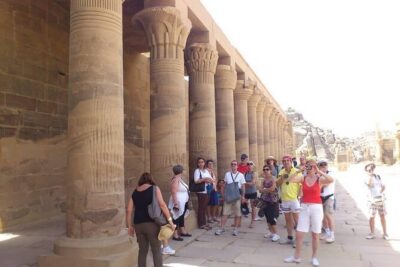
4-Day 3-Night Nile Cruise from Aswan to Luxor including Abu Simbel, Air Balloon
Read our review →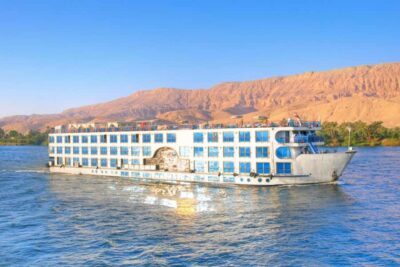
4-Day Nile Cruise from Aswan to Luxor with Guide
Read our review →
4-Days Nile Cruise From Aswan To Luxor including Abu Simbel and Hot Air Balloon
Read our review →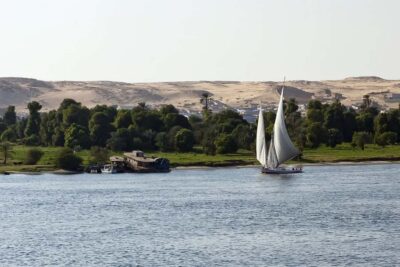
1 or 2-Hour Felucca Ride on the Nile with Transfers
Read our review →Browse the lists this tour appears in