Reviewed · GIZA PYRAMIDS & SPHINX TOURS
Pyramids tour to Giza, Sakkara and Dahshur
Egypt’s pyramid story makes far more sense when you see it in order. This long day links Djoser’s Step Pyramid at Saqqara, Snefru’s Bent Pyramid at Dahshur, and the famous pyramids of Giza, showing how Egyptian builders moved from an early stepped design to the smooth-sided monuments we know today.
I like the private format, since your group can set the pace rather than follow a large coach. I also like the range of sites: Saqqara and Dahshur are quieter and more revealing than Giza alone. The main drawback is the length. At 16 to 18 hours from Hurghada, this is a serious road day, not a gentle outing.
Key points at a glance
- Three stages of pyramid design: See the Step Pyramid, Bent Pyramid, and Giza pyramids in one carefully ordered visit.
- Private group experience: Only your party participates, with room for family needs and reasonable pacing.
- Strong guide feedback: Guides such as Markus, Aladin, and Rafik have been praised for clear explanations and friendly service.
- Dahshur adds real value: The military-restricted site remains less familiar than Giza and gives you a closer look at pyramid experimentation.
- Useful inclusions: Lunch, bottled water, admission fees, and taxes are included in the listed price of $232.63 per person.
- A demanding schedule: The 8 a.m. start and up to 18-hour duration require stamina, especially for children.
Why this route tells the pyramid story well
Many Cairo day trips rush straight to Giza. That gives you the postcard view, but it skips the experiments that came first. This route begins at Saqqara, continues to Dahshur, and finishes at Giza, so you see pyramid building develop across several generations.
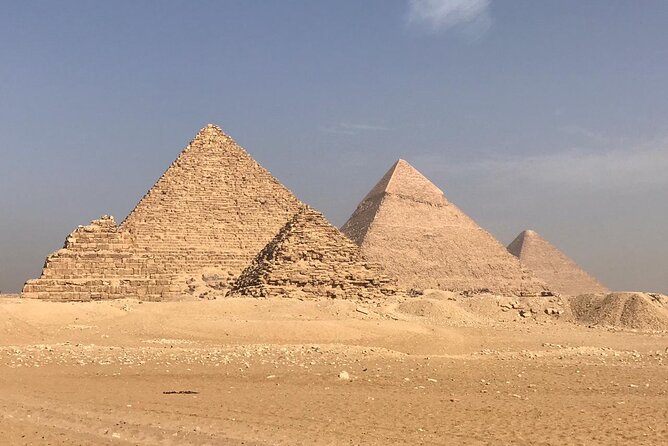
At Saqqara, you encounter the earliest major stone pyramid. At Dahshur, you see what happened when builders tried to create a true smooth-sided pyramid. At Giza, you reach the polished final form, represented by the pyramids of Cheops, Chephren, and Menkaure.
That order matters. You are not simply collecting monuments. You are watching an architectural problem being worked out in stone: how to build higher, smoother, and more stable tombs for Egypt’s kings.
The guide’s role is especially important here. A guide such as Markus, Aladin, or Rafik can turn a series of enormous stone structures into a connected lesson about royal power, engineering, astronomy, and burial beliefs. Guide assignments can vary, so treat those names as examples rather than a guarantee.
A few other Hurghada days to weigh up
- Hurghada: Cairo Pyramids, Sphinx & Egyptian Museum Day Trip
★ 4.7 · 2,271 reviews - Discover Cairo: Pyramids, Museum & Sphinx Tour from Hurghada
★ 4.9 · 707 reviews - Hurghada: Grand Egyptian Museum, Pyramids & Sphinx Day Tour
★ 4.3 · 696 reviews
Saqqara and Djoser’s Step Pyramid
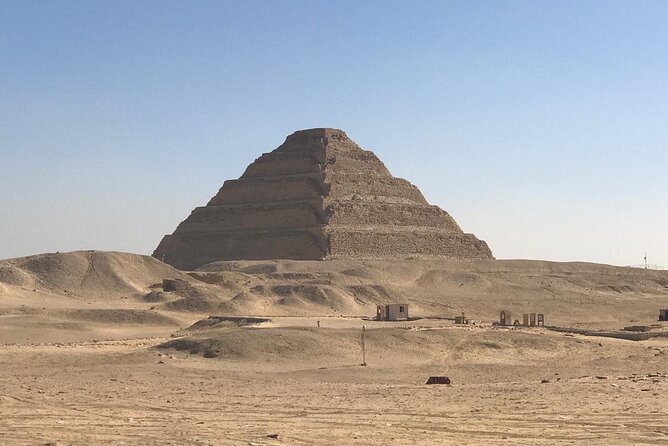
Your first major stop is Saqqara, home of Djoser’s Step Pyramid. The monument was designed by Imhotep around 2650 BC and is described as the oldest stone structure in human history. It rises about 62.5 meters and was the first major attempt to create a pyramid form.
Its shape is easy to recognize. Instead of smooth sides, it rises in a series of stone levels, like a giant staircase pointing toward the sky. The design reflects an early stage in pyramid construction, before builders settled on the familiar straight-sided profile.
One unusual detail is the pyramid’s base. The information provided for this tour describes it as the only pyramid without a square floor plan. That makes it especially useful for understanding that pyramid building was not a single perfected method from the start.
You have about two hours here, including admission. That is enough time to study the monument and hear how Imhotep’s design influenced later royal tombs, though the amount of walking and the guide’s pace will shape how much detail you receive.
I would pay close attention to the surrounding complex rather than treating the Step Pyramid as a quick photo stop. The value of Saqqara is its sense of development. Giza is more famous, but Saqqara helps explain why Giza was possible.
Dahshur and Snefru’s Bent Pyramid
Dahshur brings a different kind of interest. The Bent Pyramid was built during the reign of King Snefru and represents a second attempt to create a true smooth-sided pyramid. Its changing angle is the clue to the problem.
The lower portion rises steeply, then the sides shift to a gentler angle near the top. The result looks as if the pyramid bends inward. That shape is not decorative. It reflects a change in construction during the build, probably connected to concerns about stability.
The tour presents Dahshur as a place to ask why Snefru ordered a bent pyramid and why his master builder was later tasked with creating the first fully successful true pyramid nearby. Even without specialist training, you can see the practical lesson: pyramid construction was a process of testing, correcting, and refining.
Dahshur was in a military-restricted area for many years and opened to the public only in the mid-1990s. It remains less familiar than Giza, which is part of its appeal. You get a clearer sense of the monuments as archaeological sites rather than only as famous backdrops.
The planned visit lasts about two hours and includes admission. Some versions of this kind of private pyramid day have included entry inside the Red Pyramid at Dahshur. That interior visit is not clearly guaranteed in the stated program, so ask before booking if going inside matters to you.
Dahshur is also where the tour feels most distinct from a standard Cairo outing. If you have already seen Giza in photographs or on a previous visit, the Bent Pyramid gives you something genuinely different.
Lunch between the ancient sites
Lunch comes after the Dahshur visit and before Giza. The meal is included, as are bottled water, all fees, and taxes.
That sounds simple, but it matters on a day this long. You do not need to budget separately for the listed admissions or stop to arrange a meal on your own. Personal expenses are not included, so keep money available for anything outside the supplied program.
The meal is also a useful pause before the busiest part of the day. Saqqara and Dahshur require attention and walking, while Giza brings the largest crowds and the biggest visual impact. A break helps you arrive at the final stop with some energy left.
The food itself is not described in detail, so I would judge it as a practical part of the day rather than the reason to book. The main value is convenience and the chance to rest during a very full schedule.
Same base, a completely different day out:
- From Hurghada: Cairo and Giza Highlights Full-Day Tour
★ 4.5 · 6,014 reviews - Hurghada: Luxury Cruise Trip to Orange Bay with Lunch
★ 4.9 · 5,451 reviews - Hurghada: Orange Bay Island Boat Trip w/ Breakfast and Lunch
★ 4.9 · 5,345 reviews - Hurghada: Royal Seascope Submarine Cruise with Snorkel Stop
★ 4.4 · 4,637 reviews
Giza and the three royal pyramids
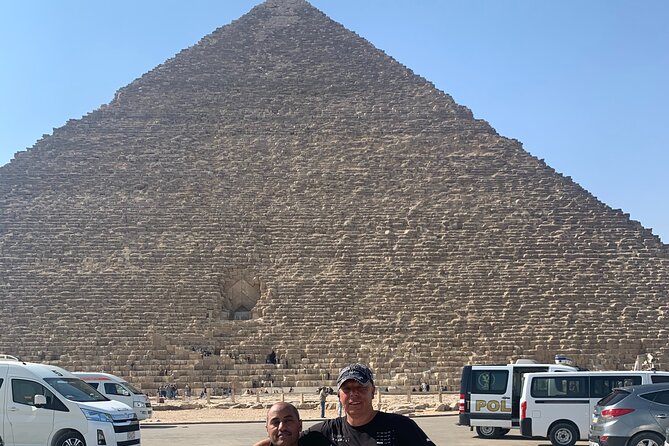
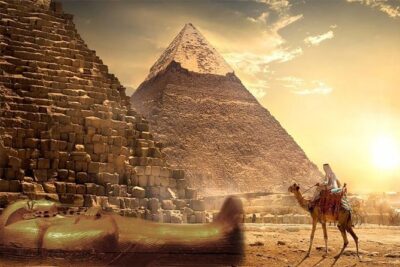
Giza is the climax of the route. Here you see the pyramids of Cheops, Chephren, and Menkaure, the monuments most closely linked with ancient Egypt in the public imagination.
The Great Pyramid of Cheops is the largest and most famous of the three. Chephren’s pyramid is often recognized by the surviving casing stones near its top, while Menkaure’s is smaller but still an impressive royal monument. Together, they show the scale and confidence reached after the earlier experiments at Saqqara and Dahshur.
The pyramids are more than 4,500 years old and are among the oldest large structures still known around the world. They were also counted among the Seven Wonders of the Ancient World, making this one of those places where the reputation is justified by the physical experience.
You have about two hours at Giza. That is enough for explanations, exterior views, and photographs, but it is not a leisurely full-day exploration of every part of the plateau. If entering a pyramid is important to you, check whether that ticket is included. The stated package includes admission fees, but it does not specify every optional interior entry.
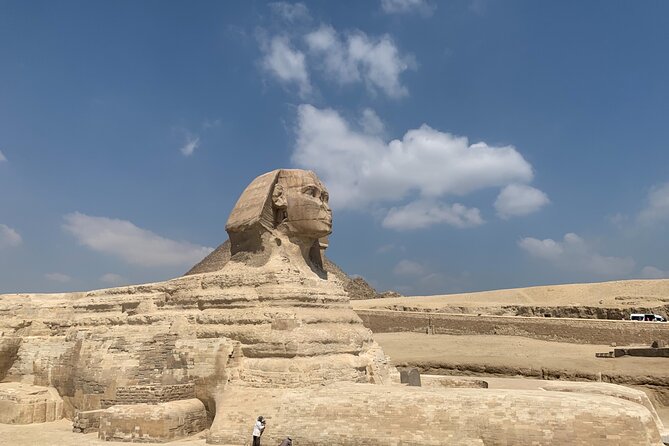
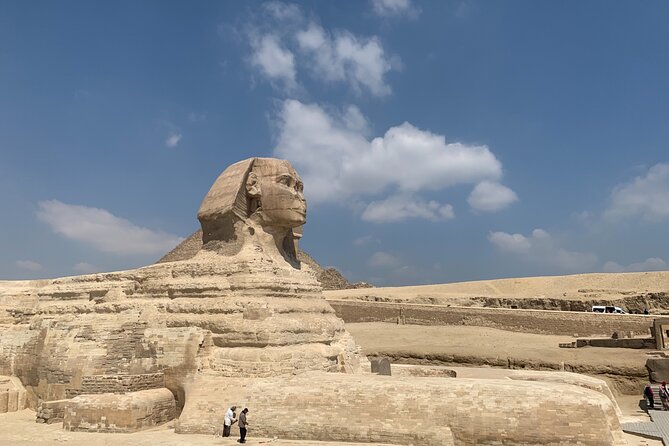
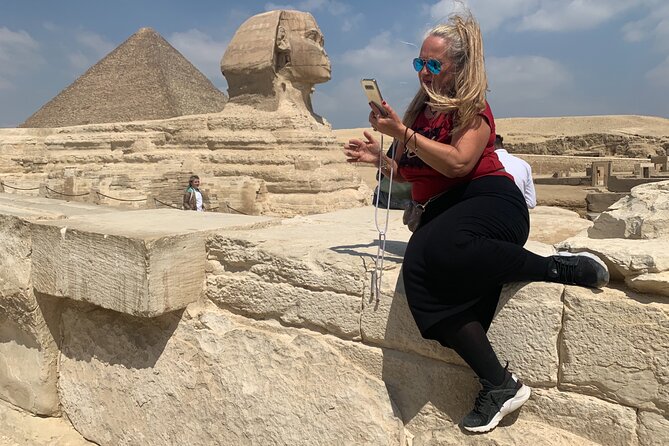
The Sphinx is not clearly listed in the main three-stop schedule. Some private pyramid programs include it, and one account connected with this provider describes seeing it, but you should confirm the exact plan before departure rather than assume it is part of this particular booking.
Giza is usually the busiest part of the day. The private arrangement helps because your group can discuss where to pause and how long to spend at each view, but it cannot remove the crowds, heat, or persistent commercial activity around the plateau.
What the private format changes
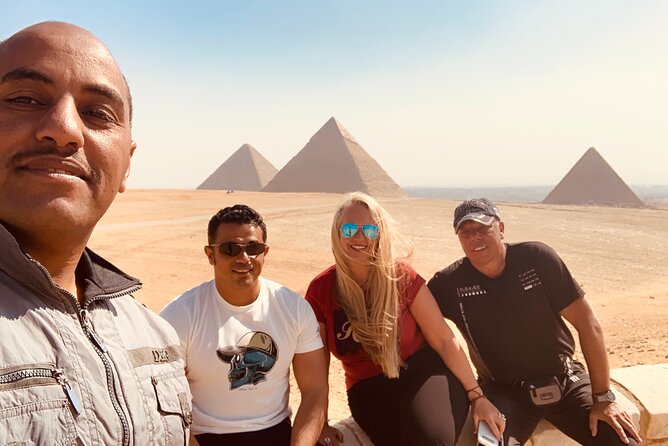
The tour is described as a private activity, meaning only your group participates. That is a meaningful advantage for families, couples, and small groups who do not want to match the pace of a large bus.
Several family accounts connected with the service describe guides adjusting well to children, including a group with three children and another private party with eight children between five and eleven. That does not guarantee a particular guide or pace, but it suggests that family flexibility is one of the service’s strengths.
You can also ask for more or less explanation at each monument. A strong Egyptologist guide can spend time on building methods, royal burials, astronomical alignment, and the changing shape of pyramids. If your group prefers photographs and shorter talks, say so early.
The private setup does not make the day short. You still face an early 8 a.m. start and a total duration of roughly 16 to 18 hours. The drive from Hurghada to the Cairo area is the central practical challenge, even though the exact transfer schedule is not provided.
Guides, drivers, and the road day
The service has received particularly strong praise for punctual pickup, clean and comfortable vehicles, and careful driving. Drivers named in accounts connected with the company include Akram, Khalid, Atef, Malek, and Rafat. You should not expect a specific driver unless the company confirms one.
Guide names include Markus, Aladin, and Rafik. The descriptions of their work point to clear historical explanations, friendly manners, and the ability to adjust the day to different groups. German-speaking service is also available in at least some cases, but confirm your preferred language before paying.
A reliable driver matters on this outing. You spend many hours on the road, and the quality of the vehicle and driving affects how much energy you have when the monuments finally appear. The positive accounts repeatedly focus on punctuality, comfortable transport, and feeling safe during the journey.
Communication through WhatsApp has also been praised in connection with the company’s private trips. That can be useful for confirming pickup details, language, and any requested additions before the long day begins.
Is $232.63 good value?
At $232.63 per person, this is not a budget trip. Still, the price needs to be judged against what is included and the distance covered.
You receive pickup, private transport, a guide, lunch, bottled water, admission fees, and taxes. You also visit three major pyramid areas rather than only Giza. For a small private group, that combination can be fair value, especially if you place a high price on comfort, flexibility, and not sharing the day with strangers.
The value is weaker if you want a relaxed Cairo visit. You are paying for a very ambitious same-day route from Hurghada, not for long, unhurried time at each monument. The day is designed for maximum coverage.
Group discounts are offered, so larger parties should ask how the final price changes. A family or group splitting private transport may find the cost easier to justify than a solo participant.
Personal spending is separate. The supplied information does not list optional interior tickets, drinks beyond bottled water, or other extras, so ask for a clear breakdown if you want to add anything.
Who should book this pyramid day?
I would recommend it most strongly to first-time Egypt visitors based in Hurghada who want to see the major pyramid sites in one trip. It suits people who value a private guide and would rather accept a long day than spend a night in Cairo.
Families may also like the format because the schedule can respond to children better than a large group tour. The route is educational without relying only on the Great Pyramid, and the progression from Saqqara to Dahshur to Giza gives children a simple story to follow.
History fans should appreciate the variety. Saqqara explains the first major step, Dahshur shows a structural correction, and Giza delivers the finished royal image. You get more context than with a Giza-only visit.
I would think twice if you dislike long car journeys, tire quickly in the heat, or prefer to explore museums and Cairo neighborhoods. This is a monument-focused expedition, and its 16 to 18-hour duration is the price of fitting Cairo into a Hurghada holiday.
Book only after confirming the pickup location, guide language, exact departure time, whether the Sphinx is included, and whether any pyramid interior entry costs extra. Free cancellation is available until 24 hours before the start time. Poor weather can lead to a new date or a full refund.
Should you book it?
Book this tour if you want the broadest pyramid experience in one demanding day. Saqqara and Dahshur make the difference, giving you the story behind Giza rather than only its most famous view.
The private service, included lunch, water, admissions, and repeated praise for guides and drivers strengthen the value. The real warning is the clock: an 8 a.m. start and up to 18 hours on the road require patience.
For a small group with limited time in Egypt, I think the route is a strong choice. For anyone who can stay overnight in Cairo, a slower two-day plan would be more comfortable.
FAQ
Where does the tour start?
The listed start time is 8:00 a.m., with pickup offered. The tour information refers to Hurghada as the location, while the route includes travel to Cairo and hotel pickup details should be confirmed when booking.
How long does the experience last?
The expected duration is approximately 16 to 18 hours.
Which pyramid sites are included?
The scheduled stops are Saqqara, Dahshur, and Giza. Saqqara includes Djoser’s Step Pyramid, Dahshur includes Snefru’s Bent Pyramid, and Giza includes the pyramids of Cheops, Chephren, and Menkaure.
Is lunch included?
Yes. Lunch, bottled water, all listed admission fees, and taxes are included.
Is this a private tour?
Yes. Only your group participates in the activity.
Are personal expenses included?
No. Personal expenses are not included in the listed price.
Can I cancel for a full refund?
Yes, if you cancel at least 24 hours before the experience start time. Cancellations or changes made less than 24 hours before the start time are not refundable, and poor weather may result in a different date or a full refund.
New on the Hurghada list
- Private Tour: shopping Tour In Hurghada★ 5.0 · 26 reviews
- Super Safari ( Jeep – Quad- Buggy car-folklore-BBQ dinner)★ 5.0 · 26 reviews
- Hurghada: Neverland Musical Show Entry Tickets with Pickup★ 4.3 · 26 reviews
- Hurghada: 3 Hours Quad Bike & Camel ride★ 4.5 · 26 reviews
- Luxor Valley of the Kings from Hurghada★ 4.5 · 26 reviews
- Makadi: Giftun Island Speedboat Cruise to Orange Bay & Lunch★ 4.7 · 26 reviews
- The Super Desert Safari Jeep Tour from Hurghada★ 4.0 · 27 reviews
- Hurghada Paradise Conquest Semi Submarine Snorkeling Trip★ 4.5 · 27 reviews
Giza Pyramids & Sphinx Tours, compared.
Pyramids & Great Sphinx Private Tour with Camel Ride
Read our review →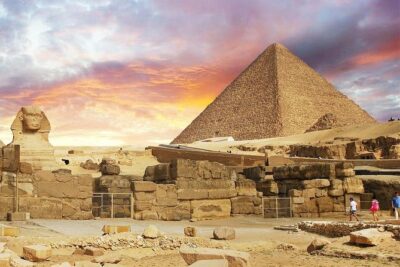
Tour to Giza Pyramids and The Egyptian Museum
Read our review →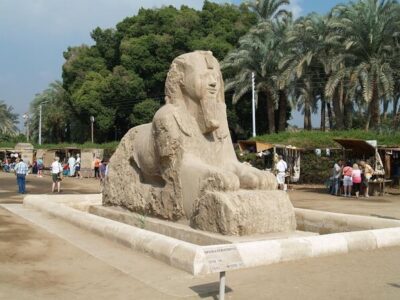
VIP All inclusive Best of the best Giza Pyramids,Sakkara,Memphis
Read our review →
Pyramids of Giza, Sphinx, Saqqara & Memphis Tour
Read our review →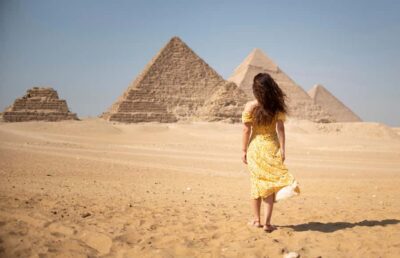
Half-Day Tour to Pyramids of Giza and the Sphinx
Read our review →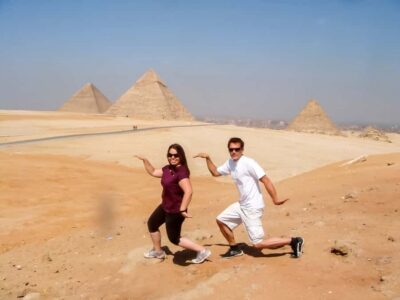
Private ViP all-inclusive Giza Pyramids,Sphinx,Inside Pyramid
Read our review →