Reviewed · HURGHADA TOURS
Luxor Small Group 8 max from Hurghada nd private option available
The big draw here is simple: in one very long day, you travel from the Red Sea to the Nile and see the key sights of ancient Thebes. Karnak Temple, the Valley of the Kings, and Hatshepsut’s Temple give you a strong first look at Luxor without arranging several separate trips.
I like the small maximum of eight people, which should make it easier to hear your Egyptologist and ask questions. I also like the practical touches: a comfortable minivan, lunch on Luxor’s west bank, and free water and Coke during the drive. Guides named Tarek and Sayid have been singled out for clear, engaging explanations, while drivers such as Bassem and Ahmed have earned praise for handling the long road from Hurghada.
The catch is the clock. Thirteen to fourteen hours is a demanding day, including roughly six hours on the road. You will see a great deal, but this is a fast introduction rather than a leisurely study of Luxor, and shopping stops or delays can reduce time at the monuments.
Key points to know before booking
- Up to eight people: A small group is more manageable than a large coach, especially inside busy temple areas.
- Three major west-bank sights: Your ticket covers three tombs in the Valley of the Kings, Hatshepsut’s Temple, and the Colossi of Memnon.
- Early departure and long drive: The road from Hurghada to Luxor is about 285 kilometers each way and takes around three hours in the stated schedule.
- English or German guide: A local Egyptologist leads the sightseeing portion, with Tarek and Sayid among the guides associated with particularly strong visits.
- Lunch and drinks included: You receive a meal at Al Mina Restaurant, plus water and Coke in the minivan, although restaurant drinks cost extra.
- Private option available: If you want more control over the pace and stops, ask about upgrading to a private tour.
A Red Sea to Nile day in one minivan
This excursion is built for people staying in Hurghada who want to see Luxor without changing hotels. The route covers approximately 285 kilometers each way, so the transport is not a minor part of the outing. You should expect an early pickup, a three-hour journey to Luxor, several hours of sightseeing, and a three-hour return.
The vehicle is described as a comfortable minivan or minibus. Water and Coke are available throughout the drive, a useful detail in Egypt’s heat and on a road day this long. Pickup is offered in Hurghada, but extra transfer charges apply for hotels in Makadi, Sahl Hasheesh, El Gouna, and Soma Bay, so check your hotel location before paying.
The group limit of eight is one of the tour’s strongest features. You are not promised a private guide, but a small party usually means less time gathering people and a better chance to hear the explanations. The private option is worth considering if your group has children, older family members, different interests, or simply wants more time at the temples.
Communication about pickup is important. Most of the positive accounts describe clear arrangements, including a 5 a.m. pickup organized with the office. One serious complaint involved a 45-minute delay and confusion between the driver and the group. I would confirm the pickup time and meeting point the evening before, keep your phone available, and avoid assuming that a hotel lobby message will reach the driver.
A few other Hurghada days to weigh up
- Private Transfer from Hurghada Airport to anywhere in Hurghada
★ 5.0 · 970 reviews - Hurghada: Private or Shared City Tour with Guide & Shopping
★ 4.5 · 753 reviews - Hurghada: Private Speedboat Adventure with Snacks & Pick-up
★ 4.8 · 582 reviews
Karnak Temple: the right place to begin
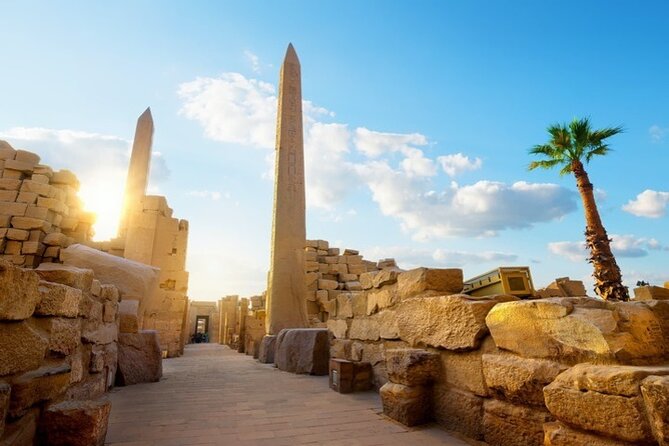
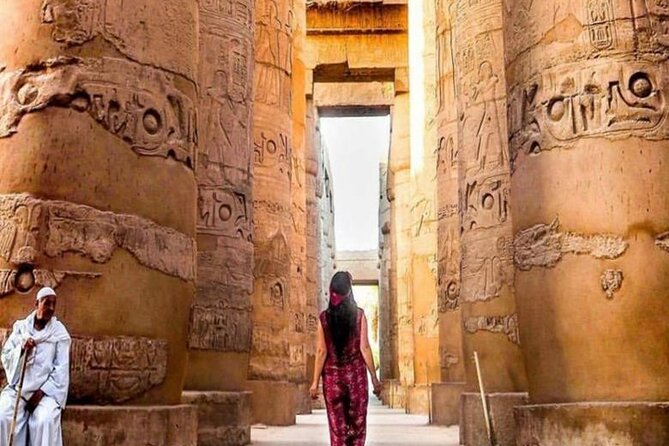
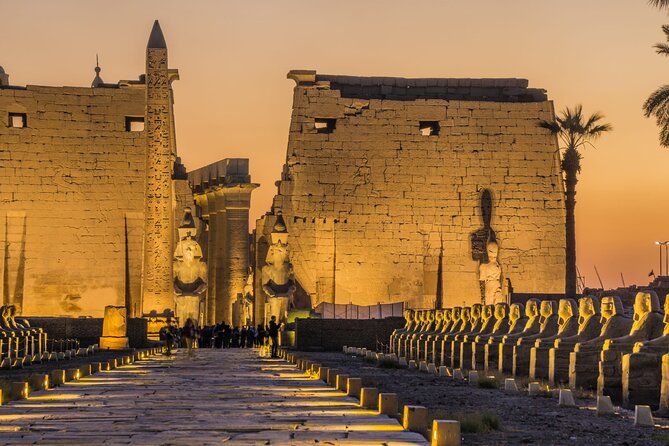
Karnak is the first major stop, and it is an excellent choice. This is not one tidy temple building but a huge complex of pylons, courtyards, columns, chapels, and remains built and altered over many centuries. The scale helps you understand that ancient Luxor was a religious center, not just a collection of isolated monuments.
You have about two hours here. That is enough for a useful guided walk, though not enough to examine every corner. A good Egyptologist matters greatly at Karnak because the site can otherwise feel like a forest of stone. Your guide should explain the role of Amun, the purpose of the processional avenues, and how successive rulers added their mark to the complex.
This is where named guides such as Tarek and Sayid can make a difference. Their work has been praised for connecting the monuments with stories about pharaohs, queens, and religious beliefs rather than simply identifying walls and statues. Ask questions early. In a small group, you have a better chance of shaping the explanation around what interests you.
The itinerary does not include Luxor Temple. That matters because many people assume a one-day Luxor outing includes both major city temples. It does not here. If Luxor Temple is essential to you, ask before booking, since adding it to a shared, tightly timed day may not be practical.
Crossing the Nile and eating at Al Mina
After the east-bank visit, the group crosses the Nile to continue on the west bank. The crossing is listed as a short part of the schedule, and lunch follows at Al Mina Restaurant. The restaurant offers Egyptian and Mediterranean food, giving you a break from the monuments and the road.
Lunch is included, but drinks at the restaurant are not. You receive free water and Coke in the vehicle, so you can keep the meal cost under control if you do not need anything extra. If you have dietary needs, mention them when booking or to the guide. One account specifically raised the issue of vegetarian food, so it is sensible not to leave that question until you sit down.
The Nile crossing also breaks up the day nicely. You have spent the morning among the monumental remains on the east bank, then move to the royal tombs and mortuary temple across the river. Do not expect a leisurely river cruise. A traditional felucca ride is not included, and the itinerary lists it as an optional extra.
Three tombs in the Valley of the Kings

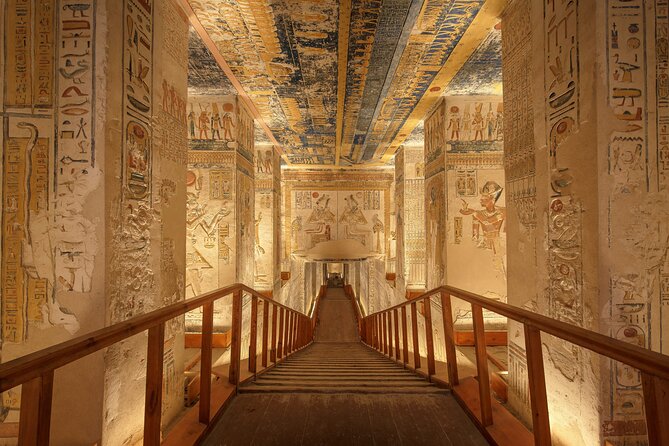
The Valley of the Kings is the emotional center of the day. From the 16th to the 11th century BC, pharaohs and powerful nobles had tombs cut into the hills on Luxor’s west bank. The attraction is underground, where painted corridors and burial chambers reveal how rulers prepared for the afterlife.
Your entrance ticket allows access to three tombs. The exact tombs open on the day can vary, so do not book this expecting a guaranteed visit to one particular ruler’s burial place unless the operator confirms it. You will walk between some points in the heat, and the ground can be uneven, so practical shoes and water are wise.
Two hours is a useful amount of time for three tombs, but you need to manage it. A tomb visit can take longer than expected if you stop to study the painted walls, and the valley can become hot. I would listen to the guide’s opening explanation, choose the three tombs carefully, and keep a little time in reserve rather than spending the full allowance in the first chamber.
The guide’s interpretation is especially valuable here. The tombs are not simply royal bedrooms underground. Their passages, images, and inscriptions were designed to help the dead ruler pass through the afterlife. A well-prepared guide can explain what you are seeing without burying you under a string of dates.
Same base, a completely different day out:
- From Hurghada: Cairo and Giza Highlights Full-Day Tour
★ 4.5 · 6,014 reviews - Hurghada: Luxury Cruise Trip to Orange Bay with Lunch
★ 4.9 · 5,451 reviews - Hurghada: Orange Bay Island Boat Trip w/ Breakfast and Lunch
★ 4.9 · 5,345 reviews - Hurghada: Royal Seascope Submarine Cruise with Snorkel Stop
★ 4.4 · 4,637 reviews
Hatshepsut’s Temple beneath the cliffs
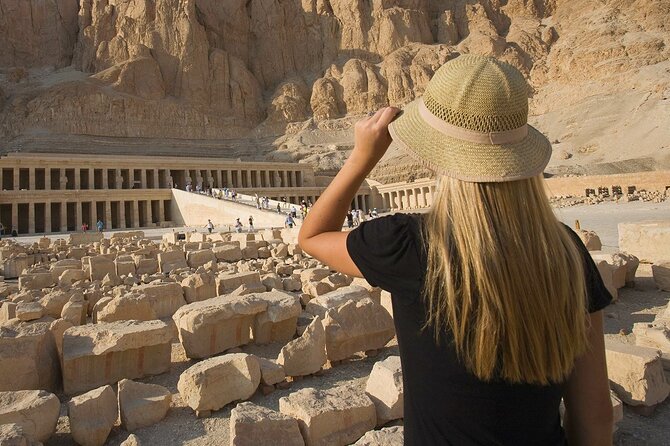
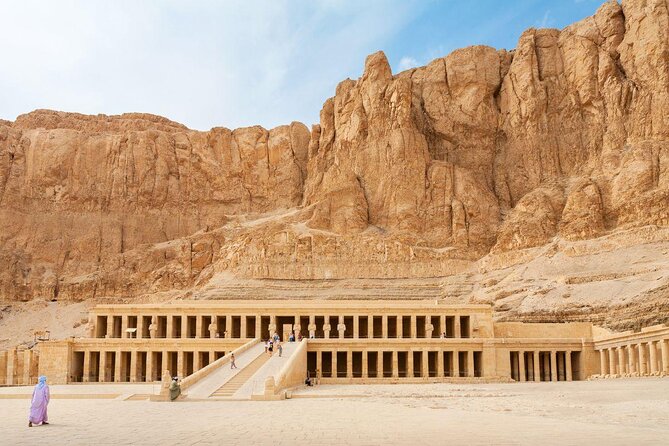
Hatshepsut’s mortuary temple is a sharp contrast to the dark tombs. Its broad terraces rise beneath the cliffs of Deir el-Bahari, creating one of Luxor’s most memorable settings. Hatshepsut ruled as pharaoh during Egypt’s Eighteenth Dynasty, and the temple reflects both religious purpose and royal self-presentation.
The itinerary allows two hours, which is generous compared with some stops. You can take in the terraces, examine surviving reliefs, and hear how Hatshepsut presented her right to rule. The open setting also means direct sun, and there is limited shade in parts of the visit. In July, heat becomes a serious consideration, not a small footnote.
This is another place where a guide earns the fee. Without context, you see terraces and columns. With context, you can follow the story of a woman who ruled as pharaoh and used architecture, ritual, and images to establish authority. Bring a hat, sunscreen, and water from the vehicle.
The Colossi of Memnon in ten minutes

The two Colossi of Memnon are massive statues of Amenhotep III, who ruled during the Eighteenth Dynasty. They have marked the Theban Necropolis on the west bank since about 1350 BC.
The scheduled stop is only ten minutes. That is enough to get out, take photographs, and hear a short explanation, but not enough for a long inspection. Treat it as a quick historical pause between the larger sites. The statues are free to view from the stop, and the itinerary includes the admission.
The alabaster workshop and the shopping question
The final west-bank stop is the Thutmoses alabaster workshop. You are shown how alabaster objects are made, and the workshop offers souvenirs. The business is described as being run by descendants of tomb builders, which gives the stop a local connection beyond the usual monument circuit.
A free bathroom and soft drink are available here. That is practical after a hot day, but you should also understand the commercial side of the visit. You are entering a sales setting, so do not feel obliged to buy. Look at the workmanship, ask about the stone, and decide calmly.
Shopping stops can affect the balance of the day. A serious complaint about a similar schedule said time was lost at an essential oils retailer, while another account expected a papyrus stop that did not happen. The stated program includes the alabaster workshop, not Luxor Temple or a papyrus factory. Ask the operator exactly which shopping stops are planned and how long they last.
This is one reason the private option may be worth the extra cost. In a private vehicle, you can make your preferences clear and are less tied to the wishes of the whole group. On the shared tour, you may need to accept a short commercial stop even if your main goal is archaeology.
What the price really means
The advertised price is $29.04 per person, which looks unusually low for a full-day excursion that includes transport from Hurghada, a guide, lunch, and several entry tickets. The key phrase is if selected regarding entry tickets. You should confirm the exact package and total before booking rather than treating the headline number as the final cost.
The listed inclusions are lunch, water, Coke in the minivan, English and German guiding, taxes and fees, and entrance tickets if that option is selected. Excluded items include felucca transport, drinks at lunch, and certain hotel transfers.
There has also been confusion over extra charges and currency. One complaint described service, pickup, and optional island charges that made the final cost much higher than expected. The operator’s response said prices were shown in British pounds and that additional costs were listed. The lesson for you is clear: check the currency symbol, hotel pickup fee, ticket option, and every optional activity before confirming.
At the base price, the tour can be good value if you want to see Luxor from Hurghada in one day and are comfortable with a fast schedule. It becomes less attractive if the final price approaches that of a private or hotel-arranged trip. Compare the complete price, not just the first number you see.
Heat, comfort, and the pace of the day
This is an ambitious excursion. You leave early, spend about six hours in transit, walk through large archaeological sites, cross the Nile, eat lunch, and return to Hurghada late. Most people can participate, but the day still demands stamina.
July heat deserves special attention. Karnak, Hatshepsut’s Temple, and the Valley of the Kings all involve time outdoors, while the valley and temple approaches can feel exposed. Wear light clothing, bring sun protection, and use the water supplied in the minivan.
The vehicle received strong marks from several people for comfort, and the drivers were praised for safe, efficient handling of the long route. One driver, Ahmed, was also described as giving useful information during the journey. Still, road conditions, checkpoints, and pickup delays can affect the schedule. Build your expectations around the stated 13 to 14 hours, not an optimistic early return.
The tour is not ideal for anyone who wants a slow archaeological study. It is much better for a first visit, a short Red Sea holiday, or a family that wants the major west-bank sights without organizing cars, tickets, lunch, and a guide separately.
Should you book this Luxor day trip?
I would book it if your priority is seeing the essential Luxor sights from Hurghada in one day, especially if you value a small group and a proper Egyptologist over a bare-bones transfer. Karnak, three Valley of the Kings tombs, Hatshepsut’s Temple, and the Colossi give you a strong overview.
I would choose the private option if you dislike shopping stops, want Luxor Temple, need a slower pace, or are traveling with people who tire easily. I would also choose private transport if the shared schedule leaves little room for questions or photography.
Before paying, confirm four things: the final currency and price, your exact hotel pickup fee, whether entry tickets are included in your package, and the planned shopping stops. If those details are clear and the total remains competitive, this is a practical way to trade one very long day for an unforgettable look at ancient Egypt.
FAQ
How long does the tour last?
The tour lasts approximately 13 to 14 hours. The schedule includes about three hours by minivan from Hurghada to Luxor and another three hours on the return journey.
How far is Luxor from Hurghada on this tour?
The stated distance is approximately 285 kilometers each way.
What is the maximum group size?
The shared tour has a maximum of eight travelers.
Which main sights are included?
The itinerary includes Karnak Temple, the Valley of the Kings, Hatshepsut’s Temple at Deir el-Bahari, and the Colossi of Memnon.
How many tombs can I enter in the Valley of the Kings?
The entrance ticket allows you to visit three tombs.
Is lunch included?
Yes. Lunch is included at Al Mina Restaurant, which serves Egyptian and Mediterranean cuisine. Drinks ordered at the restaurant are not included.
Is a Nile boat ride included?
No. A felucca boat tour is listed as an extra and is not included in the basic experience.
Can I cancel for a full refund?
You can cancel up to 24 hours before the experience start time for a full refund. Cancellations or changes made less than 24 hours before the start time are not accepted for a refund.
New on the Hurghada list
- Private Tour: shopping Tour In Hurghada★ 5.0 · 26 reviews
- Super Safari ( Jeep – Quad- Buggy car-folklore-BBQ dinner)★ 5.0 · 26 reviews
- Hurghada: Neverland Musical Show Entry Tickets with Pickup★ 4.3 · 26 reviews
- Hurghada: 3 Hours Quad Bike & Camel ride★ 4.5 · 26 reviews
- Luxor Valley of the Kings from Hurghada★ 4.5 · 26 reviews
- Makadi: Giftun Island Speedboat Cruise to Orange Bay & Lunch★ 4.7 · 26 reviews
- The Super Desert Safari Jeep Tour from Hurghada★ 4.0 · 27 reviews
- Hurghada Paradise Conquest Semi Submarine Snorkeling Trip★ 4.5 · 27 reviews
Hurghada Tours, compared.



Orange Bay Island Boat Trip w/ Breakfast and Lunch
Read our review →
Royal Seascope Submarine Cruise with Snorkel Stop
Read our review →
3 Islands, Dolphins & Snorkel Yacht Trip w/ Lunch
Read our review →
Hurghada or Makadi: Discover the Magic of Dolphin House
Read our review →
Sindbad Submarines – Hurghada (Egypt) – 2 Hours
Read our review →