Reviewed · GIZA PYRAMIDS & SPHINX TOURS
Giza Pyramids Sakkara Memphis Full Day Tour
The best part of this full-day outing is the sweep of it. You see Egypt’s most famous monument at Giza, then follow the story south to Memphis and Sakkara, where the royal cemetery and the Step Pyramid show how pyramid building began. It is a big day, but the route gives you far more than a quick pyramid photo stop.
I like the private car and guide, since your group can spend more time at the places that interest you and pause for photos without waiting for a busload of strangers. I also like the guides’ practical help. Lido, Osam, Abdoo, Mustafa, and Walid are named by past participants, with particular praise for clear explanations, family care, safe driving, and finding good photo spots.
The main drawback is the price wording. At $20 per person, this is excellent value for transport, bottled water, and a guide, but entrance tickets and lunch are extra, and ticket prices can change. Eight hours in the sun, with walking and uneven ground, also calls for sensible shoes, water, and a realistic pace.
Key points at a glance
- Three major ancient sites in one day: Giza, Memphis, and Sakkara form a useful story about Egypt’s kings, religion, and pyramid design.
- Private touring: Only your group participates, so you can ask questions and adjust the pace.
- Named guide team: Lido, Osam, Mustafa, Walid, Abdoo, and Abdul are associated with the service, with different guides assigned according to availability.
- Useful inclusions: Transportation, bottled water, and a tour guide are included.
- Costs to plan for: Lunch, tips, and all site tickets are not included in the advertised price.
- Family-friendly pace: Families have used the tour with young children, including visits inside a smaller pyramid and camel rides.
Why this route works so well
Giza gets the attention, but Sakkara gives the day its depth. At the plateau, you meet the image most people carry of Egypt: enormous stone pyramids, desert views, and the Sphinx. At Sakkara, you see an older and less polished stage of royal building, along with tombs that reveal daily life and religious beliefs.
Memphis adds another useful piece. This was Egypt’s first capital after the unification of Upper and Lower Egypt, traditionally linked to King Menes around 3200 BC. The city once held palaces and temples, though much of what you see today is archaeological remains rather than an intact urban center.
I like this order of ideas because it turns a busy sightseeing day into a basic lesson in Egyptian development. You begin with the famous monuments, then move back toward the early royal cemetery and the capital that helped govern the unified kingdom.
The tour runs roughly from 8 a.m. to 4 p.m. The exact rhythm depends on your guide, traffic, ticket lines, and how long you spend inside monuments. Since the tour is private, you can discuss the pace with the guide rather than accept a fixed group schedule.
A few other Giza days to weigh up
- Private guided tour to Giza Pyramids, and Great Sphinx
★ 5.0 · 1,755 reviews - VIP Giza Pyramids,Sphinx,ATV bike,CamelRide,Shopping&DinnerCruise
★ 5.0 · 704 reviews - Private Tour to explore Giza Pyramids – Saqqara -Memphis
★ 5.0 · 294 reviews
Giza Pyramids, the day’s grand opening
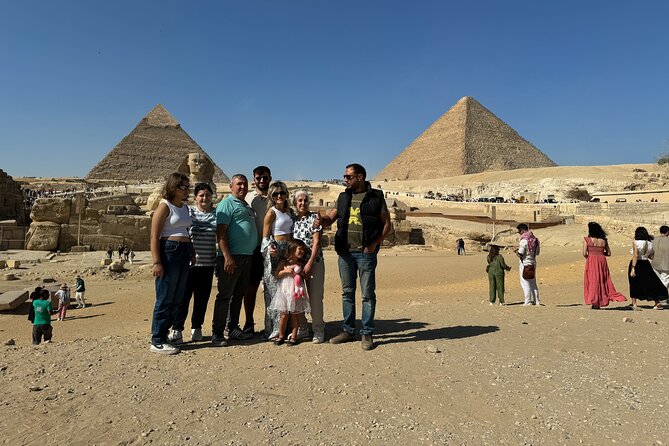
The Giza Plateau is the emotional high point. The Great Pyramid, built with vast limestone blocks and rising to about 149 meters in the supplied tour description, still forces a simple question: how did people build this nearly 5,000 years ago without modern cranes?
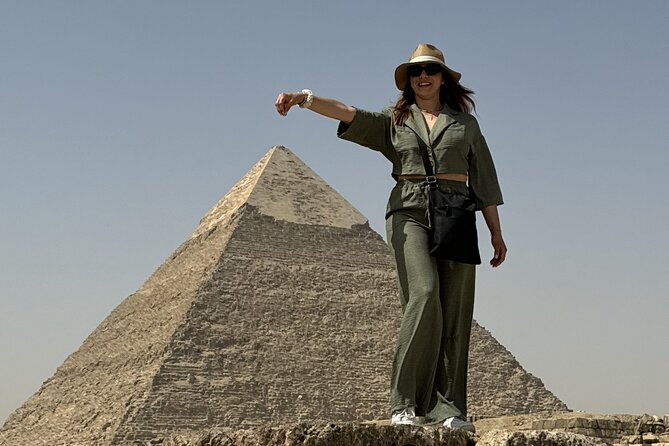
Your guide can place the three main pyramids into context and explain the royal purpose behind them. The Great Pyramid is associated with Khufu. The middle pyramid belongs to Khafre, and the smaller pyramid is linked with Menkaure. From the panoramic viewpoints, you can take in the monuments together with the Sahara Desert.
The plateau is large, so transportation between viewpoints matters. Having a car waiting is useful, especially in heat. It also lets you save energy for Sakkara, where the tombs and stone reliefs reward closer attention.
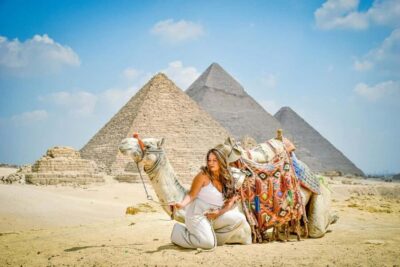
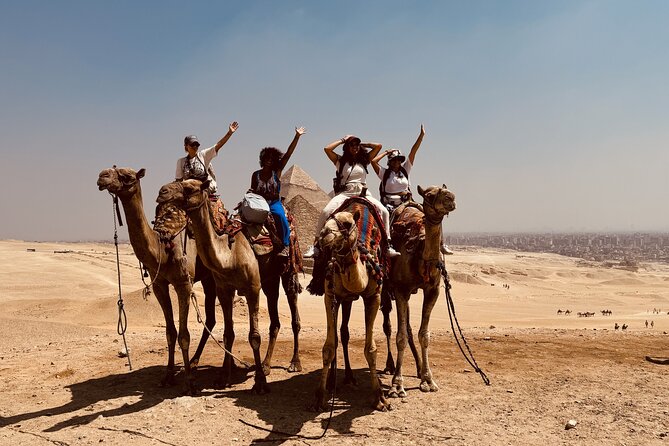
You may be offered a camel ride. Several families and couples included one during their day, and children especially enjoyed it. Treat it as an optional add-on rather than a core part of the advertised package, and confirm the price and duration before agreeing.
The Giza portion can feel busy and demanding. There are vendors, guides, animals, uneven paths, and strong sun. One of the practical strengths associated with Lido’s team is helping people avoid unwanted interruptions and locating good places for photographs. That support can make the visit feel calmer, but you should still keep your belongings close and agree on any extra purchases in advance.
Going inside a pyramid
The exterior view is free in the package description, but site entry tickets are not included. Special interior tickets may also cost extra, and the tour information warns that ticket prices are only estimates because they can change.
Going inside a pyramid is not for everyone. The passages can be tight, and the experience is more about the structure and the physical effort than about decorated rooms. A family review described entering a smaller pyramid, while other comments focused on the freedom to take photographs and enjoy the views.
Ask your guide which interior option makes sense for your group and what the current ticket cost is. If you dislike enclosed spaces, have mobility concerns, or would rather spend time at the Sphinx and viewpoints, you can skip the interior and use that time elsewhere.
Meeting the Sphinx up close
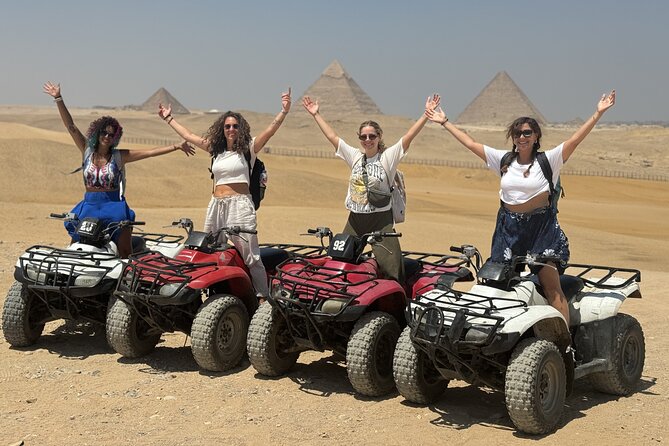
The Sphinx is carved from limestone, with the body of a lion and the head of a human. It measures about 73.5 meters long, 19.5 meters wide, and roughly 20 meters high to the top of the head. The monument is generally linked with King Khafre, who built the middle pyramid.
This stop works best when your guide explains what you are seeing rather than leaving you with a few quick photographs. The Sphinx served as a guardian figure for the plateau, and its scale is easy to underestimate until you are near it.
You will have time for photographs, including the familiar angle that makes the Sphinx appear close to a pyramid. A guide who knows the viewing areas can save you from wandering in the heat while trying to find a clear angle.
The Sphinx area can be crowded and exposed. Bring a hat, use sunscreen, and wear shoes that can handle dusty paths. The tour includes bottled water, but I would still treat that as a useful start, not your only drink for eight hours.
Same base, a completely different day out:
- From Hurghada: Pyramids and Egyptian Museum Tour & Boat Ride
★ 4.4 · 381 reviews - Egyptian Museum in Cairo: Private Guided Tour
★ 5.0 · 316 reviews - Cairo: Grand Egyptian Museum QR Ticket
★ 4.7 · 243 reviews - Sharm El-Sheikh: Full-Day Tour of Cairo and Pyramids by Bus
★ 4.8 · 237 reviews
Memphis and the first capital
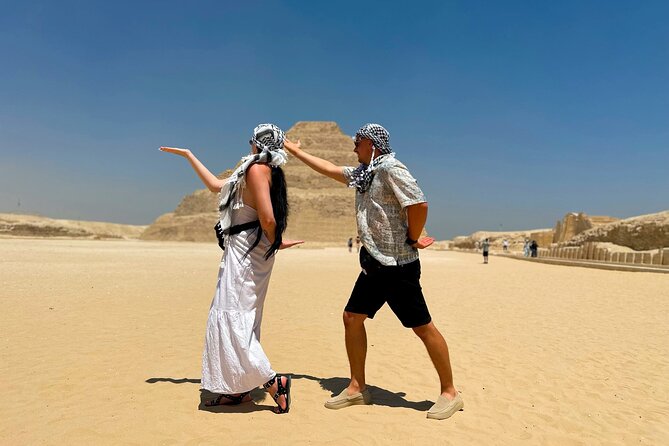
After Giza, the tour shifts from monumental tombs to the remains of a capital. Memphis was built on the western bank of the Nile and is traditionally credited to King Menes, the ruler associated with uniting Upper and Lower Egypt.
The importance of Memphis is political. It was the first capital of the unified Egyptian kingdom and remained a royal city through the reign of Menes and the following three dynasties. Kings built palaces and temples here, so the site helps explain how the state behind the pyramids was organized.
Do not arrive expecting another Giza. Memphis is quieter and more fragmentary, and its appeal lies in the story rather than a complete cityscape. Your guide’s explanation matters here because scattered remains can be hard to read on your own.
The stop also gives you a change of pace after the open plateau. You can focus on statues, ruins, and the location of the former capital before moving to Sakkara. Transportation is included for the full day, so you do not need to arrange separate transfers between these sites.
Sakkara and the Step Pyramid
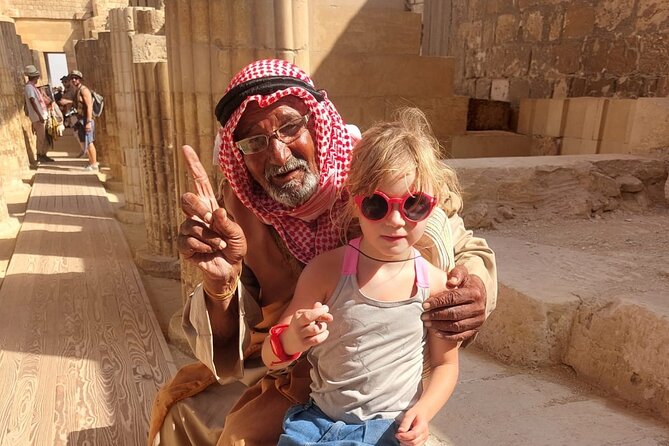
Sakkara is the archaeological heart of the route. The name comes from Seker, a falcon-headed Egyptian god connected with the dead. The cemetery stretches along the desert for about four miles, with the excavated area extending around two miles in width.
The main draw is the Step Pyramid of King Djoser, often described as the first pyramid in ancient history. Its stacked form shows an important change from earlier burial structures to the pyramid shape that later reached its grandest expression at Giza.
Sakkara is also valued for its tombs. Their walls and reliefs can show work, offerings, animals, ceremonies, and scenes from ordinary life. That detail gives you a more human view of ancient Egypt than the huge royal monuments alone.
Some of the site’s stone structures remain on their original location, which adds weight to the visit. You are not simply seeing objects in a museum display. You are moving through a cemetery planned for royal burial and ritual use.
The drawback is that Sakkara requires patience. The area is spread out, and you may visit several tombs or structures rather than one single landmark. Ask your guide which areas are open and which tombs are included on the day, since access can vary.
What the private format really adds
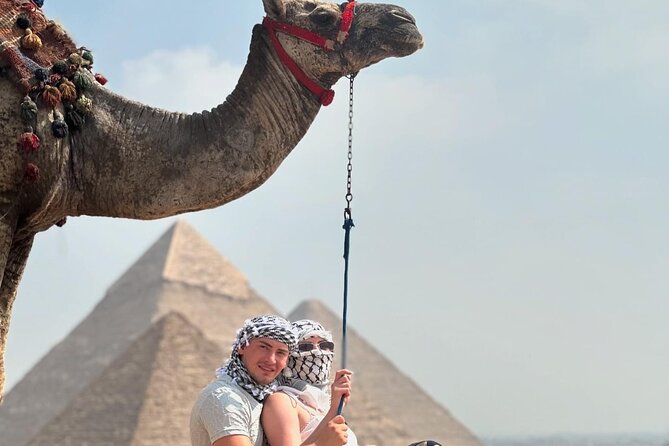
The tour is described as a private activity, so only your group participates. That is a meaningful advantage for families, couples, and small groups with different energy levels.
A family with two young girls used the guide’s flexibility to manage a demanding schedule. Another family found that the guide explained the past in a way that held children’s attention. You can ask for shorter walks, more photo time, or a slower explanation without worrying about a large group waiting.
Language support has also been part of the experience. One group specifically valued help with a language barrier and smooth transportation. The company works with guides and staff including Lido, Osam, Mustafa, Walid, Abdoo, and Abdul, though your booking may assign a different person.
The private format does not mean every cost is covered. It means the car and guide are arranged for your group. You still need to budget for tickets, lunch, tips, and any optional activities such as camel riding.
Transport, lunch, and the real cost
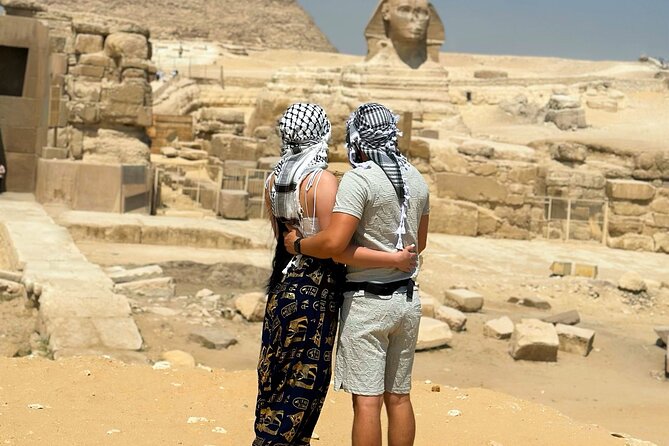
At $20 per person, the tour offers strong value if you want a car and guide for a full day. Transportation, bottled water, and the guide are included, which removes some of the hassle of connecting three separated archaeological areas on your own.
The price does not include lunch. Some groups arranged a meal during the day and described it as plentiful, but lunch is not part of the stated inclusions. Ask where you will stop and what the cost will be before ordering.
Tips are also excluded. Tipping is part of the normal cost planning for a guide and driver in Egypt, so carry suitable cash if you intend to tip for good service.
Tickets are the biggest variable. The published ticket figure is only an estimate, and prices may change. Before the tour, ask for the current cost of the Giza, Sphinx, Sakkara, Memphis, and any interior-pyramid tickets you want. That gives you a more accurate total than relying on the $20 headline price alone.
How to prepare for eight hours outside
I would book this tour for a morning start and keep the day free afterward. The stated schedule is about 8 a.m. to 4 p.m., and traffic or a longer visit at one site can affect the return time.
Wear shoes suited to dusty, uneven ground. Choose light clothing, a hat, and sun protection. The tour supplies bottled water, but bring extra if you can, especially for children.
Take small bills for tips and possible purchases. At Giza, vendors may approach you, and the guide can help reduce the pressure. Still, the simplest approach is to decide your budget before you arrive and avoid agreeing to an item or ride without confirming the price.
A phone or camera is worthwhile. The tour’s private setup gives you more freedom to stop for photos, and guides such as Lido have been praised for knowing useful picture locations. Keep your camera secure and make sure you have enough battery for the long day.
Who should book this tour
You should consider this tour if you want the major Giza sights plus the older royal centers in one day. It suits first-time visitors who need context, families who value a flexible schedule, and small groups that prefer a private car over a fixed coach itinerary.
It is also a practical choice if you want help with vendors, photo locations, and transport between sites. The repeated praise for friendly drivers, safe driving, clear explanations, and personal attention points to service as the tour’s strongest feature.
You may prefer a shorter visit if your main goal is only the Great Pyramid and Sphinx. Adding Memphis and Sakkara makes the day more rewarding historically, but it also means more driving, more walking, and less time to linger at each individual monument.
Should you book the Giza, Sakkara, and Memphis tour?
I would book it if you value coverage and personal attention more than a slow, single-site visit. For $20 per person, the included car, water, and guide make the starting price attractive, especially for a private group.
Before paying, confirm the guide language, pickup details, current admission prices, lunch arrangements, and whether you want an interior-pyramid visit or camel ride. If you are comfortable with those extra costs and an active eight-hour schedule, this is a sensible way to connect Egypt’s most famous pyramid field with the earlier world of Memphis and Sakkara.
FAQ
How long does the tour last?
The tour lasts approximately eight hours, generally from 8 a.m. to 4 p.m.
Which places are visited?
The tour visits the Giza Pyramids and Sphinx, Memphis, and Sakkara.
Is the tour private?
Yes. Only your group participates in this private activity.
Is transportation included?
Yes. Transportation by car is included for the full day.
Is a tour guide included?
Yes. A tour guide is included. Guides associated with the service include Lido, Osam, Mustafa, Walid, Abdoo, and Abdul.
Is bottled water included?
Yes. Bottled water is included.
Are entrance tickets included?
No. Tickets are not included, and the stated ticket prices are estimates because they can change.
Is lunch included?
No. Lunch is not included in the tour price.
Are tips included?
No. Tipping is not included.
Can I cancel for a full refund?
Yes, if you cancel at least 24 hours before the experience begins. Cancellations made within 24 hours are not refunded, and changes within that period are not accepted.
More Full-Day in Giza
- Full-Day Private Tour to Giza Pyramids, Sphinx, Memphis & Saqqara
★ 5.0 · 106 reviews - Full day tour to Pyramids Sphinx and Egyptian Museum of Cairo
★ 5.0 · 58 reviews - Cairo Two Full Day Tours (Jewels Of Cairo)
★ 5.0 · 53 reviews - Discover Alexandria’s Wonders: Full-Day Private Tour from Cairo
★ 5.0 · 50 reviews
New on the Giza list
- Private Tour Giza Pyramids Wonders All inclusive★ 5.0 · 26 reviews
- Private Day to Giza Pyramids, Egyptian Museum and camel sunset★ 5.0 · 26 reviews
- Sakkara, Memphis & Dahshur Tour★ 5.0 · 26 reviews
- Half Day Giza Pyramids and Sphinx★ 5.0 · 26 reviews
- Pyramid Duo Rooftop Capturing Elegance from the Rooftop★ 5.0 · 26 reviews
- Comfort experience To Saladin castle, bazaar, old Cairo & museum★ 5.0 · 27 reviews
- Half Day private guided tour Giza Pyramids,Sphinx,lunch,camel rid★ 5.0 · 27 reviews
- Cairo: Giza Pyramids & Museum of Egyptian Civilization Tour★ 4.4 · 27 reviews
Giza Pyramids & Sphinx Tours, compared.
Pyramids & Great Sphinx Private Tour with Camel Ride
Read our review →
Tour to Giza Pyramids and The Egyptian Museum
Read our review →
VIP All inclusive Best of the best Giza Pyramids,Sakkara,Memphis
Read our review →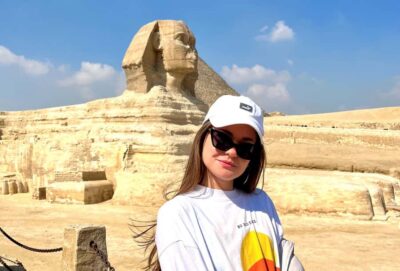
Pyramids of Giza, Sphinx, Saqqara & Memphis Tour
Read our review →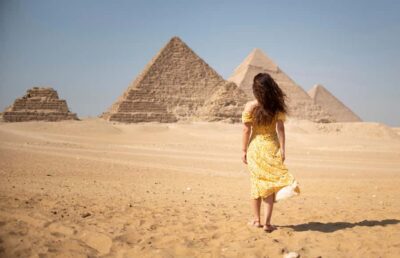
Half-Day Tour to Pyramids of Giza and the Sphinx
Read our review →
Private ViP all-inclusive Giza Pyramids,Sphinx,Inside Pyramid
Read our review →