
Reviewed · HURGHADA TOURS
Full-Day Small-Group Luxor Tour from Hurghada with Lunch & Entrance Fees
Luxor packs some of Egypt’s greatest sights into one extraordinary day. You’ll cross from Hurghada to the ancient Theban sites, walk through royal tombs cut into desert rock, face the giant Colossi of Memnon, and see the three-level temple of Hatshepsut. The Valley of the Kings and Karnak alone make this a serious history day, not a casual sightseeing stop.
I like the inclusion of hotel pickup, lunch, bottled water, transport, and entrance fees, since these details matter on a 14 to 16-hour outing. I also like the chance of a genuinely small group, with some departures reported as just one couple and a private driver and guide. The main concern is consistency: the advertised maximum is 17 people, yet one unhappy booking described a group of about 40, along with a late return and poor communication.
Key points to know before booking
- The 4:30 am start is essential: It allows time for the long road journey and a full schedule in Luxor.
- Four major ancient sites are included: The Valley of the Kings, Karnak Temple, the Colossi of Memnon, and Hatshepsut’s temple.
- Guide quality matters greatly: Guides named Hani, Mahmoud, and Mahmoud Nafa received warm praise, but one account described very weak guiding.
- The day is physically demanding: Expect heat, walking, an early start, and a late return to Hurghada.
- The advertised group limit is 17: Confirm the actual group size before departure, since one account reported around 40 people.
- Avoid pressure to add extras: Alabaster, papyrus, cartouche, Monkey Island, and Banana Island stops were described as optional sales-oriented additions.
Why this Hurghada to Luxor day trip is worth considering
Luxor is far enough from Hurghada that a day trip takes commitment. You leave at 4:30 am, spend much of the day at ancient sites, and return after a long road journey. This is not the easy choice. It is the efficient choice for someone staying on the Red Sea who wants to see Egypt’s major pharaonic monuments without changing hotels.
At $120.16 per person, the price is reasonable if the inclusions work as promised. You are paying for a full day of transport, a professional guide, lunch, water, and entry to the named sites. Separate admission tickets and a private vehicle could quickly cost more, especially when you add the convenience of hotel pickup and drop-off.
The value depends on two things: the size of your group and the quality of your guide. A small group can make the day feel personal. One booking turned into a private-style outing with driver Moses and guide Hany, while other experiences were less well controlled. I would confirm the group size and the day’s exact plan before paying, especially if the small-group format is the main reason you are choosing this tour.
A few other Hurghada days to weigh up
- From Hurghada: Cairo and Giza Highlights Full-Day Tour
★ 4.5 · 6,014 reviews - Hurghada: Full-Day Trip to Cairo by Plane
★ 4.5 · 2,415 reviews - From Hurghada: Full-Day Trip to Cairo by Plane
★ 4.5 · 1,186 reviews
The long road from Hurghada at 4:30 am
The early departure is the first fact to take seriously. You need to be ready at your hotel at 4:30 am, and the complete outing lasts about 14 to 16 hours. The drive is a large part of the day, so this works best if you are eager to see Luxor and willing to trade sleep for monuments.
The transport is by air-conditioned vehicle, which is important in Egypt’s heat. Bottled water is included, but bring extra water if you can, along with sunscreen, a hat, and comfortable walking shoes. One particularly positive account described the day continuing smoothly even with a two-year-old child, but the schedule will still be tiring for young children.
The route is worthwhile because Luxor offers a different side of Egypt from Hurghada. The Red Sea is about swimming and coral reefs. Luxor is about tombs, temples, colossal statues, and the remains of ancient Thebes. In a single day, you get a strong introduction to the country’s major ancient sites.
Still, do not expect a leisurely pace. You will visit several large archaeological areas, often in strong sun, then face the return journey. If you want long, quiet visits inside every tomb and temple, an overnight stay in Luxor would be the better plan.
Valley of the Kings: tombs beneath the desert hills
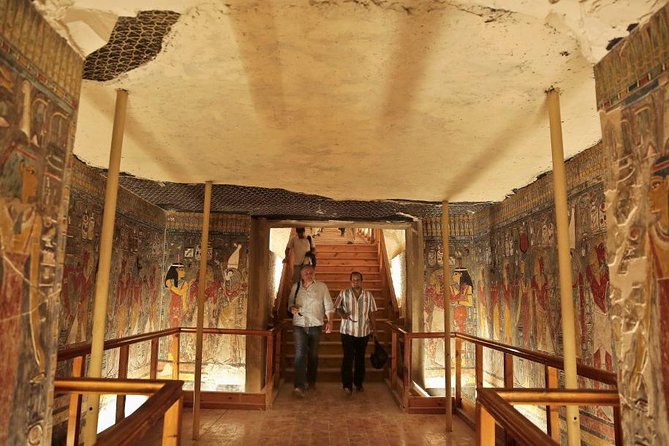
The Valley of the Kings is likely to be the emotional high point of the day. Instead of building grand pyramids for their burial places, New Kingdom pharaohs had tombs cut into the rock of the valley. The walls and ceilings were covered with scenes and texts intended to help the dead ruler reach the afterlife.
The valley contains 63 known tombs and chambers, ranging from simple pits to large complexes with more than 120 chambers. The most famous discovery came in 1922, when Howard Carter found the tomb of Tutankhamun. That discovery showed that the valley still had major secrets after centuries of searching.
You have about two hours here, enough for a useful visit but not enough to see everything. The exact tombs open to you can vary, and the famous Tutankhamun tomb may involve an additional charge or a separate arrangement. The supplied details describe the stop as having an admission fee not included, while the general tour description says entrance fees are included, so you should ask the operator to clarify this point before departure.
Inside the tombs, the experience can be close and atmospheric. You will see painted scenes, narrow passages, and chambers cut into the rock. The heat can be intense, and the walk from the vehicle to some tomb entrances may be exposed. Take your time, but keep an eye on the guide’s meeting instructions because the day has a tight schedule.
Hatshepsut’s temple and the story of a female pharaoh
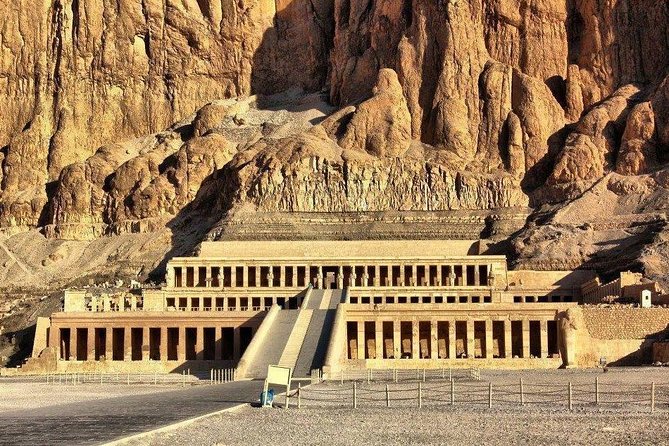
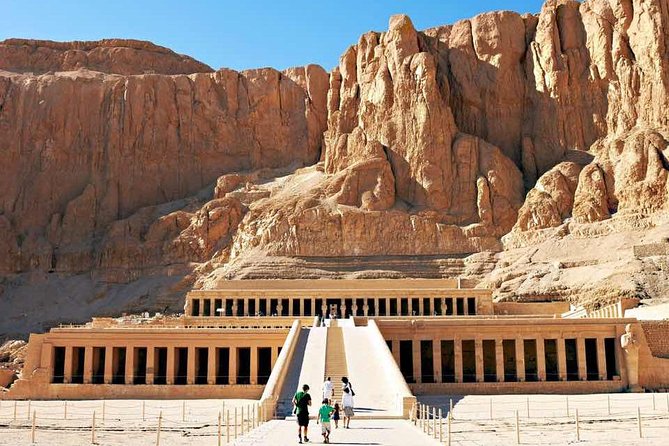
The Temple of Hatshepsut at Deir el-Bahari gives the west bank a strong architectural change of pace. Its long terraces rise in three levels against the cliffs, creating a formal, geometric appearance unlike many other Egyptian temples.
Hatshepsut ruled as pharaoh at a time when male rulers dominated Egypt’s public image. Her temple reflects that political story. A good guide can explain how she presented herself as king, why her reign mattered, and how later rulers treated her memory.
You have about one hour at the temple. That is enough to walk through the main terraces, take in the setting, and hear the key explanation, though it may feel brief if you enjoy inscriptions and architectural details. The site is open and exposed, so the sun is a serious factor. Carry water and use sunscreen even if the morning started cool.
This is one place where the guide makes a major difference. Hani received especially warm praise for explaining the sites in detail and keeping the experience enjoyable in temperatures above 40 degrees. Mahmoud and Mahmoud Nafa were also praised for being friendly, informative, and good with children. Your assigned guide may be different, so it is wise to judge the day by the service you receive rather than assuming a particular guide will lead your departure.
Same base, a completely different day out:
- Hurghada: Luxury Cruise Trip to Orange Bay with Lunch
★ 4.9 · 5,451 reviews - Hurghada: Orange Bay Island Boat Trip w/ Breakfast and Lunch
★ 4.9 · 5,345 reviews - Hurghada: Royal Seascope Submarine Cruise with Snorkel Stop
★ 4.4 · 4,637 reviews - Hurghada: 3 Islands, Dolphins & Snorkel Yacht Trip w/ Lunch
★ 4.7 · 4,609 reviews
The Colossi of Memnon: a quick stop with a big photo
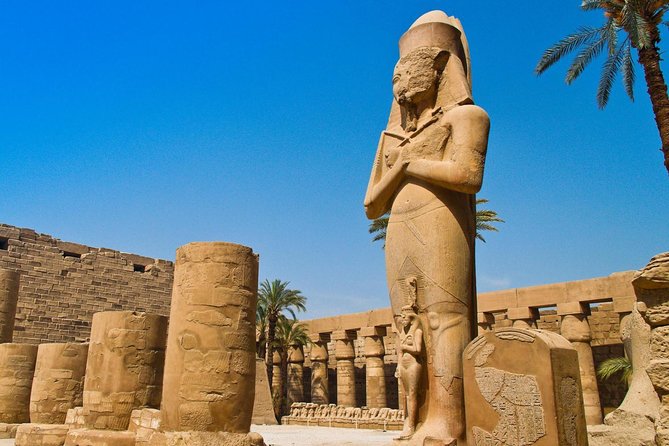
The Colossi of Memnon are two enormous seated statues that once guarded the entrance to a temple complex on the west bank. You get about 30 minutes here, making it the quickest stop of the day.
The statues are valuable not only as a photo stop but also as a reminder of how large the monuments of ancient Thebes were. Your guide should explain their place in the necropolis and how they have survived for roughly 3,400 years.
Do not expect a long visit. This is a short pause before or after the larger west bank sites, and the main activity is looking, listening, and taking photographs. That brevity is useful on such a packed day, but it also means you should not count this as a full archaeological tour.
Karnak Temple: the grand finale on the east bank
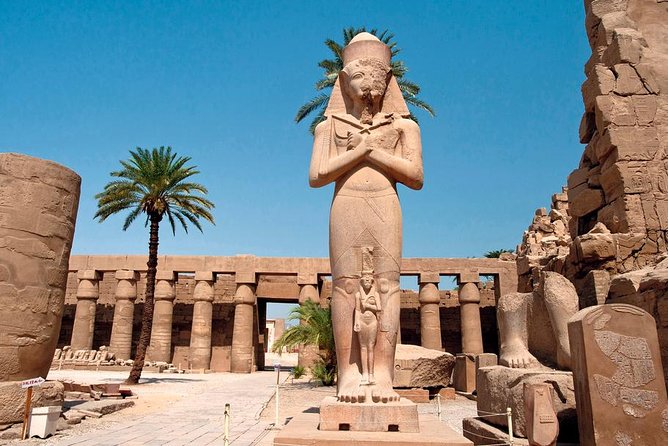
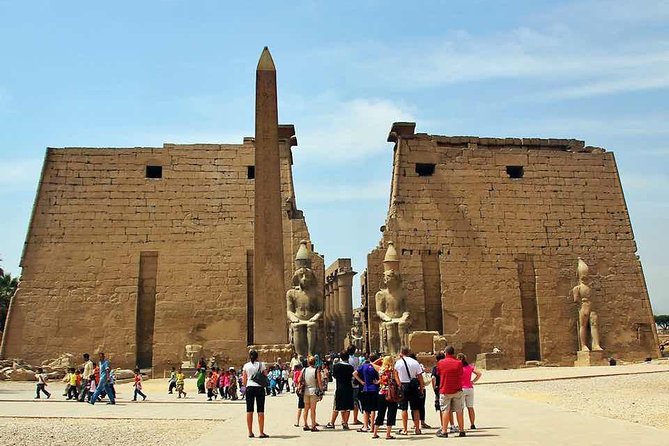
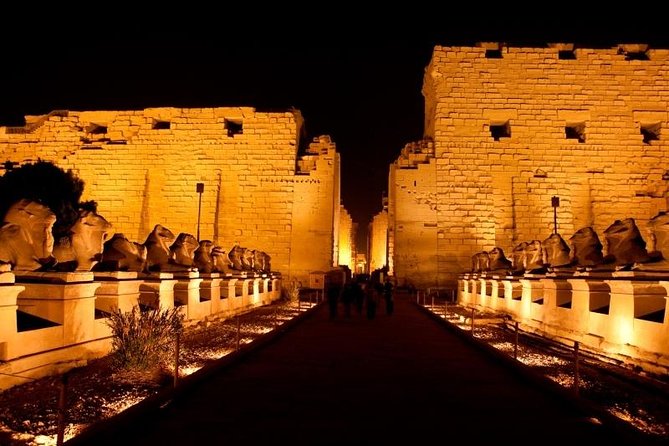
Karnak is the largest stop in terms of scale and one of the most impressive temple complexes in Egypt. Its ancient name, Ipet-isut, means the most sacred of places. Pharaohs added to it over more than 2,000 years, so what you see is a vast collection of sanctuaries, gateways, columns, and sacred spaces rather than one single building.
The Great Hypostyle Hall is the star. Its forest of giant pillars gives you a physical sense of ancient power and engineering. Look up at the remaining decoration and imagine the hall painted and active, not stripped by time and weather.
The planned visit lasts about 90 minutes. That gives you time for the main route and a proper explanation, but Karnak rewards a slower pace. If your guide is strong, this is where the stories of different pharaohs, religious practices, and temple building can turn a pile of impressive stone into a readable place.
The admission details need checking here too. The stop information says the ticket is not included, while the overall inclusions list says entrance fees to the named places are covered. Since the tour price is attractive partly because of its all-in structure, ask exactly which tickets are paid for and if any tombs or areas require extra payment.
Lunch beside the Nile, with a few conditions
Lunch at a local restaurant on the Nile is included. After a morning of tombs and temples, a sit-down meal provides a needed break, and eating near the river adds a welcome change from the dry archaeological sites.
Drinks are not included, so budget for those separately. One account praised the lunch but noted an extra charge connected with eating on the Nile, while another described being able to adjust the meal location. Treat such changes as optional, and ask about any additional cost before agreeing.
The tour also includes bottled water, but food preferences and exact menu details are not provided. If you have dietary needs, raise them when booking rather than waiting until the meal.
Small group promise, guide standards, and optional sales stops
The tour is advertised for a maximum of 17 people, and a minimum of two people per booking applies. That is a useful size for moving through busy sites without the feel of a large coach crowd.
In practice, the experience can vary. One booking became a very personal outing with its own driver and guide. Several positive accounts praised Hani or Mahmoud for clear explanations, patience, and good rapport with children. Those are important strengths because the monuments are much easier to appreciate when someone gives you a clear story and then allows time to look.
There is also a serious warning to keep in mind. One poor account described a group of about 40, a seven-hour journey each way, weak communication, limited site explanations, and a late hotel drop-off. This conflicts with the stated group limit and duration, but it is still a reason to confirm the arrangements shortly before departure.
You may also be offered stops at an alabaster factory, a papyrus shop, or a cartouche workshop. These can be interesting if you want souvenirs, but they are not part of the core ancient-site experience. Some accounts felt these stops were mainly designed to encourage purchases. You are entitled to decline optional extras.
Banana Island or Monkey Island trips may also be offered for an additional fee. One account strongly objected to an animal display involving small cages. I would skip any add-on that is not clearly described in advance, especially if it takes time from Karnak or the Valley of the Kings.
Heat, walking, and what to carry
This is a full day in open archaeological areas. Even if the vehicle has air conditioning, much of the sightseeing takes place in direct sun, and temperatures can rise above 40 degrees.
Wear light clothing that suits a religious and archaeological setting, sturdy shoes, and a hat. Bring sunscreen, extra water, and a phone or camera with sufficient battery. The supplied water is helpful, but it should not be your only hydration plan on a day this long.
The itinerary is possible for most people, and the activity states that most participants can take part. That does not mean it will feel easy. You should be comfortable walking, standing, handling steps or uneven ground, and remaining active after an early start.
Who gets the best value from this Luxor tour
I would recommend this outing to you if Luxor is high on your list, you are staying in Hurghada, and you want the main sights handled in one organized day. It suits first-time visitors who want a guide to explain what they are seeing rather than trying to arrange transport, tickets, and meals on their own.
Families can also consider it. A guide such as Mahmoud was praised for being friendly with children, and one family completed the day with a two-year-old. Even so, parents should prepare for the long road journey and heat.
I would hesitate if you dislike early mornings, long drives, sales stops, or tightly managed schedules. I would also choose an overnight Luxor visit if you want a slower pace, more tombs, or extra time at Karnak.
At $120.16, the tour offers good potential value, but only if the group size, entry tickets, and return transfer match the stated terms. The 92 percent recommendation and 4.6 rating suggest that many bookings work well, while the low ratings show why clear communication matters.
Should you book the Hurghada to Luxor day trip?
Book it if you want a practical first look at Luxor and can handle a very long day. The combination of the Valley of the Kings, Hatshepsut’s temple, Karnak, Memnon, lunch, transport, and a guide gives you a lot for the price.
Before departure, confirm three things: the actual number of people in your group, which entrance fees are covered, and that no unwanted island or shopping stops have been added. If those answers are clear, this can be an efficient and memorable way to reach Luxor from Hurghada.
FAQ
What time does the tour start?
Hotel pickup begins at 4:30 am.
How long does the tour last?
The full experience lasts approximately 14 to 16 hours.
What sites are visited?
The tour visits the Valley of the Kings, Karnak Temple, the Colossi of Memnon, and the Temple of Hatshepsut at Deir el-Bahari.
Is lunch included?
Yes. Lunch at a local restaurant near the Nile is included.
Are drinks included?
Bottled water is included, but other drinks are not.
Is hotel pickup and drop-off included?
Yes. Hotel pickup and drop-off are included.
How large is the group?
The stated maximum is 17 people, and a minimum of two people is required per booking.
Do I need my passport?
Yes. A current valid passport is required on the day of travel.
Can I cancel for a refund?
You can cancel at least 24 hours before the experience starts for a full refund. Cancellations or changes made less than 24 hours before the start time are not accepted for a refund.
New on the Hurghada list
- Private Day Tour to Luxor from Hurghada★ 5.0 · 25 reviews
- From Hurghada: El Gouna Quad and MX Bike Safari Tour★ 4.5 · 25 reviews
- Cairo Over Day Egyptian Musuem & Pyramids with Transfer -Hurghada★ 5.0 · 26 reviews
- Makadi Bay: Luxor Private Tour Kings Valley and Hatshepsut★ 4.4 · 26 reviews
- Orange Bay Island By Speedboat★ 5.0 · 26 reviews
- Private Speedboat Tour From Hurghada★ 5.0 · 26 reviews
- Orange Bay Island Boat Trip and Parasailing with Lunch – Hurghada★ 5.0 · 26 reviews
- Private Tour: shopping Tour In Hurghada★ 5.0 · 26 reviews
Hurghada Tours, compared.



Orange Bay Island Boat Trip w/ Breakfast and Lunch
Read our review →
Royal Seascope Submarine Cruise with Snorkel Stop
Read our review →
3 Islands, Dolphins & Snorkel Yacht Trip w/ Lunch
Read our review →
Hurghada or Makadi: Discover the Magic of Dolphin House
Read our review →
Sindbad Submarines – Hurghada (Egypt) – 2 Hours
Read our review →
Browse the lists this tour appears in