Reviewed · CAIRO TOURS
Cairo Old Coptic Church and Monastery St Simon Cave Church
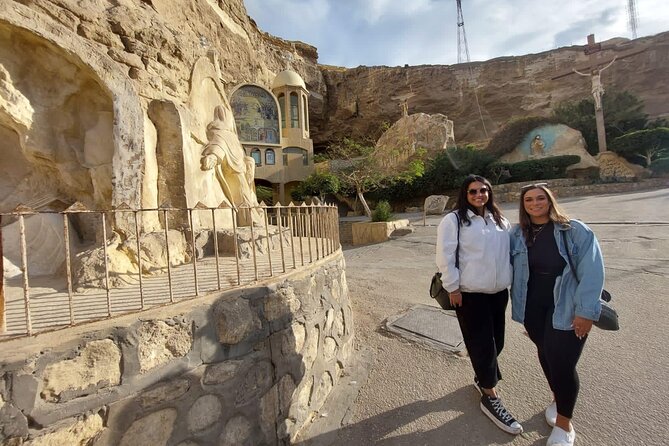
Cairo’s most unusual church is carved into a mountain reached through Garbage City, the crowded home of the city’s Zabbaleen community. Pair that striking visit with Old Cairo’s Hanging Church, Holy Crypt, and Ben Ezra Synagogue, and you get a short tour covering Christian, Jewish, Roman, and pre-Christian layers of the city.
I like two things right away: all entrance fees are included, and a private car with driver keeps the day practical in Cairo traffic. Guides such as Eman, Doaa, Mona, Abla, Ahmed, and Marcil have led this route, and the strongest experiences depend on getting a guide who explains rather than simply points.
The main consideration is time. Four hours gives you a useful introduction, but not a slow, scholarly visit to every site. The route through Garbage City can also feel confronting, and some experiences have included stops at papyrus, oils, or jewelry shops, so make your shopping preferences clear at the start.
Key things to know before booking
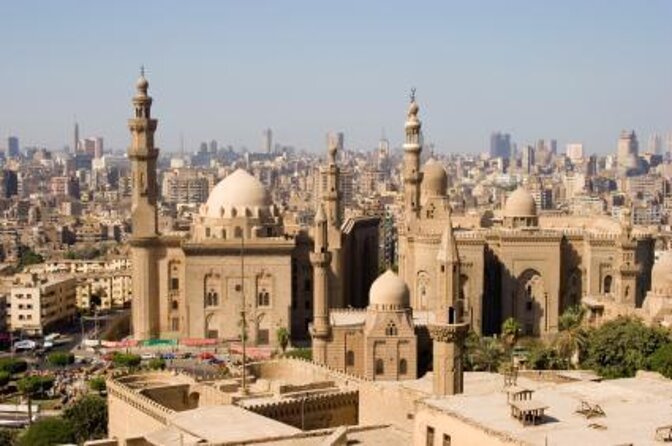
- The Cave Church is carved into Mokattam Mountain: St. Simon the Tanner Monastery is not a typical church visit, and the approach through Garbage City is part of the experience.
- Old Cairo packs several faiths into a small area: You visit the Roman Babylon Fortress remains, the Hanging Church, a Holy Crypt, and Ben Ezra Synagogue.
- A private guide and driver are included: Your group travels by private vehicle, with hotel pickup and drop-off from Cairo or Giza.
- The price is low for a private half-day: At $19 per person, the tour includes transport, guiding, admission fees, taxes, and bottled water.
- Traffic can shape the schedule: A skilled driver matters in Cairo, and the tour may feel more relaxed outside peak congestion.
- Shopping stops may appear: Papyrus, beauty oils, and jewelry have been included for some groups, so ask whether you want those visits.
Why this Cairo tour is more than a church visit
I like this experience because it gives you a different Cairo from the pyramid circuit. Instead of focusing on pharaohs and royal tombs, you spend the morning with living religious communities and buildings tied to stories of Roman rule, the Holy Family, Jewish life, and Coptic Christianity.
The route also shows how close different traditions are in Old Cairo. Within a compact area, you can move from the remains of a Roman fortress to a Coptic church built over its towers, then to a synagogue connected with Egypt’s Jewish community. That concentration makes the tour useful even if you have only a short stay.
The second half changes mood completely. St. Simon’s Cave Church is connected with Cairo’s Zabbaleen, the Coptic Christian garbage collectors who dug a place of worship from Mokattam Mountain during the 1970s. You do not simply look at an old building. You see a modern religious site shaped by a working community and a dramatic local setting.
At $19 per person, the value is unusually strong if the advertised inclusions apply to your booking. A private vehicle, hotel transfers, an Egyptologist guide, admission fees, water, snacks, and beverages would normally make this a practical way to cover several sites without arranging separate taxis.
Still, low price does not mean unlimited time. The tour lasts about four hours, with roughly two hours in Coptic Cairo and one hour at the Cave Church, plus driving. If you want long time for prayer, photography, or detailed architectural study, you may prefer a longer private day.
A few other Cairo days to weigh up
- Cairo: Pyramids & Great Sphinx Private Tour with Camel Ride
★ 4.9 · 6,335 reviews - Tour to Giza Pyramids and The Egyptian Museum
★ 5.0 · 6,016 reviews - VIP All inclusive Best of the best Giza Pyramids,Sakkara,Memphis
★ 5.0 · 3,164 reviews
Babylon Fortress and the Roman foundations
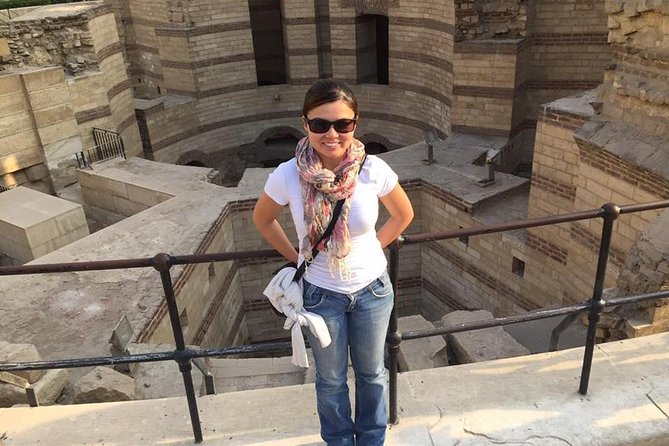
Your guide collects you from a hotel in Cairo or Giza and drives to Old Cairo in a private car. The first stop is the area associated with Babylon Fortress, a Roman defensive complex whose surviving remains form the base for several later religious buildings.
The tour description dates the fortress to 98 BC and attributes it to the Roman emperor Trajan. Those dates and attributions are presented as part of the tour’s explanation, so ask your guide to clarify the chronology if ancient Egyptian and Roman history interests you. The useful point for a first visit is that the fortress remains are not an isolated ruin. They are built into the later city around them.
This is where the tour’s theme becomes clear. Cairo’s religious quarters were not created on empty ground. Churches, homes, and places of worship developed around older walls and routes. Your guide can help you see the physical connection between the Roman remains and the Coptic buildings that followed.
The site itself is not likely to occupy the full two-hour Old Cairo segment. That time also includes the churches and synagogue, so think of the fortress as an opening chapter rather than a separate museum visit.
The Hanging Church and its unusual setting
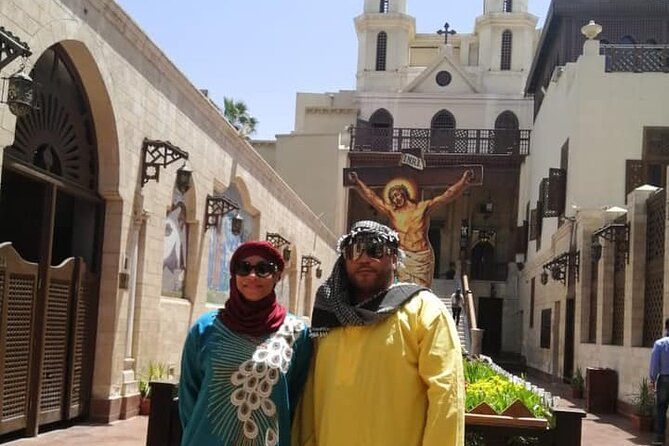
The Hanging Church is one of the best-known stops on the route. The church is dated here to the 3rd century and is described as being built over the two remaining towers of Babylon Fortress. That position explains its familiar name and gives the visit a strong visual link to the Roman remains.
I would pay close attention to the way your guide explains the building’s position. Without that context, you might see only a beautiful old church. With it, you understand why this site matters: Coptic architecture and worship occupy a structure tied directly to an earlier fortress.
The church is part of Old Cairo’s active religious quarter, not a detached archaeological display. Be prepared for a visit that combines faith, architecture, and local history. Dress respectfully for a church and synagogue visit, and follow any instructions about photography or movement inside.
Guides Eman, Doaa, Abla, Mona, Ahmed, and Marcil are named among the people who have led this route. The comments about them are consistent on the points that matter most here: clear explanations, patience with questions, and help moving through the sites. Mona has been used for both English and Spanish guiding, while a separate Spanish guide has also been arranged on some bookings. Confirm your language needs before paying.
The Holy Crypt and the story of the Holy Family
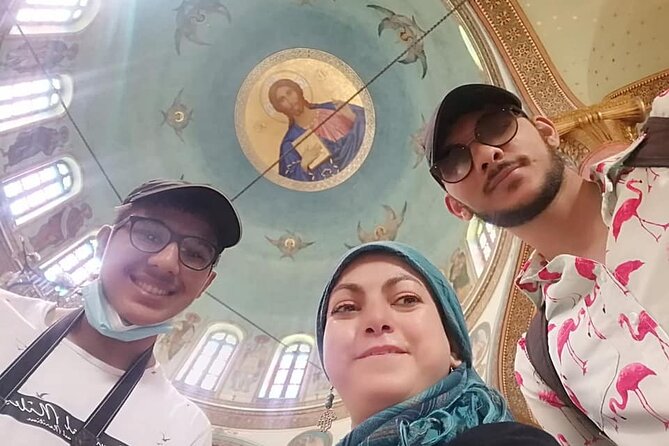
The next church is known as the Holy Crypt. According to Coptic belief, the Holy Family stayed here for three months during its journey in Egypt.
This stop is less about grand scale than religious meaning. Your guide will explain the belief surrounding the site and the place it holds in Coptic tradition. If you are interested in how sacred stories shape a city, this may be one of the most meaningful parts of the Old Cairo visit.
Keep the wording in mind: this is presented as a belief. A good guide should distinguish religious tradition from independently verified archaeological fact. That distinction does not make the visit less worthwhile. It lets you appreciate the site on its own terms while keeping the explanation precise.
The Holy Crypt also helps show why Coptic Cairo remains important to Egypt’s Christian community. These are not simply old buildings placed on a sightseeing route. They are places connected to worship, memory, and identity.
Same base, a completely different day out:
- From Cairo: Pyramids of Giza, Sphinx, Saqqara & Memphis Tour
★ 4.7 · 3,110 reviews - Cairo 8 Hour Private Tour of Pyramids, Egyptian Museum and Bazaar
★ 5.0 · 2,931 reviews - From Cairo: Half-Day Tour to Pyramids of Giza and the Sphinx
★ 4.6 · 2,891 reviews - Cairo: Pyramids, Sakkara & Memphis Tour with Lunch
★ 4.6 · 2,493 reviews
Ben Ezra Synagogue and Jewish Cairo
Ben Ezra Synagogue adds another layer to the morning. Your guide explains the Jewish community’s connection with Egypt, Jewish history in the country, and the story of Moses.
The synagogue is a valuable inclusion because many short Cairo tours treat Old Cairo as only a Christian quarter. This route gives you a broader view. Roman foundations, Coptic churches, and Jewish heritage all appear within the same compact district.
I would use this stop to ask specific questions. How did Jewish communities live in Egypt? How did their religious sites fit into the changing city? Which parts of the Moses story belong to religious tradition, and which relate to historical study? The guide’s answer can make the synagogue more than a quick photo stop.
The experience is especially useful for families or groups with different interests. One person may care most about church architecture, another about Jewish history, and another about the Roman period. The private format makes it easier to slow down for the subjects your group finds most interesting.
Entering St. Simon’s Cave Church through Garbage City
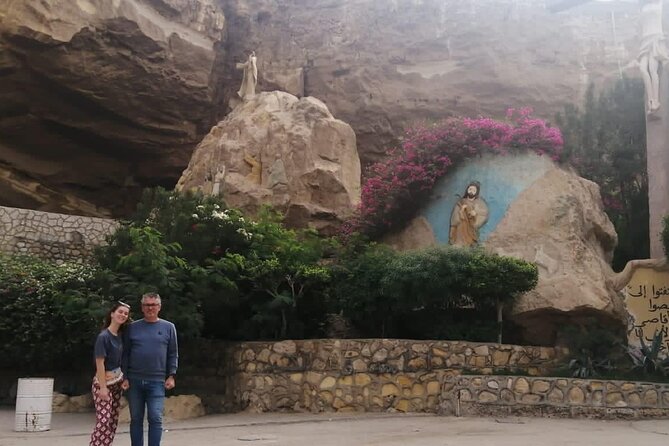
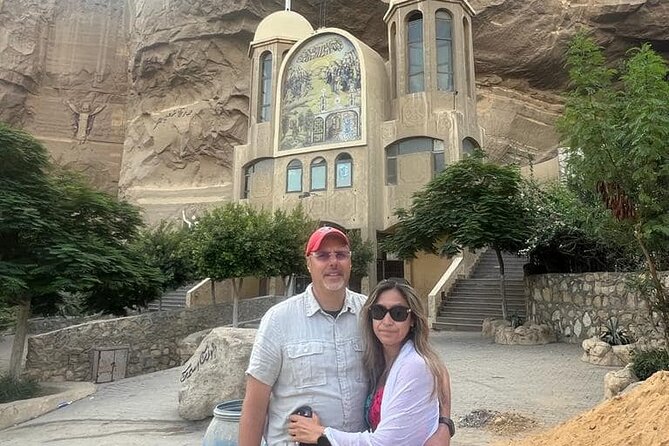
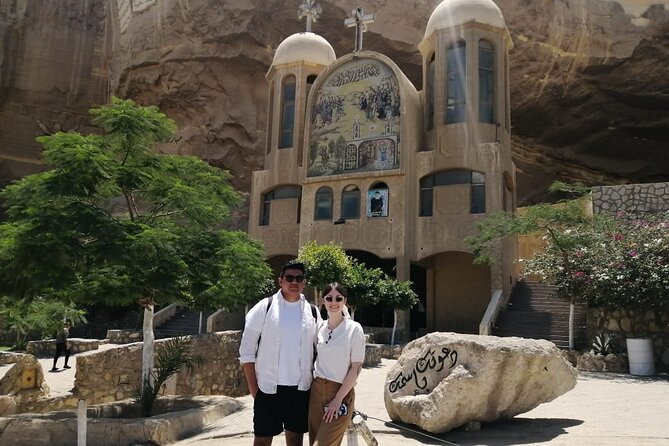
The trip to Mokattam Mountain is the tour’s sharpest change of scene. St. Simon the Tanner Monastery, also called St. Samaan or St. Simeon, includes the Cave Church, a large worship space carved into the mountain.
The church was dug out during the 1970s by the Zabbaleen, Cairo’s Coptic Christian garbage collectors. That fact gives the place a modern social setting that is as important as the religious story. Your route passes through the community often called Garbage City, and the journey may feel overwhelming because of the working environment and dense surroundings.
I would not treat this drive as a quick nuisance between attractions. It is part of understanding why the Cave Church exists where it does and who created it. At the same time, you should go with realistic expectations. This is not a polished tourist district, and the approach may be uncomfortable for some people.
The church itself is the payoff. Its scale and carved setting make it unlike the churches in Old Cairo. The site honors a miracle associated with St. Simon the Tanner, and your guide will explain the story and the monastery’s connection to the Coptic community.
One hour is allocated here. That is enough for a meaningful introduction, particularly with a guide who explains the carvings, religious story, and community background. It may not be enough if you want to examine every artwork or spend a long time sitting quietly.
Some groups have also eaten traditional Egyptian koshari during the outing. The supplied details do not make a meal a guaranteed inclusion, so do not book this expecting lunch. Snacks, beverages, and bottled water are included, which is helpful in Cairo’s heat.
The private car makes a real difference
The private transport is not a minor extra in Cairo. The city’s roads can be slow and confusing, and the driver must manage the route while you focus on the guide and sites.
Several guides have been paired with dedicated drivers. Samir is one driver specifically named, and the driving itself has drawn strong praise for handling difficult traffic. That matters most when moving between Old Cairo and Mokattam Mountain, where delays can eat into a four-hour tour.
Pickup and drop-off are included from hotels in Cairo and Giza. There is a $30 extra charge for 6 October City, Nasr City, New Cairo, the airport, and surrounding areas. Check your hotel location carefully before booking, since that fee can change the value calculation.
The experience is private, meaning only your group participates. That gives you room to ask questions and request a little flexibility, although the total time and traffic still limit what the guide can add.
Guide quality, language, and possible shopping stops
The guide can make or break this route. The most useful guides on this kind of visit explain the difference between belief, tradition, and archaeological evidence. They also connect one site to the next instead of delivering separate facts.
Names associated with the experience include Eman, Doaa, Mona, Abla, Ahmed, and Marcil. Doaa has been praised for detailed explanations and for helping with negotiations during purchases. Marcil has been described as patient with questions, while Mona has been used as an English and Spanish Egyptologist.
Language arrangements should be confirmed before booking. Most of the supplied comments concern English guiding, but Spanish service has also been offered. One Spanish-language booking received a poor assessment because of the guide and manager, so do not assume every language pairing will feel identical.
A few groups have been taken to papyrus, beauty oil, and jewelry shops. These can be useful if you want to buy Egyptian products, but they may feel like sales stops if your priority is strictly religious heritage. Tell the guide at pickup if you want the focus kept on churches, the synagogue, and the Cave Church.
The price is attractive enough that an occasional shop visit may be acceptable for some people, but it should not be a surprise. Ask directly how much time will be spent shopping and whether the stops are optional.
Who will get the most from this four-hour route
I would recommend this tour to you if you want a compact introduction to Cairo’s Christian and Jewish heritage, prefer a private vehicle, and value a guide who can explain religious stories in context.
It suits first-time visitors who have already seen, or plan to see, the pyramids and Egyptian Museum. It also works well for families because the route changes pace and subject often enough to hold attention.
The tour is a good choice for:
- Couples and small groups who want private transport
- Visitors staying in central Cairo or Giza
- People interested in Coptic Christianity and Jewish heritage
- Anyone curious about the Zabbaleen community and the Cave Church
- Groups that want a guide rather than a self-guided visit
I would think twice if you dislike city drives, crowded working districts, religious sites, or optional shopping. I would also choose a longer tour if you want extensive time inside each church or need a leisurely schedule.
Practical value, booking, and cancellation
At $19 per person, this is strong value for a private four-hour experience with transport and entrance fees included. Group discounts may improve the price for larger parties, but the extra pickup charge can matter if your hotel is outside Cairo or Giza.
Confirmation is provided at booking, and most people can participate. A child rate applies only when the child shares with two paying adults.
Free cancellation is available up to 24 hours before the start time for a full refund. Cancellations or changes made less than 24 hours ahead are not accepted for a refund, and the cut-off follows local Cairo time.
I would book as early as practical, since the experience is commonly reserved about 27 days ahead. That is not a requirement, but it suggests that planning ahead is sensible during busy periods.
Should you book it?
Book this tour if you want a focused, good-value look at Old Cairo and modern Coptic life, especially if the Cave Church interests you. The private car, included admissions, and range of guides make it easier than arranging the route alone.
Before booking, confirm your hotel pickup zone, guiding language, and whether shopping stops will be included. If you do that, the tour offers a rare combination: Roman foundations, Coptic sanctuaries, a Jewish synagogue, and a mountain church shaped by Cairo’s Zabbaleen community, all in about half a day.
FAQ
How long does the tour last?
The experience lasts approximately four hours. About two hours are allocated to Coptic Cairo, and about one hour to the Cave Church, with the remaining time used for transfers.
Where does hotel pickup apply?
Round-trip pickup and drop-off are provided from hotels in Cairo and Giza.
Is there an extra pickup charge for some areas?
Yes. Pickup from 6 October City, Nasr City, New Cairo, the airport, and surrounding areas costs an additional $30.
Is this a private tour?
Yes. Only your group participates in the activity, and transport is provided by private vehicle.
Are entrance fees included?
Yes. Admission fees for the listed stops are included in the tour cost.
What sites are visited in Old Cairo?
The route includes Babylon Fortress, the Hanging Church, the Holy Crypt Church, and Ben Ezra Synagogue.
What is the Cave Church?
The Cave Church is part of St. Simon the Tanner Monastery, also known as St. Samaan or St. Simeon. It was carved into Mokattam Mountain by the Zabbaleen during the 1970s.
Are food and drinks included?
Bottled water, snacks, and beverages are included. A full meal is not listed as an inclusion, although some groups have had the chance to eat koshari.
Can I cancel for a full refund?
Yes, if you cancel at least 24 hours before the experience start time. Cancellations and changes made less than 24 hours before the start are not accepted for a refund.
New on the Cairo list
- Private Tour Giza Pyramids Wonders All inclusive★ 5.0 · 26 reviews
- Private Half Day Tour to Giza Pyramids & Great Sphinx from Cairo★ 5.0 · 26 reviews
- Private Tour To Pyramids of Giza Memphis Saqqara With Lunch★ 5.0 · 26 reviews
- 2 days 1 night Luxor,Aswan & Abu simbel by flight from Cairo★ 4.5 · 26 reviews
- Private Day to Giza Pyramids, Egyptian Museum and camel sunset★ 5.0 · 26 reviews
- Siwa Oasis Tour 3 Day 2 Nights from Cairo★ 5.0 · 26 reviews
- VIP Cairo Day Trip Coptic Orthodox Church & Islamic Old Mosques★ 5.0 · 26 reviews
- Full Day Private Tour to visit Old Coptic Cairo & Islamic Cairo★ 5.0 · 26 reviews
Cairo Tours, compared.
Pyramids & Great Sphinx Private Tour with Camel Ride
Read our review →
Tour to Giza Pyramids and The Egyptian Museum
Read our review →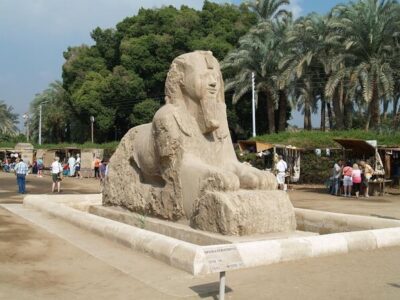
VIP All inclusive Best of the best Giza Pyramids,Sakkara,Memphis
Read our review →
Pyramids of Giza, Sphinx, Saqqara & Memphis Tour
Read our review →
Cairo 8 Hour Private Tour of Pyramids, Egyptian Museum and Bazaar
Read our review →
Half-Day Tour to Pyramids of Giza and the Sphinx
Read our review →