Reviewed · CAIRO TOURS
Cairo Half day tours to Old Markets and Local Souqs
Cairo’s old markets are not a tidy row of souvenir stalls. They are a maze of metalwork, fabric, spices, food shops, mosques, tea cafés, and daily errands. This half-day outing gives you a local guide to lead the way through El Ghorya, El Mosky, and Khan el-Khalili, with the added drama of Cairo’s medieval gates.
I like the hotel pickup in a private air-conditioned vehicle, and I like having a guide who can help you judge quality and prices before you buy. Guides including Ahmed, Osama, Nader, Omar, and Mahmoud Afifi have been praised for their care, history knowledge, and bargaining advice. The main caution is that the experience can change with shop hours, Ramadan, Sunday closures, and the guide assigned to your group.
Key points to know before booking
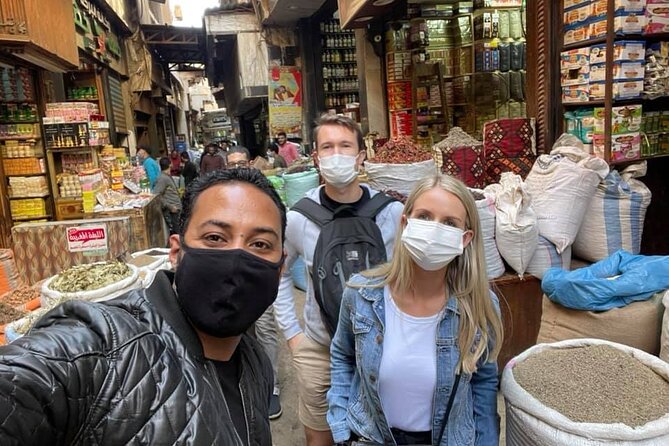
- You visit several different market areas: El Ghorya, El Mosky, Bab al-Futuh, Bab Zuwayla, Bab al-Nasr, and Khan el-Khalili each offer a different feel.
- A private guide makes shopping easier: Guides can explain quality, help with communication, and warn you away from poor-value goods.
- Hotel pickup and drop-off save time: Your tour includes transfers in a private, air-conditioned vehicle.
- Khan el-Khalili gets most of the attention: Plan on about two hours there, with time for shopping, photos, tea, and people-watching.
- This is a walking tour in crowded old streets: Uneven ground and heavy foot traffic call for comfortable shoes and patience.
- Lunch is optional: Local Egyptian food is included only if you select that option, and personal purchases and tips are extra.
Why Cairo’s old markets are worth your time
The appeal here is not simply buying a papyrus print or brass lamp. It is seeing how Cairo’s old commercial quarters work. A shopkeeper may be selling souvenirs to visitors, but the surrounding streets also serve local residents buying clothing, household goods, food, and small everyday items.
That mix gives the tour its character. You may pass a stall selling mass-produced goods, then turn into a lane with older crafts or a traditional café. The experience is noisy, crowded, and sometimes pushy, but it can also feel more like a real city outing than a polished shopping center.
The guide matters a great deal. A strong guide will do more than lead you from shop to shop. Ahmed, for example, was praised for explaining when an item was poor quality and for refusing to let sellers overcharge his group. Nader was singled out for explaining the history of each area and giving practical advice about what to look for in Egyptian goods.
You should still expect that shopping is part of the experience. If you dislike bargaining or do not want to enter shops, tell your guide at the start. The route can include brass crafts, papyrus, cotton products, Egyptian food, tea, and souvenirs, but the exact balance depends on your interests and the guide.
A few other Cairo days to weigh up
- Cairo: Pyramids & Great Sphinx Private Tour with Camel Ride
★ 4.9 · 6,335 reviews - Tour to Giza Pyramids and The Egyptian Museum
★ 5.0 · 6,016 reviews - VIP All inclusive Best of the best Giza Pyramids,Sakkara,Memphis
★ 5.0 · 3,164 reviews
Starting in El Ghorya, the pretty Fatimid market quarter
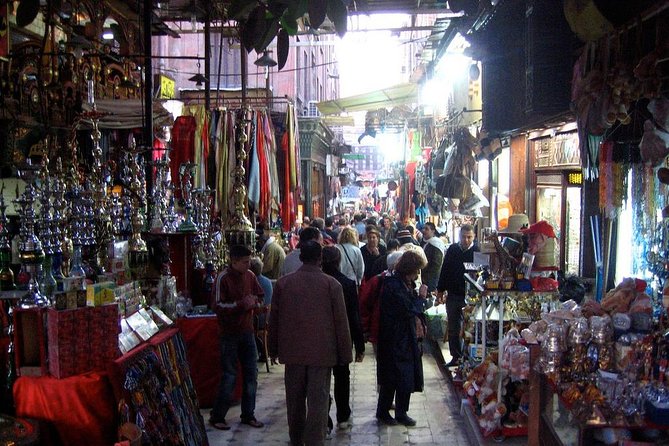
The tour begins with pickup from your Cairo hotel, then heads toward El Ghorya, a traditional market area in Fatimid Cairo. About an hour is set aside for this part of the outing, and it is a good opening because it introduces you to the old commercial streets before you reach the larger Khan el-Khalili area.
El Ghorya has a more local feel than a single-purpose souvenir market. You can expect narrow streets, shop displays spilling toward the walkway, and a mixture of old buildings and active commerce. The guide can explain what you are seeing and help you decide which stalls are worth your time.
One especially appealing way to experience this area is to arrive early. A morning departure around 9:30 was described as pleasantly quiet, before the market became crowded. That timing can make it easier to look at goods and stay with your guide.
The tradeoff is that early hours may mean some shops are not fully open. The same issue can appear during Ramadan, when opening hours and food service change. If shopping is your main goal, ask about the planned start time and local holidays before you commit.
Cairo’s medieval gates and the Bab al-Futuh area
The route continues toward Bab al-Futuh, Bab Zuwayla, Bab al-Fatah, and Bab al-Nasr. These names can sound confusing because the route description uses more than one spelling for some gates. Your guide should help connect the landmarks as you walk rather than treating them as isolated photo stops.
Bab al-Futuh and Bab al-Nasr are among the old gates associated with Cairo’s medieval city. Their stonework and setting give the market walk a stronger sense of place. You are not simply moving between stores. You are passing through historic parts of Cairo that shaped how people entered, worked in, and moved around the old city.
About 30 minutes is assigned to the Bab al-Futuh portion and another 30 minutes to Bab al-Nasr. The stop details indicate that admission for these areas may not be included, so keep a little money available for any entry fee your guide identifies. The main experience is still the walk and the surrounding streets rather than a long museum visit.
Some guides have added visits to mosques and given detailed explanations of Islamic architecture and Cairo’s past. That can be a real strength if you want more than shopping. It can also feel off target if you booked mainly to browse and buy, so tell your guide whether your priority is architecture, local life, souvenirs, or food.
Dress and behavior should be respectful around mosques and religious sites. The supplied information does not set out a formal dress code, but modest clothing is a sensible choice when the route includes mosques.
El Mosky, where the market feels most local
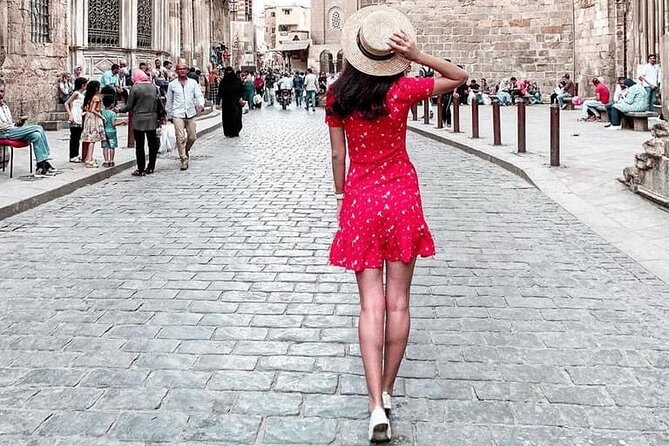
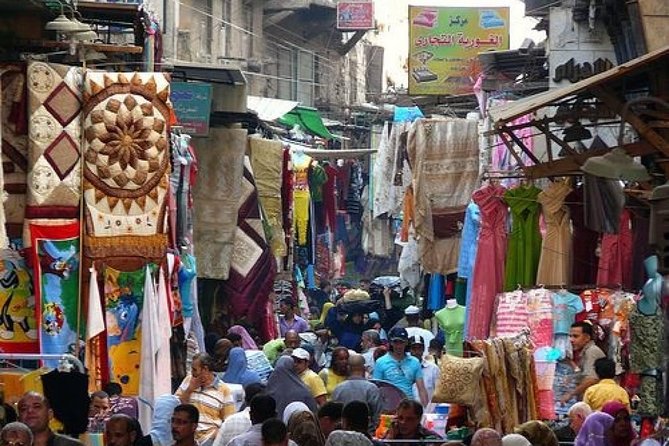
El Mosky is described as a crowded Egyptian market with almost everything. This is likely to be the least relaxed section of the walk, but it may also be the most revealing. The area is about daily shopping, packed lanes, close traffic, and the constant movement that makes old Cairo feel intense.
Keep your expectations realistic. El Mosky is not presented as a carefully arranged craft village. Goods may be practical, ordinary, imported, or aimed at local shoppers. That makes the area useful for seeing Cairo’s working market life, but it may disappoint you if you want only elegant handmade souvenirs.
The crowd level changes with the hour. One guide brought a group early, when the streets were easier to manage. Another experience was shortened because of late arrival and extra stops before reaching the market. For this reason, a prompt pickup and a clear agreement about the route are important.
Stay close to your guide in El Mosky. The streets can be confusing, and one account described a larger group having trouble staying together. This is one advantage of booking a private tour: your guide can set a pace that suits your group instead of trying to manage a crowd of unrelated people.
Same base, a completely different day out:
- From Cairo: Pyramids of Giza, Sphinx, Saqqara & Memphis Tour
★ 4.7 · 3,110 reviews - Cairo 8 Hour Private Tour of Pyramids, Egyptian Museum and Bazaar
★ 5.0 · 2,931 reviews - From Cairo: Half-Day Tour to Pyramids of Giza and the Sphinx
★ 4.6 · 2,891 reviews - Cairo: Pyramids, Sakkara & Memphis Tour with Lunch
★ 4.6 · 2,493 reviews
Two hours in Khan el-Khalili
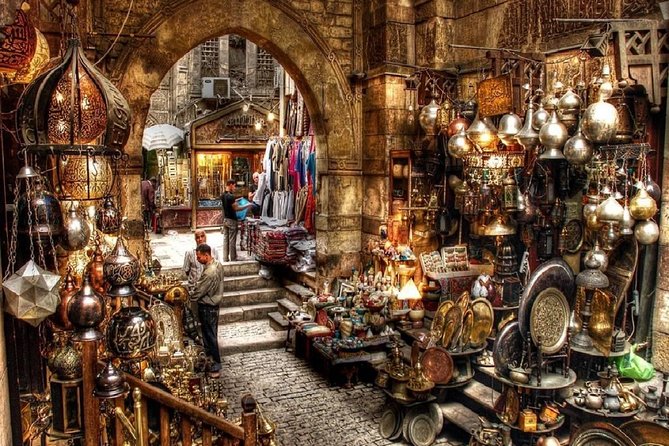
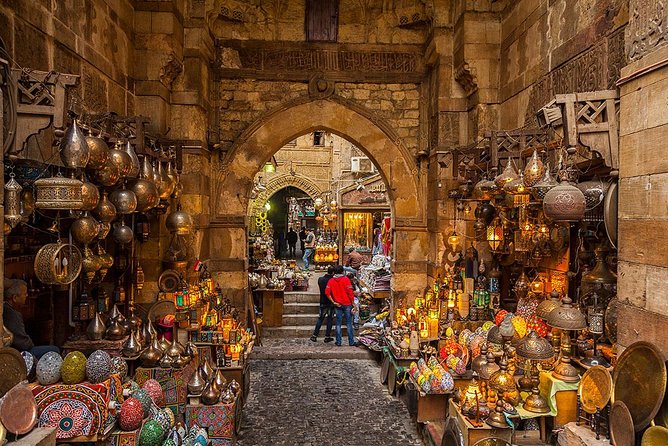
Khan el-Khalili receives the longest portion of the outing, about two hours. It is described as the oldest market in the Middle East and one of Cairo’s most prestigious market quarters, built over the tombs of Fatimid caliphs.
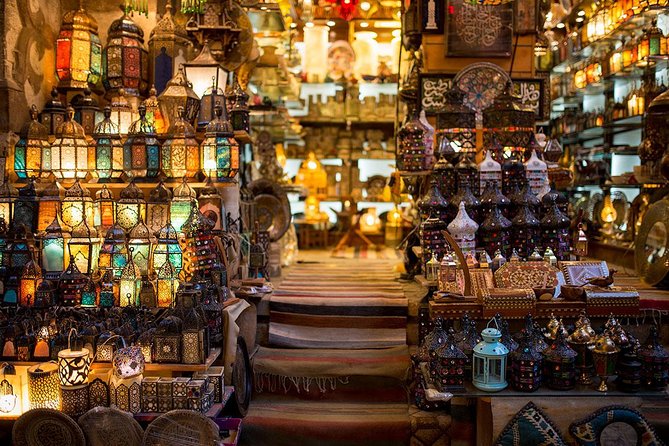
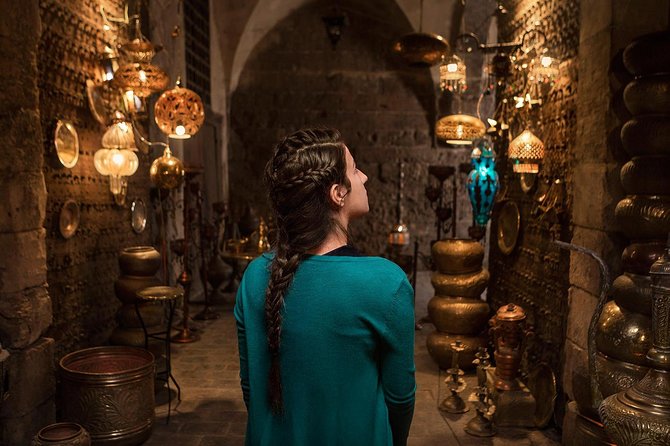
The lanes here are the classic Cairo bazaar experience: shop fronts close together, goods hanging overhead, brass and metal items catching the light, and sellers ready to begin a conversation. You may find papyrus, cotton products, brass crafts, jewelry, small gifts, and other Egyptian-themed goods. Some shops may carry Chinese-made products alongside Egyptian items, so ask your guide how to tell the difference when authenticity matters to you.
A guide can save you both money and frustration. Ahmed was praised for stepping in when sellers tried to charge too much, while Omar was able to take a visitor directly to shops suited to a particular request. Nader helped explain what to examine for quality. These are practical services, not just pleasant conversation, and they may be the best reason to choose a guided market visit over wandering alone.
Still, bargaining is part of the setting. Do not assume the first price is the final price, and do not buy something simply because the seller is friendly. If you are serious about a purchase, compare similar goods in more than one stall and ask whether the item is Egyptian-made or imported.
The market also offers breaks from shopping. You might stop for Egyptian tea at your own expense, watch people from a café, or follow your guide to one of the area’s old cafés. One outing included a stop at Cairo’s oldest café, a memorable touch for anyone who enjoys historic social spaces as much as souvenirs.
Food, tea, and the optional lunch choice
Lunch is included only when you select the lunch option. The meal is described as local Egyptian food at a local restaurant, and several accounts highlight koshari, a filling Egyptian dish made with pasta, rice, lentils, and toppings. It may not look fancy, but it can be a satisfying way to try a local staple.
Other food experiences have included a cane drink and lunch near the Nile River. Those details suggest that the meal location can vary, so do not book this tour expecting one fixed restaurant or view. If the lunch matters to you, confirm what is included and where it will take place.
Tea and other drinks are not automatically covered. Bring some Egyptian pounds or another accepted payment method for personal purchases, café stops, drinks, and tips. Personal items and gratuities are not included in the tour price.
Food service can be limited during Ramadan, especially during daylight hours. One outing during Ramadan had many closed shops and eateries, and another ended early because the market schedule was reduced. If you are visiting during Ramadan, ask the operator what will be open on your chosen date.
What the $35 price really offers
At $35 per person, the tour is reasonably priced if you value private transportation, hotel pickup, and help navigating Cairo’s old market quarters. You are paying for orientation and local support as much as for the four-hour route itself.
That value is strongest for a first visit, a solo visitor, or a small group that wants help bargaining and getting around. A guide who can explain quality and handle difficult seller interactions may prevent a bad purchase, which can make the fee worthwhile before you even count the transport.
The value is weaker if you expect a formal sightseeing tour with long visits at major monuments, a guaranteed premium lunch, or nonstop shopping for four full hours. Some outings have lasted closer to three hours, and one ended after only 45 minutes to an hour in the market because of late arrival and extra stops.
The experience is private, so only your group participates. That gives you room to ask questions and adjust the pace. Group discounts are available, but the exact saving is not stated, so check the price for your party before booking.
The guides make or break the afternoon
The strongest part of this experience is the human guidance. Osama was praised for being personable, safe, and willing to shape the day around what the group wanted. Mahmoud Afifi was noted for showing the market before opening and then contrasting it with the later rush. That sort of timing gives you a better feel for how the quarter changes through the day.
Amir was remembered for kindness and for sharing a genuine love of Egypt. Jesse was described as cheerful and ready to answer questions. Mohamed was helpful and accommodating on a quieter morning, while Walid combined market guiding with a stop for koshari and people-watching.
There is a clear limitation: guide quality and English ability may vary. One booking received a guide with limited English despite requesting an English-speaking guide. Another person wanted more explanation about Egyptian tea and the mosques. If detailed interpretation matters to you, request an English-speaking guide and make your interests clear at the start.
The tour can also suit Spanish speakers. Neveen was praised for providing the tour in excellent Spanish. Named guide requests may not be guaranteed, but asking for a preferred guide during booking is sensible.
Walking conditions, crowds, and practical comfort
Expect a lot of walking over uneven surfaces. One older group was well cared for by a guide who adjusted the pace, but comfortable shoes with good cushioning were still considered essential. Sandals with thin soles would be a poor choice for this route.
Crowds can be intense, especially in El Mosky and Khan el-Khalili. If you are not used to close-packed streets, the market may feel tiring rather than fun. Keep your belongings secure, stay aware of your position, and follow your guide through turns.
The private air-conditioned vehicle helps with the transport between areas and provides a welcome break from Cairo’s heat and noise. Hotel pickup and drop-off also remove the need to arrange taxis in an unfamiliar part of the city.
The tour is near public transportation, and most people can participate. The supplied information does not give specific wheelchair or mobility details, so anyone with limited mobility should ask about the uneven market streets before booking.
Who should book this Cairo market tour?
I would choose this outing if you want a guided introduction to Cairo’s old commercial quarters and prefer not to face the bargaining alone. It is especially useful for a first visit, solo travelers, families, and anyone interested in combining shopping with mosques, gates, cafés, and local food.
It also suits shoppers who want Egyptian goods but are unsure how to judge quality. A guide can point out differences between local products and imported stock, which matters in a market where similar items may appear in many stalls.
I would be more cautious if you are seeking a quiet cultural walk or a fixed food experience. The markets are crowded, the route can change, and the food option costs extra. Ramadan and Sunday closures may also reduce what you see.
Free cancellation is available if you cancel at least 24 hours before the start time. Cancellations within 24 hours are not refunded, and changes inside that window are not accepted.
Should you book it?
Book this tour if you want a practical first look at Cairo’s old markets, with a guide who can keep you oriented, help with prices, and add context about the gates and mosques. The $35 cost is fair when the guide is engaged and the full four-hour plan operates as expected.
Before paying, confirm the pickup time, language, lunch choice, and what will be open on your date. Ask for a guide such as Ahmed, Osama, Nader, Mahmoud Afifi, or Neveen if language or shopping help is important, though assignments may depend on availability.
Skip it if you want guaranteed long shopping time, a set restaurant, or a calm day without crowds. For everyone else, this is a useful way to meet Cairo at street level, provided you arrive ready for bargaining, uneven pavement, and a little market chaos.
FAQ
How long does the Cairo old markets tour last?
The tour lasts approximately four hours.
What market areas does the tour visit?
The route includes El Ghorya, El Mosky, Bab al-Futuh, Bab Zuwayla, Bab al-Fatah, Bab al-Nasr, and Khan el-Khalili.
Is hotel pickup included?
Yes. Hotel pickup and drop-off in Cairo are included.
Is transportation private?
Yes. Transfers are provided in a private, air-conditioned vehicle.
Is this a private tour?
Yes. Only your group participates in the activity.
Is a tour guide included?
Yes. A local tour guide is included.
Is lunch included?
Lunch is included only if you select the lunch option. The meal is described as local Egyptian food.
Are drinks included?
One bottle of water is included. Tea, cane drinks, and other personal refreshments are not included unless specifically stated as part of your selected option.
Are admission fees included?
Admission details vary by stop. The information for Bab al-Futuh and Bab al-Nasr states that admission is not included, so you should be prepared for possible extra entry fees.
Can I cancel for a full refund?
Yes, if you cancel at least 24 hours before the experience starts. Cancellations made less than 24 hours before the start time are not refunded.
New on the Cairo list
- Half Day tour to National Museum of Egyptian Civilization★ 4.0 · 25 reviews
- Private Luxor Day tour from Cairo by Flight★ 5.0 · 25 reviews
- Private Giza Pyramids & Sakkara Tour with Camel Ride & Lunch★ 5.0 · 25 reviews
- VIP 4Hour Islamic Cairo Private Tour Al Azhar and Khan Al Khalili★ 4.5 · 25 reviews
- Private full day tour to Giza Pyramids, Sphinx, Sakkara and Dahshour with guided★ 5.0 · 25 reviews
- 4 Days Nile Cruise luxor.Aswan.abu simbel with Train Tickets from Cairo★ 4.5 · 26 reviews
- Giza Pyramids, Camel Ride, ATV Bike, Sobbing tour, Dinner Cruise★ 5.0 · 26 reviews
- Wonderful Full Day Egyptian Museum and Great Pyramid★ 5.0 · 26 reviews
Cairo Tours, compared.
Pyramids & Great Sphinx Private Tour with Camel Ride
Read our review →
Tour to Giza Pyramids and The Egyptian Museum
Read our review →
VIP All inclusive Best of the best Giza Pyramids,Sakkara,Memphis
Read our review →
Pyramids of Giza, Sphinx, Saqqara & Memphis Tour
Read our review →
Cairo 8 Hour Private Tour of Pyramids, Egyptian Museum and Bazaar
Read our review →
Half-Day Tour to Pyramids of Giza and the Sphinx
Read our review →