
Reviewed · CAIRO TOURS
All Inclusive 2-Day Private Tour to All Pyramids and Cairo and 2 evenings
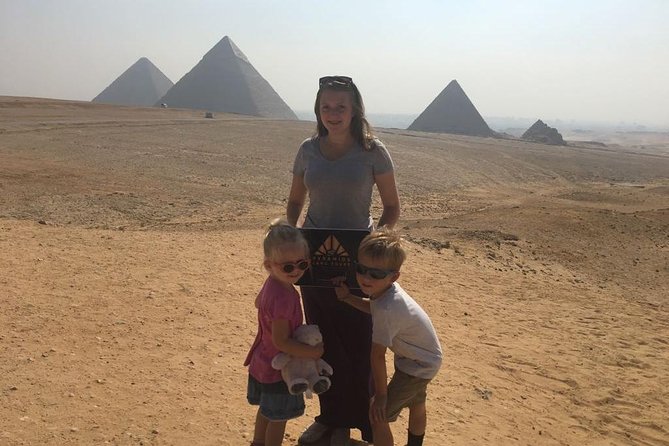
The boldest promise here is also the reason to book: in just two long days, you see all three major pyramid areas, then move from pharaonic Egypt to Islamic and Coptic Cairo. You ride a camel at Giza, descend into the Red Pyramid if you choose, and watch the pyramids glow during the evening Sound and Light Show.
I like the private format, since your guide can explain a tomb at your pace and adjust the day when possible. I also like having an Egyptologist with you for the Egyptian Museum, where a pile of ancient objects can otherwise become a blur of statues, coffins, and gold.
The tradeoff is simple: this is a packed schedule, not a slow holiday. Both days begin at 8 a.m. and cover a lot of ground, and Cairo traffic can make the road time tiring. The $299 price is fair for private transport, guiding, admissions, meals, a camel ride, and an evening show, but you still pay extra for certain interiors and drinks.
Key points to know before booking
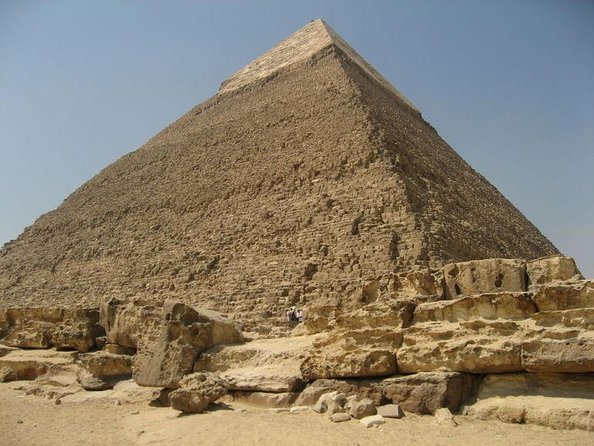
- Three pyramid zones in one day: Giza, Saqqara, and Dahshur give you a much broader view of Egyptian pyramid building than a Giza-only visit.
- Private Egyptologist guide: Your guide may be Michael, Nour, Rania Hussein, Mimo, Ahmed Abu Emirah, or another qualified guide, depending on the date.
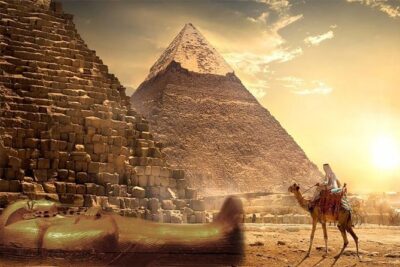
- A 30-minute camel ride: This is included on the Giza Plateau and gives you a classic, photo-friendly view of the pyramids.
- Two evenings or late-day experiences: The schedule includes dinner and the Giza Sound and Light Show, with the show lasting about an hour.
- A full Cairo circuit: The Egyptian Museum, Citadel, Coptic Cairo, and Khan el-Khalili cover several major sides of the city.
- Bring modest clothing and energy: Knees and shoulders must be covered at religious sites and selected museums, and the pace calls for moderate fitness.
Why this two-day plan works
Cairo can feel like several trips at once. The pyramids sit outside the central city, while the museum, Citadel, churches, synagogue, and bazaar each require time and road connections. A private minivan and one guide keep the trip organized, so you are not spending your limited time figuring out taxis, ticket counters, and directions.
The best feature is the sequence. Day one is devoted to the long story of pyramid construction, from the Step Pyramid at Saqqara to the Red and Bent Pyramids at Dahshur, ending with Giza after dark. Day two shifts toward Cairo itself, bringing in ancient objects, medieval fortifications, Christian landmarks, and traditional shopping streets.
This is especially useful if you have only a short stay in Cairo. You will be busy from morning into the evening, but you will not leave wondering what you missed outside Giza.
A few other Cairo days to weigh up
- White & Black Desert tour 2 Days 1 night camping from Cairo.
★ 5.0 · 649 reviews - Cairo: 2-Day Bahariya Oasis Camp and Desert Tour
★ 4.9 · 616 reviews - White & Black desert camping tour 2 Days 1 night From Cairo
★ 5.0 · 467 reviews
Day one: Giza, Saqqara, Dahshur, and the evening show
Giza: the famous pyramids and the Sphinx
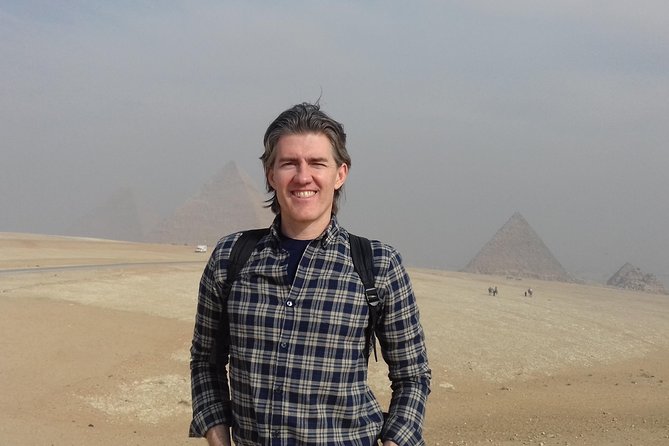
The day begins at the Giza Plateau, where you see the pyramids of Cheops, Chephren, and Mycerinus. This is the image most people carry of Egypt, but the setting is larger and more varied than a single postcard view. Your guide helps separate the three royal monuments and explains how the plateau functioned as a funerary complex.
The visit lasts about two hours and includes the Valley Temple of Chephren and the Sphinx. The Valley Temple gives you a close look at the massive stone construction connected with the pyramid complex, while the Sphinx provides the familiar combination of human face and lion body.
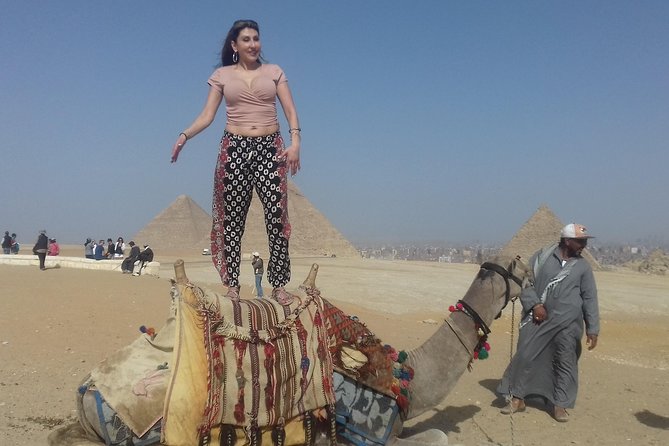
A 30-minute camel ride is included. It is less about a long ride across the desert than about seeing the plateau from a different angle and taking memorable photographs. If you are uncomfortable on a camel or have balance concerns, tell your guide before setting off. The tour requires a moderate level of fitness, and the heat, uneven ground, and steps can add up.
Interior entry to the Giza pyramids is not included. The same applies to the Solar Boat Museum. You can ask about these extras, but budget for separate admission if going inside matters to you. The exterior experience already gives you the main visual impact, while an interior visit adds a tighter, more physical encounter with the monument.
Saqqara: the Step Pyramid and decorated tombs
From Giza, the route continues to Saqqara for about an hour and a half. This is one of the most valuable stops because it shows an earlier stage in pyramid design. The Step Pyramid complex of Zoser is not simply a smaller version of Giza. Its stepped form marks an important change in royal burial architecture.
You also visit the Pyramid of Teti and the Tomb of Kagemni. The tomb provides a closer look at carved scenes and everyday life than the giant pyramids can offer. This is where a good Egyptologist matters most. Without context, the reliefs can look like a procession of familiar figures. With explanation, details such as food, farming, animals, and ritual become easier to read.
Saqqara also helps you understand that ancient Egypt was not built around three isolated pyramids. It was a broad funerary zone with temples, tombs, processional routes, and later additions. The stop is shorter than Giza, so stay focused and ask your guide which features deserve the most attention.
Same base, a completely different day out:
- Cairo: Pyramids & Great Sphinx Private Tour with Camel Ride
★ 4.9 · 6,335 reviews - Tour to Giza Pyramids and The Egyptian Museum
★ 5.0 · 6,016 reviews - VIP All inclusive Best of the best Giza Pyramids,Sakkara,Memphis
★ 5.0 · 3,164 reviews - From Cairo: Pyramids of Giza, Sphinx, Saqqara & Memphis Tour
★ 4.7 · 3,110 reviews
Dahshur: the Red Pyramid and Bent Pyramid
Dahshur adds about an hour to the pyramid story. You see the Red Pyramid and the Bent Pyramid, two monuments that show experimentation in the design of smooth-sided pyramids.
The Bent Pyramid is especially interesting because its angle changes partway up. It looks almost as if the builders corrected the plan while construction was under way. The Red Pyramid is a more finished-looking example, and you may have the option to descend inside it for an additional physical challenge.
One particularly memorable detail from the experience is the steep descent into the Red Pyramid, involving roughly 140 ramp steps. You should not treat this as a casual stroll. The passage can feel cramped and demanding, especially after a full morning at Giza and Saqqara. If you have knee, back, breathing, or claustrophobia concerns, ask your guide about the conditions before paying for extra interior access.
Dahshur is worth keeping in the schedule because it takes you beyond the most crowded and familiar pyramid stop. You see how royal architecture developed, rather than viewing the Giza pyramids as a finished story.
The Giza Sound and Light Show
The first day ends with the one-hour Sound and Light Egypt show at Giza. The pyramids and Sphinx are lit while recorded narration presents the ancient story in a theatrical format.
This is not the same as standing quietly beside a monument at sunset. It is staged, dramatic, and designed for atmosphere. I would treat it as an evening add-on rather than a substitute for your daytime guide. The show gives you a different way to see the plateau, and it is a welcome change after a day of walking and driving.
Dinner is included, though the supplied details do not specify the restaurant or exact menu. If you have vegetarian needs or another dietary requirement, provide that information when booking. Drinks are not included, so keep money available for beverages.
Day two: the museum and Cairo’s old quarters
The Egyptian Museum: allow two hours for the essentials
Day two begins with about two hours at the Museum of Egyptian Antiquities. The collection contains hundreds of thousands of ancient Egyptian objects, so the main challenge is not finding something to see. It is deciding what deserves your attention.
Your guide can give the museum a clear shape. You may focus on royal sculpture, coffins, jewelry, funerary objects, and the famous treasures associated with Tutankhamun. The Royal Mummy Room requires an extra entrance fee, so decide in advance if that is important to you.
Two hours is enough for a guided introduction, but not enough to inspect every gallery. That is a strength rather than a flaw on a two-day schedule. You get a useful framework without losing the entire day indoors. If you have a special interest in one period or collection, tell your guide early so the visit can reflect it.
The museum can be visually overwhelming. I appreciate guides who pause to explain why a particular object matters instead of rushing from one famous name to the next. Several people praised guides such as Nour, Michael, Rania Hussein, and Mimo for explaining archaeology and culture in a way that was easier to remember.
Cairo Citadel: a high point over the city
The Cairo Citadel visit lasts about an hour and introduces a major Islamic-era site dating back to the 13th century. The elevated position gives you broad views across Cairo, while the fortifications and religious buildings show how the city was defended and governed in later centuries.
You should wear clothing suitable for religious places. Knees and shoulders must be covered for both men and women, and sleeveless tops and shorts can lead to refused entry at selected sites. Smart casual clothing is the safest choice for the entire two-day plan.
The Citadel is a useful counterpoint to the pyramids. Instead of royal tombs built in the desert, you see a fortified center tied to the later city. Your guide can help connect the site to Cairo’s changing political and religious life.
Coptic Cairo: churches and a synagogue
The Coptic Cairo stop lasts about an hour and includes old churches and a synagogue. This part of the program is valuable because it widens the story of Egypt beyond pharaohs and pyramids.
You move through a part of Cairo shaped by Christian communities and later religious traditions. The buildings are more intimate than the pyramid fields, and their interiors call for respectful behavior. Keep your shoulders and knees covered, speak quietly, and follow any site-specific rules.
The visit is brief, so do not expect a detailed study of every church. Instead, use the hour to understand the religious layers of the city. This stop works best when your guide explains what you are looking at before you enter, rather than offering only a quick name and date.
Khan el-Khalili: shopping with a little strategy
The final listed stop is Khan el-Khalili, described as a large traditional market. You have about an hour to browse, shop, and take in the narrow lanes and storefronts.
This is a place for atmosphere as much as purchases. You will find opportunities to bargain, but do not feel pressured to buy simply because a shop is part of the route. One practical lesson from the experience is to handle purchases yourself, confirm the price clearly, and ask for a receipt. That advice applies especially to services or electronics, where confusion over the final cost can spoil an otherwise good day.
Your guide may know local shops or less expensive places to look. You should still make your own decision and keep the exchange simple. If you want time for a serious shopping session, tell the guide early, since one hour passes quickly.
What the private guide and driver add
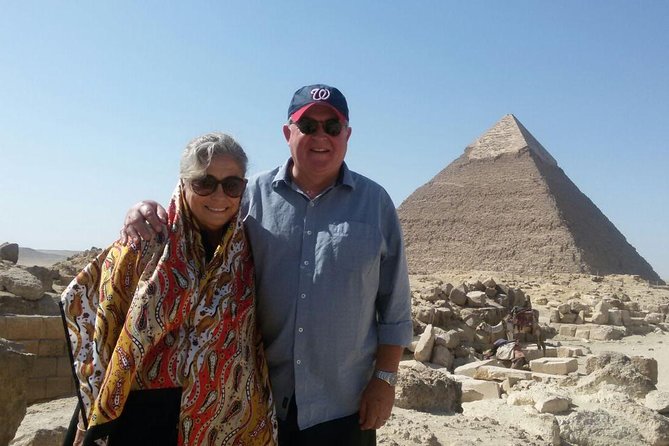
A private tour gives you your own Egyptologist and air-conditioned minivan rather than placing you with a large mixed group. That matters in Cairo, where road conditions and traffic can make a fixed public itinerary hard to manage.
The driver is a separate part of the experience. Names noted for different departures include Sam, Amr, Emad, Adel, Hassan, Mohammed, and Mohamed. You cannot assume a particular person will be assigned, but the format gives you a driver focused on your group while the guide handles explanations and site visits.
Cairo traffic is intense. Cars may not follow lane markings, and signaling can be inconsistent. A skilled local driver reduces the stress, but you should still expect road time and avoid treating the schedule as exact to the minute.
The guide quality is the biggest variable in any history-based tour, yet the named guides associated with this experience include university-trained Egyptologists and guides praised for their archaeology, culture, tipping, bargaining, and practical bathroom advice. I would tell your guide what level of detail you want. One useful suggestion from the experience is to ask for context before arriving at a major site, since the ancient world can feel like too much information all at once.
Is $299 a good value?
At $299 per person, the price is strong if you want a private two-day introduction and plan to use most of the included features. You receive hotel pickup and drop-off, air-conditioned transport, a qualified Egyptologist, admission to the listed sites, two lunches, dinner, the camel ride, and the Sound and Light Show.
Buying each part separately could take more planning and might not provide the same private vehicle or connected route. The value is greatest for solo visitors, couples, families, and small groups who want efficient sightseeing without joining strangers.
The phrase all inclusive needs a little caution. Interior access to the Giza pyramids, the Solar Boat Museum, and the Royal Mummy Room costs extra. Drinks are also excluded. Ask about any optional entry before you arrive, and carry some Egyptian currency for refreshments, tips, and market purchases.
Group discounts may be available, and children must be accompanied by an adult. The tour offers hotel pickup, but the supplied information does not name a specific pickup radius, so confirm your hotel details at booking.
Who should book this Cairo tour?
I would choose this tour if you have only two days and want both the headline monuments and a useful introduction to Cairo’s later religious and political history. It is also a good fit if you prefer asking questions privately, want help with bargaining and local customs, or feel uneasy arranging several long drives on your own.
It suits people with moderate fitness who can handle walking, uneven surfaces, heat, and a full schedule. Families can benefit from the private setup, since the guide can adjust explanations and breaks more easily than a large group tour.
I would hesitate if you want long museum sessions, unhurried meals, or extended time at each pyramid. The itinerary is intentionally packed. It gives you range, not a leisurely study of one site.
Final call: book it for range, not relaxation
Book this private tour if your goal is to see the major pyramids, ride a camel, visit Cairo’s key historic districts, and add an evening show without wasting time on local planning. The Egyptologist guide and dedicated driver are the main reasons the $299 cost makes sense.
Skip it if you have several spare days and would rather split the sights into slower visits. For a short first stay, though, this is a smart, energetic way to connect Saqqara, Dahshur, Giza, the museum, the Citadel, Coptic Cairo, and Khan el-Khalili in one clearly planned trip.
Free cancellation is available up to 24 hours before the start time. Changes or cancellations made later are not accepted for a refund.
FAQ
How long is the tour?
The experience lasts approximately two days. Both days start at 8 a.m., and the first day continues into the evening for the Sound and Light Show.
Is hotel pickup included?
Yes. Hotel pickup and drop-off are included by air-conditioned minivan.
Is this a private tour?
Yes. Only your group participates in the private activity.
Is an Egyptologist guide included?
Yes. A qualified Egyptologist guide is included. Guides named for different departures include Michael, Nour, Rania Hussein, Mimo, Ahmed Abu Emirah, and others.
Which pyramid areas are included?
The tour visits the Pyramids of Giza, Saqqara, and Dahshur. At Giza, you see the pyramids of Cheops, Chephren, and Mycerinus, along with the Sphinx and Valley Temple of Chephren.
Is the camel ride included?
Yes. A 30-minute camel ride on the Giza Plateau is included.
Is the Sound and Light Show included?
Yes. Admission to the one-hour Sound and Light Egypt show at Giza is included.
Are meals included?
Two lunches and dinner are included. Drinks are not included. Vegetarian meals are available if requested when booking.
Do extra entrance fees apply?
Yes. Interior entry to the Giza pyramids, the Solar Boat Museum, and the Royal Mummy Room are not included.
What clothing should I wear?
Smart casual clothing is advised. Knees and shoulders must be covered for men and women at places of worship and selected museums. Shorts and sleeveless tops may result in refused entry.
New on the Cairo list
- Half Day tour to National Museum of Egyptian Civilization★ 4.0 · 25 reviews
- Private Luxor Day tour from Cairo by Flight★ 5.0 · 25 reviews
- Private Giza Pyramids & Sakkara Tour with Camel Ride & Lunch★ 5.0 · 25 reviews
- VIP 4Hour Islamic Cairo Private Tour Al Azhar and Khan Al Khalili★ 4.5 · 25 reviews
- Private full day tour to Giza Pyramids, Sphinx, Sakkara and Dahshour with guided★ 5.0 · 25 reviews
- 4 Days Nile Cruise luxor.Aswan.abu simbel with Train Tickets from Cairo★ 4.5 · 26 reviews
- Giza Pyramids, Camel Ride, ATV Bike, Sobbing tour, Dinner Cruise★ 5.0 · 26 reviews
- Wonderful Full Day Egyptian Museum and Great Pyramid★ 5.0 · 26 reviews
Cairo Tours, compared.
Pyramids & Great Sphinx Private Tour with Camel Ride
Read our review →
Tour to Giza Pyramids and The Egyptian Museum
Read our review →
VIP All inclusive Best of the best Giza Pyramids,Sakkara,Memphis
Read our review →
Pyramids of Giza, Sphinx, Saqqara & Memphis Tour
Read our review →
Cairo 8 Hour Private Tour of Pyramids, Egyptian Museum and Bazaar
Read our review →
Half-Day Tour to Pyramids of Giza and the Sphinx
Read our review →
Private ViP all-inclusive Giza Pyramids,Sphinx,Inside Pyramid
Read our review →Browse the lists this tour appears in