
Reviewed · NILE CRUISES
Luxor to Aswan: 5-Day Private Nile Journey
The best thing about this five-day Nile journey is its steady rhythm: ancient temples by day, a moving river view between stops, and a comfortable boat as your base. You see Luxor’s grandest monuments, the painted tombs of the pharaohs, and the temples farther south without repacking every morning.
I like the small maximum group of eight and the chance of having a private guide, especially guides such as John, Mena, or Michael, who are praised for clear explanations and careful timing. I also like that four nights, meals, transfers, guiding, and listed entrance fees are bundled into the price.
The main caution is that this is an active sightseeing trip, not simply a lazy cruise. Early starts, hot stone courtyards, extra charges for Tutankhamun’s tomb and Abu Simbel, and a few uneven service details onboard can affect the experience.
Key points to know before booking
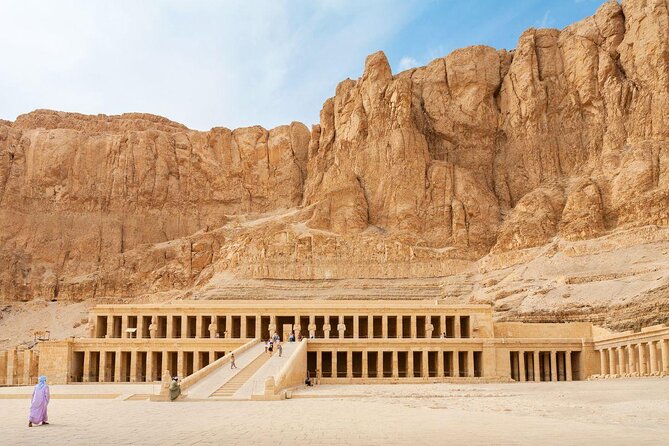
- Luxor gives you two full sides of ancient Egypt: Karnak and Luxor temples on the East Bank, then Hatshepsut, the Colossi of Memnon, and the Valley of the Kings on the West Bank.
- A guide makes a real difference: John, Mena, and Michael are repeatedly praised for patient explanations, useful timing, and personal attention.
- Four nights onboard simplify the route: Your room, meals, and transport between major sites are handled in one package.
- Edfu and Kom Ombo break up the cruise well: One offers an exceptionally preserved temple, while the other combines two gods and a display of mummified crocodiles.
- Aswan includes more than a boat view: You visit Philae, the Unfinished Obelisk, the High Dam area, and take a felucca ride at sunset.
- Abu Simbel is worthwhile but demanding: The optional trip takes about three and a half hours each way by road and costs extra.
Why this Luxor to Aswan route works
A Nile cruise is useful because it joins Egypt’s major southern sights in a sensible line. You begin among the huge temples of Luxor, then move south toward Aswan while your hotel room travels with you.
At $1,000 per person, the package is not a bare-bones sightseeing deal. It includes four nights on a standard 5-star cruise, breakfast, lunch, and dinner each day, local guides, transfers in an air-conditioned vehicle, and entry fees for the listed sites. That makes the price easier to judge, especially if you would otherwise arrange several hotels, drivers, meals, and day tours yourself.
The word standard matters. This is presented as a 5-star cruise, but the boat experience may not feel identical on every departure. One account praises the Princess Sarah, spacious clean rooms, good food, and helpful service. Another describes the boat as less impressive than expected. I would confirm the exact vessel, cabin category, sailing dates, and what 5-star means for that departure before paying.
The small group limit is one of the strongest features. A group of no more than eight is far easier to manage at a temple than a full coachload. The guide can usually keep explanations focused, find shade when needed, and adjust the pace to the group. Several bookings have included a personal guide, though you should confirm whether your reservation is fully private or a small shared group.
More Nile cruises around Luxor:
- From Luxor: 3-Night Nile Cruise to Aswan and Hot Air Balloon
★ 3.7 · 297 reviews - Amazing Sunset sailing by Felucca in Luxor -2 Hours (Private)
★ 5.0 · 255 reviews - 5 Days Private Guided Nile River Cruise Tour from Luxor to Aswan
★ 5.0 · 229 reviews
Day 1: Karnak and Luxor temples set the scale
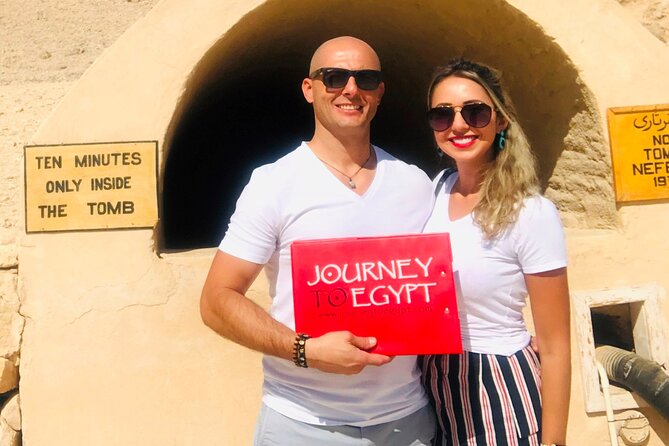
Your journey begins with pickup at Luxor Airport. A Journey to Egypt guide meets you at the exit door with a sign bearing your name, then takes you to the East Bank.
Karnak is the major event. This is not one tidy temple but a vast complex shaped by generations of pharaohs. The Great Hypostyle Hall is the visual knockout, with rows of enormous columns rising roughly 80 feet. Walk slowly here. The scale is hard to grasp from photographs, and your guide can point out how rulers added their own names and images to an older sacred site.
The plan then moves to Luxor Temple. Look for the statues of Ramses II at the front pylons, the courtyard named for him, and the tall colonnade linked with Amenhotep III. Karnak feels sprawling and layered. Luxor Temple feels more concentrated, with a strong processional axis that is easier to understand in one visit.
The listed sightseeing time is about three hours, but the day also includes airport arrival, transfers, and cruise check-in. Do not expect a leisurely morning after an early flight. Wear shoes suited to stone paving, carry water, and keep some energy for the next day, which is another major archaeological outing.
The supplied schedule marks admission as not included in the individual stop descriptions, while the package details say entrance fees for all mentioned sites are included. Treat the package inclusion as the controlling detail, but confirm this before departure so there is no confusion at the ticket booth.
Day 2: The West Bank, Hatshepsut, and the Valley of the Kings
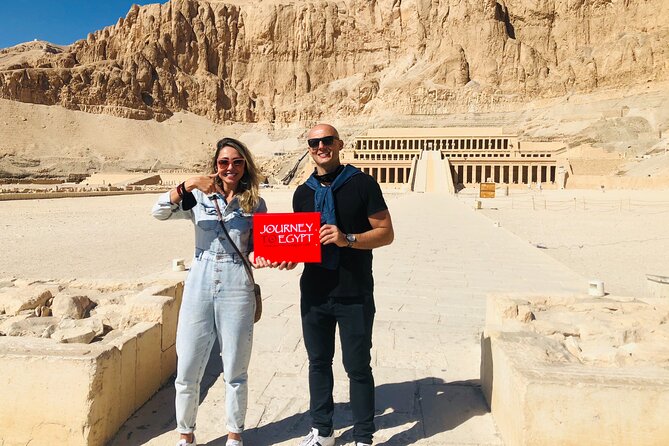
Day two crosses the Nile to the West Bank, the ancient burial zone of Thebes. The first stop is the Colossi of Memnon, two huge seated figures that once guarded a temple complex. They are a quick stop, but they help you see how monumental the royal funerary sites once were.
The Temple of Hatshepsut is more architectural than ornamental. Its terraces climb against the cliffs, and its story is unusually compelling. Hatshepsut ruled as pharaoh and presented herself with the symbols of kingship, including the traditional royal image. Your guide’s explanation is especially useful here because the surviving structure can otherwise feel like a series of platforms and columns without a clear story.
Then comes the Valley of the Kings. For about 500 years, from the 16th century BC, pharaohs and nobles had tombs cut into this dry valley. The tombs were meant to protect royal burials, though many were robbed in antiquity. The painted chambers that remain show a different side of Egyptian art from the enormous temples: intimate, symbolic, and built for the afterlife.
Your standard ticket allows entry to selected tombs, but Tutankhamun’s tomb requires an extra ticket on the spot. That is worth planning for rather than treating it as an automatic inclusion. The tomb is small compared with the grander royal chambers, but its importance comes from the discovery of the young king’s burial by Howard Carter in 1922.
The excursion takes about four hours, and the heat can be tiring. I would avoid trying to see every tomb at top speed. Ask your guide which open tombs best suit your interests, then take time with the paintings. The value of a good guide is clear here: without context, the Valley can become a hot sequence of doorways; with context, each chamber has a purpose.
Day 3: Edfu and Kom Ombo between stretches of river
The third day shifts from Luxor’s royal monuments to two temples built or completed under later rulers. At Edfu, you visit the Temple of Horus, the falcon-headed sky god. Built in the Ptolemaic period, beginning in 237 BC under Ptolemy III, it is among Egypt’s best-preserved temples.
Edfu is valuable because so much of the structure survives. You can study the entrance, courts, columns, reliefs, and sacred spaces with a clearer sense of how a temple operated. The colorful details and intact walls make this stop easier to picture than many more damaged sites.
After returning onboard, the cruise continues to Kom Ombo. The temple here is unusual because it honors two deities: Haroeris, associated with the sun and the sky, and Sobek, the crocodile god. The double dedication gives the plan a distinctive symmetry, and your guide can explain how separate sacred functions were linked within one complex.
The crocodile mummies are the memorable oddity. Ancient Egyptians associated crocodiles with Sobek, and the preserved remains connect the temple to the Nile environment just outside its walls. You may find the display a little macabre, but it adds a human and practical dimension to the visit.
The listed sightseeing time is about two hours, with breakfast, lunch, and dinner included onboard. This is one of the most pleasant days for pacing. You get two strong temple visits without the packed sequence of Luxor, followed by time to watch the river from the boat.
A few other Luxor days to weigh up
- From Luxor: 5-Day Nile Cruise to Aswan with Balloon Ride
★ 4.2 · 168 reviews - Luxury 5 Days Nile River Cruise from Luxor to Aswan with Private Tour Guide
★ 5.0 · 114 reviews - From Luxor: 5 Days 4 Nights Nile Cruise to Aswan
★ 4.5 · 108 reviews - Nile cruise 5 days Private full board accommodation transferred guided tours
★ 4.0 · 104 reviews
Day 4: Philae, the Unfinished Obelisk, and a felucca sunset

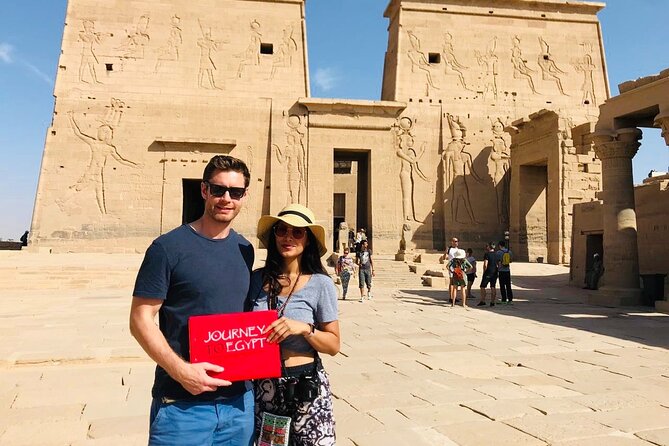
Aswan’s sights have a different mood. Philae Temple sits on Agilika Island and is reached by motorized boat. The complex was dedicated to Isis and contains Egyptian, Greek, and Roman elements, so it reflects the long life of the sacred site rather than one single period.
Philae’s modern story is nearly as striking as its ancient one. When the Aswan High Dam threatened to flood the original island, the temple was dismantled and reassembled on Agilika. That work explains why the setting feels carefully arranged and why the boat ride is part of the experience rather than a simple transfer.
You then visit the granite quarries and the Unfinished Obelisk. This enormous piece of stone was abandoned before it could be separated from the bedrock. The cracks make the risks of ancient stonework easy to understand, and its scale helps explain why finished obelisks were such demanding projects.
The day ends with a felucca ride around the Aswan islands and a scenic sundowner. This is a good counterweight to the formal temple visits. A felucca is a traditional sailing boat, but the schedule describes this as a local-style ride, so do not expect a long open-water sailing expedition. Think of it as a short, atmospheric outing near Aswan.
The High Dam is included in the overall route description, but the day’s listed activities specifically name Philae, the Unfinished Obelisk, and the felucca ride. Confirm how the dam visit is timed on your departure. The sightseeing portion is listed at about three hours, with all three meals onboard.
Day 5: Decide if Abu Simbel fits your final morning
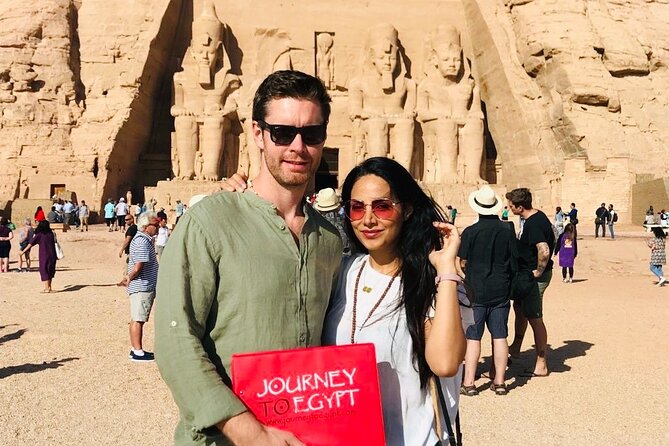
The optional Abu Simbel excursion is the biggest choice on the final day. The twin temples of Ramses II and Queen Nefertari are famous for their monumental façades, including four statues of Ramses II that rise about 70 feet.
The temples also share the relocation story seen at Philae. They were dismantled and moved to protect them from the reservoir created by the Aswan High Dam. That practical detail makes the site more than a grand photo stop. You are seeing both ancient ambition and a major modern rescue project.
The drive takes about three and a half hours each way. That means roughly seven hours on the road before time at the temples, so Abu Simbel is not a casual add-on. If these temples are a personal priority, the long transfer may be a fair trade. If you prefer a slower final morning in Aswan, skip it and keep the day less demanding.
Abu Simbel costs extra, and the tour price includes breakfast on day five. The itinerary then provides a transfer to Aswan Airport. Confirm the departure time of your flight before adding the excursion. The supplied details do not state a flight schedule, and a long road trip plus airport transfer needs careful timing.
The guide can shape the whole experience

The strongest pattern in the feedback is the guide’s role. John is praised for detailed historical explanations, patience, and good timing. Mena is described as attentive and flexible, with a knack for handling practical details. Michael is praised for being prepared, accommodating, and helpful throughout the cruise.
That matters in Egypt. The sites are impressive, but they are not always easy to read on your own. A guide can explain why a temple has two sanctuaries, point out a royal alteration, or help you choose which tombs deserve your limited time.
You should still ask questions and state your pace clearly. If you want more time for photographs, say so. If heat is wearing you down, ask for shade and a slower route. The small group format gives you a better chance of being heard than a large bus tour.
One unusually useful detail is that a guide reportedly carried small bills for restroom visits. That is the sort of minor help that reduces friction during long sightseeing days. It is not a promised feature, but it shows why practical support can matter as much as formal history lessons.
Food, cabins, and life onboard
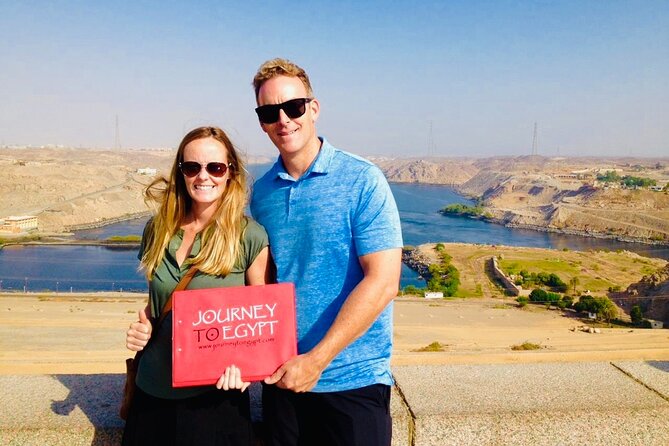
All four breakfasts, lunches, and dinners are included. One account describes the food as excellent, with clean and spacious rooms and reasonable drink prices. Drinks are not included, so budget separately for beverages and remember that bar service can vary.
The roof deck is likely to be the social heart of the boat, with a pool area and river views. One point to watch is bar staffing: the pool deck bar may not always be staffed, and cocktail service may be limited. That will matter more to you if onboard drinks are a major part of the holiday than if you mainly want a place to sit between temple visits.
The cruise provides welcome downtime. After a hot excursion, you can return to the same cabin, eat onboard, and watch the riverbanks pass instead of dealing with another hotel check-in. Still, this is a sightseeing cruise with scheduled shore trips, not a resort stay. The boat standard and cabin quality should be confirmed in writing.
What the $1,000 price really covers
The $1,000 per person price covers a lot of moving parts: airport meet-and-assist service, local guides, transfers, four nights onboard, full-board meals, and the listed Nile excursions. Entry fees for the mentioned sites are also stated as included.
You still pay for domestic flights, drinks, tipping for the cruise crew, guides, and drivers, Tutankhamun’s tomb, and the optional Abu Simbel trip. Those extras can change the final cost, so make a simple allowance before booking.
The value is strongest if you want a guided route with little day-to-day planning. It is less compelling if you already have accommodation in Luxor and Aswan, prefer independent sightseeing, or want to select a luxury boat by exact specification.
Who should book this Nile cruise?
I would recommend it for a first visit to southern Egypt, especially if you want the major sites arranged in a sensible order. It suits couples, families, solo visitors, and small groups who value a guide and want meals and lodging handled together.
Families may appreciate the private transport and small group limit, though the heat, long walks, and Abu Simbel road trip require realistic pacing. Solo visitors may also find the airport pickup and guide support reassuring.
I would be more cautious if you want a quiet luxury cruise above all else. The strongest part of the trip is the sightseeing and personal guidance, while boat service can vary. Ask for the ship name, cabin details, group arrangement, and all extra fees before you commit.
Free cancellation is available when you cancel at least 24 hours before the start time. Changes or cancellations inside that window are not accepted for a refund.
FAQ
Where does the Nile journey begin?
The tour begins in Luxor, Egypt. Pickup is offered from Luxor Airport, where a guide meets you at the exit door with a sign bearing your name.
Where does the cruise end?
The journey ends in Aswan. The final itinerary includes a transfer to Aswan Airport.
How many nights are spent onboard?
Accommodation for four nights is included onboard a standard 5-star Nile cruise on a full-board basis.
Are meals included?
Yes. Breakfast, lunch, and dinner are included for the four cruise days. Breakfast is included on the fifth day.
Are entrance fees included?
Entrance fees to the sites named in the package are included. Tutankhamun’s tomb requires an additional ticket purchased on the spot, and Abu Simbel costs extra.
Is Abu Simbel included?
No. Abu Simbel is an optional excursion for an additional fee. The road journey takes about three and a half hours each way.
How large is the group?
The activity has a maximum of eight participants. Some bookings may include a private guide, so confirm the exact arrangement when booking.
Should you book it?
Book this journey if you want Egypt’s key Nile Valley sights covered with a guide, a fixed base on the boat, and most major costs bundled together. The excellent route, small group limit, and guides such as John, Mena, and Michael are the main reasons to choose it.
Before paying, confirm the exact cruise ship, cabin standard, private versus shared guiding, and the cost and timing of Abu Simbel. If those details suit you, this is a practical way to connect Luxor and Aswan without spending your holiday arranging every transfer yourself.
New on the Luxor list
- Full-Day East and West Luxor Private Tour★ 4.5 · 26 reviews
- Marsa Alam: Snorkeling with Sea Turtles Marsa Mubarak★ 4.9 · 26 reviews
- Private Full day East and West Bank, Luxor★ 5.0 · 26 reviews
- Day Trip to Edfu & Kom Ombo temples from Luxor and drop off in Aswan or Luxor★ 5.0 · 26 reviews
- Luxor Day Tour: Kings Valley & Karnak & Luxor & Hatshepsut Temple★ 5.0 · 26 reviews
- Luxury Hot Air Balloon Experience in Luxor with Pick-up★ 5.0 · 27 reviews
- Full-Day Luxor Tour – Discover the East and West Banks of the Nile★ 5.0 · 27 reviews
- 5 Days 4 Nights Nile Cruise Tour★ 5.0 · 27 reviews
Nile Cruises, compared.
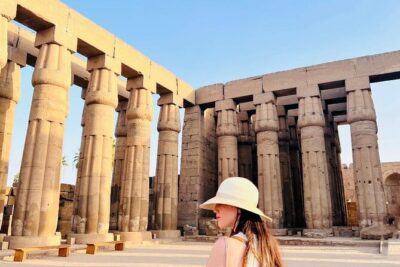
4-Days Nile Cruise From Aswan To Luxor including Abu Simbel and Hot Air Balloon
Read our review →
Sakkara, Memphis & Dahshur (Pyramid & Felucca Options)
Read our review →
4-Day 3-Night Nile Cruise from Aswan to Luxor including Abu Simbel, Air Balloon
Read our review →
4-Day Nile Cruise from Aswan to Luxor with Guide
Read our review →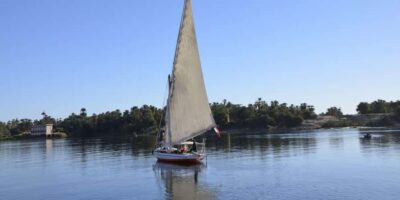
4-Days Nile Cruise From Aswan To Luxor including Abu Simbel and Hot Air Balloon
Read our review →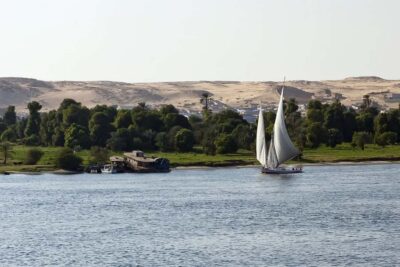
1 or 2-Hour Felucca Ride on the Nile with Transfers
Read our review →Browse the lists this tour appears in