
Reviewed · CAIRO TOURS
From Cairo: 8-Day Tour of Cairo, Luxor and Aswan with Cruise
Egypt’s greatest sights come in one tightly packed run here: the Pyramids of Giza, Karnak, the Valley of the Kings, Abu Simbel, and a four-night Nile cruise. The tour handles the awkward pieces, including domestic flights, airport transfers, guides, meals, and hotel changes, so you can focus on the monuments rather than bargaining for every taxi.
I like the mix of private touring in Cairo and the slower rhythm of a river cruise. I also like that the price includes the hot-air balloon over Luxor, felucca rides, all entrance fees, and flights. The trade-off is a busy schedule, early starts, uncertain hotel details until shortly before arrival, and some unevenness in vehicles, food, and guiding.
Key points to know before booking
- The route covers Egypt’s big three areas: Cairo, Luxor, and Aswan, with four nights on a Nile cruise between Luxor and Aswan.
- Abu Simbel requires another early morning: The excursion is made with a group, even though much of the rest of the tour is private.
- The balloon ride is included: You leave before breakfast, so ask the hotel reception for a breakfast box.
- Nearly every major cost is bundled: Flights, hotels, cruise, meals, guides, transport, and entrance fees are included.
- The schedule is active: Expect long touring days, early departures, and several transfers.
- Coordinator Marena is a useful contact: Her prompt replies and practical help were singled out in the feedback.
The big picture: eight days, three cities, one busy route
This is a strong first visit to Egypt if you want the headline sights without arranging each train, flight, guide, and transfer yourself. You begin with three nights in Cairo, fly south to Luxor, spend four nights moving along the Nile to Aswan, then fly back to Cairo on the final day.
The advertised price is $1,200 per person. That is a meaningful amount, but it covers far more than sightseeing. You receive three nights in a 5-star Cairo hotel, four nights aboard a 5-star Nile cruise, two domestic flights, private car or van transport, guides, entrance fees, and three meals each day.
That bundle can be good value, especially in Egypt, where arranging a reliable car, a licensed guide, site tickets, and airport transfers separately takes time and care. You are also paying for coordination. Someone meets you at airports, moves you between hotels and boats, and keeps the route moving.
The price does not include drinks, tips, or a guide in Spanish, German, or French. English-language guiding is the practical assumption unless you arrange another language and pay extra.
More Boat Tours in Cairo
- Cairo: Dinner Cruise on the Nile River with Entertainment
★ 4.2 · 2,190 reviews - Cairo: Nile Sunset Dinner Cruise, Show & Optional Transfer
★ 4.1 · 2,184 reviews - Cairo: Nile Dinner Cruise with Belly Dancer Show with Pickup
★ 4.4 · 835 reviews
Day 1: Cairo arrival followed by a Nile dinner
Your arrival begins with a pickup outside the airport exit hall. Look for the Nice Tours sign, then go directly to a restaurant for a traditional Egyptian lunch before checking into your Cairo hotel.
The evening adds a dinner cruise on the Nile. As the boat moves, you get dinner, folklore entertainment, and traditional shows. This is more of a lively welcome than a serious cultural performance, but it gives you an easy first taste of Cairo after the flight.
The first day is listed at about eight hours, though much depends on your arrival time and airport formalities. If you land late, the day may feel compressed. Still, having lunch, a hotel transfer, and evening plans arranged removes the usual arrival-day fuss.
Day 2: Giza, Memphis, and Saqqara
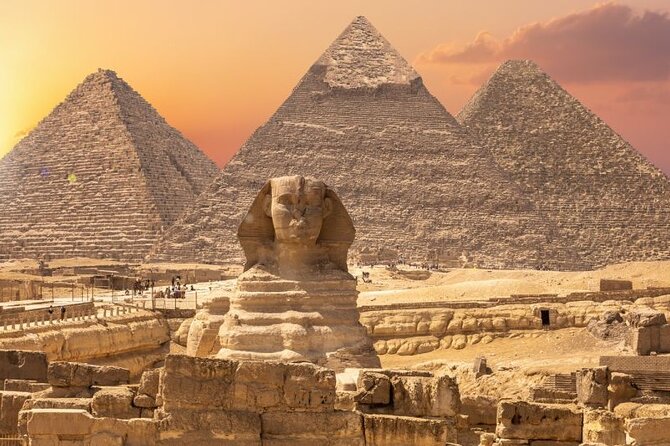
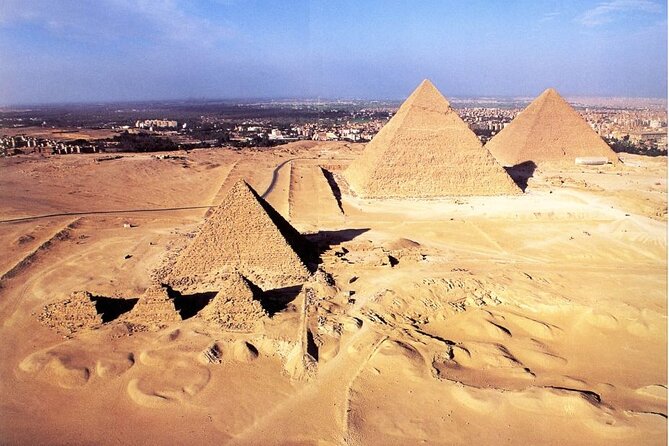
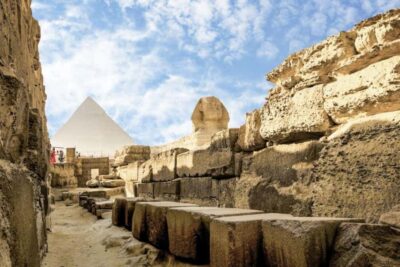
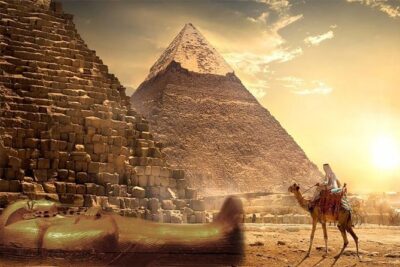
The main Cairo sightseeing day begins with the Pyramids of Giza and the Sphinx. Your private guide leads the visit, explaining the purpose and age of the monuments while you see the Great Pyramid, the other pyramids, and the Sphinx in one area.
The Great Pyramid is the only surviving member of the Seven Wonders of the ancient world. That fact is worth remembering when the site feels crowded or commercial around the edges. The scale is the point. No photograph quite prepares you for the size of the stonework.
The day continues to Memphis, once a major center of Egyptian power and worship. It is not as visually overwhelming as Giza, but it helps you place the pyramids within a larger story of royal cities, temples, and religious life.
At Saqqara, the Step Pyramid of Djoser gives you a different stage in pyramid building. This open-air archaeological area has more variety than Giza, including other Old Kingdom tombs and monuments. A guide matters here because many of the details are easy to miss without context.
Lunch comes during the day, followed by a return to the hotel for dinner and overnight accommodation. The full eight-hour schedule can feel demanding, especially in the heat. Bring water, a hat, and shoes that handle uneven ground.
Day 3: Cairo’s Islamic and Coptic quarters
Day three is split between Islamic Cairo and Coptic Cairo. The morning starts at the Citadel, built by Saladin in 1176 and used as a center of government during the Ayyubid era.
The Muhammad Ali Mosque, often called the Alabaster Mosque, is the visual highlight. Its large interior, decorated surfaces, Arabic inscriptions, gold details, and mihrab offer a very different experience from the ancient monuments. From the Citadel area, you also get a broad view across Cairo.
The Coptic section includes Saint George Church and the Hanging Church. Saint George is unusual for its round form and its position above an ancient Roman tower. The Hanging Church is known for its basilica design and collection of 110 icons, many made from ebony, with some decorated with ivory.
This part of the tour gives you a welcome change from pharaohs and royal tombs. It shows how several religious traditions shaped Cairo over time. Lunch at a local restaurant breaks up the day, and you return to the hotel for dinner and rest.
The listed timing is about five hours for the Citadel and three hours for Coptic Cairo. That split is useful because it avoids making the entire day one long march through monuments. Even so, you will want a quiet evening afterward.
More boat trips around Cairo:
- Giza pyramids, Sphinx, ATV bike, Lunch,Camel ride, Dinner cruise& shopping tour
★ 5.0 · 798 reviews - Cairo: Dinner Cruise on the Nile River
★ 4.2 · 741 reviews - 2-Hour Nile River Dinner Cruise From Cairo
★ 4.5 · 672 reviews - Giza Pyramids,Sphinx,Camel Ride,ATV Bike,Shopping, Dinner cruise
★ 5.0 · 479 reviews
Day 4: Flying to Luxor and boarding the Nile cruise
After breakfast, a representative takes you to the airport for the flight from Cairo to Luxor. On arrival, your guide meets you outside the exit hall and begins the Luxor program.
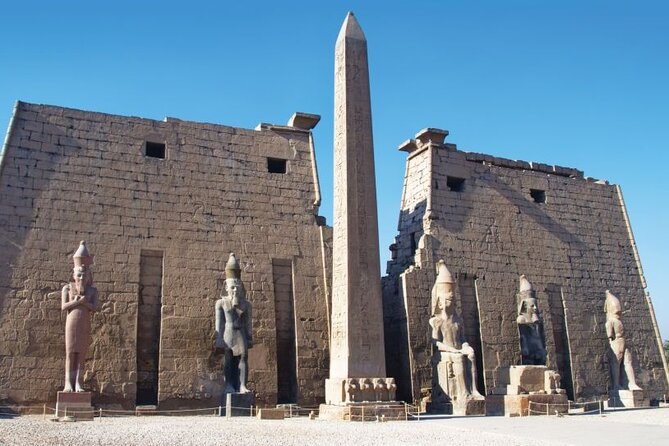
The eastern bank starts with Karnak Temple, a huge complex built and expanded by generations of ancient rulers over roughly 1,500 years. Its scale is hard to grasp from a single viewpoint. Give yourself time to notice the columns, courtyards, inscriptions, and the way each section reflects a different period.
You then visit Luxor Temple, smaller than Karnak but more compact and easier to read as a ceremonial space. The preserved statues and hieroglyphs help explain its role in the annual Opet celebrations.
Around lunchtime, you board the cruise. Later, a one-hour felucca ride offers a smaller, quieter boat experience on the Nile before you return to the cruise ship for the night.
This is a full transition day, with a flight, two major temple visits, a boat check-in, and the felucca outing. The cruise simplifies your next four nights, but you should expect some luggage handling and waiting as the group moves from airport to sites to ship.
Day 5: A hot-air balloon over Luxor
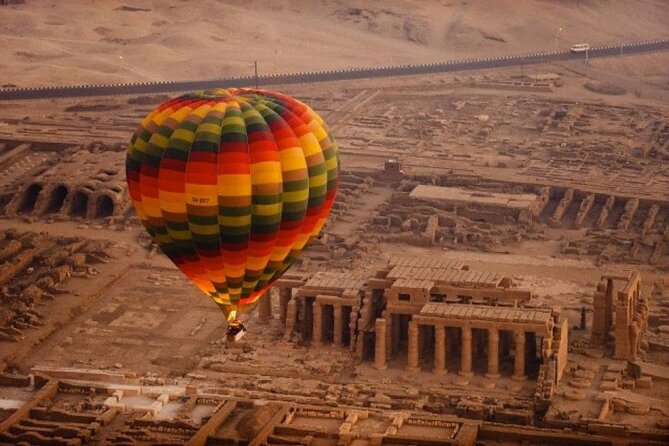
The hot-air balloon ride begins early. You should ask reception for a breakfast box because you leave before the regular hotel or ship breakfast schedule.
From above, you can see the Nile dividing Luxor’s east and west banks, with temples, farmland, and modern streets arranged around it. The ride is included in the tour price, which makes it one of the more useful extras in the package. It changes your view of Luxor from ground-level monument hopping to a broad look at how the city fits together.
After landing, your guide takes you to the west bank. The Valley of the Kings is a rocky gorge that hides painted and carved tombs below the surface. The number of open tombs can vary, and entrance arrangements are not detailed here, so ask your guide which tombs are covered by the included fees.
The Temple of Hatshepsut follows. Its terraces and wall scenes tell the story of the queen’s birth and her trading expeditions to Punt. At the Colossi of Memnon, you get a short photo stop with two enormous statues.
After lunch back on the boat, the ship sails toward Edfu. This day combines one of the tour’s most memorable extras with some of Egypt’s most important funerary sites. It is also another early morning, so pace yourself.
Day 6: Edfu and Kom Ombo from the river
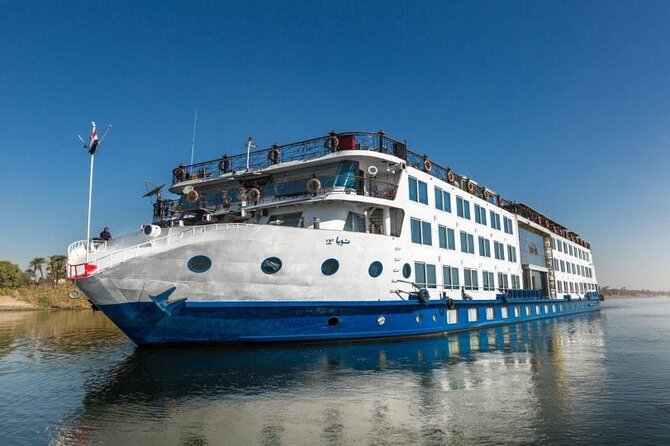
The Nile cruise earns its keep on this day. Instead of packing and unpacking for every temple, you return to the same ship after each visit.
In Edfu, the Temple of Horus is the main sight. Built during the Ptolemaic period, it preserves a later form of Egyptian temple design and provides a strong contrast with the older monuments around Cairo and Luxor.
The ship then continues to Kom Ombo. The temple is dedicated to two gods, Sobek, the crocodile god, and Haroeris, a form of Horus associated with the falcon. The shared design is unusual, and your Egyptologist guide should explain how the paired worship shaped the temple’s layout and decoration.
This is an eight-hour day once sailing and sightseeing are counted. Guide quality matters here because the sites have many similar-looking walls and inscriptions. One account of the trip described a Kom Ombo guide who did not cover the whole site and left during the visit to eat. That is not a reason to dismiss the route, but it is a reminder to ask questions and stay aware of the meeting point.
Day 7: Abu Simbel and Philae in Aswan
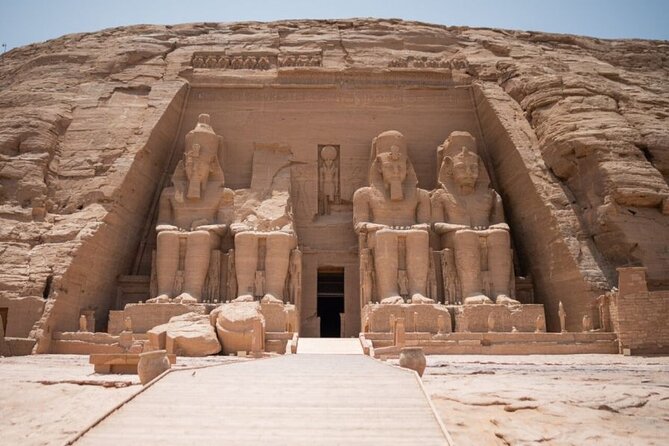
Abu Simbel is the longest and most demanding outing on the route. You leave early with a breakfast box and travel with a group to the great temple complex.
Ramesses II built the main temple for Egypt’s national gods, including Ptah, Ra, Amun, and the king himself as a deified son of Ra. The four colossal seated figures at the entrance are among Egypt’s most powerful sights.
The modern story is just as striking. The temples were moved to protect them from flooding, and the site later received UNESCO World Heritage status. Your guide should explain both the ancient purpose and the modern rescue project, since each adds weight to the visit.
You return to the ship for lunch, then head out again for Philae Temple, often called the Pearl of Egypt. Its walls carry hieroglyphs, and the sculptures preserve scenes of the gods and royal worship.
Day seven runs about eight hours and includes another early departure. Abu Simbel is worth the effort, but this is not a restful cruise day. If you prefer a slower schedule, this itinerary may feel too packed. If you want the major southern sight without arranging a separate excursion, the included visit is a major advantage.
The cruise, hotels, and meals: what the package really delivers
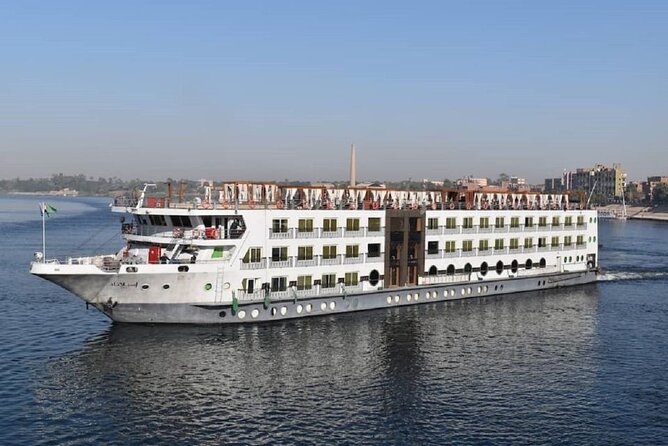
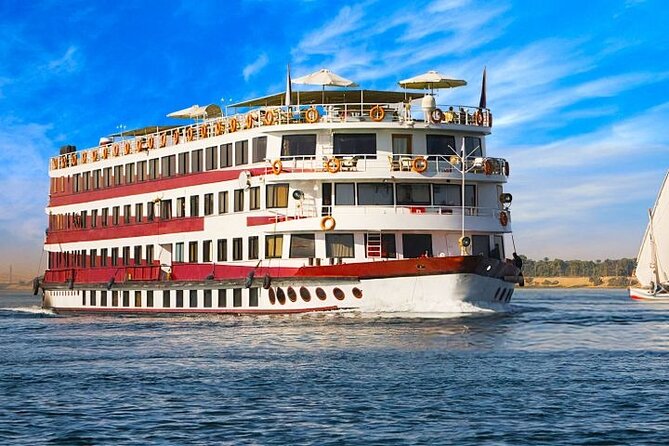
The four-night Nile cruise is the trip’s organizing feature. You sleep aboard while the ship moves from Luxor toward Aswan, reducing hotel changes and long road transfers. The included meals also make daily planning easier.
You should keep expectations realistic about the 5-star label. Hotel and ship names are not provided in advance, and one piece of feedback noted that final arrangements might not be known until shortly before departure. If a particular hotel, cabin location, or onboard facility matters to you, ask Nice Tours for those details before paying.
Food is included every day, but quality may be uneven. One account described meals as average and suggested that guides and drivers sometimes received better food. That is a fair consideration for anyone choosing a tour partly for dining.
Drinks are extra. Carrying money for beverages, tips, and small daily needs will make the all-inclusive plan feel less restrictive.
Private touring, group outings, and transport
The tour is described as private, with only your group participating, and it includes a private guide and private car or van. That is especially useful in Cairo, where you can ask questions and adjust the pace more easily than in a large coach group.
Abu Simbel is the clear exception, since that excursion is done with a group. Confirm the exact arrangement if traveling with children, older family members, or anyone who needs a slower pace.
Transport coordination is one of the package’s strongest practical benefits. Airport pickups, hotel transfers, sightseeing vehicles, and the two domestic flights are included. At the same time, vehicle condition may not always match the 5-star promise. One low-rated account described the cars as being in poor condition, although the drivers themselves were considered good.
The coordinator Marena received specific praise for prompt replies and careful attention. Having a reachable coordinator is valuable in Egypt, where a missed pickup or unclear meeting place can quickly eat into a sightseeing day.
Is $1,200 a good value?
At $1,200 per person, the tour is priced as a broad package rather than a simple sightseeing pass. You receive eight days of movement, three hotel nights, four cruise nights, meals, entrance fees, guides, private transport, two flights, a felucca ride, and a balloon ride.
The strongest value comes from combining Cairo and the Nile Valley in one booking. Independent planning could offer more control, but it would also require separate decisions about flights, cruise cabins, airport transfers, guides, site tickets, and restaurants.
The weak point is control. You may not know the hotel or cruise details until shortly before departure, meals may be merely adequate, and vehicle standards can vary. You are buying convenience and coverage, not a highly customized luxury journey.
A 4.8 score from 132 ratings and a 95 percent recommendation rate suggest that most people find the operation effective. Still, the lower ratings point to real issues rather than nitpicks: inconsistent guiding, tired vehicles, and average food.
Who should book this Egypt tour?
I would choose this for a first visit when you want the main monuments and prefer not to manage logistics yourself. It suits couples, families, and small groups who value a private guide in Cairo and a set route through Luxor and Aswan.
It is also a good match if Abu Simbel and the balloon ride are priorities. Both can be awkward to arrange alone, and they are built into this schedule.
I would hesitate if you need firm hotel names well ahead of departure, gourmet meals, top-condition vehicles, or slow mornings. The schedule begins early more than once, and the route gives you limited free time for wandering through Cairo or Aswan on your own.
Book only after confirming the language of the guide, hotel and cruise names, the exact Abu Simbel group arrangement, and what each entrance fee covers. Those questions will not change the ancient sites, but they can change your comfort.
FAQ
What does the 8-day Egypt tour include?
It includes hotel pickup and drop-off, a private guide, private car or van transport, entrance fees, breakfast, lunch and dinner each day, three nights in a 5-star Cairo hotel, a four-night 5-star Nile cruise, flights between Cairo and Luxor and between Aswan and Cairo, felucca rides, and a hot-air balloon ride.
Are flights included?
Yes. The tour includes a flight from Cairo to Luxor on day four and a flight from Aswan to Cairo on day eight.
Is Abu Simbel included?
Yes. The day-seven visit to Abu Simbel is included. The excursion is described as taking place with a group, unlike the private touring arrangement used for much of the rest of the trip.
Is the tour private?
The experience is described as a private tour with only your group participating. Abu Simbel is specifically described as a group excursion.
Are drinks and tips included?
No. Drinks and tips are not included in the price. Spanish, German, and French-speaking guides are also excluded.
What is the cancellation policy?
You can cancel at least 24 hours before the experience start time for a full refund. Cancellations or changes made within 24 hours are not accepted for a refund. Cut-off times follow local time.
New on the Cairo list
- Private Tour Giza Pyramids Wonders All inclusive★ 5.0 · 26 reviews
- Private Half Day Tour to Giza Pyramids & Great Sphinx from Cairo★ 5.0 · 26 reviews
- Private Tour To Pyramids of Giza Memphis Saqqara With Lunch★ 5.0 · 26 reviews
- 2 days 1 night Luxor,Aswan & Abu simbel by flight from Cairo★ 4.5 · 26 reviews
- Private Day to Giza Pyramids, Egyptian Museum and camel sunset★ 5.0 · 26 reviews
- Siwa Oasis Tour 3 Day 2 Nights from Cairo★ 5.0 · 26 reviews
- VIP Cairo Day Trip Coptic Orthodox Church & Islamic Old Mosques★ 5.0 · 26 reviews
- Full Day Private Tour to visit Old Coptic Cairo & Islamic Cairo★ 5.0 · 26 reviews
Cairo Tours, compared.
Pyramids & Great Sphinx Private Tour with Camel Ride
Read our review →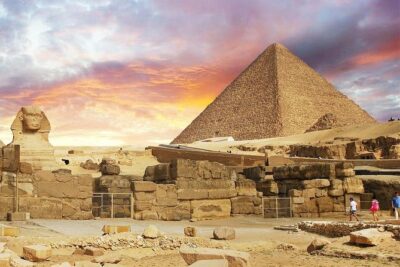
Tour to Giza Pyramids and The Egyptian Museum
Read our review →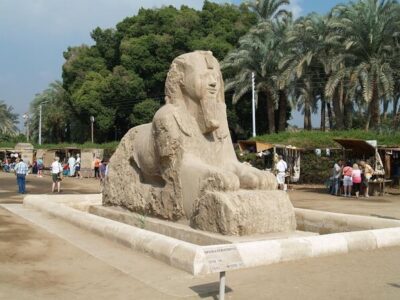
VIP All inclusive Best of the best Giza Pyramids,Sakkara,Memphis
Read our review →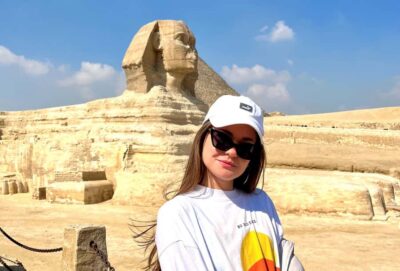
Pyramids of Giza, Sphinx, Saqqara & Memphis Tour
Read our review →
Cairo 8 Hour Private Tour of Pyramids, Egyptian Museum and Bazaar
Read our review →
Half-Day Tour to Pyramids of Giza and the Sphinx
Read our review →
Private ViP all-inclusive Giza Pyramids,Sphinx,Inside Pyramid
Read our review →Browse the lists this tour appears in