
Reviewed · ALEXANDRIA TOURS
Alexandria: Archeological Day Tour
Alexandria’s past comes at you in layers: rock-cut Roman tombs, underwater discoveries, royal gardens, old churches, mosques, and the fort built where the ancient lighthouse once stood. This 6 to 7 hour tour gives you a useful first look at nearly all of the city’s major historic sites without asking you to solve Alexandria’s traffic and distances yourself.
I like the range of stops, especially the Catacombs of Kom El Shokafa and the chance to pair ancient sites with everyday Alexandria around the harbor. I also like the flexible guiding style. Guides such as Waleed, Eman, Heba, Karim, and Mahmoud Abd Elrahman have been praised for adjusting the route, adding breaks, suggesting local food, and explaining the city through stories rather than dates alone. The main drawback is the packed schedule. Several stops are outside views or short walks, and the Library of Alexandria is closed on Fridays, Saturdays, and public holidays.
Key points at a glance
- Three levels below ground: Enter Kom El Shokafa, Alexandria’s largest Roman cemetery, cut directly into the rock.
- One tour, many eras: Move from Roman tombs and amphitheater ruins to St. Mark’s Church, royal gardens, mosques, and a medieval fort.
- The lighthouse site: Qaitbay Citadel occupies the location associated with the ancient Pharos, one of the Seven Wonders of the Ancient World.
- Flexible local guidance: Guides may adjust the order for traffic, heat, crowds, or your walking pace.
- Seafood is optional: You can stop at a modern fish restaurant, with lunch treated as an extra rather than part of the base price.
- Good value for first-time visitors: At $80 per person, the air-conditioned transport, guide, taxes, and listed entrance fees, when the entrance option is selected, cover a lot of ground.
Why Alexandria works best as a guided day
Alexandria is spread along the Mediterranean coast, and its important sites do not line up in one easy walking route. The Catacombs are inland, the Library and old Roman excavations sit nearer the center, Montaza lies to the east, and Qaitbay occupies the western harbor.
That geography is the strongest reason to book a guided vehicle tour. You spend less time figuring out taxis and more time at the places that brought you to Alexandria. An air-conditioned car also matters during the warmer part of the year, especially when the day includes outdoor gardens, waterfront walks, and exposed ruins.
Your guide is the key variable. The guides assigned on different dates have included Waleed, Eman, Heba, Karim, Mahmoud Abd Elrahman, Norhan, Macy, and others. Their approach can shape the day. Some have rearranged the route to avoid the hottest hours or heavier crowds. Others have added a short beach stop, a tropical plant house at Montaza, or extra time in the Library’s manuscript area when schedules allowed.
The tour is listed at $80 per person. That is a fair price if your booking includes the entrance-fee option, since the cost also covers transportation, a live guide, service charges, and taxes. Check the exact package before paying, because entrance fees are described as included only if that option is selected. Lunch and anything not listed are extra.
A few other Alexandria days to weigh up
- Alexandria Full Day Trip
★ 4.5 · 191 reviews - Alexandria Full Day Tour
★ 5.0 · 144 reviews - Private Alexandria Highlights Guided Day Tour
★ 4.5 · 121 reviews
Beneath the city at Kom El Shokafa
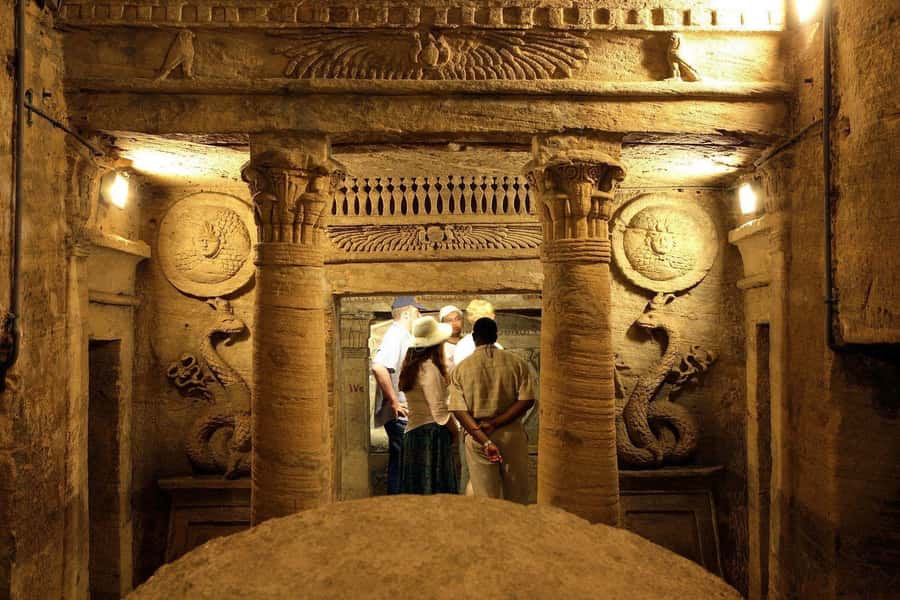
The Catacombs of Kom El Shokafa are the most unusual stop of the day. You descend into a cemetery with three levels carved into the rock, a setting that feels very different from the open monuments elsewhere in Alexandria.
This is not simply a room full of tombs. The site reflects Alexandria’s mixture of Egyptian, Greek, and Roman traditions. Your guide can help you notice how those influences appear in the decoration and layout. Without that explanation, the narrow passages and burial chambers can be hard to read.
Wear shoes with a good grip. Comfortable footwear is specifically advised, and it is especially useful here because the visit involves walking and descending underground. The catacombs are also one of the places where a guide adds real value. The physical remains are impressive, but the meaning behind them is not always obvious at first glance.
Allow for a slower pace if you dislike enclosed spaces or stairs. The tour is designed for a broad range of visitors, and guides have been praised for offering extra breaks, but you should still be ready for a walking-heavy start.
Pompey’s Pillar and the Serapeum area

The stop at Pompey’s Pillar is mainly a photo break. The tour drives by and pauses so you can see the tall granite column and record the visit, rather than spending a long period exploring the wider site.
The itinerary also includes the Serapeum of Alexandria, the religious complex connected with the ancient city’s worship of Serapis. Depending on the exact route and access on the day, your guide will explain the remains and lead you around the permitted areas.
This part of Alexandria helps connect the underground cemetery to the city’s public and religious life. It is worth listening closely here, since the ruins may look spare compared with the more dramatic catacombs or Qaitbay Citadel.
The Library of Alexandria and its modern galleries
The Library of Alexandria is the tour’s most important modern stop. The building recalls the ancient library, but what you see today is a major contemporary cultural center with an open court, museums, and exhibition areas.
The visit includes the open court, where you can see the statue of Alexander the Great and a statue of Ptolemy I. The Ptolemy statue was found underwater nearby, a detail that underlines how much of Alexandria’s past lies beneath or beside the sea.
The program also includes the President Sadat Museum and the Impressions of Alexandria Museum inside the library. These additions give the stop more range than a quick photograph outside the building. You get some ancient history, modern Egyptian political history, and a sense of how Alexandria presents its own story today.
The reading hall requires an extra ticket. If you care about seeing that space, ask about the additional cost before the visit. The Library of Alexandria is closed on Fridays, Saturdays, and public holidays, so the schedule needs checking before you book. If the library is central to your plans, do not treat this as a minor detail.
Same base, a completely different day out:
- ALL inclusive Tour to Giza Pyramids Sakkara from Alexandria Port
★ 5.0 · 80 reviews - Alexandria day tour.The catacomb, pompy’s pillar,the citedal
★ 5.0 · 65 reviews - Cairo: 9-day Egypt Private Tour with Flights and Nile Cruise
★ 4.2 · 64 reviews - From Alexandria Port: Alexandria Day Tour
★ 4.0 · 54 reviews
Roman Alexandria at Kom El Deka
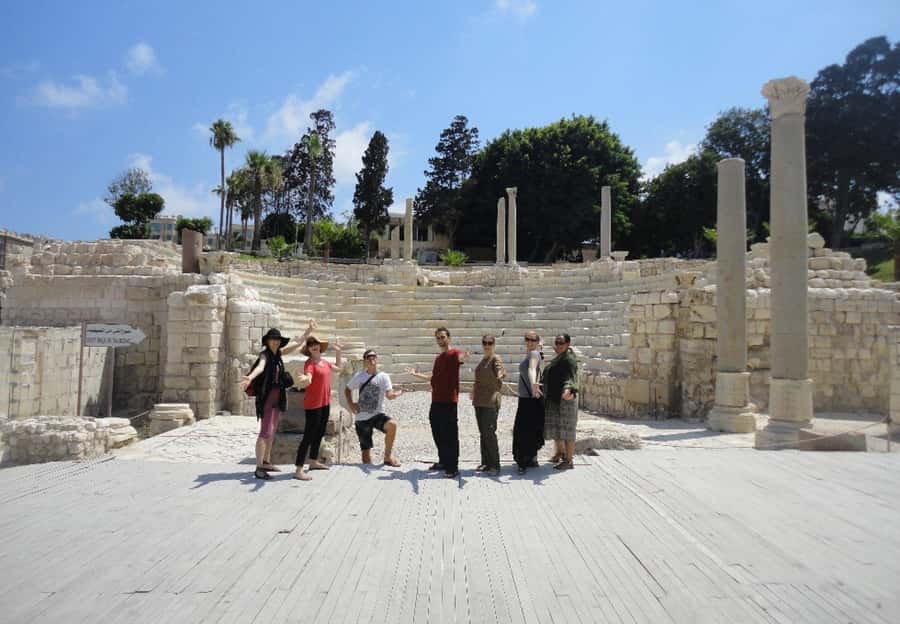
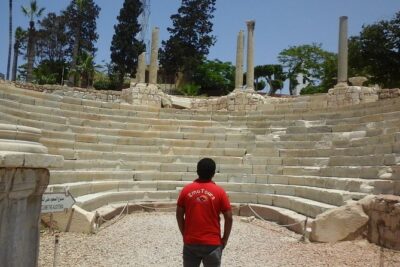
At Kom El Deka, you walk around the excavation area of the old Roman city. The remains include Roman villas, an amphitheater, and other fragments of urban life.
The important limitation is access. The program describes these as external views, and you are not allowed to enter the excavation sites themselves. That means this stop works best when your guide explains what you are looking at and how the pieces once fit together.
I like this part because it shifts the focus from burial places to daily life. Villas and an amphitheater help you picture Alexandria as a functioning Roman city, not only as a place of famous rulers and lost monuments. Still, if you want long, hands-on archaeological exploration, the restricted access may leave you wanting more.
St. Mark’s Church and the old downtown
The visit to St. Mark’s Church adds a Christian chapter to the day. It is presented as the oldest church in Africa, and the stop offers a change of mood after the Roman ruins.
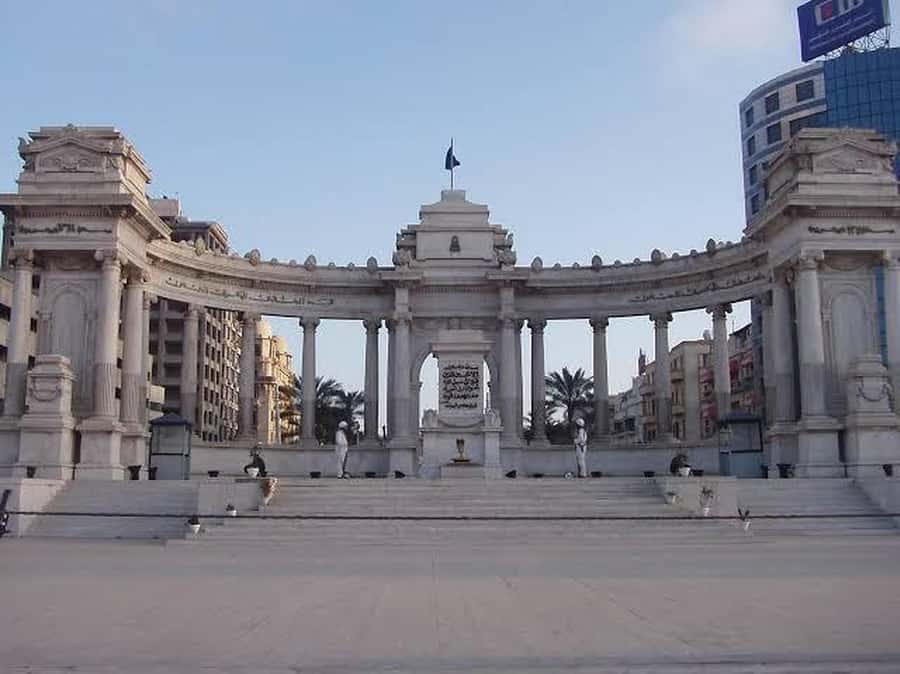
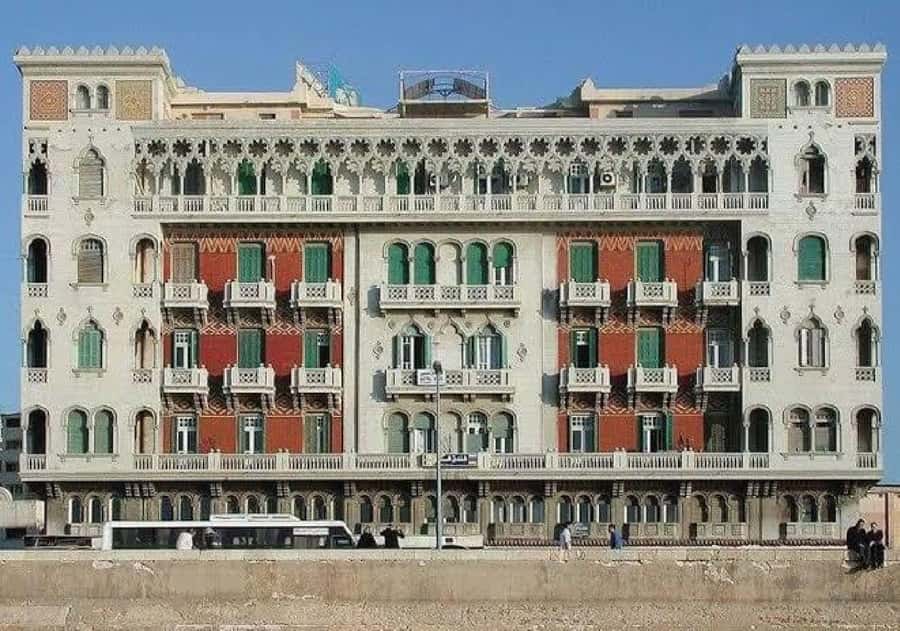
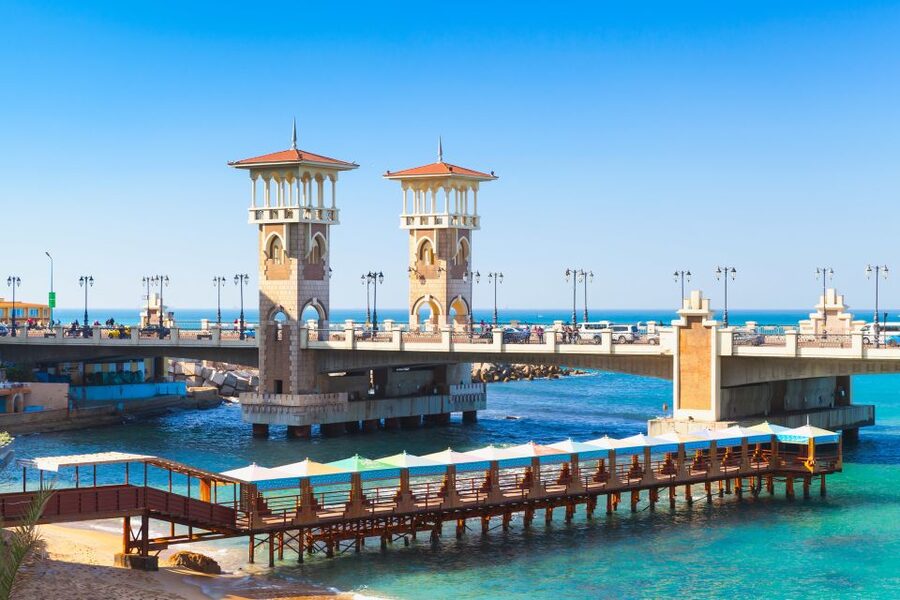
The drive through old downtown is almost as useful as the formal visits. You see historic buildings with Baroque touches and Italian and French-style properties, reminders of Alexandria’s long connection with the wider Mediterranean. This is a place to watch through the car window and ask your guide questions about the city’s architecture.
The stop also gives the day a better balance. You are not moving from one archaeological ruin to another without context. Alexandria’s story includes ancient religion, early Christianity, European influence, royal rule, and modern Egyptian life.
Montaza Palace Gardens and King Farouk’s seaside retreat
Montaza Palace Gardens bring open air and greenery into a day otherwise filled with stone, roads, and museum interiors. These were the royal gardens of King Farouk, Egypt’s last king.
You stop for a photograph of the royal palace and see the beaches associated with the queens. The setting is more about atmosphere and royal history than detailed palace interiors. If you expect a long palace tour inside richly furnished rooms, this visit may feel brief.
The gardens are still a welcome change. One guide, Karim, reportedly added the tropical plant house when traffic and timing made it possible, showing how a good guide can use small pockets of free time. Do not count on that extra stop, but do ask what can fit if your schedule allows.
Montaza is also a good place for a short rest from the city streets. Guides have arranged extra walking breaks and brief time by the sand for some groups. The day remains busy, so enjoy the change of pace rather than rushing through it for photographs alone.
Abu al-Abbas Mosque and Alexandria’s working harbor
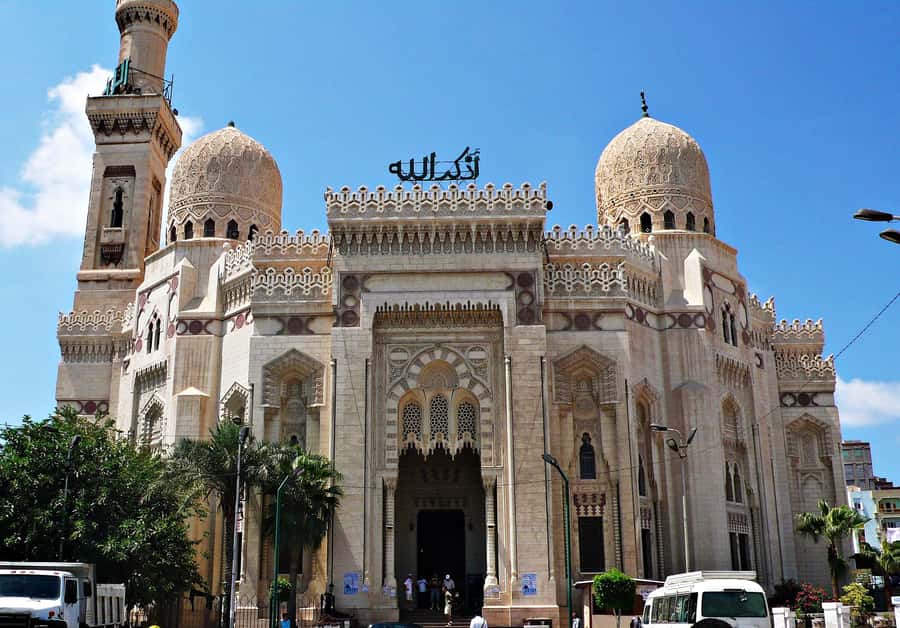
Abu al-Abbas Mosque is described as the city’s largest and prettiest mosque, with a grand interior and an important place in local religious life. Dress respectfully and follow your guide’s instructions about entering and moving through the mosque.
Outside, the scene becomes much more informal. An old funfair sits near the mosque, with antique rides and candy floss for children. Across from it are the corniche and old harbor, where you can see fishing boats, men fishing, and fishermen making nets.
This is one of the best parts of the route for seeing Alexandria as a living city rather than a collection of monuments. The harbor details are modest, but they give the day texture. You may get a better feel for the place here than at a polished historic facade.
The mosque and harbor stop also rewards a little patience. Take time to look at the boats and working waterfront, not just the mosque’s exterior. Your guide may point out local customs and explain how the neighborhood fits into the city’s daily rhythm.
Qaitbay Citadel and the lost Pharos
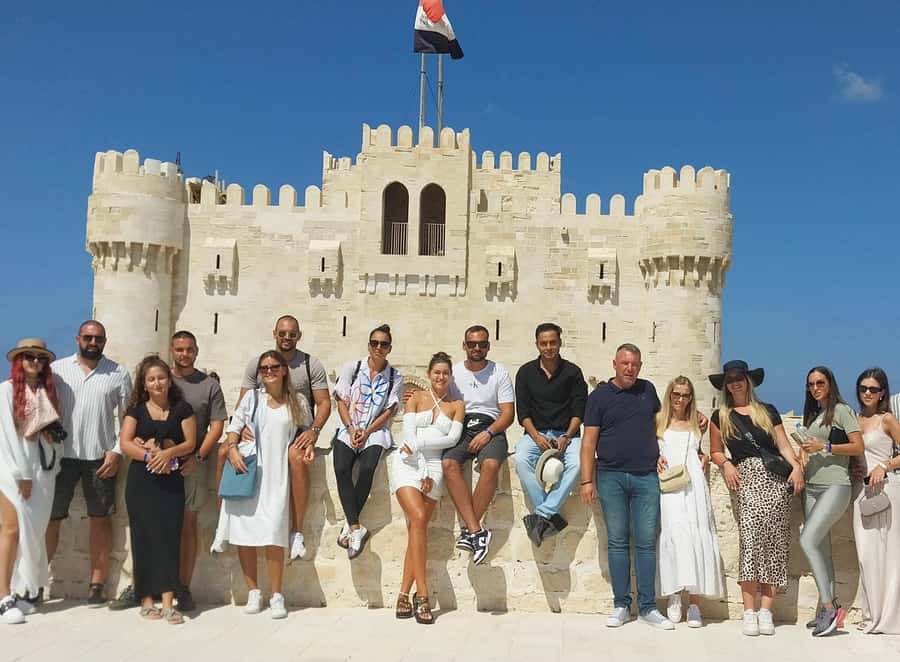
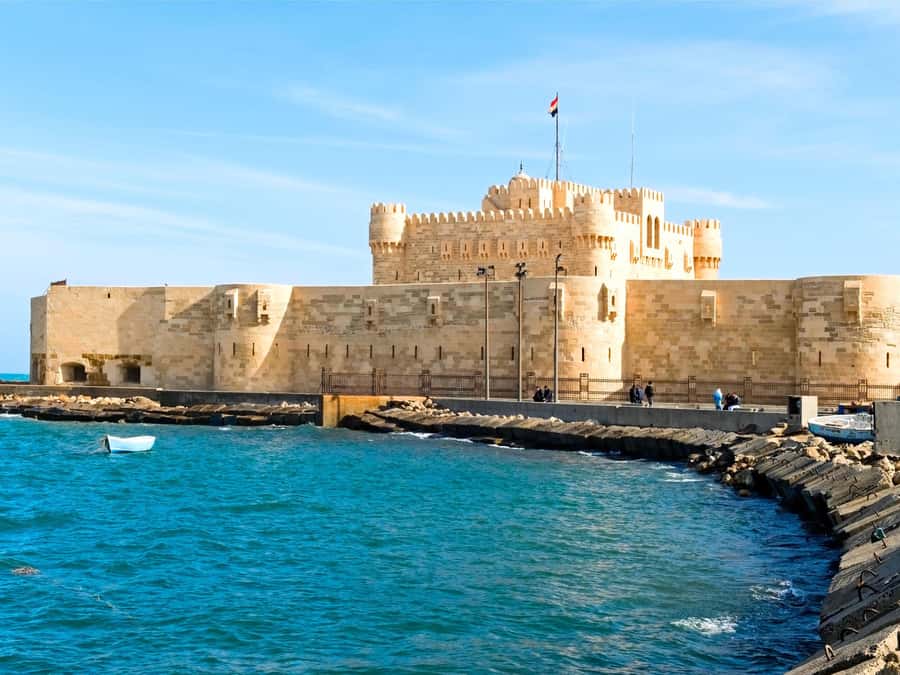
Qaitbay Citadel is one of the day’s big visual moments. The fortress was built on the site associated with the ancient Lighthouse of Alexandria, one of the Seven Wonders of the Ancient World.
The contrast is striking. The lighthouse is gone, while the later fortress remains above the harbor. You are looking at a medieval building tied to one of antiquity’s most famous vanished monuments.
The tour includes a guided visit and walk around Qaitbay. The location makes the stop especially rewarding because it combines architecture, sea views, and a clear connection to Alexandria’s ancient identity. If you have seen pictures of the lighthouse site, this is where the story becomes physical.
As with the other outdoor stops, bring sunglasses and a hat. The waterfront can be bright, and the walking surfaces may be uneven. Your guide can explain the site, but no modern visit can recreate the lighthouse itself. Think of Qaitbay as a chance to understand the location, not a preserved piece of the original wonder.
What lunch adds to the day
Lunch is an optional stop at a modern fish restaurant. This is a sensible choice in Alexandria, where seafood is part of the city’s coastal character, but you should confirm the menu and price directly before ordering.
One guide arranged baked fish at Branzino, a restaurant described as overlooking the waves, and other guides have suggested local dishes and desserts. These details point to the benefit of letting your guide steer you toward a practical local meal rather than choosing at random during a tightly scheduled day.
Lunch does take time. If you have a cruise departure, an evening train, or another fixed appointment, tell your guide at pickup. One guest with a time commitment was dropped at the hotel early, which shows that the route can sometimes be adjusted, but you should not assume every stop will fit if you leave early.
Timing, traffic, and the pace of the route
Six to seven hours is enough for a broad introduction, but not enough for a slow study of every site. You will move between several districts, and Alexandria traffic can affect the order and length of stops.
One booking was scheduled for 8 a.m. but began at 9 a.m., followed by a long wait for late arrivals. That is an important warning if you are visiting from a cruise ship or have an evening departure. Confirm the pickup time and build in a cushion.
The vehicle is air-conditioned, and the driver is a major part of the experience. Drivers such as Ahmed Saimir, Ahmed, and John have been praised for careful, courteous driving. The standard of the vehicle may vary, though. One account described the bus as less clean than expected.
The tour is best when you speak up. Ask for a short break if you need one, request more time at a favorite site, and tell the guide if the Library, the catacombs, or Qaitbay matters most to you. Guides have adjusted routes around traffic, heat, crowds, and personal schedules, but the day works better when your priorities are clear.
Who should book this Alexandria tour?
I would choose this tour if you have one full day in Alexandria and want to see the major sites without arranging separate transport. It suits first-time visitors, archaeology fans, families who want a guide to keep the day moving, and anyone who prefers historical explanation to wandering through ruins alone.
It is also a good fit if you want more than ancient history. The route includes a church, mosque, royal gardens, modern library, harbor, and architectural views through downtown. That variety helps you understand Alexandria as a city shaped by several cultures and periods.
I would be more cautious if you want long visits at each site, quiet museum time, or unrestricted access to excavation areas. The Roman excavation sites are viewed from outside, the Pompey’s Pillar stop is brief, and the Library reading hall costs extra. The day is broad rather than slow.
Language options include English, Arabic, and French. Other language guides depend on availability and may cost more on certain dates. If your preferred guide is not available, the operator may provide a live English-speaking guide with an audio guide in your chosen language.
Free cancellation is available up to 24 hours before the start, and you can reserve now and pay later. Those terms help if your Alexandria schedule is still shifting, but the more urgent planning issue is the Library closure on Fridays, Saturdays, and public holidays.
Should you book it?
Book this Alexandria archaeological tour if you want a well-filled day that connects the city’s ancient monuments with its churches, mosques, royal gardens, harbor, and modern cultural center. The strongest reasons are the wide range of stops, private vehicle transfers, and guides who have shown patience and flexibility.
Skip it if you want a slow archaeological study or if your schedule cannot absorb traffic delays. At $80 per person, it offers solid value when entrance fees are included, especially for a first visit. Confirm the start time, entrance option, lunch plans, Library opening day, and any extra ticket for the reading hall before you commit.
FAQ
How long does the Alexandria archaeological tour last?
The tour lasts approximately 6 to 7 hours. Starting times vary, so you should check availability when booking.
Where does pickup take place?
Pickup is available in Alexandria, including your hotel or place of residence when the pickup option is selected.
What languages are available?
Live guides are available in English, Arabic, and French. Other languages depend on availability and may involve an additional charge on certain dates.
Is the Library of Alexandria included?
The tour includes a visit to the Library of Alexandria, its open court, the President Sadat Museum, and the Impressions of Alexandria Museum. The reading hall requires an extra ticket.
When is the Library of Alexandria closed?
The Library is closed on Fridays, Saturdays, and public holidays. Check the date before booking if this stop is important to you.
Are entrance fees included in the $80 price?
Entrance fees are included if you select the option that includes them. Confirm the package details when booking.
Is lunch included?
No. Lunch at a local fish restaurant is optional and is not included among the standard inclusions.
Can I see the original Lighthouse of Alexandria?
The original lighthouse no longer survives. You will visit Qaitbay Citadel, which was built on the same site associated with the ancient lighthouse.
What should I bring?
Wear comfortable shoes and bring sunglasses and a hat. The day includes underground passages, walking around ruins, gardens, waterfront areas, and the citadel.
New on the Alexandria list
- Alamein full day tour from Alexandria★ 5.0 · 27 reviews
- Alexandria Experience from Alexandria Hotels & Alexandria Port★ 5.0 · 33 reviews
- Half-Day Guided Tour in Alexandria★ 5.0 · 33 reviews
- From Alexandria: El Alamein Day Trip★ 4.9 · 34 reviews
- Day Tour To Cairo From Alexandria★ 4.5 · 36 reviews
- Group Tour top Things To Do In Alexandria From Cairo★ 4.0 · 38 reviews
- Day Tour to Cairo from Alexandria Port & Alexandria Hotels★ 4.5 · 38 reviews
- Mirette Tour in Alexandria from Alexandria hotels and Alexandria Port★ 5.0 · 38 reviews
Alexandria Tours, compared.
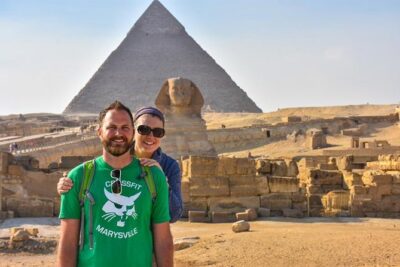
ALL inclusive Tour to Giza Pyramids Sakkara from Alexandria Port
Read our review →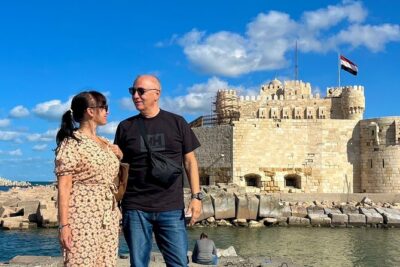
Alexandria day tour.The catacomb, pompy’s pillar,the citedal
Read our review →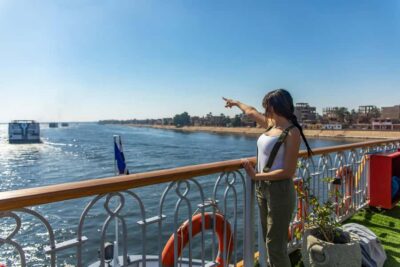
9-day Egypt Private Tour with Flights and Nile Cruise
Read our review →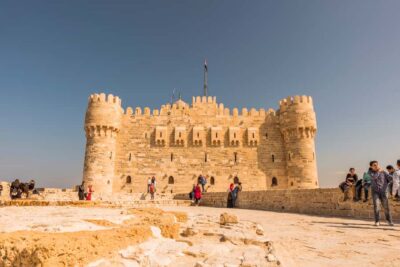

Browse the lists this tour appears in