
Reviewed · CAIRO TOURS
3 Days Private Guided Cairo Tour Package
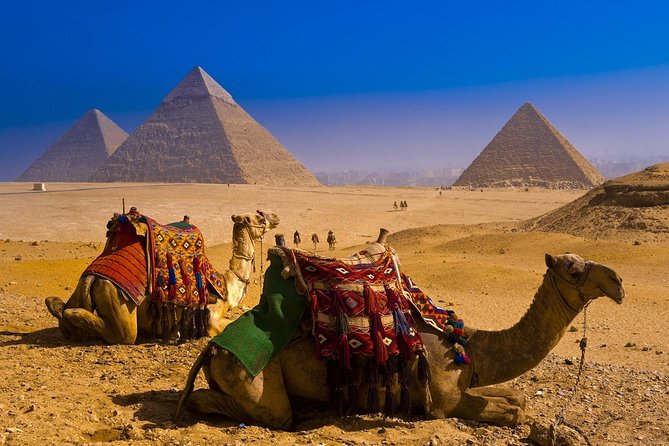
The Great Pyramid is only the beginning. This three-day private tour takes you from Giza’s famous monuments to the quieter pyramids of Dahshur, then into Cairo’s museums, medieval mosques, bazaars, churches, and synagogues. It is a broad introduction to Egypt’s capital, with your own guide and car keeping the complicated sightseeing plan manageable.
I like the private format, which lets you ask questions, adjust your pace, and avoid joining a large bus group. I also like the unusually wide first-day route, covering Giza, Memphis, Saqqara, and Dahshur rather than stopping at the best-known pyramids. The main consideration is stamina: this is a packed schedule, and the quality of the experience depends heavily on the guide assigned to you.
Key points at a glance
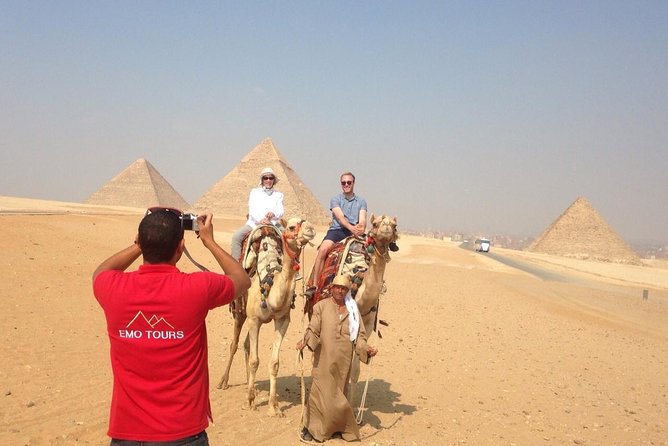
- Giza plus Dahshur: See the famous pyramid plateau and the Bent Pyramid area in one day.
- A private car and guide: Private transport saves time between widely scattered archaeological sites.
- Three different sides of Cairo: Ancient Egypt, medieval Islamic Cairo, and Coptic Cairo all receive serious attention.
- Guide quality matters: Past departures have included guides such as Habib, Ahmed Zaki, Ehab, Maged, Hossam, and Mo Salah.
- Good inclusions for the price: Water, lunch, entry fees, transport, and guiding are included at $150 per person.
- A demanding schedule: Long site visits and many stops leave little room for a slow, unplanned day.
Is three days enough for Cairo?
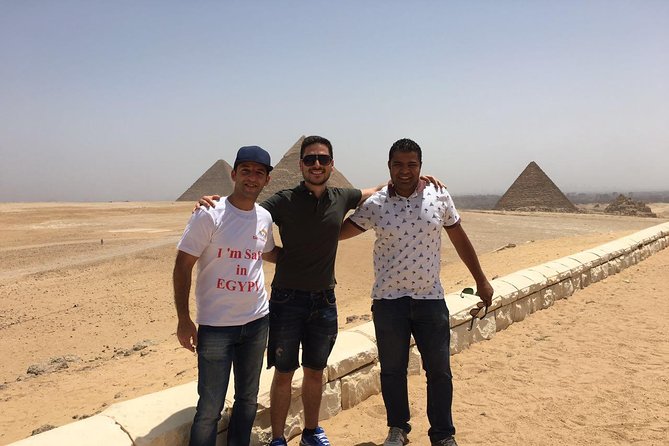
Three days is enough to see a large share of Cairo’s major sights, but this is not a relaxed city break. The schedule moves quickly because the attractions are spread across several areas: Giza lies west of central Cairo, Saqqara and Dahshur are farther south, while the Egyptian Museum, Citadel, Khan el-Khalili, and Old Cairo occupy different parts of the city.
The private setup is especially useful here. You have an air-conditioned vehicle between stops, and a driver handling the roads while your guide explains the sites. That matters in Cairo, where arranging separate taxis, finding the correct entrances, and keeping track of opening areas can consume a surprising amount of time.
The tour also gives you more than a pyramid checklist. You see royal tombs, ancient capital sites, medieval fortifications, Islamic architecture, Coptic churches, and a historic synagogue. If you want a first look at the many layers of Cairo, the route makes good use of three days.
The tradeoff is that you may not linger as long as you would on a custom private itinerary. Day 1 includes a remarkable number of archaeological stops. You should expect a full day on your feet, with plenty of time in the car between locations.
A few other Cairo days to weigh up
- Siwa Oasis All inclusive 3 days Tour from Cairo or Giza
★ 5.0 · 310 reviews - Siwa Oasis Tour All inclusive 3 Days Experience from Cairo&Giza
★ 5.0 · 227 reviews - White Desert & Bahariya oasis 3 days 2 nights Tour from Cairo
★ 5.0 · 135 reviews
Day 1: Giza, Memphis, Saqqara, and Dahshur
The first day is the archaeological heavyweight. It begins around the Giza monuments, then reaches the ancient capital of Memphis, the necropolis at Saqqara, and the pyramids of Dahshur. The route includes the three main Giza pyramids, the Sphinx, the Step Pyramid of Djoser, the pyramids of Teti and Unas, the Mastaba of Ti, and more.
That is a lot of ancient Egypt in one day. The advantage is variety. You do not simply see the Great Pyramid, take photographs, and leave. You get a sense of how Egyptian pyramid building changed over time.
The Great Sphinx and Giza plateau
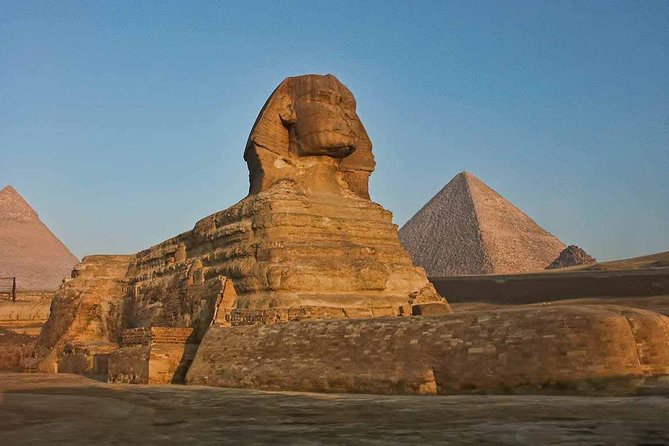
The Sphinx is given a separate visit of about 30 minutes, while the wider Giza Pyramids area receives about three hours. The Sphinx, with a lion’s body and the head traditionally associated with King Khafre, is one of the most recognizable monuments in Egypt. Your guide can help place it within the wider funerary complex rather than treating it as a stand-alone statue.
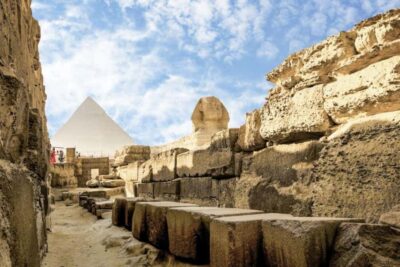
At Giza, you see the pyramids of Khufu, Khafre, and Menkaure, along with the Valley Temple associated with Khafre. The Valley Temple is important because it was used in the preparation and mummification rites connected with the king’s burial.
The plan also lists separate visits to each pyramid. Khufu’s Great Pyramid is the largest and most famous, Khafre’s retains some of its original casing near the top, and Menkaure’s smaller pyramid gives the plateau a useful sense of scale. Those individual stops are helpful for orientation, but the time allocation may feel tight if you want to walk extensively around the plateau.
Important: entry inside any pyramid is not included. The package includes listed entry fees, but interior access carries a separate charge. Ask your guide before the day begins if entering one is important to you.
Memphis and the ancient capital
Memphis was Egypt’s ancient capital and is described as dating to around 3100 B.C. The visit is shorter, about an hour, but it adds useful context to the pyramid fields south of Cairo. You see the colossal statue of Ramses II and an alabaster sphinx among the remains.
The Sphinx of Memphis receives another brief stop. It is smaller and less famous than Giza’s Sphinx, yet it helps show that sphinx imagery was used across royal and religious sites. With only about ten minutes assigned, this is best treated as a quick look rather than a full archaeological visit.
Same base, a completely different day out:
- Cairo: Pyramids & Great Sphinx Private Tour with Camel Ride
★ 4.9 · 6,335 reviews - Tour to Giza Pyramids and The Egyptian Museum
★ 5.0 · 6,016 reviews - VIP All inclusive Best of the best Giza Pyramids,Sakkara,Memphis
★ 5.0 · 3,164 reviews - From Cairo: Pyramids of Giza, Sphinx, Saqqara & Memphis Tour
★ 4.7 · 3,110 reviews
Saqqara and the Step Pyramid of Djoser
Saqqara is one of the day’s most important stops. The Step Pyramid of Djoser is the earliest colossal stone building in Egypt and a major turning point in pyramid construction. Its six-tier design looks very different from the smooth-sided pyramids at Giza.
You have about two hours for the Step Pyramid area. That gives you more time to understand the site’s layout, see the surrounding complex, and ask your guide how the earlier stepped form led toward later pyramid designs.
The itinerary also includes the Pyramid of Teti and the Pyramid of Unas, each with a shorter stop. Both are notable for pyramid texts, written religious spells placed inside royal burial chambers. Teti’s pyramid is the second known pyramid to contain these texts, while Unas built his pyramid between the complexes of Sekhemkhet and Djoser.
The Mastaba of Ti is another worthwhile stop. Its walls show scenes of everyday life, making it different from the grand royal monuments. Instead of only seeing kings and gods, you get glimpses of farming, crafts, food, and household activity through ancient tomb decoration.
Dahshur and the Bent Pyramid
Dahshur is the quieter counterpoint to Giza. The area lies about 30 kilometers south of the Giza Pyramids and contains pyramids from several dynasties, including the Bent Pyramid and the Red Pyramid area. The supplied plan gives Dahshur about two hours, enough to make this more than a quick roadside photograph.
The Bent Pyramid is especially useful for understanding experimentation in Egyptian engineering. Its angle changes partway up, producing the shape that gives it its name. Your guide can connect this unusual design to the development of later smooth-sided pyramids.
Dahshur also includes pyramids associated with Amenemhat II and Amenemhat III, including the Black Pyramid. The setting feels more open than the central Giza plateau, though site conditions and access can vary. I would give this part of the day your attention, not just your camera, because it is one of the places where the tour moves beyond the standard Cairo highlights.
Day 2: Tutankhamun, Saladin, and the old bazaar
The second day shifts from pharaonic sites to central Cairo and its Islamic monuments. You visit the Egyptian Museum, the Citadel of Cairo, the Mosque of Muhammad Ali, and Khan el-Khalili.
Three hours at the Egyptian Museum
The Egyptian Museum on Midan Tahrir houses one of the world’s major collections of ancient Egyptian objects. The collection includes royal treasures, mummies, jewelry, household goods, toys, and burial items belonging to people whose names have disappeared from history.
Three hours is a useful amount of time, especially with a guide to help you choose what deserves attention. Without some direction, the museum can feel overwhelming. Ask your guide to balance famous pieces with ordinary objects, since the latter often make ancient life easier to picture.
Tutankhamun’s treasures are a major draw, but the museum is not only about gold and royal display. You may also see funerary equipment, eating bowls, and personal objects that show the practical side of life along the Nile. Museum displays and access arrangements can change, so your guide’s on-site advice will matter.
The itinerary lists the museum entry as included, though the general inclusion wording should be checked at booking because some museum areas or special exhibitions can have separate rules.
The Citadel of Cairo and the Alabaster Mosque
The Citadel of Cairo, also called the Citadel of Saladin, was built by Salah ad-Din and later developed by Egyptian rulers. It served as the seat of government and the residence of rulers for nearly 700 years, from the 13th to the 19th centuries.
The visit lasts about an hour, followed by roughly 30 minutes at the Mosque of Muhammad Ali. The mosque was commissioned by Muhammad Ali Pasha between 1830 and 1848 and is often called the Alabaster Mosque because of its stone facing.
This pairing works well. The Citadel gives you the political setting, while the mosque provides the architectural focus. Modest clothing is the sensible choice for religious sites. The tour data does not specify a dress code or shoe policy, so follow the instructions given at the entrance.
Khan el-Khalili
Khan el-Khalili is Cairo’s historic bazaar district and a natural place to end a day of monuments. You have about an hour to walk through its lanes, browse shops, and experience one of the city’s best-known commercial quarters.
Treat the bazaar as a place for atmosphere as much as shopping. If you want souvenirs, compare prices and take your time before buying. Your private guide can help you understand the difference between browsing and committing to a purchase, but personal purchases are not included in the tour price.
Day 3: Coptic and Islamic Cairo
The final day explores Cairo’s religious and architectural variety. The itinerary includes Coptic Cairo, the Mosque of Amr Ibn Al-As, Sultan Hassan Mosque and Madrasa, Al-Rifai Mosque, Ben Ezra Synagogue, and the Hanging Church.
This is a particularly strong day for visitors who want more than ancient monuments. Cairo’s identity is not confined to the pharaohs. Its churches, mosques, synagogues, schools, and old neighborhoods show how different communities and ruling periods shaped the city.
Coptic Cairo and the Hanging Church
Coptic Cairo grew around an ancient strategic location connected to the Nile and the route toward the Red Sea. The area is described as the original seed of the modern city, with settlement reaching back more than two thousand years.
You have about two hours for Coptic Cairo, then an hour at both Ben Ezra Synagogue and the Hanging Church. The Hanging Church, formally dedicated to Saint Mary, is one of the best-known Coptic churches in Old Cairo. Its name comes from its position above the gatehouse of the Roman fortress known as Babylon.
Ben Ezra Synagogue adds another part of Cairo’s religious story. It has also been called the El-Geniza Synagogue, a reference to the important collection of Jewish documents associated with the site. The visit is not just about the building itself, but about the long record of Jewish life in Egypt.
The route is compact, but allow time for security checks and walking between nearby historic sites. The supplied schedule gives one hour at each of these two locations, which should be enough for an introduction rather than a slow architectural study.
Amr Ibn Al-As Mosque
The Mosque of Amr Ibn Al-As was originally built in 641 to 642 A.D. as the center of Fustat, the newly founded capital of Egypt. It was the first mosque built in Egypt and the whole of Africa.
The listed visit is about 30 minutes, so your guide will likely focus on the mosque’s place in the development of Cairo and early Islamic Egypt. It is a short stop, but an important one. The mosque connects the Roman and Coptic layers of Old Cairo with the Islamic city that followed.
Sultan Hassan and Al-Rifai
The Mosque and Madrasa of Sultan Hassan receives about an hour. Built between 1356 and 1363 during the Bahri Mamluk period, it was commissioned by Sultan an-Nasir Hasan and served both religious and educational purposes.
Al-Rifai Mosque receives another hour. It stands beside the Cairo Citadel and serves as the Khedival mausoleum of the Muhammad Ali royal family. Seeing these two monumental mosques together gives you a useful contrast in style, scale, and historical purpose.
This part of the day suits visitors who enjoy architecture and historical explanation. The buildings are not simply photo stops. Ask your guide about their role as schools, prayer spaces, and royal monuments.
What your $150 covers
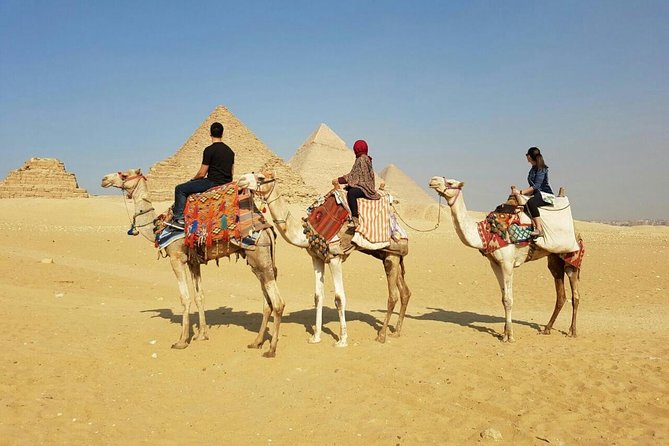
At $150 per person, the package offers solid value if you intend to visit most of these sites. You receive a private tour, an English-speaking guide is implied by the past guide assignments and descriptions, private air-conditioned transport, bottled water, lunch, and entry fees.
The cost becomes especially reasonable for two or more people because you are paying for a private vehicle and guide rather than a shared excursion. Group discounts are also offered, though the amount is not specified.
The inclusions have limits. Tips, personal items, and entry inside any pyramid are excluded. Lunch is included, but the exact restaurant, menu, and number of meals are not specified. If food quality matters to you, ask what lunch covers before booking. Some past experiences praised the guide and transport but found the included lunch disappointing.
Complimentary refreshments and bottled water are useful in Cairo’s heat, especially on Day 1. Still, bring additional water if you need it, since the itinerary includes several long site visits.
The guide can make or break the experience
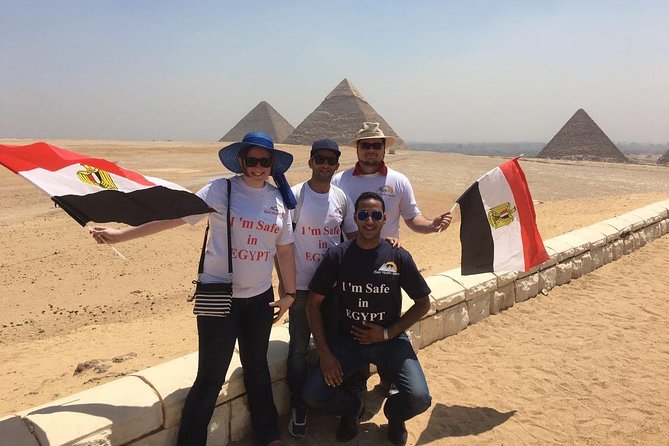
A private tour gives you personal attention, but it does not guarantee that every guide will have the same style or experience. Past assignments have included Ahmed Zaki, Habib, Ehab, Maged Abdelazim Elbehairy, Ahmed Yassin, Hossam, Tonsi, and Mo Salah. Some guides were praised for clear English, humor, flexibility, history knowledge, photography help, and honest advice about saving money.
If you have a preferred guide, request that person at booking, but understand that availability is not guaranteed. It is also sensible to confirm the guide’s name and the daily plan before the first pickup.
There has been at least one serious complaint about a guide named Sara and another about an operator named Mahdy. The overall score is 4.7 from 42 ratings, with a 90 percent recommendation figure, but those negative accounts are still worth noting. A private tour costs little if the guide is excellent and feels expensive if the guide rushes you or skips key sights.
The most useful approach is to tell your guide what matters to you. If you care about pyramid interiors, museum mummies, Coptic architecture, photography, or shopping, say so early. One past itinerary problem involved not getting enough time near the second and third Giza pyramids, so be clear that you want time at all three.
Who should book this Cairo tour?
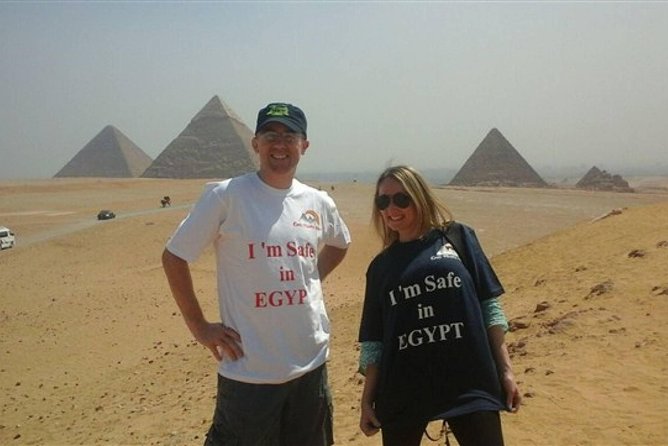
I would recommend it to a first-time Cairo visitor who wants the major sights arranged in one package. It suits couples, families, and small groups that value a private vehicle, direct explanations, and the ability to ask for a slower pace at a favorite site.
It is also a good fit if Cairo is one stop in a larger Egypt trip and you want to cover a lot without spending days arranging transport. The route reaches places that are awkward to combine independently, especially Memphis, Saqqara, and Dahshur.
I would hesitate if you prefer unstructured days, long museum visits, or repeated breaks. Day 1 is particularly full. You should also compare the package carefully if you already have transport, since part of its value comes from the private car and driver.
Booking ahead is sensible. The experience is booked, on average, 26 days before departure, which suggests that planning roughly three to four weeks ahead is prudent. Free cancellation is available up to 24 hours before the local start time. Cancellations or changes made later are not accepted for a refund.
Final call: good value, with one important condition
Book this tour if you want an efficient first look at Cairo and are willing to accept a busy schedule. The strongest features are the private transport, the wide archaeological route, and the balance between ancient, Islamic, and Coptic Cairo.
Before paying, confirm the guide assignment if possible, ask what lunch includes, and make sure you understand that pyramid interiors cost extra. If you do those checks and communicate your priorities, $150 per person is a reasonable price for three days of private sightseeing.
Skip it if you want a slow, specialist-led archaeological trip. For most first visits, though, this tour gives you a practical way to see far more of Cairo than the Giza plateau alone.
FAQ
How long is the private Cairo tour?
The tour lasts approximately three days.
What attractions are included on the first day?
Day 1 includes the Great Sphinx, the Giza Pyramids, Memphis, the Sphinx of Memphis, the Step Pyramid of Djoser, Dahshur, the pyramids of Khufu, Khafre, and Menkaure, the pyramids of Teti and Unas, and the Mastaba of Ti.
Is entry inside the pyramids included?
No. Entry inside any of the pyramids is specifically excluded from the package.
Is transportation provided?
Yes. Transport is provided in a private air-conditioned vehicle.
Is lunch included?
Yes. Lunch is included, along with bottled water and complimentary refreshments. The specific lunch venue and menu are not provided.
Is this a private group tour?
Yes. Only your group participates in the private tour.
Are entry fees included?
Entry fees are included according to the package details, but interior access to the pyramids is not included.
What is the cancellation policy?
You can cancel up to 24 hours before the experience start time for a full refund. Cancellations or changes made less than 24 hours before the start time are not accepted for a refund.
New on the Cairo list
- Private Half Day Tour to Giza Pyramids & Great Sphinx from Cairo★ 5.0 · 26 reviews
- Private Tour Giza Pyramids Wonders All inclusive★ 5.0 · 26 reviews
- Private Tour To Pyramids of Giza Memphis Saqqara With Lunch★ 5.0 · 26 reviews
- 2 days 1 night Luxor,Aswan & Abu simbel by flight from Cairo★ 4.5 · 26 reviews
- Private Day to Giza Pyramids, Egyptian Museum and camel sunset★ 5.0 · 26 reviews
- Siwa Oasis Tour 3 Day 2 Nights from Cairo★ 5.0 · 26 reviews
- VIP Cairo Day Trip Coptic Orthodox Church & Islamic Old Mosques★ 5.0 · 26 reviews
- Cairo sailing boat Tours on the Nile by felucca★ 4.0 · 26 reviews
Cairo Tours, compared.
Pyramids & Great Sphinx Private Tour with Camel Ride
Read our review →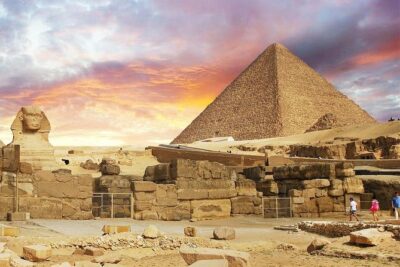
Tour to Giza Pyramids and The Egyptian Museum
Read our review →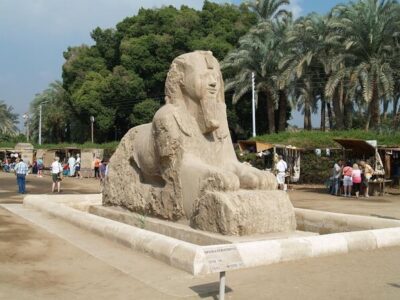
VIP All inclusive Best of the best Giza Pyramids,Sakkara,Memphis
Read our review →
Pyramids of Giza, Sphinx, Saqqara & Memphis Tour
Read our review →
Cairo 8 Hour Private Tour of Pyramids, Egyptian Museum and Bazaar
Read our review →
Half-Day Tour to Pyramids of Giza and the Sphinx
Read our review →
Private ViP all-inclusive Giza Pyramids,Sphinx,Inside Pyramid
Read our review →Browse the lists this tour appears in