Reviewed · CAIRO TOURS
Overnight Trip To Luxor From Cairo
Luxor packs Egypt’s greatest ancient sights into a small area, and this trip gives you two days to see both banks of the Nile without arranging flights, taxis, hotels, or entrance tickets yourself. I especially like the private tour format and the inclusion of a qualified Egyptologist, since these temples make far more sense with someone to explain the carvings, rulers, and rituals. The price also covers flights, hotel, transfers, and a local lunch.
The catch is the 3:30 am Cairo pickup on the first morning. You will see a lot in a short time, but the schedule is demanding, and an airport transfer mistake caused one reported visitor to be left at the wrong Cairo terminal. Confirm your terminal and flight details carefully before departure.
Key points to know before booking
- A 3:30 am start from Cairo: You are transferred to the domestic airport for a flight to Luxor, so the first day begins very early.
- Both banks of the Nile in two days: The route includes the Valley of the Kings and Hatshepsut Temple on the west bank, plus Karnak and Luxor Temple on the east bank.
- A private Egyptologist-led visit: Only your own group takes part, with a private air-conditioned vehicle and guide.
- Major admission fees are included: Entry to the listed historic sites is covered, which keeps the day moving.
- One hotel night in Luxor: The package includes a hotel stay, with dinner described for the hotel in the daily plan.
- The second day goes beyond the usual highlights: Medinat Habu, Deir el-Medina, and the Valley of the Queens offer a different look at royal and working life.
Why this Cairo to Luxor trip makes sense
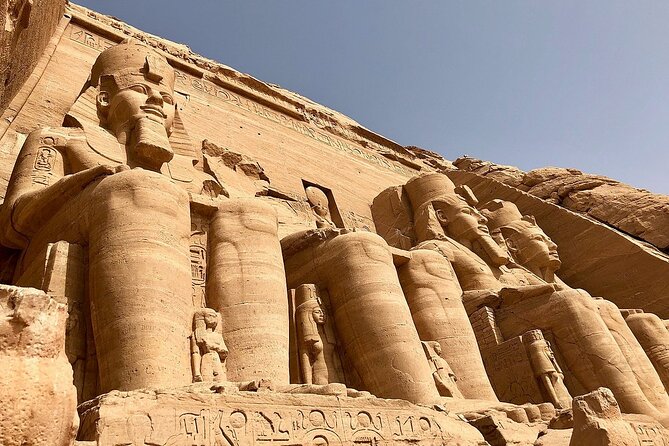
Luxor is not a quick side trip in the usual sense. It is several hundred miles from Cairo, and reaching it by road would make for a long, tiring transfer. Flying lets you spend your limited holiday time among temples and tombs instead of sitting in a vehicle.
At $390 per person, this is not the cheapest possible way to reach Luxor. It is a practical package price, though, because it bundles the domestic flights, one hotel night, private transportation, a guide, entry fees, hotel pickup and drop-off, and lunch. Booking these pieces separately can be awkward, especially when you are working out airport transfers and the order of west bank and east bank visits.
I like that this is a private activity, not a large coach tour. Your group can travel in a private air-conditioned vehicle, and the guide can spend more time answering your questions. The exact guide is not guaranteed, but Ayman is a guide associated with this experience and was singled out for making the day especially strong.
The tradeoff is the pace. Your first day starts at 3:30 am, includes a flight, a full west bank program, lunch, east bank temples, hotel check-in, and perhaps a night visit to Luxor Temple. This is a sightseeing sprint, not a slow archaeological study. If you want long photography stops or plenty of time at every tomb, the schedule may feel tight.
A few other Cairo days to weigh up
- Cairo: Pyramids & Great Sphinx Private Tour with Camel Ride
★ 4.9 · 6,335 reviews - Tour to Giza Pyramids and The Egyptian Museum
★ 5.0 · 6,016 reviews - VIP All inclusive Best of the best Giza Pyramids,Sakkara,Memphis
★ 5.0 · 3,164 reviews
The 3:30 am departure from Cairo
A representative collects you from your Cairo hotel and transfers you to the domestic airport. The early pickup is the price of making Luxor work in just two days. Before leaving your hotel, confirm your flight time, airport terminal, and where the representative will meet you.
The airport transfer deserves special attention. A problem was reported with a driver dropping someone at the wrong terminal in Cairo, which is exactly the kind of small mistake that can sour an otherwise excellent trip. Keep your flight information accessible, and do not assume the driver has the terminal correct.
Once you arrive in Luxor, a local representative meets you and the sightseeing begins. This handoff is useful because you are not left to find a taxi or negotiate a transfer in an unfamiliar city.
The Valley of the Kings and Theban royal tombs
The first major stop is the Valley of the Kings, where rulers of several dynasties were buried in rock-cut tombs. The appeal here is not the outside scenery but the painted interiors, the long corridors, and the way the tombs reveal ancient beliefs about the afterlife.
The general plan allows about an hour. That is enough for an introduction, but you may need to make choices about which tombs to enter. The tour includes admission to the listed sites, but the supplied details do not specify which individual tombs or any possible extra tomb charges are covered. Ask your guide what your ticket includes before entering.
Your guide matters most here. Without context, a tomb can look like a narrow passage covered in symbols. With an Egyptologist explaining the scenes, you can understand why the walls show gods, funerary rites, protective texts, and the journey of the dead king.
Do not expect a quiet, unhurried visit. The program has many stops, and the Valley of the Kings can involve walking and time in enclosed spaces. Wear practical shoes and bring water, keeping in mind that drinks are not included with lunch.
Hatshepsut Temple and Deir el-Bahari
The Temple of Queen Hatshepsut sits at Deir el-Bahari against the Theban hills. Its broad terraces and long approach make it different from the enclosed tombs visited earlier. It was built for Hatshepsut, one of ancient Egypt’s most important female rulers, and its reliefs help explain her public image and connection to the gods.
The itinerary groups the temple with the wider Theban necropolis. That gives you a useful picture of how royal tombs, mortuary temples, and religious spaces worked together on the west bank.
The visit is listed as part of the first day, but the time allocation in the supplied schedule is not always precise. You should expect the guide to manage the order according to opening conditions, traffic, and the time available before the east bank visits.
Same base, a completely different day out:
- From Cairo: Pyramids of Giza, Sphinx, Saqqara & Memphis Tour
★ 4.7 · 3,110 reviews - Cairo 8 Hour Private Tour of Pyramids, Egyptian Museum and Bazaar
★ 5.0 · 2,931 reviews - From Cairo: Half-Day Tour to Pyramids of Giza and the Sphinx
★ 4.6 · 2,891 reviews - Cairo: Pyramids, Sakkara & Memphis Tour with Lunch
★ 4.6 · 2,493 reviews
The Colossi of Memnon: a quick but worthwhile stop
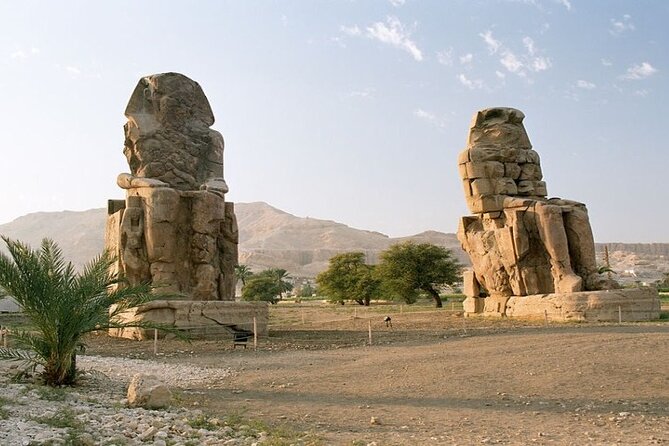
On the return journey, the vehicle stops at the Colossi of Memnon. These two huge seated statues represent Amenophis III and face toward the Nile.
This is a short, easy stop and a good chance to stretch your legs after the tombs and temple. The statues are impressive because of their scale, but do not expect a large complex to explore here. The value is visual and historical: two massive figures mark the remains of a once-important royal temple.
Bring your camera, but keep the stop in perspective. The colossi are not a substitute for the Valley of the Kings or Hatshepsut Temple. They work best as a brief roadside chapter in the west bank route.
Lunch, then Luxor Temple and Karnak
Lunch is provided at a local restaurant, with a full meal for each person. Beverages are not included, so carry money for drinks. The supplied information does not name the restaurant or give a menu, so treat lunch as a practical included meal rather than a planned food experience.
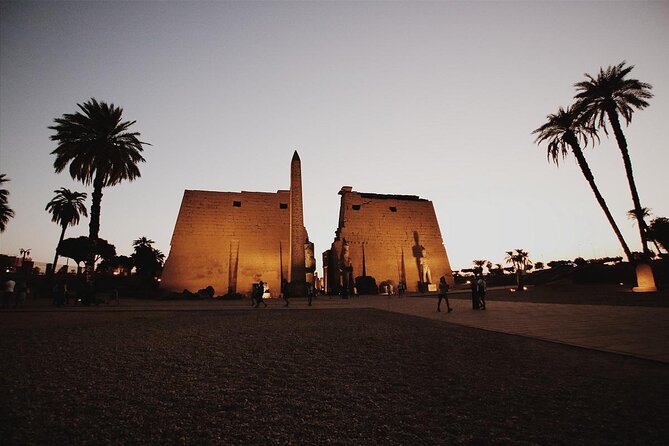
After lunch, the route crosses to the east bank for Luxor Temple. Here you see the courtyard and granite statues associated with Ramses the Great. The temple is closely tied to the ancient city of Thebes and feels different from the royal burial sites on the other side of the river.
The plan then continues to Karnak, described as a series of temples built across different reigns. This is one of the largest and most rewarding stops on the trip. The route includes the Avenue of Sphinxes, the Unfinished Propylon, the Hypostyle Hall with its 134 giant columns, the obelisks of Hatshepsut and Thutmose III, the temple of Amun, the Granite Scarab of Amenophis III, and the Sacred Lake.
Karnak can be overwhelming if you try to absorb every wall and column. I would listen closely to the guide’s explanation of the main spaces, then take a few minutes to look around on your own. The private format should make it easier to pause for questions, though the full day schedule still limits your free time.
The plan allows for travel by carriage or bus between Luxor Temple and Karnak. Since transport details can vary, follow the guide’s instructions and keep your belongings close during any short transfer.
Your night in Luxor
After the east bank visits, you are taken to a Luxor hotel for check-in and an overnight stay. The daily plan says dinner is included at the hotel, while the formal inclusion list specifically names lunch but does not separately list dinner. Confirm the dinner arrangement before booking so there are no surprises.
There is also an option to visit Luxor Temple at night from 6:00 pm to 9:00 pm if you prefer. This is listed as a possibility rather than a guaranteed extra stop, so ask your guide whether it can fit your schedule and whether any additional fee applies.
The hotel night is important for more than comfort. It prevents the trip from becoming a same-day Cairo to Luxor rush and gives you a base for the second morning. Still, your first day begins before dawn, so do not plan a late evening unless you know you can manage it.
Medinat Habu and the Temple of Ramesses III
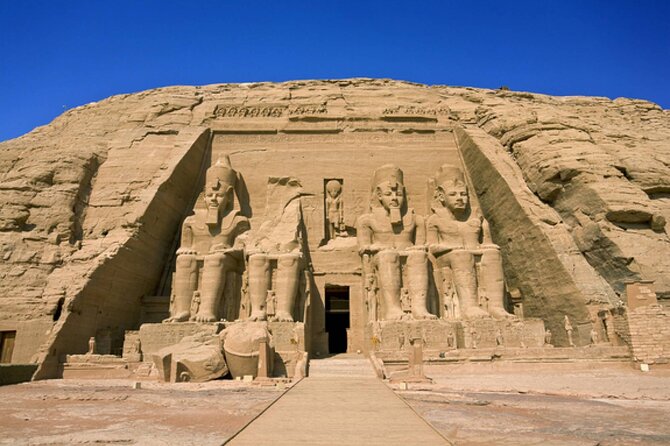
Day two begins at 7:00 am, with pickup from the hotel by a licensed guide and transfer in a private air-conditioned vehicle to the west bank.
The first major stop is Medinat Habu, an archaeological site near the Theban hills. It is associated mainly with the mortuary temple of Ramesses III, a structure about 150 meters long with a formal design similar to the mortuary temple of Ramesses II.
This temple is a strong reason to choose the two-day plan instead of a basic one-day Luxor visit. The better-known Valley of the Kings and Karnak often take the spotlight, but Medinat Habu gives you another chance to study carved walls and royal architecture without repeating the same type of stop.
The program allows about an hour at the temple. It also mentions other structures within the area, including a Temple of Amun dating to the 18th Dynasty and built by Hatshepsut and Thutmose III. The complex was altered over many later dynasties and during the Greco-Roman period, which gives your guide plenty to point out.
Deir el-Medina, the artisans’ village
Next comes Deir el-Medina, known as the Valley of the Workers. This ancient village housed the artisans who made the tombs in the Valley of the Kings during the 18th through 20th dynasties of the New Kingdom, roughly 1550 to 1080 BC.
This stop changes the focus from kings to the skilled people who built and decorated royal burial places. The paintings are noted for appearing fresh, and the visit can help you understand that the tombs were not produced by anonymous labor alone. They required organized communities of artists and craftsmen.
The planned visit is about 30 minutes, making it the shortest stop on day two. If this subject interests you, listen carefully and ask the guide to explain what remains visible. The time is enough for an introduction, but not a long examination of every detail.
The Valley of the Queens
The final stop is the Valley of the Queens, where wives of pharaohs were buried. In ancient times, it was called Ta-Set-Neferu, meaning the place of the children of the pharaoh. Princes, princesses, and members of the nobility were also buried here.
The valley gives the second day a useful balance. The Valley of the Kings centers on royal rulers, while this site broadens the story to queens and other members of the royal family. Mortuary priests maintained the tombs and performed daily rituals, offerings, and prayers for the dead.
The visit is planned for about an hour. As with the Valley of the Kings, the exact tomb access is not specified, so ask your guide which tombs are included and whether any separate ticket is needed.
What the $390 price really buys you
The strongest value is convenience. You get a Cairo hotel pickup, airport transfer, flights to Luxor, a Luxor hotel, a private vehicle, a guide, entry fees, hotel return or drop-off service, and lunch. That removes many separate decisions from a trip that is otherwise difficult to arrange in only two days.
The package also gives you substantial coverage. You see the principal royal sites on the west bank, the major temples on the east bank, and three less commonly paired sites on the second day. A private guide adds value because the monuments are not self-explanatory, and the tour is designed around your group rather than a large shared bus.
The limitations are clear. You pay for speed, not leisure. The early flight, full sightseeing days, and many stops may leave you tired. Tipping and personal items are not included, and drinks are not included with lunch. Also confirm exactly how dinner, flight details, and any optional night visit are handled.
The tour is recommended by 96 percent of its listed audience and carries a 4.9 rating from 52 reviews. One especially positive account praised the overall experience and guide Ayman, while also pointing out the airport terminal problem. That combination is useful: the sightseeing and guiding can be excellent, but you should still take responsibility for checking the practical details.
Who should book this Luxor itinerary?
I would choose this trip if you are based in Cairo, have only two days, and want the ancient sites handled in one package. It suits first-time visitors who prefer a guide and private transport over working out domestic flights, taxis, tickets, and hotel arrangements themselves.
It also works well for people who want more than the standard highlights. Medinat Habu, Deir el-Medina, and the Valley of the Queens add variety and give you a fuller look at the west bank.
I would think twice if you dislike pre-dawn starts, tightly planned sightseeing, or organized meals. Independent visitors who already know Luxor may prefer a slower schedule with more control over tomb choices and time at each site.
You must provide a copy of your passport photo during booking, and confirmation is sent within 48 hours, subject to availability. Most people can participate, and the tour is near public transportation, though the main transport for the experience is the included private vehicle.
Should you book this overnight Luxor tour?
Book it if your priority is seeing a large number of major Luxor sites with minimal planning. The combination of flights, hotel, private transport, guide, and entry fees makes $390 a reasonable convenience price for a tightly managed two-day visit.
Before paying, confirm the Cairo airport terminal, your domestic flight details, the hotel and dinner arrangement, and which individual tombs are covered. If you can handle a 3:30 am start and two full days on site, this is an efficient way to put Luxor’s temples and tombs at the center of your Egypt trip.
FAQ
How long is the overnight Luxor trip from Cairo?
The experience lasts approximately two days and includes one overnight stay in Luxor.
What time is pickup from my Cairo hotel?
Pickup is scheduled for 3:30 am on the first day so you can transfer to the domestic airport for your flight to Luxor.
Are flights from Cairo to Luxor included?
Yes. The package includes the domestic flights needed for the Cairo to Luxor trip.
Is the tour private?
Yes. This is a private activity, and only your group participates.
Is an Egyptologist guide included?
Yes. A qualified Egyptologist guide is included, and day two specifies pickup by a licensed tour guide. A guide named Ayman is associated with the experience, but guide assignment can vary.
Which Luxor sites are visited on the first day?
The first day includes the Valley of the Kings, Colossi of Memnon, Temple of Queen Hatshepsut, Luxor Temple, and Karnak Temple.
Which sites are visited on the second day?
The second day includes Medinat Habu, the Temple of Ramesses III, the Temple of Amun within the Medinat Habu area, Deir el-Medina, and the Valley of the Queens.
Is lunch included?
Yes. Lunch at a local restaurant is included. Beverages are not included.
Is dinner included?
The daily plan says dinner is included at the Luxor hotel, but the formal inclusion list specifically names lunch. Confirm the dinner arrangement before booking.
Are entrance fees included?
Yes. Entry fees to the listed historic sites are included in the package.
Can I visit Luxor Temple at night?
A night visit to Luxor Temple may be possible between 6:00 pm and 9:00 pm if you prefer. It is described as an option, so confirm availability with the guide.
What do I need to provide when booking?
You need to provide a copy of your passport photo during the booking process.
Can I cancel for a full refund?
You can receive a full refund if you cancel at least six full days before the experience starts. Cancellations two to six full days ahead qualify for a 50 percent refund, while cancellations less than two full days before the start time are not refunded.
New on the Cairo list
- Half Day tour to National Museum of Egyptian Civilization★ 4.0 · 25 reviews
- Private Luxor Day tour from Cairo by Flight★ 5.0 · 25 reviews
- Private Giza Pyramids & Sakkara Tour with Camel Ride & Lunch★ 5.0 · 25 reviews
- VIP 4Hour Islamic Cairo Private Tour Al Azhar and Khan Al Khalili★ 4.5 · 25 reviews
- Private full day tour to Giza Pyramids, Sphinx, Sakkara and Dahshour with guided★ 5.0 · 25 reviews
- 4 Days Nile Cruise luxor.Aswan.abu simbel with Train Tickets from Cairo★ 4.5 · 26 reviews
- Giza Pyramids, Camel Ride, ATV Bike, Sobbing tour, Dinner Cruise★ 5.0 · 26 reviews
- Wonderful Full Day Egyptian Museum and Great Pyramid★ 5.0 · 26 reviews
Cairo Tours, compared.
Pyramids & Great Sphinx Private Tour with Camel Ride
Read our review →
Tour to Giza Pyramids and The Egyptian Museum
Read our review →
VIP All inclusive Best of the best Giza Pyramids,Sakkara,Memphis
Read our review →
Pyramids of Giza, Sphinx, Saqqara & Memphis Tour
Read our review →
Cairo 8 Hour Private Tour of Pyramids, Egyptian Museum and Bazaar
Read our review →
Half-Day Tour to Pyramids of Giza and the Sphinx
Read our review →